

Is your summer bedding too thin now, while your winter duvet still feels like too much? The best fall comforters keep you warm on cooler nights without making a mild September night miserable. Choose for the temperature of your bedroom, and leave yourself room to add a blanket later.
Which fall comforters work best for your room?
Most fall bedrooms need a lightweight or all-season comforter before they need an extra-warm one. Your sheets, room temperature and tendency to sleep hot matter more than the outdoor forecast.
"In a study of 50 older adults across 10,903 nights, a rise in bedroom temperature from 22°C to 30°C was associated with a 10% drop in sleep efficiency." - Science of the Total Environment via NIH PubMed Central
Warmth level |
Best fit |
What to do when nights get colder |
|---|---|---|
Lightweight |
Warm bedrooms, hot sleepers, early fall |
Add a quilt or throw you can pull off easily |
All-season |
Moderate or cooler bedrooms, sleepers who want one main cover |
Add a blanket on the coldest nights |
Extra-warm |
Consistently cold bedrooms or people who get cold easily |
Keep the rest of the bed light so it doesn't feel stifling |
If you wake up sweaty, a heavier comforter won't help just because the calendar says fall. If you wake up cold, an all-season fill may spare you a pile of blankets. Think about how you feel at 3 a.m., when the bedroom has had time to cool.
Lightweight versus all-season
Go lightweight if the room stays warm or your partner sleeps hot. You can pull on another layer when you need it. An all-season comforter makes more sense if the room cools overnight and you like sleeping under one main cover.
“All-season” isn't a standardized warmth level across brands. Compare the warmth labels and fill details within one maker's range. Fill power measures down's loft, while fill weight tells you how much is inside; neither alone settles how warm the finished comforter will feel. This comforter warmth-level guide explains those labels further.
When a warmer comforter makes sense
An extra-warm comforter suits a room that stays chilly and a sleeper who seldom overheats. If the heat comes on early or the weather keeps shifting, a lighter comforter and a removable blanket give you more control.
Choose the fill and shell you'll want to sleep under
Fill insulates you. The shell touches your skin and affects the drape, so give both some thought when shopping for fall.

Material |
What it feels like |
Fall consideration |
|---|---|---|
Goose down fill |
Lofty warmth without the dense feel of a heavy blanket |
Pick the warmth level, not simply the puffiest-looking option |
Down-alternative fill |
Soft, lofted alternative for people who don't want down |
Compare its actual warmth designation and care label |
Organic cotton shell |
Familiar, soft fabric feel |
A comfortable everyday choice when paired with the right fill |
Linen shell |
Textured, relaxed drape |
Good if you like a less smooth surface against your skin |
Silk shell |
Smooth, fluid drape |
A different feel from crisp cotton or textured linen |
Cooling fabric |
Designed for a cooler-feeling surface |
Consider it if warmth buildup bothers you, even in autumn |
Goose down can keep you warm without feeling dense. Still, a light down comforter and an ultra-warm one will feel different at night. A cooling shell can't make a heavily filled winter comforter feel like a light fall layer, either.
Warmy & Tummy sells goose down comforters with organic cotton, deluxe silk and European linen shells. Each comes in Light, All Seasons and Ultra Warm, so you can choose the feel of the shell separately from the warmth. The Summer-Breeze option is ultra-light for warmer rooms, though you'll likely want another layer once it gets cold.
How to layer a fall bed without making it too hot
Start with breathable sheets and a comforter. Keep a blanket within reach for the nights that surprise you; there's no need to remake the whole bed when the weather turns.
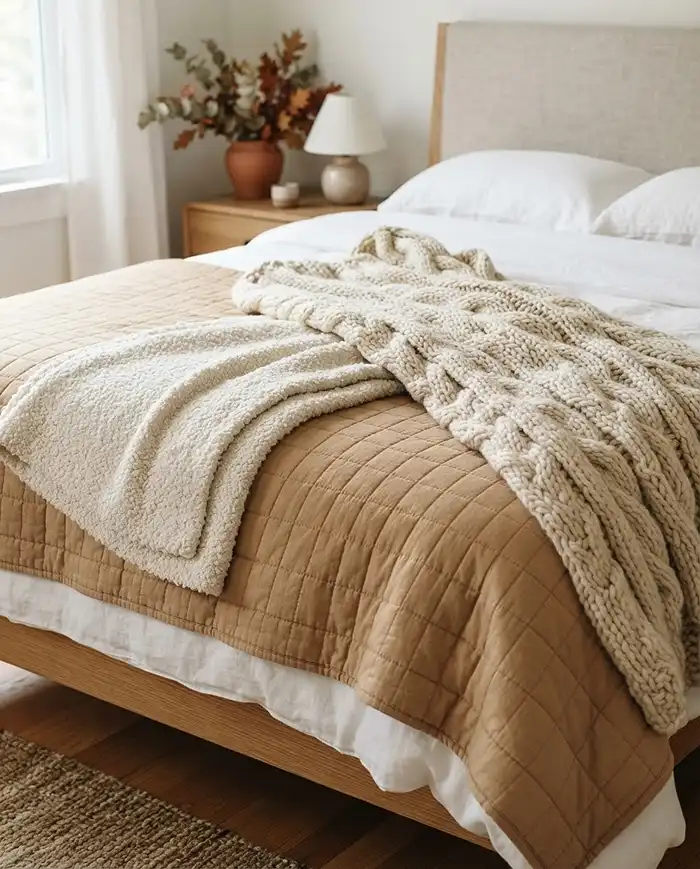
In a warm bedroom, light sheets and a lightweight comforter may be plenty. On cooler nights, lay a quilt or chunky knit throw across the lower half of the bed for added warmth. Pull it up if you need it, or push it away without losing your main cover.
In a cooler bedroom, start with an all-season comforter. Fleece sheets under a thick quilt and a heavy throw may feel more like winter bedding than you need yet. Add one layer at a time. If you share the bed with someone who sleeps at a different temperature, separate throws let each of you adjust your own side.
For an autumn look, you can keep the insert you love and change its cover to earthy tones such as rust, olive or deep brown. A textured blanket folded at the foot of the bed adds color without adding warmth until you pull it up. A solid color is easy to live with beyond fall. New to duvet covers? See how to get a duvet insert into its cover.
Queen fall comforters and sets: what should you buy?
Queen sizing deserves a closer look if you have a deep mattress or share the cover. Measure the mattress, decide how much fabric you want hanging over each side, and compare that with the comforter's listed width. The word “queen” on the package won't tell you how much cover you'll each get.
A fall comforter set is handy if you want matching pieces. Contents vary: some sets include a comforter and shams, while duvet cover sets may come with shams but no insert. Read the included-pieces line so you don't buy a cover with nothing to put inside it. Still unsure? See the difference between a duvet insert and a comforter.
Happy with the warmth of your current insert? A new cover may be all you need. If you're too hot or too cold, settle on the right fill before picking a color or looking at matching fall comforter sets. A product named a “rest comforter” still needs the same scrutiny: the name won't tell you its fill, shell or warmth level.
Make your choice before the first cold night
Sleep hot or keep the bedroom warm? Pick a light comforter and leave a blanket nearby. For a cool room, an all-season one should be easier to live with. Keep extra-warm bedding for bedrooms that stay cold through the night.
Warmy & Tummy lets you choose both the shell and warmth level of a goose down comforter. Start with the cotton, linen or silk feel you prefer, then choose Light or All Seasons to suit your room. You'll still have a spot at the foot of the bed for a blanket when that first cold night arrives.
FAQ
What is the best comforter for fall?
The best fall comforter is a lightweight one for a warm room or an all-season one for a cooler room. Choose your warmth level by how you sleep indoors, then add a removable quilt or blanket as nights get colder. An extra-warm comforter makes more sense if your bedroom stays cold and you rarely overheat.