

Difference Between Duvet Insert and Down Comforter
Choosing between a duvet insert and a down comforter sounds simple - until you’re standing in front of dozens of beautiful bedding options wondering which one will actually feel better, look better, and fit your lifestyle. If you’ve been comparing the difference between duvet insert and down comforter, the short answer is this:
A duvet insert is designed to go inside a removable duvet cover
A down comforter is often designed to be used as the finished top layer on its own
That said, the real decision goes deeper than appearance. It comes down to how warm you sleep, how often you want to wash bedding, how much flexibility you want with bedroom styling, and whether you prefer a polished hotel-bed look or an easy all-in-one setup.
At Warmy & Tummy, we believe your top layer should do more than look cozy - it should support deeper, more restorative sleep night after night. That’s why this guide walks through construction, fill, warmth, maintenance, design versatility, and the best fit for different sleepers and households.
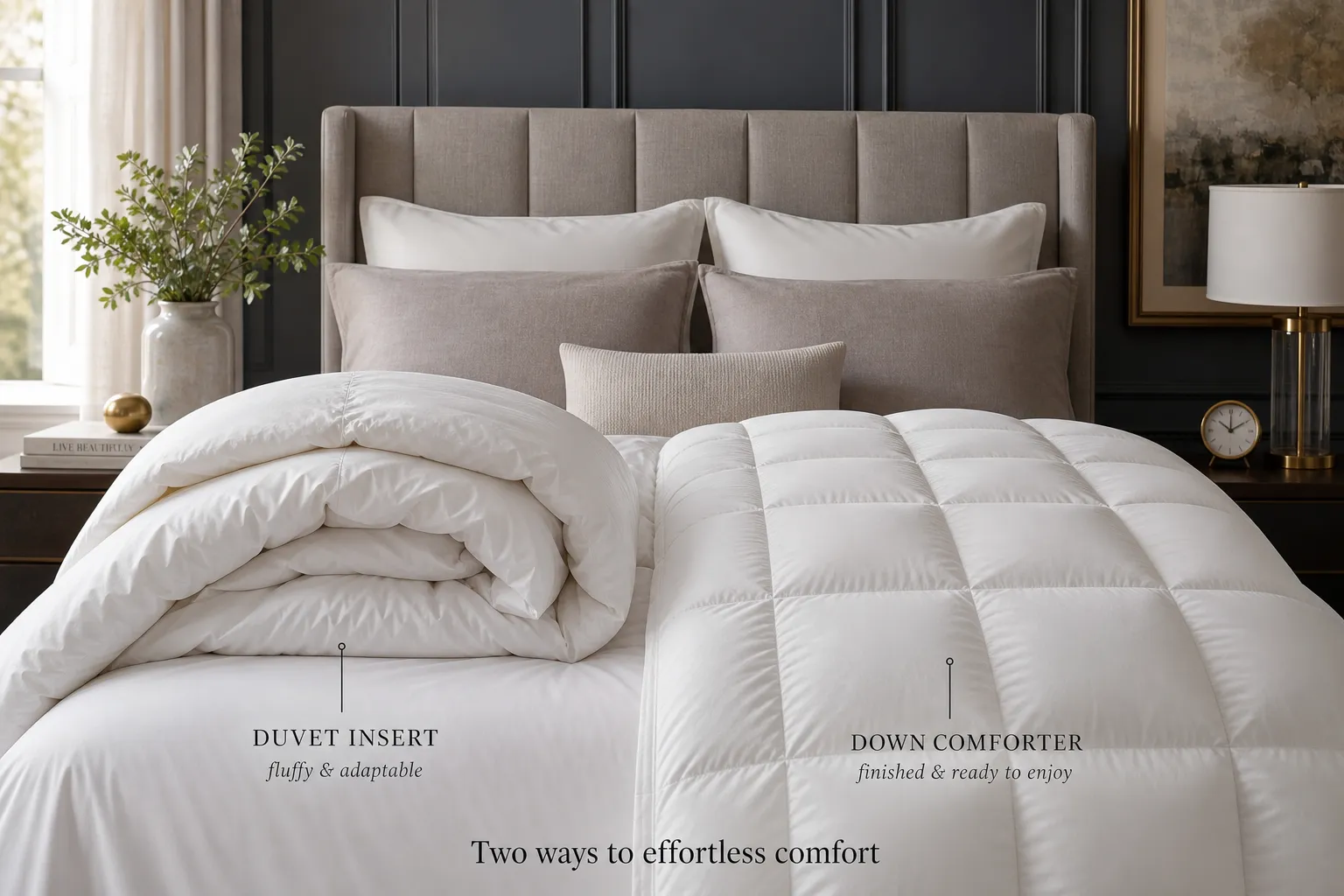
Quick Answer: What’s the Main Difference?
A duvet insert is the inner filled layer that pairs with a duvet cover. It usually has corner loops or tabs to help secure it inside the cover and is often plain white or lightly patterned because it isn’t meant to be seen on its own.
A down comforter is a filled blanket, typically with an outer shell that can function as the visible finished bedding layer. Some down comforters can also double as duvet inserts, but not all are constructed with that purpose in mind.
In practical terms:
Feature |
Duvet Insert |
Down Comforter |
|---|---|---|
Intended use |
Goes inside a duvet cover |
Often used on its own |
Exterior look |
Usually simple, minimal shell |
Often designed to be visible |
Corner loops |
Common |
Not always included |
Style flexibility |
Very high |
Moderate |
Ease of changing bedroom look |
Easy - just swap the cover |
Requires changing the whole comforter |
Washing routine |
Cover washed more often, insert less often |
Whole comforter may need more involved care |
What Is a Duvet Insert?
A duvet insert is a lofty filled bedding layer made to deliver insulation and softness. It can be filled with goose down, duck down, wool, silk, or down alternative fibers. The insert goes inside a duvet cover, which protects it and gives your bed its visible color, texture, or pattern.
Most duvet inserts feature:
Corner loops or tabs
Baffle-box or sewn-through construction
A breathable shell, often cotton or performance fabric
Multiple warmth levels
Because the cover is removable, a duvet insert is often the favorite choice for people who want a cleaner, more adaptable bedding system. It’s especially appealing if you like changing your bedroom with the seasons or want easier routine laundering.
What Is a Down Comforter?
A down comforter is a plush top layer filled with down clusters, usually from goose or duck. It’s prized for its light, airy warmth and luxurious drape. A high-quality down comforter can feel cloudlike while still insulating exceptionally well.
Unlike a duvet insert, a down comforter may be designed to stand alone as the visible top layer. It can come in crisp white, subtle neutrals, or decorative stitching that looks finished without a cover.
That said, many premium down comforters can still be used inside a duvet cover if the size and construction allow it. The distinction is often about design intent rather than an absolute product category.
Duvet Insert vs. Down Comforter: The Deeper Comparison
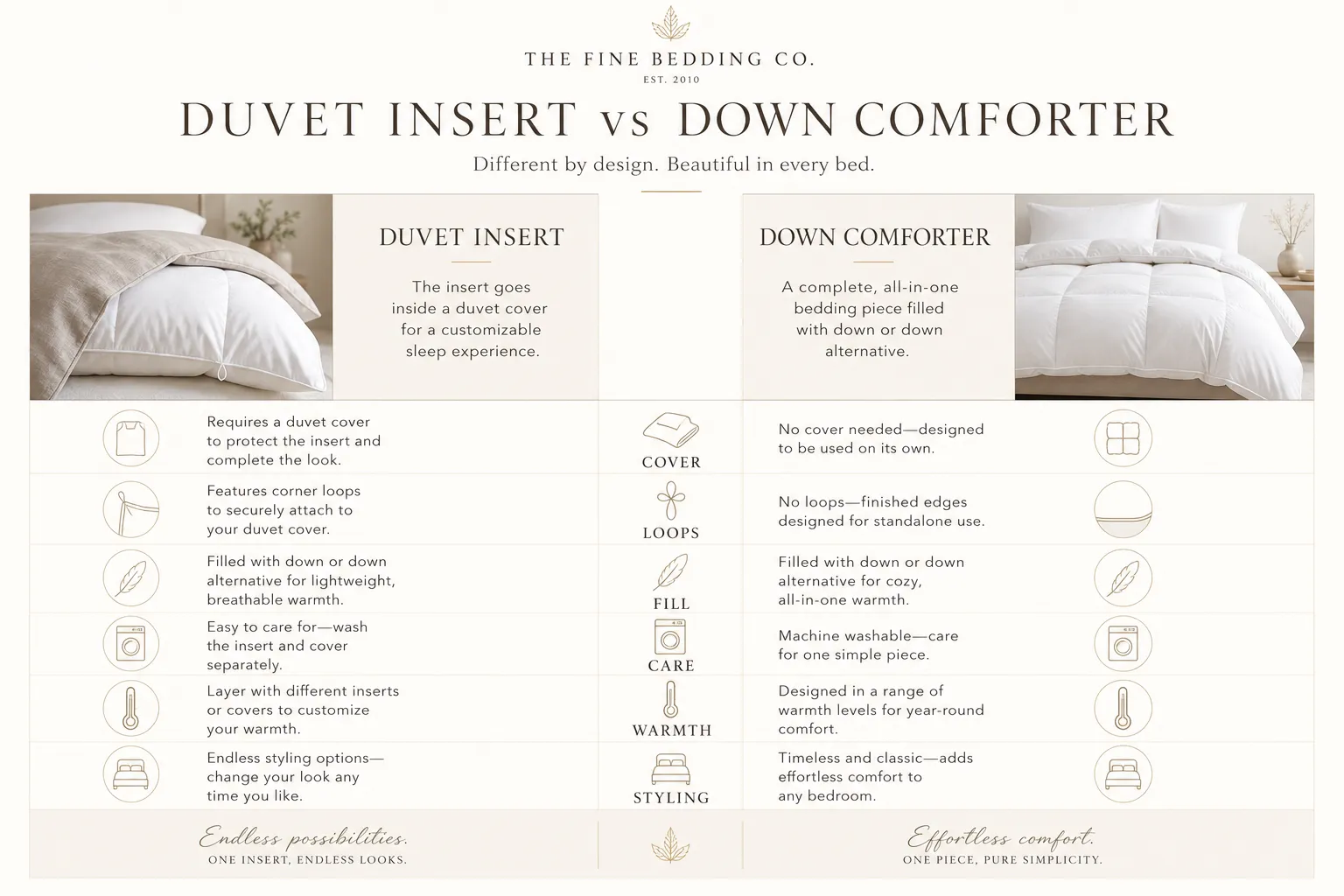
1. Construction and Design
A duvet insert is typically built for function first. The shell may be smooth and understated, with practical details like anchor loops for securing inside a cover.
A down comforter may also have premium internal construction, but it’s more likely to have a finished outer appearance suitable for direct use on the bed.
Look for these details in either option:
Baffle-box construction for better loft and fill distribution
Sewn-through construction for a lighter, flatter profile
High-quality shell fabrics such as organic cotton, silk, linen, or cooling blends
Secure stitching to reduce shifting over time
At Warmy & Tummy, these details matter because the best comfort isn’t just about softness on day one - it’s about consistent performance night after night.
2. Fill Type and Feel
This is where many shoppers get confused. A duvet insert can absolutely be filled with down, and a down comforter is defined by its fill. So the comparison is not just “duvet vs down.” It’s more accurate to think of it as:
Form and use: duvet insert vs comforter
Fill material: down vs down alternative vs wool vs silk
A down-filled duvet insert and a down comforter may feel very similar internally. What changes is how you use them.
Down is loved because it is:
Lightweight yet insulating
Soft and airy
Highly breathable when well made
Luxurious in drape and loft
For shoppers wanting natural premium bedding, goose down remains one of the most sought-after materials for year-round comfort.
3. Warmth and Seasonal Flexibility
Warmth depends on much more than the product label. Fill power, fill weight, shell fabric, and construction all influence how a comforter or insert performs.
A duvet insert often offers more flexibility because you can:
Choose a lightweight insert for summer
Switch to all-season for most homes
Layer with blankets in winter
Change covers for different textures and thermal comfort
A down comforter can do the same in theory, but many households treat it as a one-piece bedding solution and keep the same top layer in place longer.
For households with shifting seasons, couples with different temperature preferences, or style-conscious shoppers, a customizable bedding system can make a noticeable difference. Warmy & Tummy’s mix-and-match approach is especially useful here, allowing you to choose warmth level, shell material, and comfort profile with more precision than one-size-fits-all bedding.
4. Care and Maintenance
This is one of the biggest real-world differences.
With a duvet insert, you usually wash the duvet cover much more often than the insert itself. That helps protect the fill and can extend the life of the insert.
With a down comforter used on its own, you may need to spot clean more frequently and wash the entire comforter less often but more carefully.
A duvet setup usually wins for convenience if you:
Have kids or pets
Prefer frequent freshening
Like rotating colors or fabrics
Want to protect a premium down fill investment
A comforter-only setup may feel simpler if you:
Want fewer separate pieces
Prefer the ease of laying one top layer on the bed
Don’t mind more occasional bulk washing or professional cleaning
5. Bedroom Style and Versatility
This is where duvet inserts shine.
Because the insert is hidden inside a duvet cover, you can refresh your room without buying a whole new top layer. Swap crisp organic cotton for summer, European linen for a relaxed luxury look, or a richer texture for winter.
A down comforter can still look beautiful, especially in a minimal or hotel-inspired bedroom. But it gives you less styling flexibility unless you add a cover anyway.
If you love design freedom, limited-edition collections, or seasonal bedroom updates, a duvet system gives you much more room to play.
Why the Best Choice Depends on Your Sleep Habits
Competitor guides usually stop at “duvets use covers, comforters don’t.” That’s true - but it doesn’t fully help shoppers decide. The better question is: How do you actually sleep and live?
Choose a Duvet Insert If You:
Like changing your bedroom aesthetic easily
Want a removable, washable outer layer
Prefer a cleaner, more protected bedding system
Have children, pets, or allergy concerns
Want to customize shell fabric and warmth level
Choose a Down Comforter If You:
Want an all-in-one top layer
Love a simple bed-making routine
Prefer the classic fluffy comforter look
Don’t plan to change styles often
Want the cozy feel of down without dealing with a cover
Choose a Down Duvet Insert If You Want the Best of Both
For many households, this is the sweet spot: the lightweight luxury of down, plus the practicality and style versatility of a duvet cover. It offers premium comfort while giving you more control over maintenance and design.
A Simple Buyer’s Guide by Sleeper Type
Sleeper Type |
Best Option |
Why |
|---|---|---|
Hot sleeper |
Lightweight duvet insert or lightweight down comforter |
Better temperature control and less bulk |
Cold sleeper |
All-season or ultra-warm down insert/comforter |
More loft and insulation |
Couple with different preferences |
Customizable duvet insert system |
Easier to layer and personalize |
Family with pets or kids |
Duvet insert with washable cover |
Easier upkeep and protection |
Style-focused shopper |
Duvet insert |
Easy seasonal refreshes |
Minimalist shopper |
Down comforter |
Clean, simple setup |
Luxury bedding buyer |
Premium goose down duvet insert |
High-end comfort with flexibility |
Materials Matter More Than Most People Realize
The shell fabric around the fill changes how bedding feels against your skin, how breathable it is, and how it performs through the seasons.
Organic Cotton
A timeless choice for softness, breathability, and easy comfort. Organic cotton shells feel fresh and classic, making them ideal for year-round bedding.
Silk
Silk offers a smooth, refined hand-feel and a naturally elegant drape. It can make the sleep experience feel especially elevated and indulgent.
European Linen
Linen is relaxed, breathable, and visually rich. It works beautifully for casual-luxury bedrooms and can help create a more airy, lived-in sleep environment.
Cooling Performance Fabrics
Tencel blends and other cooling fabrics can be a smart option for warm sleepers or humid climates. These shells can feel cooler to the touch and help manage moisture more effectively.
Wool and Alternative Natural Fills
Merino wool and other natural fills can regulate temperature well and appeal to shoppers looking for something different from traditional down.
Warmy & Tummy offers these premium material choices because bedding should be personal. The “best” option isn’t universal - it’s the one that matches your body, bedroom, and lifestyle.
Common Mistakes Shoppers Make
Assuming “Duvet” Means the Fill Is Different
A duvet insert is not a fill type. It’s a format. It can be down-filled, wool-filled, silk-filled, or filled with synthetic alternatives.
Buying Based Only on Warmth Label
“Lightweight” from one brand may not feel the same as “lightweight” from another. Construction, fill quality, room temperature, and shell fabric all matter.
Ignoring Bed Styling Needs
If you enjoy changing your room with the seasons, a stand-alone comforter may feel limiting later.
Overlooking Care Realities
A premium down layer is an investment. Protecting it with a duvet cover can help preserve loft, cleanliness, and longevity.
Not Considering Household Life
Pets, children, frequent guests, allergies, and laundry habits all affect what will actually feel easiest to live with long term.
Which Is Better for Luxury Sleep?
If your top priority is a refined sleep experience, both can work beautifully - but a premium down duvet insert paired with a high-quality cover often offers the most complete combination of comfort, practicality, and style.
It delivers:
The airy warmth and loft of down
Better protection for the fill
Easy seasonal updates
More personalized material choices
A polished, layered bed aesthetic
That’s why so many elevated bedding setups lean toward inserts and covers rather than one-piece comforters alone.
Warmth Levels: What to Choose
When deciding between a duvet insert and a down comforter, think in terms of warmth profile rather than just product type.
Lightweight
Best for:
Hot sleepers
Summer months
Warm climates
Layered bedding lovers
All-Season
Best for:
Most households
Moderately climate-controlled bedrooms
Couples with balanced preferences
Year-round versatility
Extra Warm or Winter Weight
Best for:
Cold sleepers
Drafty homes
Winter climates
People who want a cocooned feel
Warmy & Tummy’s broad range of comforters and inserts is designed around these real sleep differences, so you can choose based on how you actually rest - not just what looks good online.
How to Decide in 30 Seconds
If you want the shortest path to the right choice, use this:
Want easy style changes and simpler routine washing? Choose a duvet insert
Want one visible top layer with fewer pieces? Choose a down comforter
Want luxury, flexibility, and long-term practicality? Choose a premium down duvet insert with a washable duvet cover
Our Verdict
For most modern households, a duvet insert offers the better blend of hygiene, flexibility, and design freedom. And if that insert is filled with premium goose down, you don’t have to compromise on softness or warmth.
A down comforter is still an excellent choice for shoppers who want simplicity and the plush feel of a finished top layer. But if you’re looking for the most versatile long-term bedding investment, the duvet insert system tends to win.
At Warmy & Tummy, we design bedding for people who want deeper sleep and a more beautiful bedroom at the same time. From organic cotton and silk to linen, goose down, merino wool, and cooling fabrics, our collections are crafted to help you build a bed that feels tailored to you. Add in customizable mix-and-match comforter options, eco-conscious materials, limited-edition luxury designs, fast email and chat support, free shipping in the USA on qualifying orders, a 30-day hassle-free return policy, and a 3-year limited warranty - and the choice becomes not just about bedding, but about sleeping better with confidence.
If you’re ready to upgrade your top layer, Warmy & Tummy makes it easy to find the comfort level, material, and look that fits your life beautifully.
FAQ
Is a duvet insert or comforter better?
Neither is universally better - it depends on your lifestyle. A duvet insert is usually better for flexibility, easier routine washing, and protecting a premium fill, while a comforter is better for shoppers who want a simple all-in-one top layer.
Should I get a down or down alternative duvet insert?
If you want a light, lofty, luxurious feel, down is often the premium choice. If you prefer a non-down option, want easier care, or have specific sensitivities, a down alternative insert can be a practical fit.
Can you use a down comforter as a duvet insert?
Yes, in many cases you can, especially if the comforter is the right size and not overly bulky. It works best when the comforter has a relatively simple outer shell and fits securely inside the duvet cover.
Why do people get duvets instead of comforters?
People often choose duvets because they offer more style flexibility and a removable cover that is easier to wash regularly. They also help protect the insert, which can extend the life of premium bedding.
What do Americans use instead of duvets?
Many Americans traditionally use comforters, often as the visible top layer of the bed. However, duvet inserts and duvet covers have become increasingly popular for their versatility and easy refresh options.
Can I put my regular comforter in a duvet?
Yes, you can put a regular comforter inside a duvet cover if the dimensions match closely. Just keep in mind that comforters without corner loops may shift more inside the cover than a purpose-made duvet insert.


