

Duvet How to Insert for a Smooth, Cozy Bed
Ever wrestled with a duvet cover and wondered why something so soft can feel so annoying? If you're searching for duvet how to insert advice that actually works, the short answer is this: line up the corners first, secure them, then use a simple method like the burrito roll or inside-out shake to get a smooth, cozy finish without the twisting and bunching.
A well-made bed changes the whole room. It looks calmer, feels cleaner, and somehow makes bedtime more inviting. The good news is that putting a duvet into its cover doesn't need brute force or a second person. You just need the right setup and a method that matches your bed size, your strength, and your patience level.
At Warmy & Tummy, we think bedding should feel comforting before you even fall asleep. That's why details matter: the right insert, the right cover, and the right way to put them together.

Duvet how to insert: the easiest way for most people
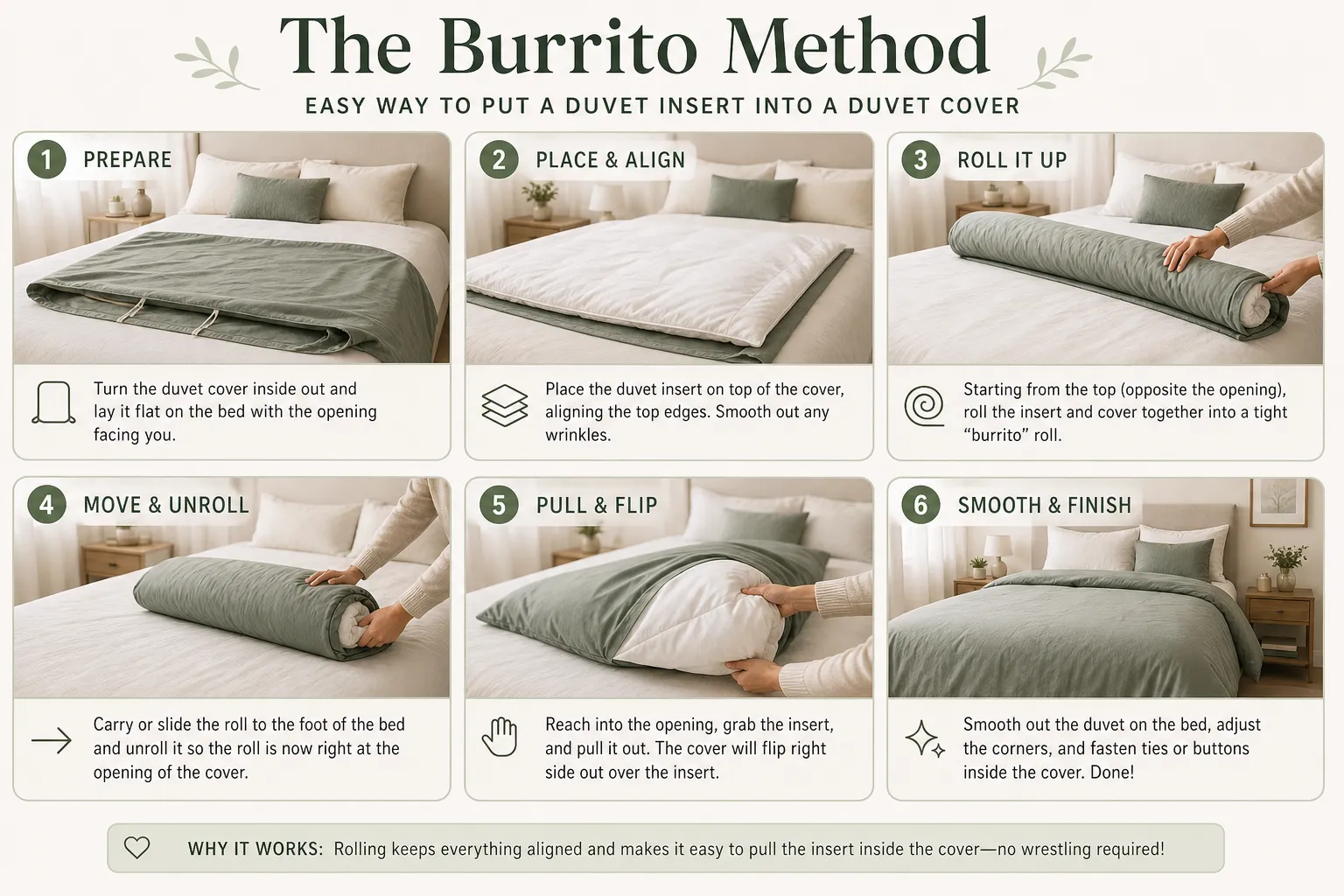
The easiest way for most people is the burrito method. It keeps the corners aligned from the start, which is the part that usually causes all the frustration.
Here’s the quick version:
Turn the duvet cover inside out.
Lay it flat on the bed with the opening at the foot.
Place the duvet insert on top.
Match all four corners carefully.
Secure corner ties if your cover has them.
Roll both layers together from the head of the bed to the foot.
Pull the opening around the rolled bundle.
Unroll it.
Shake and smooth.
That’s it. Once you do it once or twice, it starts to feel oddly satisfying.
If you want a deeper breakdown of cover basics, our guide on what a duvet cover is and why it matters helps explain why covers, ties, and insert fit make such a difference.
Why putting a duvet insert into the cover feels so hard
It feels hard because you're handling two oversized pieces at once. Fabric slides, corners disappear, and the fill inside the insert shifts if you rush.
Most problems come down to three things:
the corners weren’t matched properly
the insert was slightly twisted
the cover and insert weren’t the right size match
If your duvet always ends up lumpy, it usually isn’t because you’re doing everything wrong. It’s because one of those small setup steps got skipped.
What you need before you start
You only need a few things:
a duvet cover
a duvet insert
a flat surface, usually your bed
Before you start, spread both pieces out fully. Check that the insert is not folded in on itself and that the cover opening is easy to access. This takes less than a minute and saves a lot of mid-process frustration.
If you're pairing a comforter with a cover and wondering if that's okay, this guide on using a comforter as a duvet insert can help you choose the best setup.
The 3 best methods to put a duvet in a cover
There isn’t just one right way. The best method depends on how heavy your insert is and how much control you want.
1. The burrito method
The burrito method is usually the fastest once you learn it. It works especially well for queen and king beds.
Steps
Turn the cover inside out.
Lay it flat with the opening at the bottom.
Put the insert directly on top.
Align the top two corners, then the bottom two.
Tie the corners if your cover has ties.
Roll from the head of the bed downward.
When fully rolled, reach into the opening and wrap it over the roll.
Pull the fabric through until the cover is right side out.
Unroll and fluff.
Why it works
The rolling keeps everything together. Instead of fighting loose fabric, you control it from the beginning.
2. The inside-out shake method
This is the classic method. It’s simple and works well with lighter inserts.
Steps
Turn the cover inside out.
Put your hands inside and grab the top corners from the inside.
Pinch the matching top corners of the insert.
Lift both together.
Shake the cover downward over the insert.
Adjust the lower corners.
Close the opening and smooth.
Best for
twin and full beds
lightweight inserts
quick bed refreshes
This method is easy to remember, but it can be awkward with a heavy all-season or winter insert.
3. The lay-flat pull method
This is the most controlled method. It’s great if you don’t want to lift much.
Steps
Turn the cover inside out.
Lay it flat on the bed.
Place the insert on top.
Match all corners.
Secure them with ties, snaps, or even temporary clips.
Pull the cover around the insert section by section.
Smooth each area as you go.
Fasten the bottom closure.
Best for
king-size bedding
heavier down or wool inserts
anyone who wants less shaking and more control
Which duvet method is best? A quick comparison
The burrito method is best for speed, the shake method is best for simplicity, and the lay-flat method is best for control.
Method |
Best For |
Effort |
Speed |
Main Advantage |
|---|---|---|---|---|
Burrito method |
Beginners, queen and king beds |
Medium |
Fast |
Keeps corners aligned |
Inside-out shake |
Lightweight duvets, smaller beds |
Medium |
Fast |
Familiar and simple |
Lay-flat pull |
Heavy inserts, large beds |
Low to medium |
Moderate |
Easy to control |

How to put a duvet cover on by yourself
Yes, you can absolutely do it alone. The easiest solo option is a version of the inside-out method, sometimes called the mittens method.
Solo method
Turn the cover inside out.
Lay it flat with the opening facing you.
Put your arms inside the cover.
Grab the top corners from the inside.
Pinch the insert’s top corners.
Lift both together.
Give a few gentle shakes.
Let the cover drop into place.
Fix the bottom corners and close the opening.
The key word here is gentle. Wild shaking usually makes the insert slip instead of helping it settle.
How to stop a duvet from bunching inside the cover
To stop bunching, secure the corners and make sure the insert and cover are the same size category. Most shifting starts at the corners and spreads from there.
What helps most
Use built-in corner ties every time
Smooth the insert before closing the cover
Choose a cover designed for your exact insert size
Fluff after washing so the fill is evenly distributed
Fasten buttons or zippers fully at the bottom
If your duvet still slides around, it may be a fit issue rather than a technique issue. Our guide to duvet covers for down comforters can help you avoid that loose, shifting feel.
Common mistakes that make the job harder
A few tiny mistakes can turn a two-minute task into a fifteen-minute one.
1. Starting without checking the corners
If the corners aren’t matched first, the rest won’t sit right. This is the number one reason people end up redoing the whole thing.
2. Using the wrong size combination
A full/queen insert inside a roomy queen cover may not sit evenly. Exact matching usually gives the neatest look.
3. Skipping the ties
If your cover includes ties, use them. They’re there to keep the insert from migrating to one side during the week.
4. Pulling too fast
Fast pulling twists fabric. Slow, steady adjustments create a flatter result.
5. Not fluffing the insert first
Especially with down or down-alternative bedding, fill can clump after washing or storage. A quick fluff helps restore shape before you begin.
The best method by bed size
Bed size affects how manageable a duvet feels. A twin is easy to maneuver. A king can feel like wrestling a sail.
Bed Size |
Best Method |
Why |
|---|---|---|
Twin |
Inside-out shake |
Light and easy to control |
Full/Queen |
Burrito method |
Good balance of speed and accuracy |
King/California King |
Burrito or lay-flat |
Better corner control for larger inserts |
How your duvet insert changes the experience
Not all inserts behave the same way. A lightweight summer insert slips into place more easily than a lofty winter one.
Lightweight inserts
These are easiest to shake into place. They’re great if you change bedding often or like a quick morning reset.
All-season inserts
These give a fuller bed look and are still manageable for most people. They work well with all three methods.
Heavyweight inserts
These often need more control and less lifting. The lay-flat or burrito method usually works best.
At Warmy & Tummy, we design bedding for real-life sleep needs, not just pretty product photos. That means options for hot sleepers, cold sleepers, seasonal changes, and people who want luxury materials like organic cotton, silk, linen, merino wool, cooling fabrics, or goose down without sacrificing practicality.
What to look for in a duvet cover if you want easier bed-making
A duvet cover can either help you or fight you. The easiest covers to use have thoughtful details.
Look for these features
corner ties or loops
sturdy zipper or button closure
breathable fabric that drapes well
size labels that are easy to spot
a finish that feels smooth, not stiff
Natural materials often feel better in daily use. Organic cotton is easy to care for, linen gives that relaxed lived-in softness, and silk blends can feel incredibly smooth against the skin.
If you’re shopping for a better sleep setup overall, Warmy & Tummy offers premium comforters and covers in carefully chosen materials, plus customizable mix-and-match options so your bed feels personal, not generic.
Cozy bed styling tips after your duvet is in place
Once the insert is in properly, a few finishing touches can make your bed look polished and inviting.
Quick styling ideas
Fluff the duvet from the center outward
Fold the top third down for a hotel-inspired look
Add two sleeping pillows and two decorative shams
Layer a throw at the foot of the bed
Keep colors soft and textures mixed for warmth
The coziest beds usually combine comfort and contrast. Think crisp sheets, a soft duvet, and one extra tactile layer like knit, cashmere, or washed linen.
How often should you wash your duvet cover?
Most people should wash their duvet cover about every one to two weeks, depending on sweat, allergies, pets, and daily habits. The cover collects body oils and dust much faster than the insert does.
Your insert needs less frequent washing than the cover, but it still deserves proper care. If you need help with that part, our article on how to wash a down comforter the right way walks through it step by step.
When it’s worth upgrading your bedding instead of fighting it
Sometimes the method isn’t the problem. Sometimes the bedding itself is.
If your cover is too slippery, too oversized, missing ties, or made from fabric that bunches easily, bed-making will always feel harder than it should. A well-made duvet cover and a properly sized insert can make the whole routine easier.
That’s part of why people come to Warmy & Tummy. We focus on premium bedding that feels beautiful but also works in everyday life: luxury materials, seasonal comfort options, eco-conscious choices, fast customer service by email and chat, free U.S. shipping on qualifying orders, a 30-day hassle-free return policy, and a 3-year limited warranty on qualifying products. You should be able to trust your bed to feel good and function well.
A better bed starts with the first two corners
If you remember only one thing, remember this: start with the corners. Once those are matched and secured, everything else gets easier.
A smooth, cozy bed isn’t about perfection. It’s about knowing one simple method that works for you and having bedding that supports the process instead of making it harder. If your current setup feels frustrating, this might be the perfect time to upgrade to a duvet insert and cover that actually fit your sleep style.
Warmy & Tummy was built for that kind of comfort: thoughtful materials, lasting craftsmanship, and sleep products that help your bedroom feel like the calmest place in your home.
FAQ
How to make a bed look extra cozy?
Start with a smooth, evenly filled duvet, then fluff it well and fold the top down slightly for a relaxed hotel look. Layer in soft pillows and a throw at the foot of the bed to add texture and warmth without making it feel crowded.
How to put a duvet on a comfort?
Turn the duvet cover inside out, line up the top corners with your comforter or insert, and secure the ties if it has them. Then use the burrito method or a gentle shake method to pull the cover into place and smooth out any bunching.
What is the duvet trick?
The best-known duvet trick is the burrito method. You roll the cover and insert together, flip the opening over the roll, then unroll it so the duvet settles neatly inside with less twisting and fewer lumps.