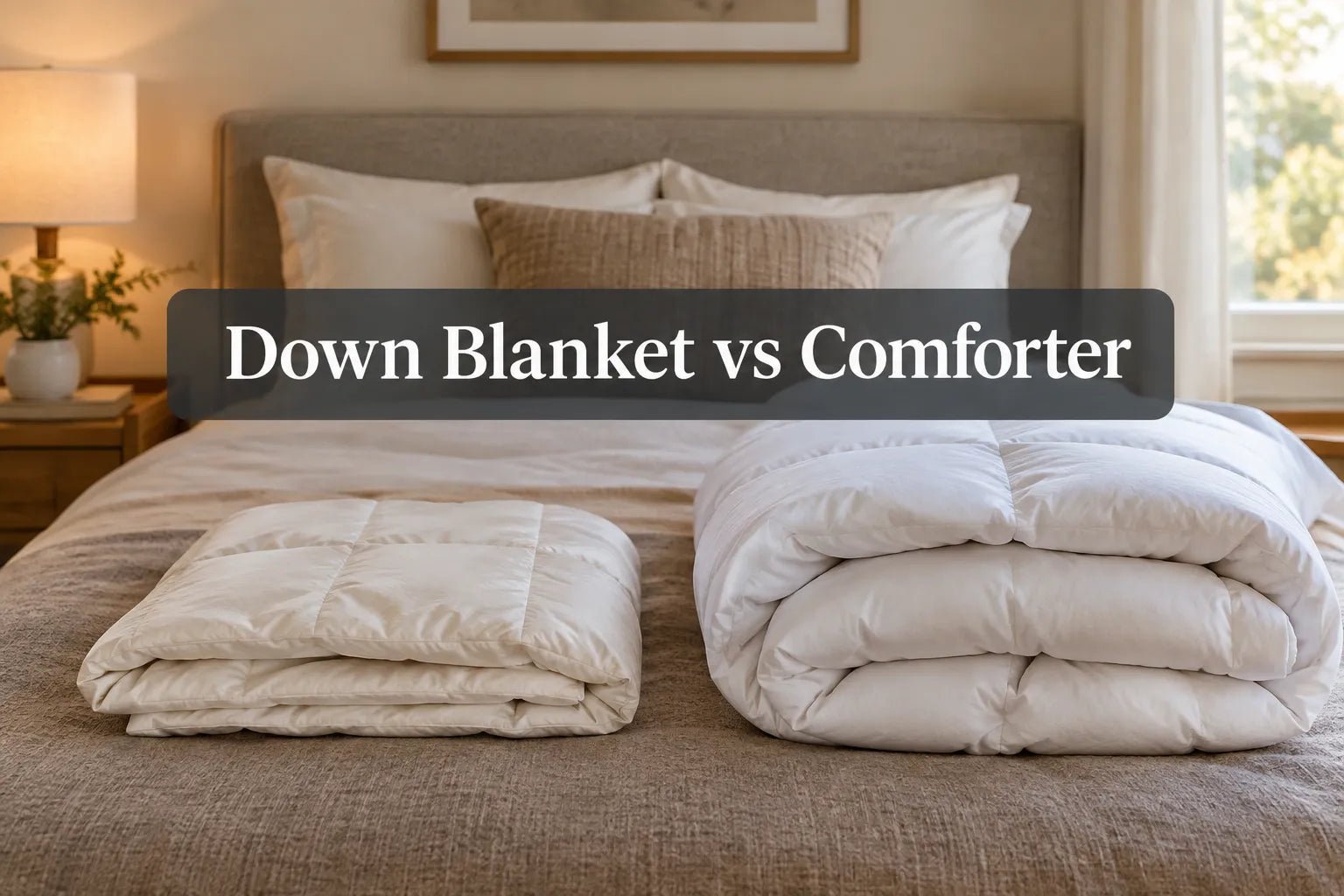

It's move-in night. You've finally cleared the boxes off the bed, and the fitted sheet won't reach the last corner. Start your college bedding checklist with the mattress size, then pack a protector, two sheet sets, a pillow, and one top layer. A topper or throw can wait until you know what the bed and room feel like.
College bedding checklist: what to pack
Pack the layers you'll use each night and a clean set of sheets for laundry day. Matching shams and spare comforters can stay home.
Item |
Pack |
Why it earns space |
|---|---|---|
Mattress protector |
1, fitted to the mattress |
Creates a washable barrier between you and the issued mattress |
Sheet sets |
2, with fitted sheets sized for the bed |
One goes on the bed while the other is clean and ready |
Sleeping pillow and pillowcase |
1 pillow, at least 2 cases |
Change the case with your sheets; add another pillow only if you use it |
Comforter or duvet with cover |
1 appropriately sized top layer |
Choose for the room temperature and your laundry access |
Lightweight throw |
Optional, 1 |
Handy when a comforter feels too warm or a desk session feels chilly |
Mattress topper |
Optional, 1 sized for the bed |
Consider it if the mattress feels uncomfortable, not as an automatic purchase |
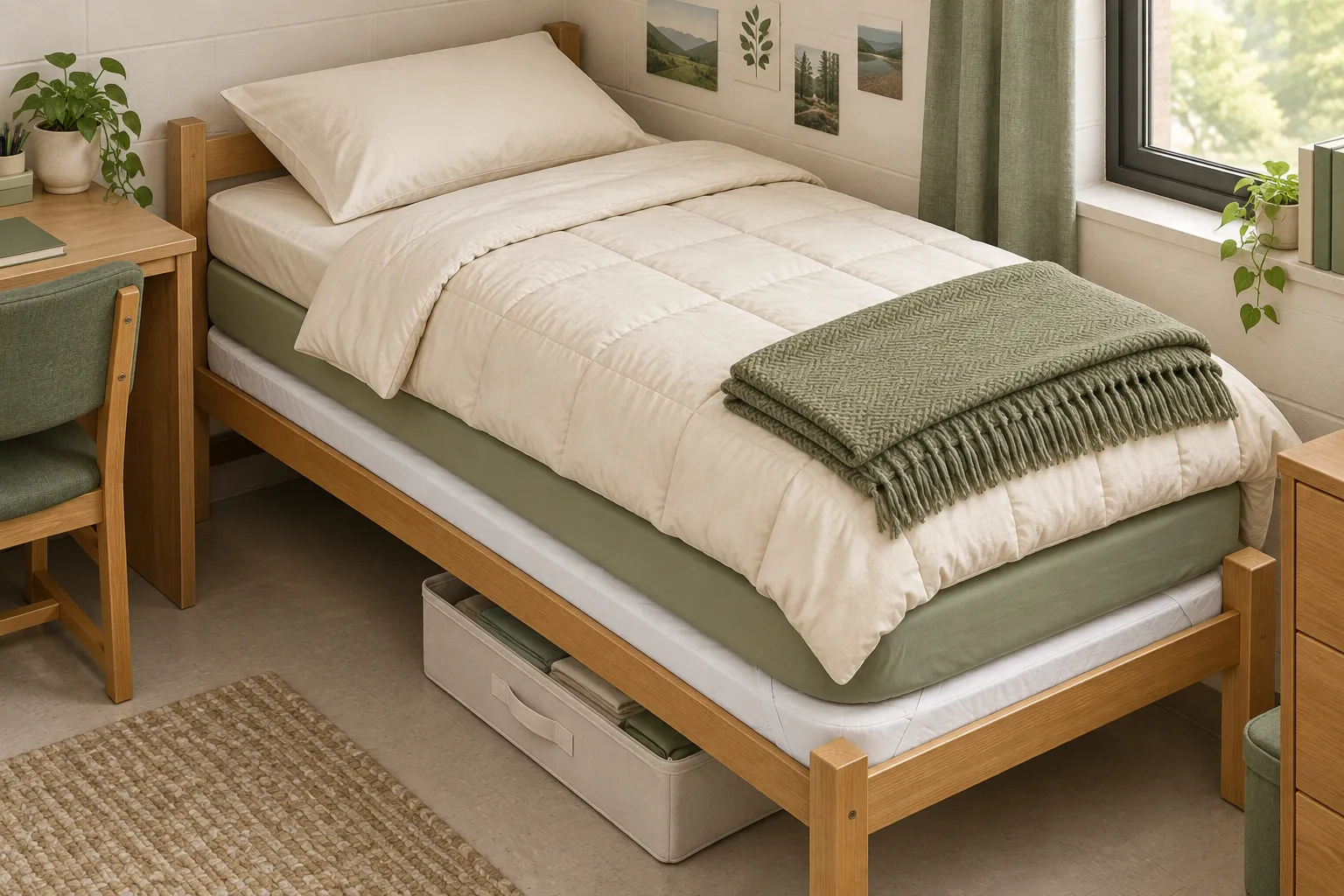
Shopping with a parent? Pull up the housing measurements and care labels together before adding bedding to the cart. It's a lot easier than discovering on move-in night that something doesn't fit or can't go in the shared washer.
Get Twin XL sizing right before buying
Twin XL is a common dorm mattress size: 39 by 80 inches, compared with 39 by 75 inches for a standard twin. A standard twin fitted sheet or protector can pull off the longer mattress. Your housing information has the final word on the size of your bed.

"All our residence hall mattresses are XL Twin (39 x 80)." - SUNY Oneonta Residential Experience and Housing
Which pieces need to say Twin XL?
Buy the fitted sheet, mattress protector, and any fitted topper for the mattress length. Pocket depth matters too. If you add a topper, measure the combined height so your fitted sheet won't slip off the corners.
Your comforter can hang over the sides. Check its listed dimensions: a Twin XL or roomy twin comforter may cover the length, while a full-size one may hang farther down the sides. On a lofted bed or tight walkway, that extra fabric can get in the way. A standard pillow and its case don't need a Twin XL label. For a closer look at covers, see how to size a twin duvet cover.
Choose bedding you can actually wash
Choose sheets you can wash without fuss and a top layer that fits the laundry machine. In a shared laundry room, special-care bedding can become a chore.
Sheets and pillowcases
If you sleep warm and like crisp sheets, cotton percale is a good place to start. Linen feels airy but may wrinkle; microfiber tends to feel smooth and costs less in many ranges. Feel and care instructions vary by product. If you're often cold, warmer sheets may suit you better than another bulky blanket.
Two sets are enough for most students: strip the bed, put the clean set on, then wash the used one. Count pillowcases if your sheet set includes only one. Choose colors you won't mind seeing between washes, and read the care label before buying anything delicate.
Comforter or duvet?
A machine-washable comforter keeps the top layer simple. With a duvet, you can wash the cover more often than the insert, though you'll have to wrestle it back on afterward. The insert still has to fit a washer when it's time to clean it.
In a warm room, start with a lighter layer and add a throw for colder nights. If you tend to get cold, choose a warmer fill rather than stacking multiple heavy blankets. Warmy & Tummy offers different shell materials and warmth choices, including down options. Use its advice to choose a comforter warmth level, then match the product dimensions and care instructions to your dorm. Even a lovely fill has to work with your laundry routine.
Protector, topper, and pillow
Put a mattress protector under the fitted sheet. A mattress pad adds a modest cushion, while a thicker topper changes the feel more and takes up more space. If you use either, follow its directions for protector placement and make sure the sheet fits over the added height. You can leave bundled padding behind if you don't need it.
Bring a pillow that supports how you sleep, not a pile of decorative pillows you'll move onto the floor each night. A spare pillowcase is a small, useful extra; a second sleeping pillow is worth it if you already sleep with two.
What to skip until you've slept in the room
Hold off on bulky extras until you know the mattress feel, room temperature, and storage space. A crowded bed is harder to make and gives you more fabric to wash and store.

Several decorative pillows: One accent is plenty if you want the bed to double as a seat.
Multiple seasonal comforters: Start with one versatile top layer; add warmth later if needed.
A thick topper bought sight unseen: Try the mattress first if you can, then decide if cushioning is worth the height and bulk.
A fussy duvet setup: If you won't take the cover off to wash it, a washable comforter may suit your routine better.
A full-size top layer chosen only for looks: Compare its dimensions with your bed height and floor space before you buy.
In a small room, you can fold back the top layer and move a single throw from the bed to your desk chair. Store spare sheets in a clean bag or bin under the bed instead of piling more on top.
Set up the dorm bed on move-in day
Make the bed before unpacking decorations. You'll have somewhere clean to sit, and if the sheet doesn't fit, the bedding box is still within reach.
Check the mattress for its size and condition, and wipe down the bed frame if needed.
Add the topper if you're using one, then fit the protector as directed for that setup.
Pull on the fitted sheet, tuck the flat sheet if you use one, and put a fresh case on your pillow.
Lay down the comforter or covered duvet. Fold the optional throw at the foot rather than burying it under the comforter.
Stow the second sheet set where you can find it on laundry day.
If your bed is lofted, see whether the top layer trails into a walkway and keep the bedside arrangement simple. There's no need to buy every bed accessory before you know how high the bed sits.
Keep laundry simple during the semester
Wash sheets and pillowcases on a regular schedule that works with your campus laundry access. Swap in the second set while the first is in the wash. Bring laundry detergent that works for your linens and follow the care labels on the protector and top layer. Dry everything fully before storing it.

Keep the spare set together in a breathable bag or drawer under the bed. If the comforter is too bulky for your laundry room's machines, you can wash a removable duvet cover more often than its insert. The insert still needs care; see down comforter cleaning instructions for that option. Keeping the clean sheets together makes bed-changing less of a hunt.
Make the one bed you want to come back to
Buy the fitted basics first. You can add warmth or cushioning once you've felt the mattress and spent a night in the room. That leaves you with a bed you enjoy sleeping in and can keep clean without a complicated laundry routine.
If you're ready to choose a top layer, explore Warmy & Tummy's comforter options for different warmth preferences and materials. Pick the size and care routine that work for your dorm before choosing a finish you love.
FAQ
What are some common dorm essentials people forget to bring?
For the bed, it's easy to forget a mattress protector, a spare pillowcase, or a second fitted sheet for laundry day. Pack those before extra throws or decorative pillows, and match the fitted pieces to your housing mattress size.