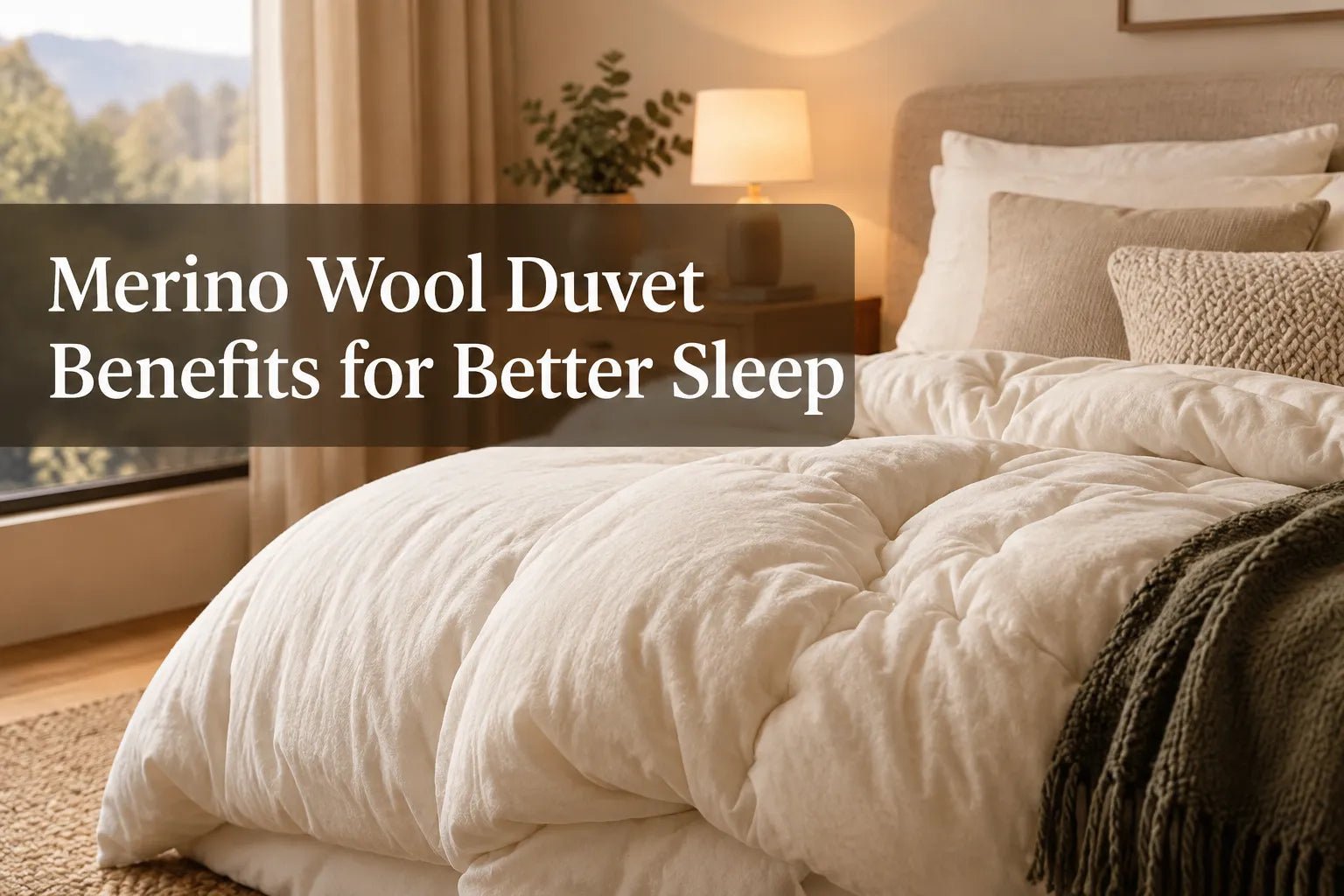

Ever wake up with the comforter kicked to the foot of your queen bed? A cool queen comforter gives you coverage without piling on heat. Look for a light fill and a breathable shell. “Cool to the touch” might feel nice at bedtime, but it won’t lower your room temperature.
If you share your bed, you’ll want enough fabric for both people without buying more insulation than you need.
Best cool queen comforter choices at a glance
For most hot sleepers, a lightweight comforter with a cotton or lyocell shell is a good starting point. If you wake up damp, consider how the fabric handles moisture and how you’ll clean it. If you love down, choose a lighter warmth level.
Comforter or approach |
Best fit |
Shell and fill direction |
Trade-off |
|---|---|---|---|
Warmy & Tummy customizable goose down comforter |
Someone who wants a down feel with control over shell and warmth |
Select a lighter warmth and a breathable shell option |
Down still insulates; the wrong fill level can feel too warm |
Buffy Breeze |
A sleeper who wants a plant-derived fabric and fill |
Eucalyptus lyocell shell and fill |
A duvet cover adds another layer, and care may be less convenient |
Slumber Cloud Tencel Cumulus Comforter |
Someone who wants moisture management plus temperature-buffering fabric |
Tencel fabric, lightweight synthetic fill and Outlast technology |
Temperature buffering isn’t the same as active cooling |
Casper Humidity Fighting Duvet |
Someone who wants down but also worries about humidity |
Cotton shell, down fill and a merino wool layer |
More layers may be too insulating in a very warm room |
Think about what woke you up last night. If you felt hot under the covers, try less fill. If the fabric felt clammy, moisture handling matters more. Couples who keep pulling the comforter back and forth need enough width as well.
Which cooling comforter fits your sleep temperature?
Choose by how much warmth you can tolerate overnight. A “cooling” label alone can’t tell you that.
Warmy & Tummy: best if you want to adjust down warmth
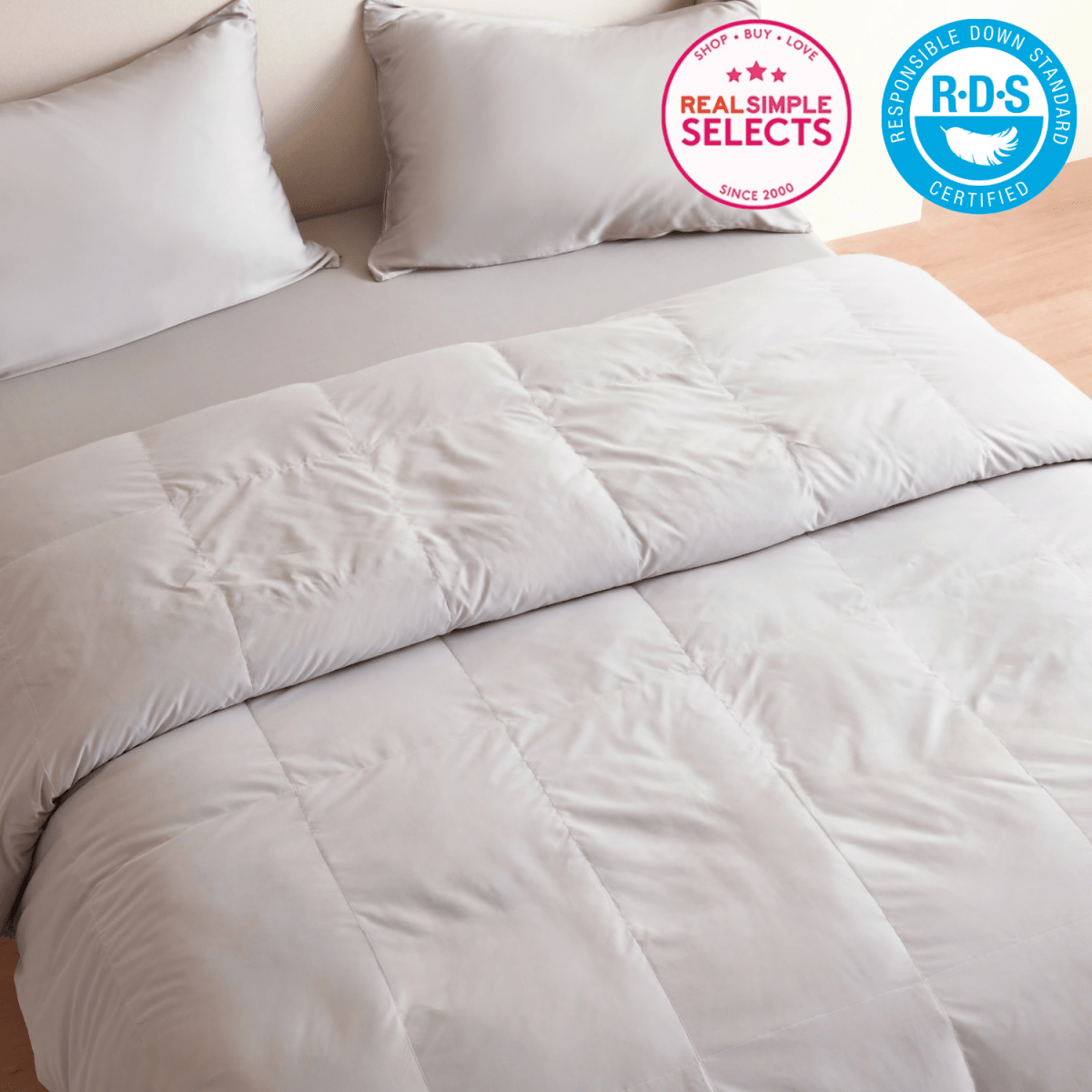
If you love the soft drape of goose down, Warmy & Tummy’s mix-and-match comforter lets you choose the shell and warmth level. Shell options include cotton, silk, linen and cooling performance fabrics. For a ready-made warm-weather layer, there’s also an ultra-light Summer-Breeze down comforter.
Down traps air to keep you warm. If you wake up sweaty in summer, a down comforter may still be too much insulation. Choose the lightest configuration that gives you the coverage you want.
Buffy Breeze: best for a soft, plant-derived feel
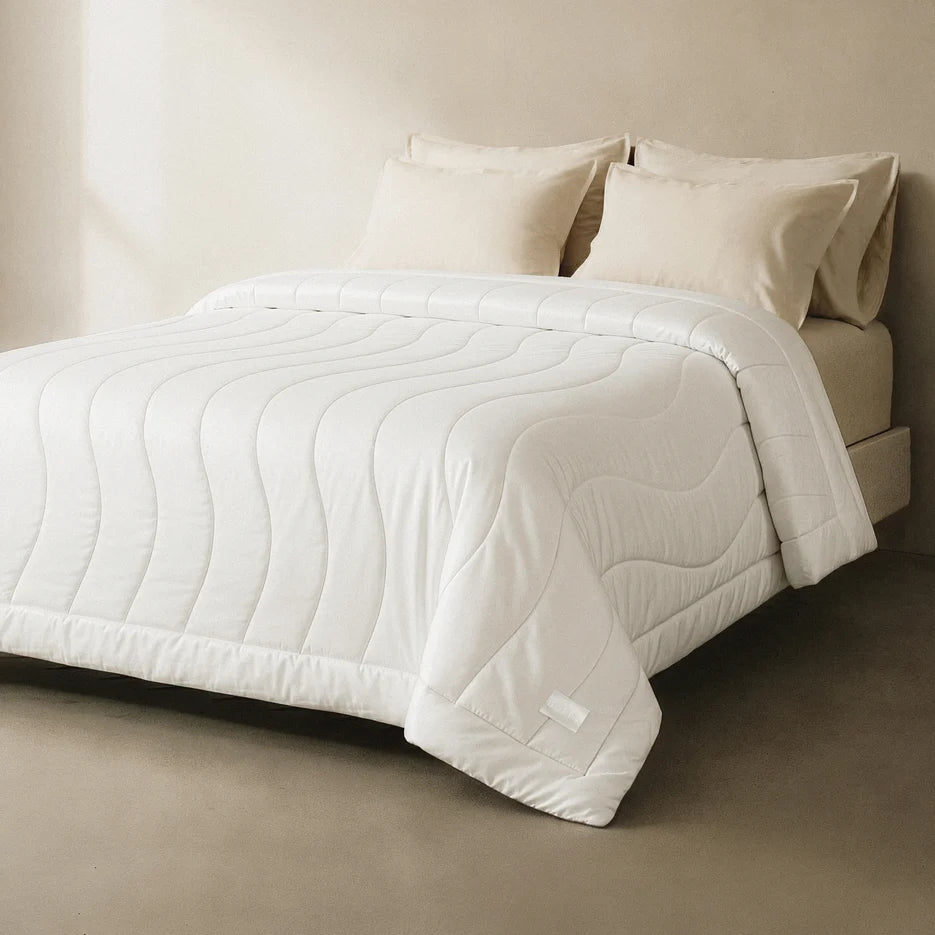
The Buffy Breeze has a TENCEL lyocell shell and fill. Its full/queen size measures 90 by 90 inches, so you can work out the drop on your mattress before buying. This one suits you if you prefer smooth fabric to lofty down.
Buffy recommends a duvet cover and says to spot clean or dry clean the insert when needed. If you choose a heavy cover, you add warmth back on top of the lighter insert.
Slumber Cloud Tencel Cumulus: best for temperature swings
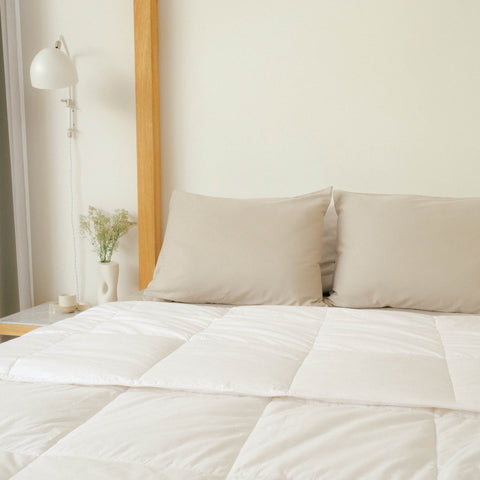
The Tencel Cumulus has lightweight synthetic fill, Tencel fabric and Outlast phase-change material. The phase-change material absorbs and releases some heat as temperatures shift; the Tencel component helps handle moisture. If you go from hot to chilly during the night, that combination may suit you.
That heat-buffering effect has limits. In a hot room, lighter bedding and a cooler room will do more for you than the fabric treatment.
Casper Humidity Fighting Duvet: best for down lovers who feel clammy
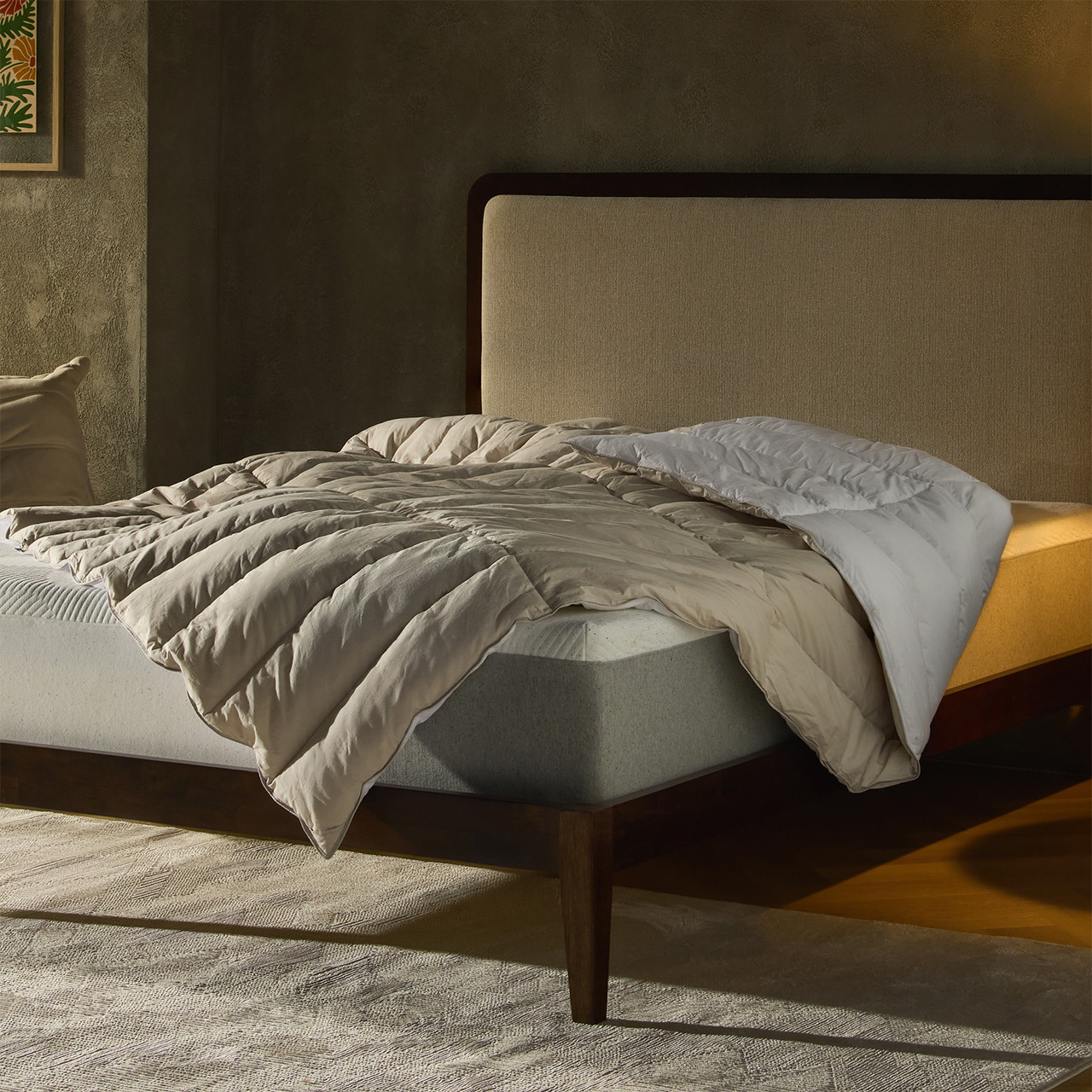
Casper’s Humidity Fighting Duvet has a cotton outer layer, down fill and a merino wool layer. The wool helps with moisture, making this an option if you wake up feeling clammy.
The wool layer adds insulation, so this may feel too warm if you run very hot. It makes more sense when you want some warmth with moisture management. Use a light cover if you treat it as an insert.
What actually keeps a comforter cool?
Less insulation, an airy shell and fabric that handles moisture will make the biggest difference. Even a chilly-feeling surface can leave you hot later if you’re sleeping under dense fill or a heavy cover.
Shell: the layer your skin or duvet cover meets
Cotton percale and linen feel airy, while lyocell tends to feel smoother and helps with moisture. Silk drapes differently, though the fill still determines much of the warmth. A duvet cover adds another layer, so choose a light duvet cover if you use one.
Words like “bamboo,” “eucalyptus” and “cooling” tell you little about warmth on their own. Consider the shell, fill and cover together.
Fill: choose warmth before fluff
A lighter fill means less insulation over your body. Down holds warm air in its loft, while synthetic down alternatives vary widely in weight. Silk and wool have different drape and moisture behavior. Consider the warmth of the finished comforter rather than relying on a “natural” fill label.
If you tend to sleep hot, pick the summer or lightweight warmth option. A plush all-season comforter might look lovely on the bed and still feel too warm at night. Warmy & Tummy’s warmth-level guide explains the labels.
Moisture handling and cooling treatments
Wicking fabric moves moisture away from your skin; absorbent fibers take some up. You can still sweat under either. Phase-change fabric stores and releases heat during a temperature swing, but you’ll still need ventilation or air conditioning in a hot room. A cool-touch surface describes that first moment against your skin.
For heavy night sweats, prioritize a light construction that you can care for easily and bedding layers you can change without remaking the whole bed. If sweats are new, severe or unexplained, speak with a clinician rather than treating bedding as the only fix.
How to choose queen size and warmth
Size the comforter for your mattress depth and the way you share the covers. A queen label doesn’t tell you how far it will hang down the sides, and extra width won’t make thick fill sleep cooler.
Your bed or habit |
Practical choice |
Why |
|---|---|---|
Queen bed, one sleeper, low-profile mattress |
Queen or full/queen with dimensions you like |
Avoid unnecessary bulk while keeping your preferred drape |
Queen bed, two people who tug at covers |
Compare queen and king dimensions |
Added width may give each person more coverage |
Deep mattress or desire for a generous drop |
Compare actual finished width and length, not the size name alone |
“Queen” sizing differs by maker |
Hot sleeper year-round |
Lightweight warmth first, then choose size |
A larger but heavier insert adds insulation along with width |
A cool king comforter can give a shared queen bed more overhang. Measure the mattress and decide how far you want the fabric to hang, then compare finished dimensions. The queen duvet sizing and fit details can help you picture the drop. If one of you sleeps much hotter, separate lighter covers may work better than an oversized insert.
What cooling comforters can and can't do
A cooling comforter can feel less stuffy or damp than a heavy one when it uses lighter fill and handles moisture well. Some fabrics also soften brief temperature swings. None will chill you all night.
In a 2023 study of older adults sleeping in their own bedrooms, researchers found:
"Sleep was most efficient and restful when nighttime ambient temperature ranged between 20 and 25 °C." - Baniassadi et al., PubMed
If a lightweight insert still leaves you hot, your sheet, mattress or bedroom may be part of the problem. Try a breathable cover or a fan before buying another comforter. On the warmest nights, you might prefer a light blanket to a filled insert.
The comfortable choice for your bed
Choose the least insulating comforter that still gives you the covered-up feeling you enjoy. For a queen bed, match the finished dimensions to your mattress and partner, then choose the shell and fill around how hot or damp you get overnight.
Warmy & Tummy lets you choose the warmth and shell if you want premium down on your queen bed. Start with a lighter build and a breathable shell. If that still sounds too warm, choose a thinner non-down option instead.
FAQ
What is the best comforter to stay cool when it's hot?
A lightweight comforter with a breathable shell is the best starting point. Choose the least insulating fill you find comfortable, and swap to a light blanket if even a summer comforter feels too warm.
Do cooling comforters actually work?
They can reduce heat buildup and help manage moisture when their construction is lighter and more breathable than your current bedding. They don't lower the room temperature or provide unlimited cooling all night.
What is the coolest fabric for a comforter?
No fabric wins in every finished comforter. Cotton percale and linen offer an airy feel, while lyocell feels smooth and handles moisture; the fill weight and any duvet cover matter just as much as the shell.
What are the best comforters for people who sweat a lot?
Look for a lightweight comforter with a moisture-managing shell and care instructions you can live with. A breathable cover and easily changed layers are useful when you need to wash bedding often; persistent unexplained night sweats deserve medical advice.