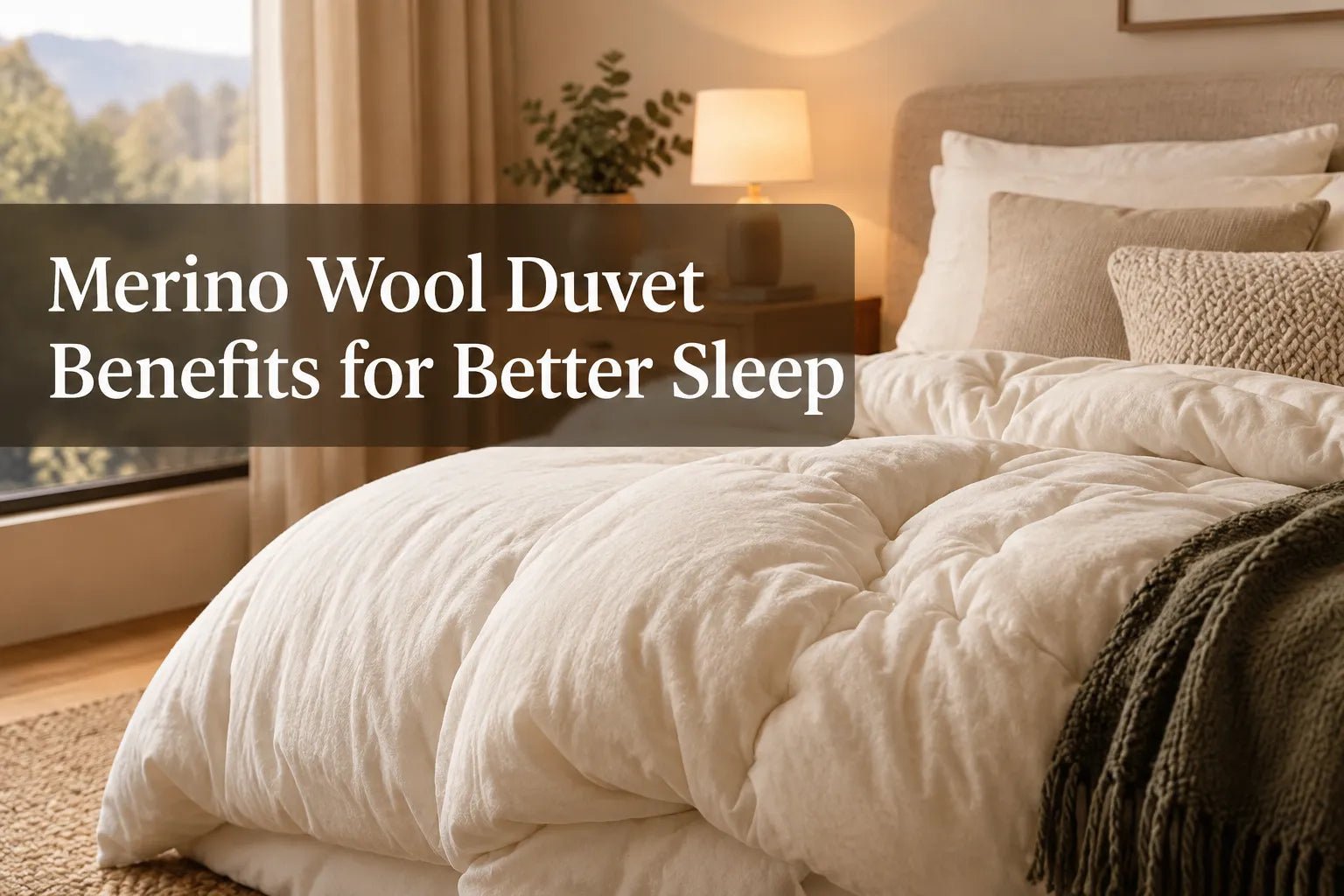

Ever bought a fluffy comforter that looked gorgeous on the bed, then woke up too hot under it? When you compare high end comforter brands, start with what you need at night: a comfortable fill, a shell you like touching, and enough warmth for your room. You'll notice those choices long after you've forgotten the price tag.
What high end comforter brands should tell you
A high-quality comforter comes with useful details: fill type, fill power if it's down, fill weight or warmth designation, shell fiber, stitching, dimensions, and care. “Hotel quality” and “extra fluffy” can't tell you how warm it will feel.
Do you want a light layer that floats over you, or the weight of a thick blanket? Both can look beautiful on a bed. You'll notice the difference when you pull them up to your chin.
Choose the fill for the feeling you want
Down gives you airy loft and warmth without much weight. If you'd rather avoid animal fill, down alternative offers another option, though it may feel heavier at the same warmth. Wool sits flatter on the bed and has more weight against you.
Fill |
How it tends to feel |
Good fit if you want |
Trade-off |
|---|---|---|---|
Goose down |
Lofty and light for its warmth |
A cloudlike, draping comforter |
Needs a suitable shell and proper care |
Down alternative |
Even, springy loft that varies by fiber |
A non-down option |
Can feel heavier at a comparable warmth |
Wool |
Lower loft, more tangible weight |
A flatter profile and natural fiber |
Won't give you the billowy down look |
Fill power isn't the same as fill weight
Fill power describes the volume an ounce of down occupies. Fill weight tells you how much down is inside. Higher fill power can give you the same warmth with less down, but the highest fill-power number doesn't automatically mean the warmest comforter. Compare fill weights among comforters of similar size and construction.
Feathered Friends, for example, offers 700+ and 850+ fill-power comforters, plus separate weights from summer to winter. The fill-power choice changes the loft you get per ounce; the warmth weight helps you choose for your room. If a listing gives you only fill power, ask about fill weight or warmth.
Down versus feathers, and what certifications mean
Down clusters create loft, while feathers have quills and feel firmer. Read the fill composition: a “goose” label doesn't tell you the down percentage. For animal-welfare claims, a named standard tells you more than “ethically sourced.” An organic cotton shell label describes the shell, not the fill.
"There shall be no live-plucking of down and feather of waterfowl." - Textile Exchange, Responsible Down Standard
The Responsible Down Standard sets that requirement for certified down. It doesn't apply to every goose-down comforter. Textile Exchange's official RDS guide explains how certified down is tracked through the supply chain.
What is the most luxurious material for bedding?
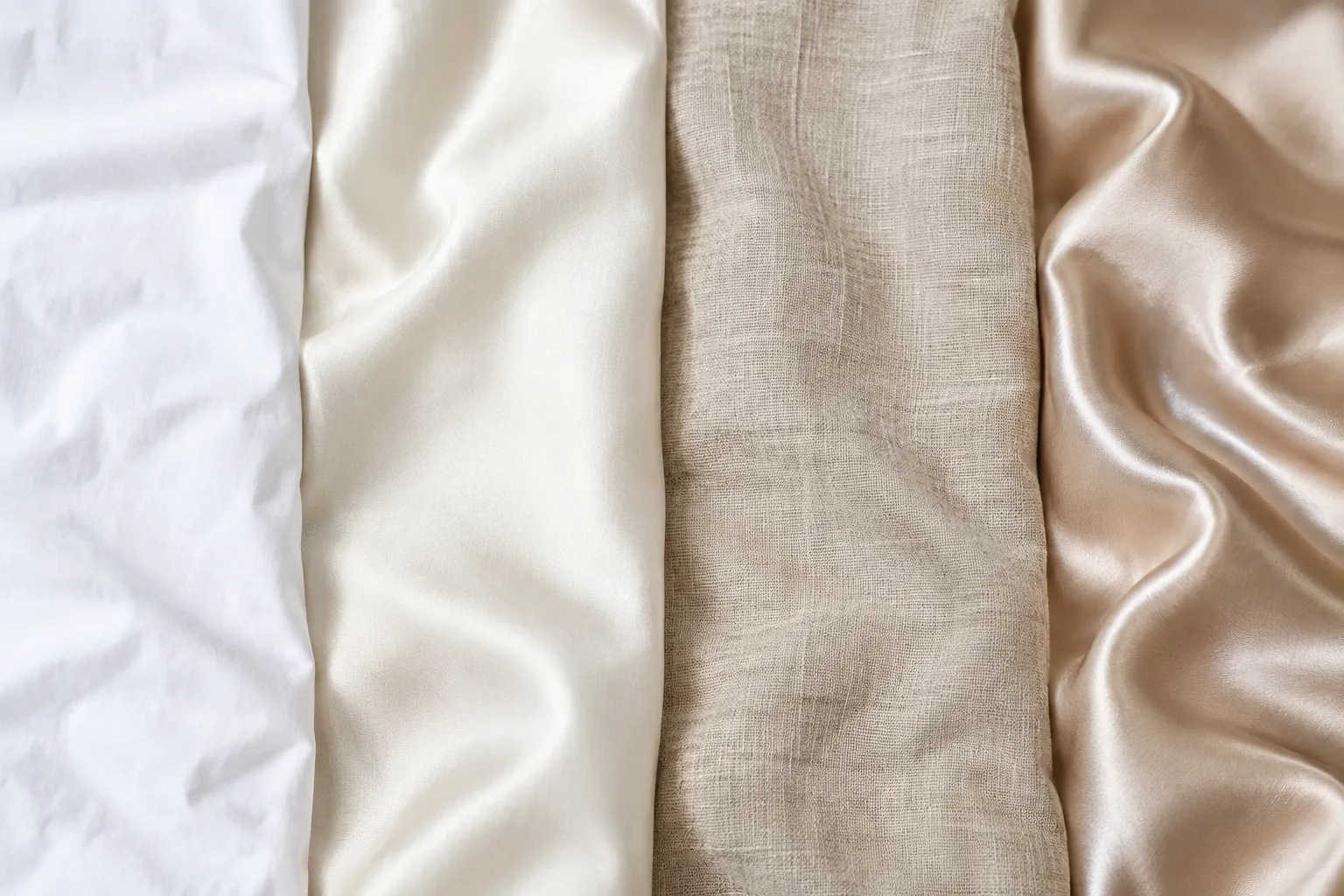
Cotton feels crisp, linen has a relaxed texture, and silk feels fluid against your skin. Your favorite of the three is the luxurious one. The shell also affects a comforter's sound and drape: tightly woven downproof cotton contains fine down, while lighter cotton batiste feels softer and less crisp. Thread count alone can't tell you how the weave feels or whether it holds the fill.
Shell or cover fabric |
Typical feel |
Consider it when |
|---|---|---|
Cotton percale or cambric |
Crisp and structured |
You like a cool, classic hotel-bed touch |
Cotton batiste or sateen |
Light and soft, or smooth with a slight sheen |
You want a gentler hand feel |
Linen |
Textured and relaxed |
You like an unfussy drape and a lived-in look |
Silk |
Smooth and fluid |
Surface feel is your priority and the care suits you |
Lyocell-based cooling blends |
Smooth to the touch |
You prefer a sleek-feeling shell in a warm room |
With a duvet cover, your skin mostly meets the cover rather than the comforter's shell. Without one, you'll feel the shell and need to pay closer attention to its cleaning instructions. Our guide can help you choose a duvet cover that works with your insert.
Look inside: stitching is part of the luxury
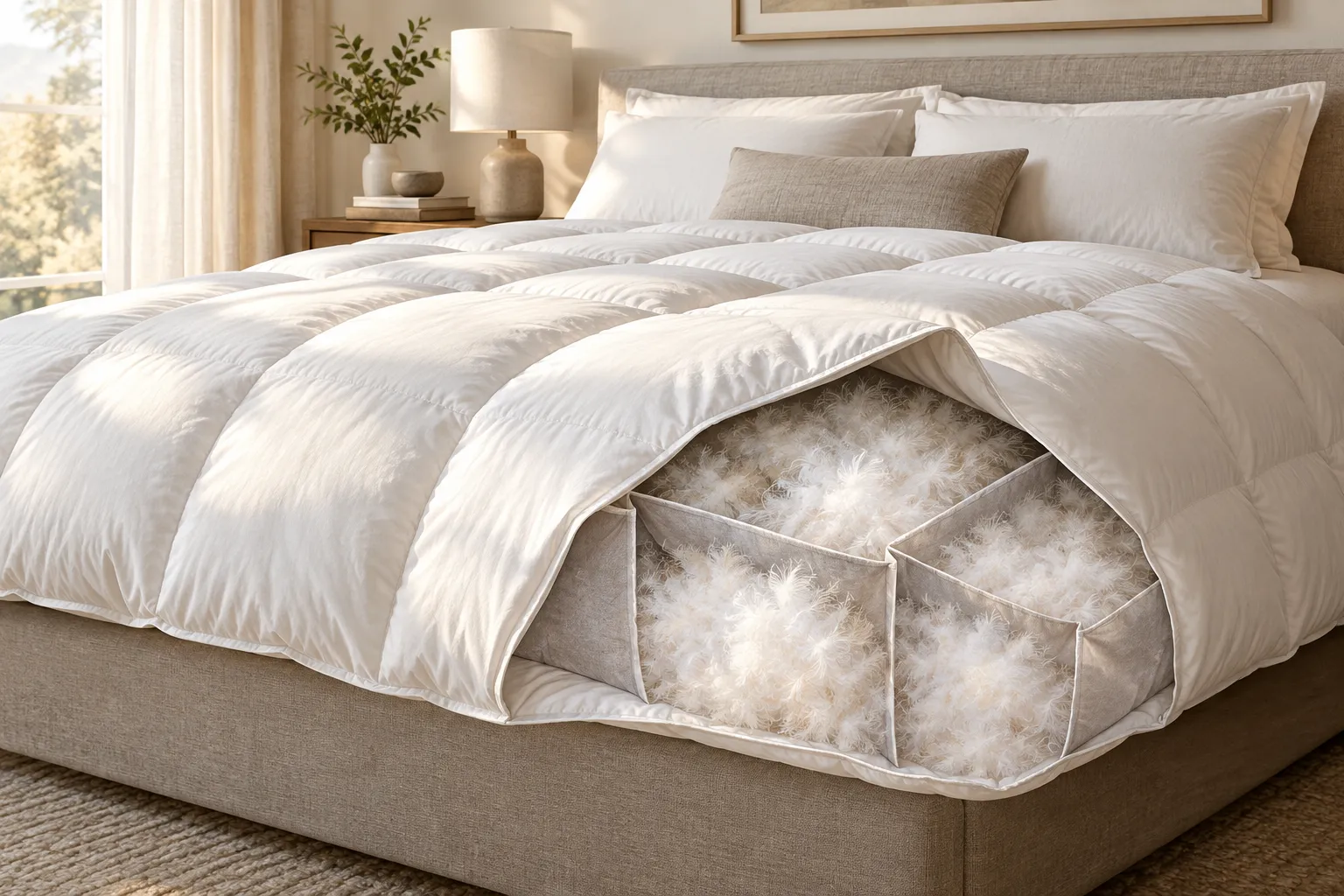
If you want a lofty down comforter, look for baffled-box construction. Fabric walls inside the boxes let the down expand and keep the seams from becoming thin spots. A sewn-through comforter joins its top and bottom shell at each seam. You get a quilted look and a lighter layer, with less loft along the stitching.
In either style, look for fill spread across the bed and secure edge seams. Corner loops or ties help if you plan to use a duvet cover. Once the comforter has had time to expand, its loft should look even, rather than puffy only in the product photo.
Match warmth to your room, not the season on the label
Choose a warmth level that lets you stay tucked in without waking up hot. Your room temperature and your own tendency to sleep warm matter more than the season printed on the label. Sharing the bed or adding a heavy duvet cover can change the feel, too.
Your nights |
Starting point |
Why |
|---|---|---|
You sleep hot or keep the room warm |
Lightweight or summer |
Less fill is easier to live with |
Your room stays fairly steady year-round |
Medium or all-season |
A balanced everyday layer |
You sleep cold or keep the room chilly |
Warm or winter |
More insulation when you need it |
Partners disagree on warmth |
Lighter shared comforter plus an extra throw |
Each person can adjust their own side |
To judge warmth, consider the fill amount alongside loft, construction, and your cover. If you're torn between weights, picture an ordinary night in your room instead of the coldest one all year. Our guide to choosing a comforter warmth level goes into more detail.
Luxury bedding, linens, and more: size the whole bed
Queen and king labels don't guarantee identical measurements across brands. Measure your mattress, including its depth, then work out how much comforter you want hanging over the sides. An oversize option can give two sleepers more coverage; you'll also need a duvet cover that fits it.
Shopping for luxury queen bedding sets or a king comforter set? Read the contents before falling for the styled photo. A comforter set may include shams, while a duvet-cover set may contain no insert at all. Luxury queen sheet sets are a separate choice: the fitted sheet needs to accommodate your mattress depth, and even lovely sheets won't cool down an overfilled comforter. Our duvet insert versus comforter explainer sorts out the labels.
For a luxury queen bedding setup, choose the insert and warmth first, then add a cover and luxury sheets that feel good against your skin. Cotton sateen sheets feel smoother than crisp percale, and decorative pillows and a consistent color palette can dress up a luxury bed without changing its warmth. The same principle works for a king bed. Coordinating colors is easier than fixing a comforter that's too short or too hot.
How to compare luxury comforter brands fairly
Choose among bedding brands by their disclosed materials and the kind of sleep they offer, not the prestige of the name. A specialized down maker, a decorative bedding house, and a customizable bedding shop solve different problems; compare the particular product, not just the logo.
Brand or approach |
What to look at |
Who it may suit |
Limitation to weigh |
|---|---|---|---|
Feathered Friends |
Published down fill-power choices, construction, shell, and warmth weights |
Shoppers focused on detailed down specifications |
Its down-focused selection won't suit someone avoiding down |
Lili Alessandra |
Coordinated decorative bedding collections and layering pieces |
Shoppers building a dressed, designed bed |
A decorative collection isn't a substitute for choosing an insert by warmth |
Warmy & Tummy |
Goose-down comforters with a choice of shell materials and warmth options, plus mix-and-match personalization |
Shoppers who want to tailor the feel and look of one comforter |
More choices mean you'll need to decide on both shell and warmth before ordering |
At Warmy & Tummy, you can pair the shell you like with a warmth option instead of taking a fixed combination. That helps if you love linen's texture but want a different level of warmth from the silk option that caught your eye. Give the exact configuration's dimensions, construction, and care the same attention you'd give any other comforter.
Make the choice you'll still like next winter
Picture your own bedroom while you make a shortlist. The best-looking luxury bed in a photo won't tell you if you'll be comfortable under its comforter at night.
Set your warmth target. Use your normal room conditions and your own tendency to sleep hot or cold.
Pick your feel. Decide between airy down, a non-down fill, or a flatter natural-fiber layer, then choose the shell or cover texture.
Compare the fine print. Look for fill composition, fill power and weight where relevant, construction, exact dimensions, and care instructions.
Plan the rest of the bed. Check whether the listing is an insert, a standalone comforter, or a set, and choose sheets and a cover separately if needed.
Use a duvet cover if you want an easier-to-launder surface between you and the comforter. Follow the specific care label for the insert; our down comforter washing guide offers a useful starting point. Give down room to expand after unpacking rather than judging its loft while compressed.
If you know the shell you want and how warm you sleep, you've got enough to make a sensible choice. Warmy & Tummy's mix-and-match options let you build around those preferences and add a personal touch, rather than settling for a ready-made combination.
FAQ
What is the best brand for comforters?
The best brand is the one that publishes enough detail to match a comforter to your sleep. Compare fill, shell, construction, warmth, dimensions, and care before picking a name. A down specialist suits a different shopper from a brand built around coordinated bedding or custom choices.
What are some luxury comforter brands?
Feathered Friends makes down comforters with published fill-power and warmth choices. Lili Alessandra focuses on decorative bedding collections, while Warmy & Tummy offers customizable goose-down comforter options. Compare the specific product and its intended warmth, not just the brand.