

Still pulling a second blanket over that thin patch of your comforter? A down comforter cared for well can last 15 to 20 years or more, though the loft tells you more than the age. Want a down comforter washable at home? Check the care label before you give up on a flat one; washing and drying it properly may bring back the puff.
How long does a down comforter last?
You can expect about 15 to 20 years or more if you protect the comforter, clean it as directed, and store it dry. Use that cared-for range to plan ahead. Daily wear, trapped moisture, and rough laundering can shorten it.
"When properly cared for, a down comforter can last 15 to 20 years or more." - The Company Store
Down traps warm air when its clusters have room to expand. Once fill escapes or bunches into a few sections, you may feel chilly in a bedroom that used to feel fine. Check for those cold patches before winter sets in.
Is a down comforter washable?
Many down comforters can go in the washing machine. Read your own comforter’s label first, though: the shell and fill may call for professional cleaning or another care method. Silk and special finishes can need different treatment from cotton; DOWNMARK’s down-care guidance also points readers back to the item’s special care instructions.
If the label permits a machine wash, give the comforter plenty of space in the washer. Choose a delicate cycle and mild down-safe detergent, and mend any open seams first. Skip fabric softener. Dry it on the permitted setting until even the corners and thick seams are dry; dryer balls can help break up clumps if tumble drying is allowed. A cramped washer or damp fill can leave flat areas and a musty smell.
Washing won’t fix worn fabric or put escaped down back inside. If yours is clean and dry but still feels thin, use the check below. Warmy & Tummy’s down comforter cleaning instructions explain the washing and drying process in more detail.
Five signs it’s time to replace your down comforter
Spread the comforter on your bed and spend two minutes running your hands across it. Shake it once, then look at the shell and sniff near the seams. A single problem may have a simple fix; several that remain after proper care tell a different story.
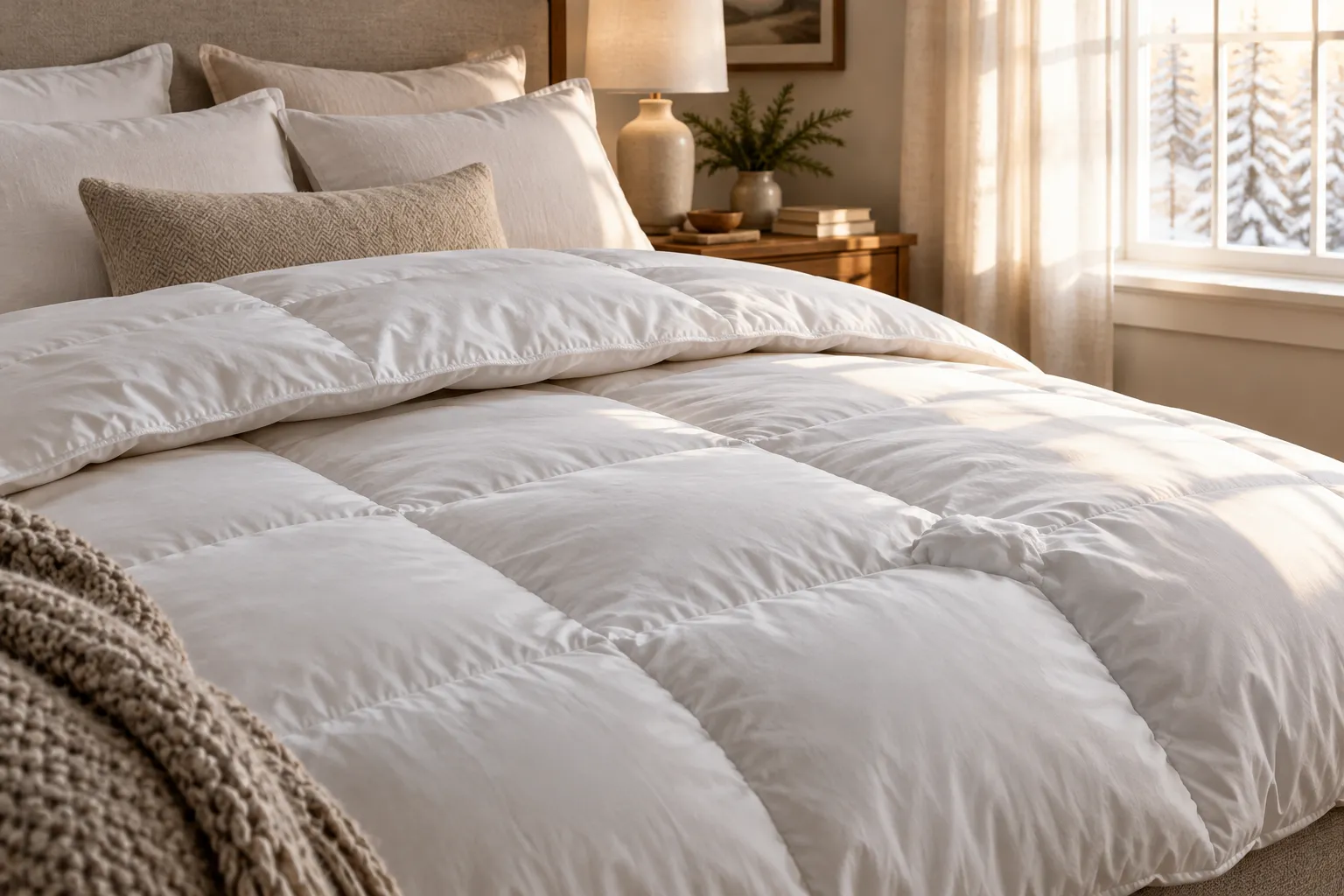
Hold it up to the light. Do you see flat spots where you usually sleep? If a shake leaves those areas thin, you’ll feel the missing insulation.
Press each section with your hands. Hard clumps can form while down is damp, but clumps that stay after a full dry deserve attention.
Smell the fill near a seam. Air the comforter and clean it as directed; if a musty odor stays after it’s completely dry, leave it off the bed.
Look at the fabric and seams. One stray feather isn’t much to worry about; repeated leakage through thinning fabric means you’re losing fill. A small seam opening may still be repairable.
Think about last winter. In the same room with the same bedding, are you colder under this comforter? Persistent thin areas after fluffing may mean you need a fresh insert or a different warmth level.
Can you save it instead?
You can often save a comforter with compressed fill, a washable spill, or a loose seam. Shake it, let it air in a dry spot, and clean it as its label directs. Warmy & Tummy’s duvet insert and fluffing tips can help you settle it evenly in its cover. Let the down expand before you judge it; persistent odor, widespread leakage, or cold zones after care point toward replacement.
What helps a down comforter last longer?
Keep body oils and moisture off the insert, and let the down expand between uses. A few habits help:
Use a duvet cover. You can wash the cover as its label directs and spare the insert some trips through the machine.
Let the bed air after you get up, then give the comforter a gentle shake so the fill doesn’t settle in one place.
Follow the insert’s label when it needs a wash. Leave room in the washer and dryer, and feel the thick sections for dampness before you remake the bed.
For off-season storage, use a breathable bag in a dry spot. Don’t leave the down compressed in a vacuum bag.
That duvet cover does much of the work: it catches daily wear while you reserve washing for the insert when it needs it.
What to look for in a replacement
The best down bedding for you feels comfortable in your bedroom, not only on a product page. If you run hot in summer, try a lighter insert; if you wake up cold, look at warmer fills. Compare shell feel and cover fit, then read the laundering instructions. Home washing is useful only if the label permits it and your machines have enough room.
If cold spots drove you to replace your old comforter, look closely at its construction. Baffle boxes have fabric walls inside that let down expand and keep it evenly distributed. Box stitching divides the fill too, though it lacks those raised inner walls. Secure seams and corner loops also help an insert stay put inside a duvet cover.

Warmy & Tummy’s comforter comparison includes organic cotton, silk, linen, and cooling TENCEL™ across different warmth levels. You can also use its mix-and-match comforter to tailor your bed. Choose a shell you’ll be comfortable caring for, since delicate fabric may need a different routine from everyday cotton. Read the written warranty coverage alongside the care label; a limited warranty doesn’t guarantee how long the fill will last.
What is an organic down comforter?
“Organic” may describe the cotton shell rather than the down. Warmy & Tummy’s Original Organic Down Comforter, for example, has a 100% organic cotton shell and RDS-certified goose down fill. Read the shell and fill descriptions separately, along with that model’s care instructions.
The winter-ready verdict
If a wash your label allows and a full dry restore warmth, keep the comforter under a duvet cover. Still finding cold gaps, leaking fill, or a musty smell? Replace it before winter. Warmy & Tummy gives you shell and warmth choices that suit the way you sleep, so you don’t have to spend another cold season under a failing insert.
FAQ
How do you wash a down comforter without ruining it?
Follow its care label first. If machine washing is allowed, use a roomy washer, gentle setting, and mild down-safe detergent; dry it completely on the permitted setting and break up clumps as it dries.
Is there a machine washable down comforter available?
Yes, some down comforters are machine washable. Check the specific insert’s care label before buying, since the shell material and construction can change the instructions.
What to know when buying a down comforter?
Start with your preferred warmth, then compare shell fabric, size, laundering instructions, and written warranty terms. If you want to wash it at home, make sure the label permits that and your machines are large enough.