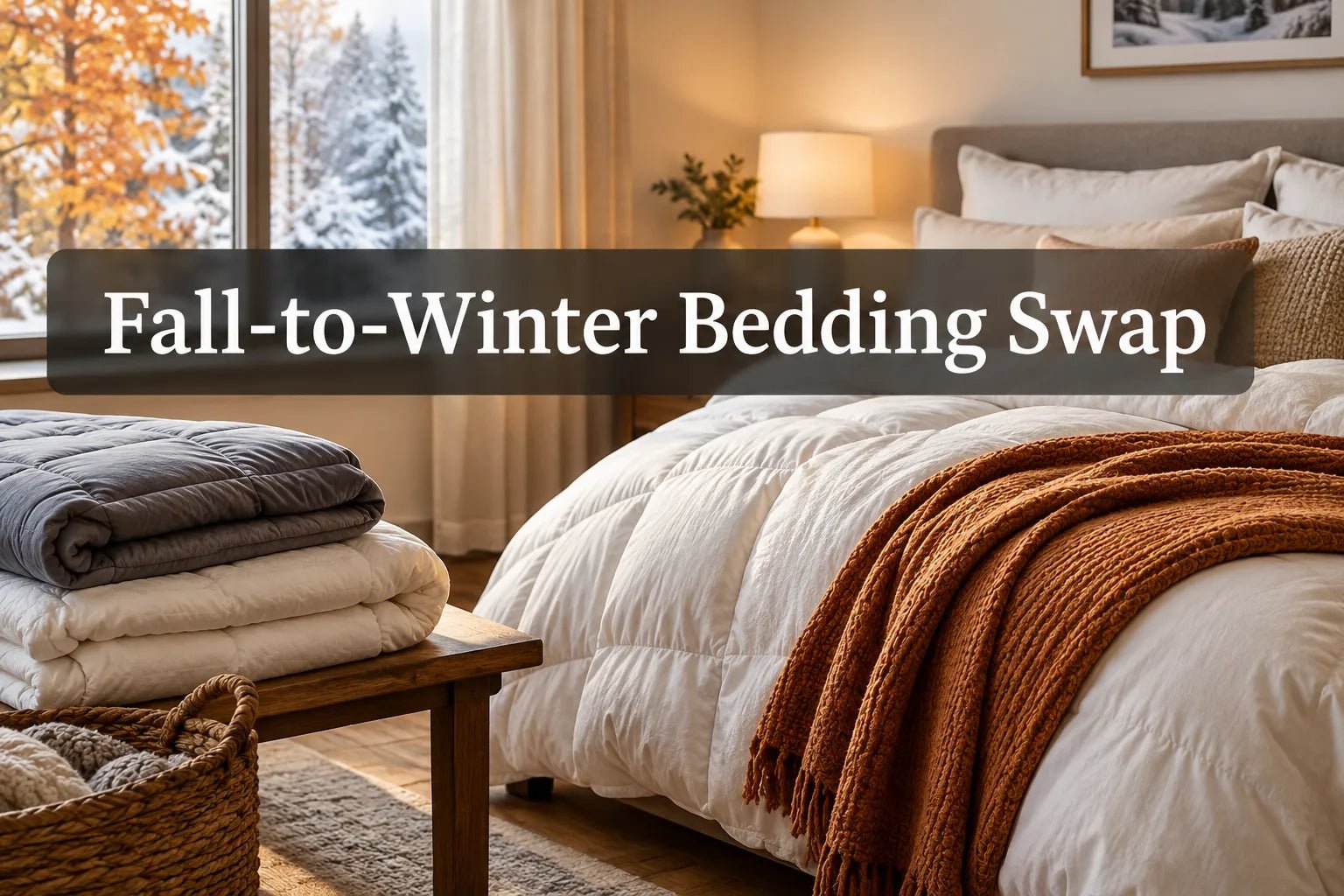

Ever kicked off a heavy duvet on a freezing night, then pulled it back up when you got cold? The best bedding for menopause in winter is easy to rearrange: a breathable sheet against your skin, with a light comforter you can push aside during a hot flash. You'll still have the sheet over you while you cool down. Bedding won't stop the flash, but you won't be stuck under a sweaty duvet.
Why do hot flashes feel worse under winter bedding?
Winter bedding can hold heat and moisture close to your skin during a nighttime hot flash. With flannel sheets, a thick comforter, and the heat on, it's hard to find a comfortable layer once you've started sweating.
"Hot flashes and night sweats occur in up to 80% of women during menopause and last a mean of 7–10 years." - The Menopause Society
During perimenopause and menopause, changes in estrogen affect your body's temperature regulation. You can sweat through a flash and then feel cold against damp sheets. In winter, the trick is having a cover you can put back on without going straight from too hot to too cold. The National Institute on Aging explains how night sweats disrupt sleep.
Best bedding for menopause in winter
Start with a breathable sheet set and a light comforter. Keep the top sheet on the bed so you still have a cover when you push the comforter aside.
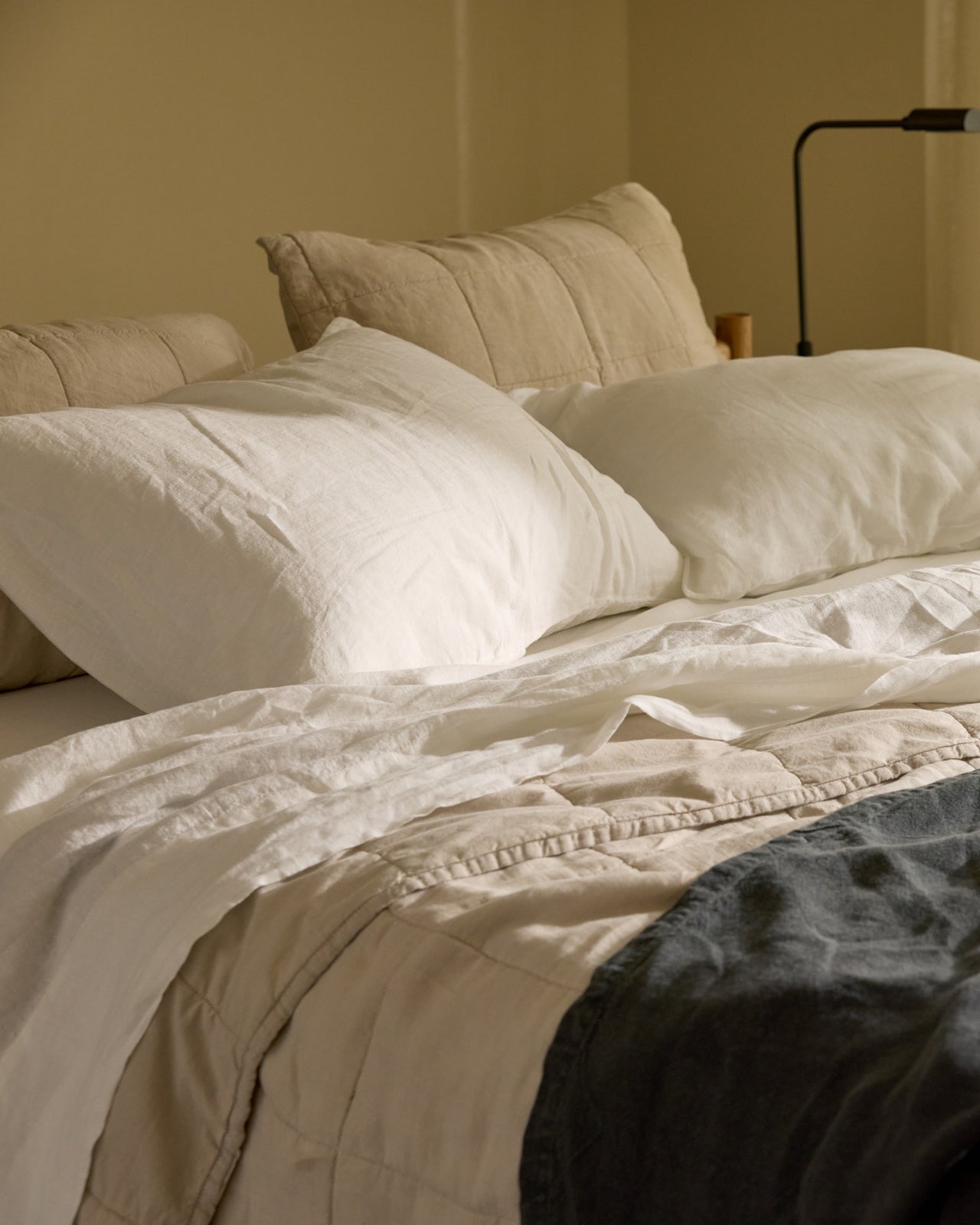
Choose sheets by fabric and feel, not a “cooling” label
If you wake up clammy, start with the fitted sheet and pillowcase. Breathable fabrics and moisture-wicking sheets help sweat spread and dry. That matters more at 3 a.m. than how cool the fabric felt when you got into bed.
Sheet fabric |
What it feels like |
Where it fits in a winter bed |
|---|---|---|
Tencel lyocell |
Smooth and fluid, with good moisture management |
A good choice if damp sheets bother you most |
Linen |
Airy and textured, softening with use |
A good choice if you want airflow without a slippery feel |
Organic cotton |
Familiar, soft, and breathable |
A good choice if you prefer a crisp, simple sheet; an open weave feels less enclosing than dense fabric |
One customer said she'd bought plenty of “cooling” products and still woke up sweaty. If that sounds familiar, focus on covers you can move aside or change from bed, rather than another promise to keep you cool all night.
Should you avoid bamboo sheets?
You don't have to rule out bamboo sheets. Many use bamboo viscose, while Tencel refers to a type of lyocell. The word “bamboo” won't tell you how the finished sheet handles sweat, so look at the fiber and weave before paying extra for cooling effects.
For hot sleepers, sheets that dry quickly and allow airflow are a more practical bet than an instant-cooling claim. A sheet needs to feel comfortable after the first cool touch wears off, especially in a winter sleep environment.
Use a lighter comforter, even when it's cold outside
The best blanket for menopause is warm enough between flashes but easy to kick off. If you like down's loft, try a lighter fill with a breathable shell or duvet cover. On a colder night, add a layer you can remove without disturbing the rest of the bed.
Warmy & Tummy's European Linen goose down comforter has a shell of 70% organic cotton and 30% linen. It comes in Light, All Season, and Ultra Warm. For a bed you can adjust during a flash, start with Light. Even a light down comforter holds warmth, so plan to pull it aside when you get hot.
Keep a top sheet within reach
When a flash hits, push the comforter down and stay under your top sheet. Pull it back up once you cool off; the bed stays made.
Tuck the sheet loosely or leave its sides free. Keep a dry sheet nearby if you often wake up cold against damp bedding.
How to set up the bed when one partner runs hot
Give each partner their own top layer. You can share a fitted sheet while the cooler sleeper uses a comforter and the hotter sleeper uses a top sheet with a lightweight comforter or blanket.
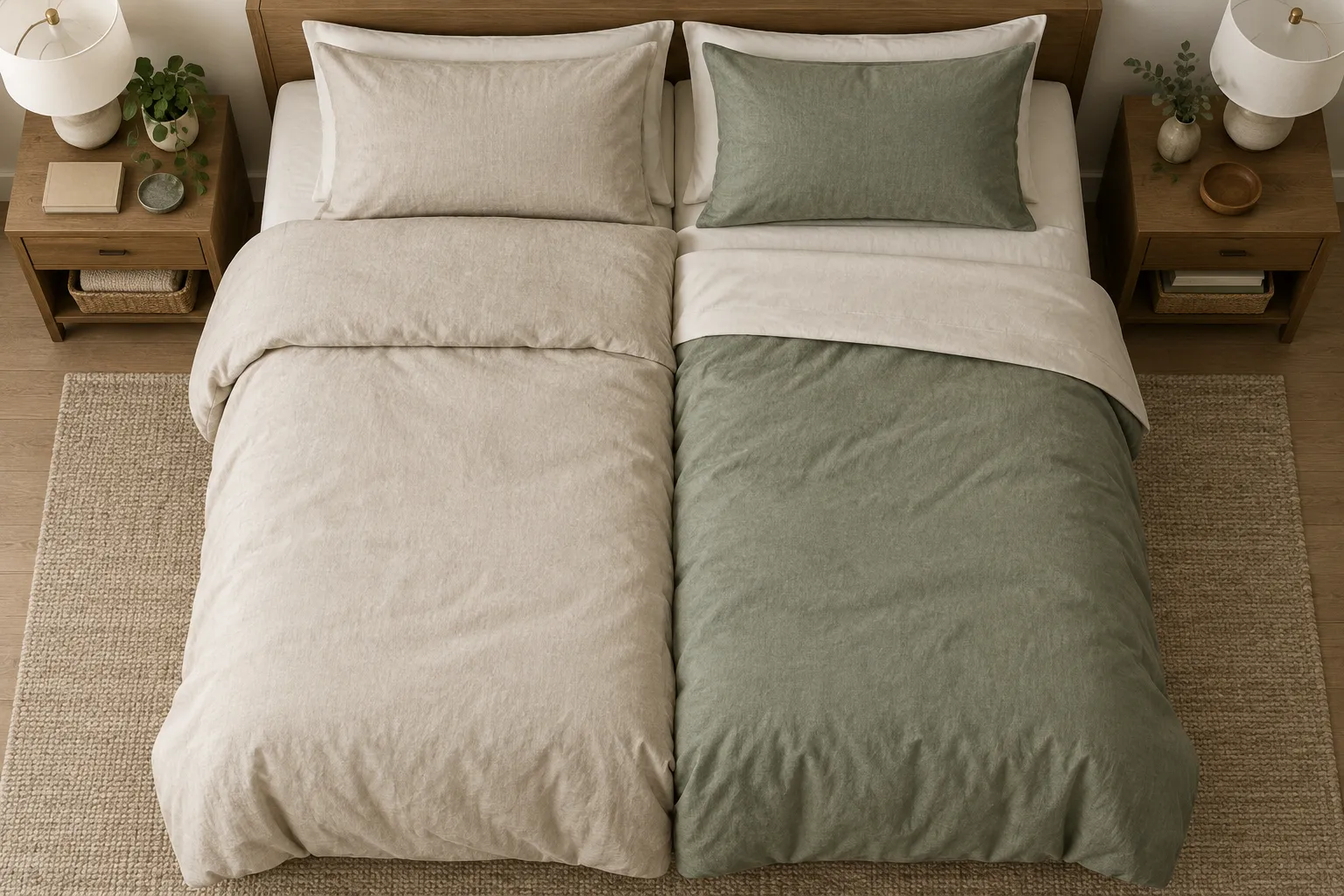
That way, neither of you has to tug the same duvet back and forth. If you want the bed to look tidy during the day, lay the covers side by side under a coverlet, then take it off at bedtime if it's too warm.
What should you do when a night sweat wakes you up?
Push the comforter away first, then stay under the top sheet while your skin cools. Change a wet sleep shirt or sheet before the damp fabric makes you cold.
Keep a spare pillowcase and dry sleep shirt by the bed. A cooler room and lighter sleepwear may help, but you don't need to shiver to sleep. Arrange your covers so you can change layers without turning on the lights at 3 a.m.
When bedding isn't enough
Bedding can help with heat and dampness, but it can't treat menopause or stop night sweats. If yours are severe, frequent, new, or disrupting your sleep, talk to a doctor. Night sweats can have causes besides menopause.
Tonight, leave the top sheet on and fold your heavy comforter toward the foot of the bed. If you decide you need a lighter one, Warmy & Tummy's mix-and-match comforter option lets you choose the warmth that suits you. Keep that top sheet, though. It's what lets you stay covered while the comforter is off.
FAQ
How to sleep better during menopause?
Make the bed easy to adjust: use breathable sheets, a light comforter, and a top sheet you can keep on when you remove the comforter. If night sweats keep disrupting sleep, talk to a doctor; changing bedding can improve comfort but won't treat the underlying symptoms.
What material is good for menopause?
Tencel lyocell, linen, and breathable organic cotton are sensible sheet choices. Pick the texture you enjoy, then keep the covers light and removable so you can respond quickly to a hot flash.
How can I stop night sweats?
Bedding can't stop night sweats, though lighter layers and a dry spare sheet can make them easier to manage. If sweats are severe, frequent, or new, a doctor can help you look at possible causes and treatment options.
Why do I keep waking up at 3am drenched in sweat?
A nighttime hot flash may be one reason, but heavy bedding can also trap heat and moisture, and night sweats can have other causes. If this keeps happening, talk to a doctor rather than relying on bedding alone.