

Ever wake up too warm under a duvet you love the look of? An organic linen duvet cover can feel airier against your skin. If the insert underneath is heavy, you'll still need a lighter fill or warmth level to sleep cooler. A linen duvet insert is worth considering if you like linen on the filled layer itself.
Is an organic linen duvet worth it?
The extra cost makes sense if you like a relaxed, slightly rumpled bed and fabric that softens with washing. Sweating under a thick insert? Spend on a lighter one before replacing the cover, since the fill makes a bigger difference to warmth.
“Organic linen duvet” might mean a removable cover, a filled insert with a linen shell, or both sold together. The contents and certification details should tell you which piece the claim describes.
Linen duvet insert vs. linen duvet cover: what's the difference?
Your insert supplies most of the warmth and loft. The removable cover wraps around it and touches your skin. A linen-shelled insert may still contain down, wool or another filling.
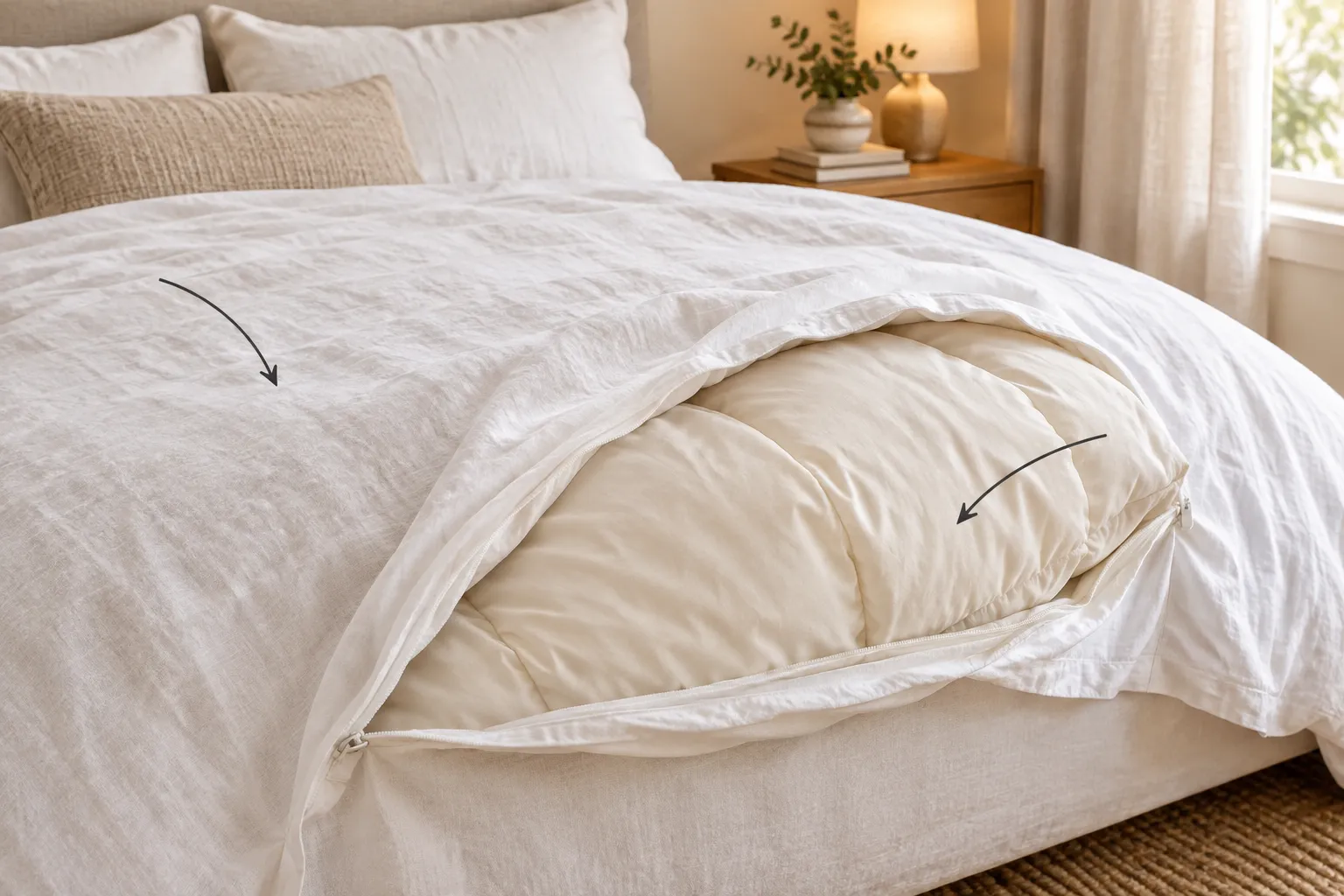
What you're buying |
What linen does |
What matters just as much |
|---|---|---|
Pure linen duvet cover |
Adds texture, an airy surface and a relaxed drape |
Insert weight, fit and cover construction |
Linen-shell duvet insert |
Provides a linen outer fabric around the fill |
Fill material, quantity and warmth rating |
Linen duvet set |
Usually groups coordinating bedding pieces |
Exact contents: a set may not include an insert |
If a listing says only “linen duvet,” look for a filling in the contents. You might be buying a cover alone, even if the description calls it organic. The certification on that cover says nothing about the insert.
How does linen actually feel and sleep?
Linen feels airy and textured, but a cool night's sleep depends on what's inside the duvet too. Linen comes from flax; weave, fabric weight and washing all affect the feel of the finished cover. The insert provides most of the insulation.
Breathability and temperature
Linen lets air move through the cover and can feel pleasant against your skin in a warm room. If the filling holds too much heat, a new cover won't solve the whole problem. Pick an insert warmth level you can sleep under, then choose the fabric you'd like to touch.
You can keep the same linen cover through the seasons: pair it with a light insert on mild nights and a warmer one when the room gets cold.
Texture, wrinkles and durability
Expect visible texture and creases. Prewashed linen may feel softer on day one, and the fabric often relaxes after laundering. If you want a sleek bed straight from the package, you may prefer cotton sateen.
Linen's strong fibers can stand up well to use. You'll also want sound seams and a closure that holds, since those details take wear too. When the bed needs freshening up, a removable cover is easier to wash than a filled duvet.
Linen vs. cotton: which duvet setup should you buy?
Linen suits you if you love airy texture and a casual look. Cotton percale feels crisper and smoother, while sateen drapes more fluidly and may feel a little warmer. You'll still need an insert suited to your bedroom temperature.
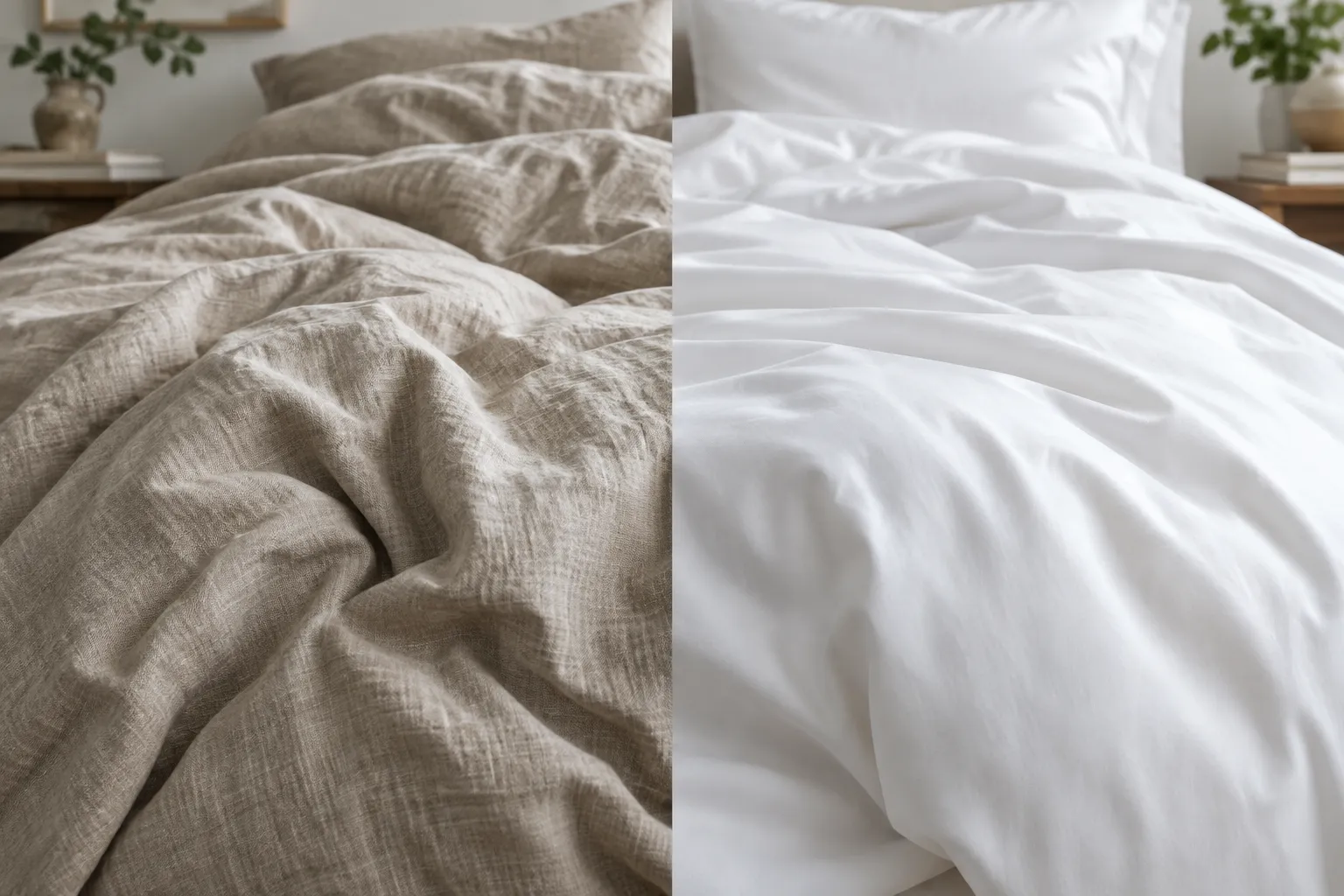
Surface fabric |
Feel and look |
Likely tradeoff |
Best fit |
|---|---|---|---|
Linen |
Textured, relaxed, visibly creased |
Higher price and a less smooth initial feel |
You like lived-in style and don't mind wrinkles |
Cotton percale |
Crisp, matte and smoother |
Can wrinkle and may feel less drapey |
You prefer a fresh, hotel-like surface |
Cotton sateen |
Smooth and fluid |
Can feel warmer than percale |
You want softness and a neater drape |
If you like your current insert, you can try linen by changing only the cover. If it runs hot, a lighter insert is the more useful purchase.
How to choose an organic linen duvet that you'll keep using
Choose the insert's warmth for your room and your sleep temperature, then find a cover that feels good and fits. Even the “best linen duvet” label tells you little if the seller doesn't name the filling.
Check fill and warmth before the shell
The fill determines most of the warmth. Compare the warmth level and material, whether you're considering down, wool or another fill. If you run hot, a linen shell won't offset winter-weight filling.
A linen-shell insert isn't necessarily a linen-filled quilt. When a product names only the shell as linen, it uses another material inside. You need to know what that material is before choosing a warmth level.
Read organic claims precisely
“Natural linen,” “European flax” and “organic” describe different things. Read the named certification to see if it covers the fiber, fabric or finished item. OEKO-TEX STANDARD 100 tests for harmful substances; it doesn't certify organic farming. The cover's certification may not cover the fill.
"Every thread, button and accessory have been tested against a list of over 1,000 harmful substances" - OEKO-TEX STANDARD 100
Get the right cover size and set contents
For a king-size linen duvet cover, compare its width and length with your insert. “King” alone isn't a fit guarantee. An organic linen duvet cover in king size and a king-size linen duvet set may come with different pieces, so read the contents for pillowcases, sheets or an insert. Internal ties or loops help keep the filling in place.
The best linen duvet sets contain pieces you'll use. A bundle doesn't guarantee better fabric. Thread count alone won't tell you how linen feels either; fabric weight and finishing make a difference. If all you want is a new feel against your skin, buy the cover and save the rest for the insert.
Plan for the laundry
Launder the cover according to its label and follow the insert's own care instructions. Linen wrinkles, and heat or rough handling can change how the fabric looks and fits. A pressed finish takes work if that's the look you want.
The verdict: choose the piece that fixes your sleep problem
An organic linen duvet cover is a good buy if you like texture, an airier surface and a relaxed look. A linen duvet insert makes sense when your filled layer needs replacing too. Pay attention to the fill and warmth, since that's what you'll sleep under.
If your bed feels too warm, start with the insert. Warmy & Tummy offers comforters in different shell materials and warmth options, so you can choose for your sleep temperature and add a linen cover for the feel. You needn't buy a full set to fix a too-warm bed.
FAQ
Is there such a thing as organic linen?
Yes. Linen is made from flax, and flax fiber can be grown and processed under an organic certification. A product described only as “natural” or “European” linen isn't necessarily certified organic; the claim should identify which part of the bedding it covers.
What is the least toxic duvet?
There isn't one universally least-toxic duvet based on shell material alone. Look at the materials and any relevant testing or certification for the finished product; a linen cover doesn't establish what's in the insert. OEKO-TEX STANDARD 100 addresses tested substances, while an organic claim concerns how qualifying materials are produced.
What is the best organic linen duvet cover?
The best one fits your insert, identifies its organic certification clearly and has a texture you're happy to sleep against. Compare fiber content, closure, internal ties and washing directions before choosing by color or set name.
Do dust mites live in duvets?
They can live in bedding; linen isn't a dust-mite-proof material. A removable, washable cover makes regular cleaning easier, but choosing a linen shell alone isn't a substitute for managing allergens throughout the bed.