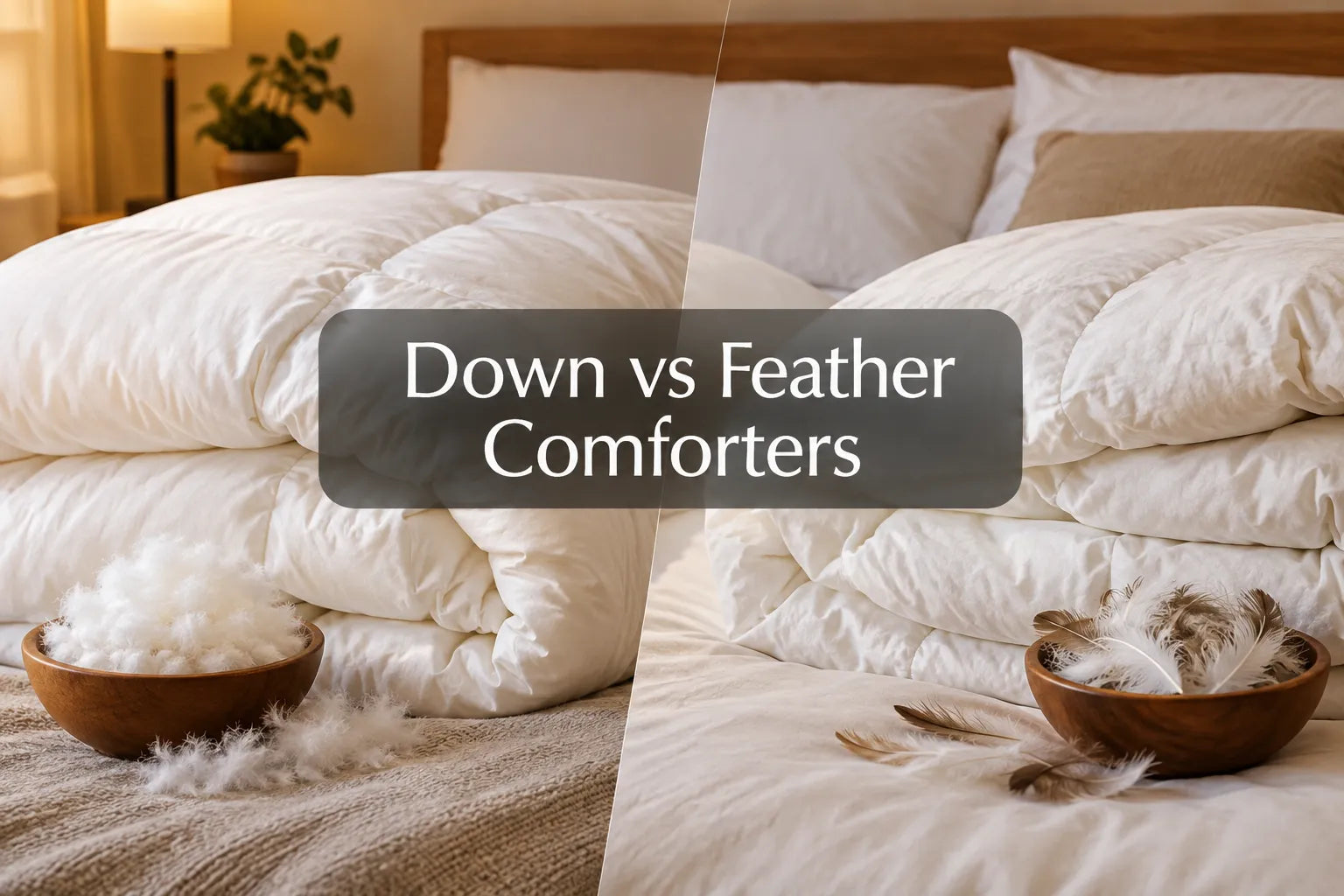


Woke up stuffy and started eyeing your down comforter? Hypoallergenic bed sets may sound reassuring, but that word doesn't guarantee an allergy-free bed. With down, ask how the fill was cleaned, whether the shell holds it in, and how you'll wash the layers you sleep against.
Your comforter may not be the culprit. Dust mites and their waste can be present elsewhere in the bedroom, and some people do react to feathers or down. If you have a diagnosed allergy or persistent symptoms, talk with your doctor or allergist rather than trying to identify the trigger from a product label.
What do hypoallergenic bed sets actually promise?
“Hypoallergenic” means the maker intends the product to be less likely to cause an allergic reaction. You can still react to it. The word alone tells you little about fill cleaning, the shell's weave, or how you'll care for the bed.
Look at what's included. One “set” contains a duvet cover and shams; another includes sheets and a comforter. A label on the cover doesn't certify the insert inside it. A fabric certification about certain substances doesn't establish dust-mite barrier performance or safety for someone with a feather allergy.
Is down the problem, or dust mites?
You can be sensitive to down or feathers, but a stuffy morning doesn't identify the source. Dust mites and their allergens can collect in bedding, particularly where skin flakes accumulate. Your pillows, mattress, and sheets deserve attention alongside the comforter.
Down washing and rinsing can remove dirt and residues from the fill. That's useful information to have when you're shopping, alongside the care instructions for the cover. Even clean fill and a well-made shell can't guarantee that you won't react.
If you know you're allergic to feathers, don't treat a “hypoallergenic down” label as permission to use them. Ask your clinician what materials are appropriate for your own allergy history.
How to choose hypoallergenic bed sets with down
Think about the whole bed when you shop for a comforter. Ask about fill processing, inspect the shell, and find a removable cover you'll have time to wash.
Part of the bed |
What to look for |
What the claim doesn't establish |
|---|---|---|
Down insert |
Stated washing or cleaning process for the fill, plus clear fill composition |
That nobody can react to down |
Comforter shell |
Closely woven, down-proof fabric and sound seams |
That an ordinary shell is a certified dust-mite barrier |
Duvet cover and sheets |
Removable layers with care instructions you can follow regularly |
That a fabric name alone prevents allergens |
Pillow and mattress |
Fully enclosed allergen-barrier covers if dust mites are the concern |
That a decorative pillowcase protects the fill |
Ask what happened to the fill
If a maker calls its down “cleaned,” look for a named process or test rather than “pure” on the tag. Washing and rinsing can remove dust and debris from the fill. Textile safety labels and fill-cleanliness tests measure different things, so pay attention to which component each claim covers.
You may see an oxygen number or a turbidity result in a fill-cleanliness report. Oxygen number measures organic residue, so lower is cleaner; turbidity measures dust and residue, so higher is cleaner. IDFL describes industry criteria for a hypoallergenic down claim as an oxygen number no greater than 4.8 and turbidity of at least 500 mm. A result within those criteria can't guarantee that you won't react.
The Responsible Down Standard covers animal welfare and supply-chain verification. It doesn't test allergen exposure. Fill treatment can vary across a brand's range, so a cleaning claim on one item doesn't establish how another was processed.
Check the shell and the actual barrier
A tightly woven, down-proof shell helps keep down inside the insert. For dust-mite protection on pillows and mattresses, you'd use zippered allergen-barrier encasements; an ordinary comforter shell doesn't necessarily serve that purpose. Pay attention to the whole bed if mites concern you.
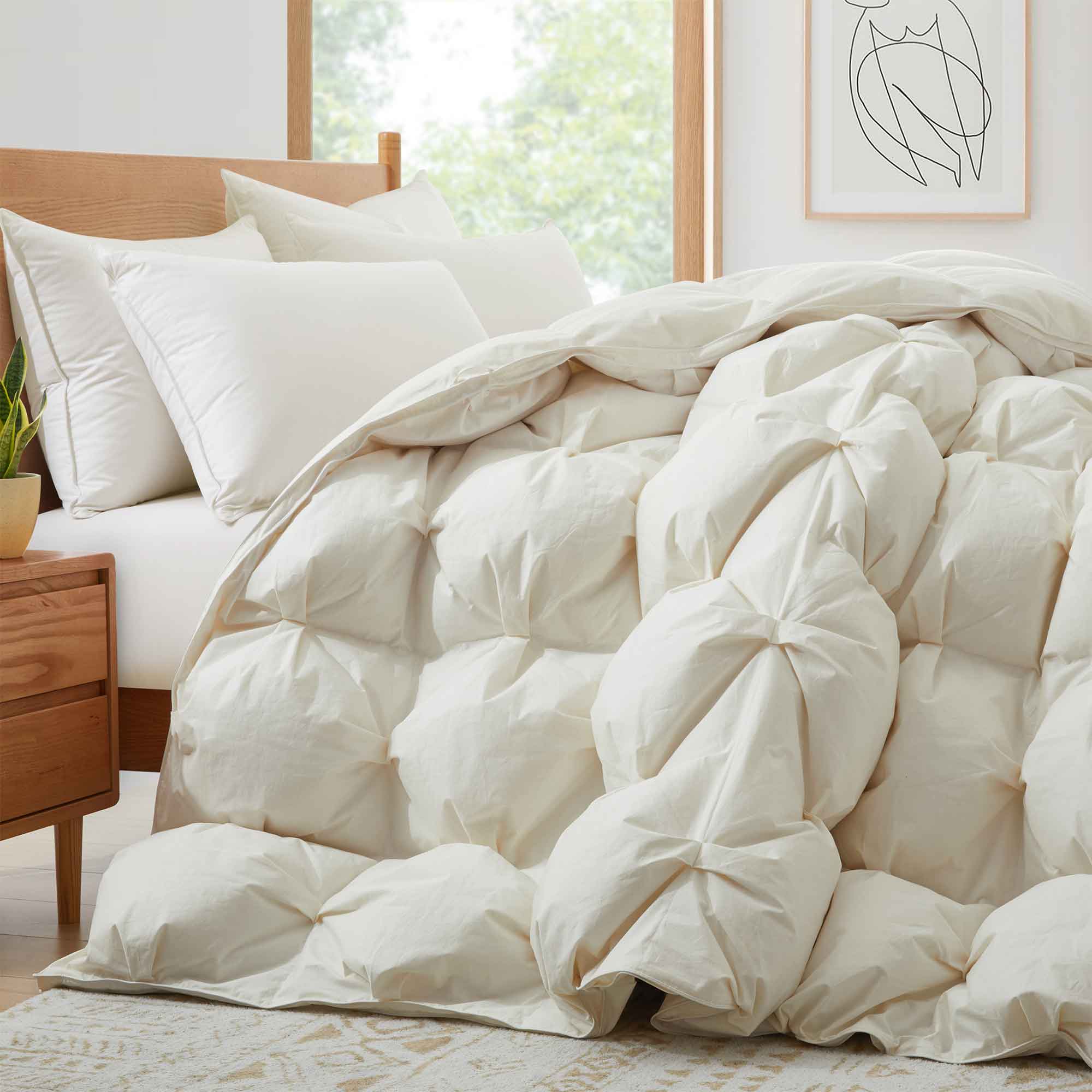
You might prefer the feel of cotton, linen, silk, or a performance fabric. Choose the texture and warmth you enjoy, but don't assume the fiber name tells you how tightly the shell is woven or how well it blocks allergens.
Put washable layers between you and the insert
You can launder a removable duvet cover more readily than a bulky down insert. Pick sheets and pillowcases you can wash on a regular schedule, too. If a set's care instructions don't fit your routine, you may struggle to keep it clean.
Read each piece's care label. The comforter inside a washable cover may need a different water temperature, cycle, or dryer setting.
Down or down alternative: which is better for allergies?
There's no single fill that suits everyone with allergies. If you have a confirmed feather allergy, a feather-free option may be the clearer choice. If dust mites concern you, cleaning and barrier covers matter with either fill.
Choice |
Why you might choose it |
Trade-off to weigh |
|---|---|---|
Cleaned down in a down-proof shell |
You like down's feel and can protect it with a removable cover |
“Hypoallergenic” doesn't rule out a personal reaction; the insert may need special care |
Down alternative |
You want to avoid feather or down fill, or prefer a particular washable construction |
Synthetic fill alone doesn't make the rest of the bed dust-mite-free |
If you like the feel of down, don't let a competing label make the decision for you. Your known sensitivities and the insert's care instructions give you more to go on.
How do you keep a down bed fresher?
Start with sheets and pillowcases, which you can wash more often than a full down comforter. A removable duvet cover gives you another layer to launder without cleaning the insert every time. Follow each item's care label.
"Wash sheets and blankets weekly in water at least 130°F to kill dust mites." - Asthma and Allergy Foundation of America
Strip and launder sheets and pillowcases regularly; wash the duvet cover on a schedule you can sustain.
If dust mites are the issue, use suitable zippered covers on pillows and the mattress, and keep those covers intact when changing linens.
Clean the down insert only by its own care instructions, then dry it thoroughly before putting the cover back on.
The hot-wash advice for sheets may damage a silk cover or down insert if its care label calls for a different method. Keep the outer layers in your usual laundry rotation and clean the insert as directed.
Where Warmy & Tummy fits
Warmy & Tummy sells goose down comforters and duvet covers. The bamboo-rayon cover set comes with matching shams, while inserts are sold separately. Its listing says to wash the cover separately from the comforter according to the product label. This gives you a removable layer, though it's not an allergen-proof encasement, and the cover listing makes no claim about down-fill cleaning.
A comfortable choice starts with the details
If you love down, look for a specific fill-cleaning claim and a shell that keeps the fill in place. Add a cover you can launder. Warmy & Tummy's comforters and removable covers let you choose a texture you like, but let the product details and care labels guide your choice.
FAQ
What is hypoallergenic bedding?
It's bedding described as less likely to cause an allergic reaction, not bedding guaranteed to be free of triggers. The useful details are the fill, fabric construction, cleaning information, and care instructions.
What are some allergy-friendly duvets available?
Options include cleaned-down inserts with down-proof shells and removable covers, as well as feather-free down-alternative inserts. Choose according to your specific sensitivities and the care instructions; neither option is allergy-proof.
What is the most hypoallergenic duvet?
There isn't one duvet that works for every person. A feather-free insert may suit someone avoiding down, while a person focused on dust mites should prioritize washable layers and appropriate barrier covers.
Can dust mites live in duvets?
Dust mites can be present in bedding, including duvets; the material name alone doesn't keep them out. Wash removable layers as directed and consider allergen-barrier covers for pillows and the mattress if dust mites are your concern.