
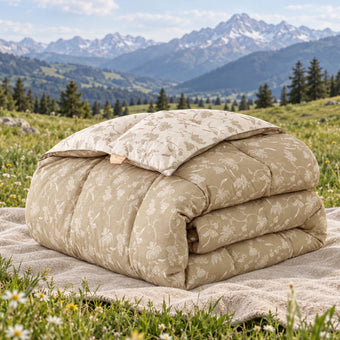


Ever pulled a comforter over your shoulders and felt a pointy quill through the fabric? A down comforter with feathers can feel cozy, but the mix decides how light, lofty and smooth it feels. For warmth without much weight, look for a higher share of down clusters. If you like a heavier blanket and a lower upfront price, a feather-rich blend may suit you.
The name on the front of the package won't tell you enough. Turn it over and find the fill composition: “goose feather” and “goose down” describe different parts of the bird, with different effects on your sleep.
What is a down comforter with feathers?
A down comforter with feathers contains both fluffy down clusters and flat feathers. Down grows beneath a goose's or duck's outer feathers. Its branching structure traps air without a hard central shaft, giving the comforter loft and insulation with relatively little weight. Outer feathers have a firm quill and a flatter shape, so they add weight but offer less warmth per ounce.
Feathers have their place. A blend can give a comforter a heavier drape and keep its price below a comparable down-rich option. If a label says “feather and down,” don't assume the two make up equal shares. The percentages, shell and stitching tell you more than a soft-sounding name.
Plenty of cheaper comforters mix in feathers, sometimes as the majority of the fill. You may enjoy the heavier feel. The surprise comes when you were expecting the lightness of mostly down.
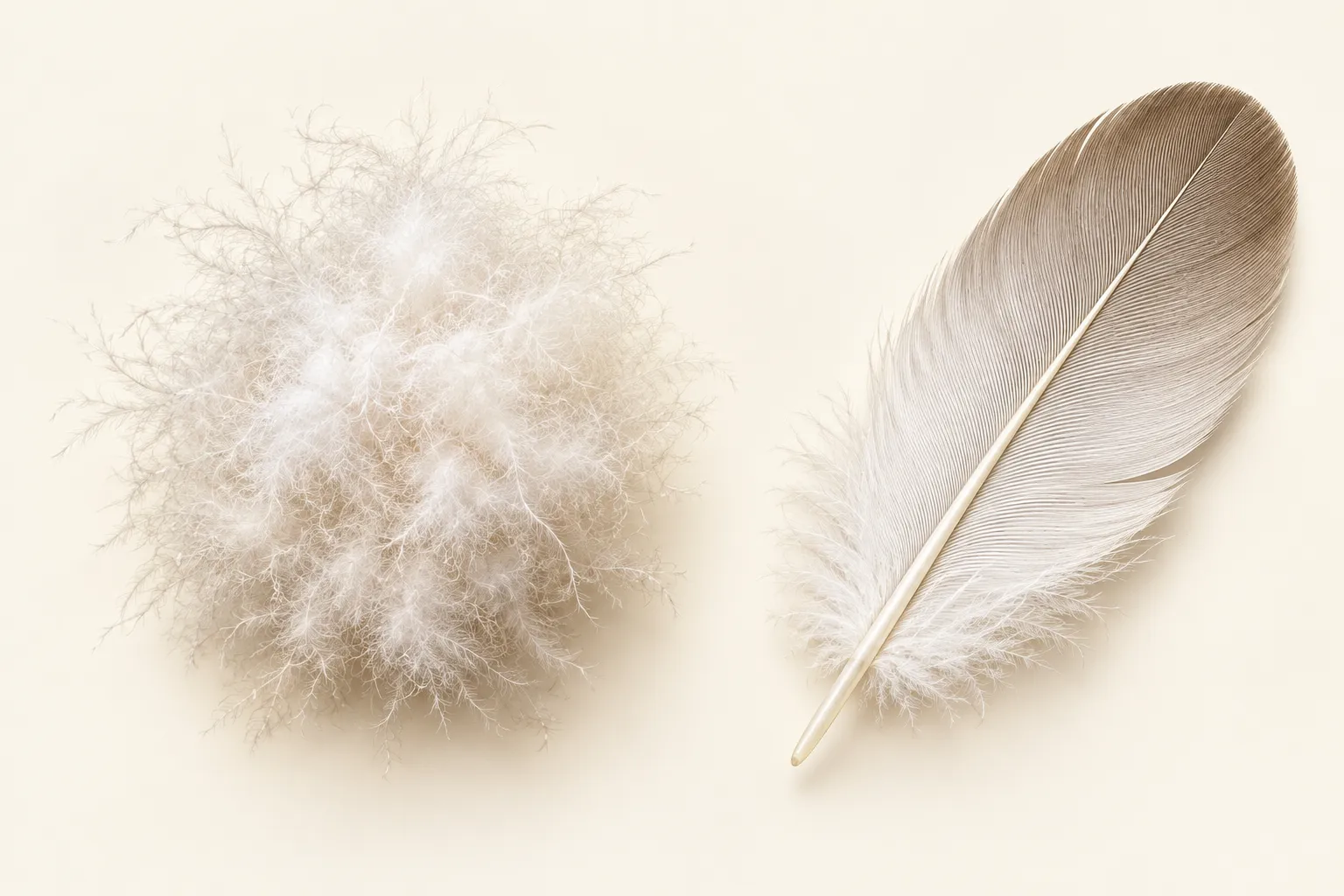
Down comforter with feathers vs pure down: side-by-side
Pure or down-rich fill gives you airy warmth; feather-rich fill suits you if you prefer a weightier feel for less money. The shell, amount of fill and construction affect both, so compare comforters of the same size and warmth level when possible.
What you'll notice |
Down-rich comforter |
Feather-rich comforter or blend |
|---|---|---|
Warmth per ounce |
Higher: clusters trap more insulating air for their weight |
Lower: needs more fill for comparable warmth |
Weight |
Typically lighter at a similar warmth level |
Typically heavier at a similar warmth level |
Loft |
Puffy, airy and springy |
Flatter, denser drape; a blend gains loft from its down |
Quills and shedding |
Down clusters have no stiff central quill; loose fibers may still escape a poor shell |
Quills can poke or work through weak seams or a loose shell |
Price |
Usually higher for comparable size and construction |
Usually lower upfront |
Lifespan |
Can retain loft longer when properly made and cared for |
Quills and flattening can become more noticeable with wear; construction and care still matter |
Which feels warmer without feeling heavy?
Down gives you more warmth for its weight. Its loft holds warm air around you; a feather-heavy insert often needs more material to feel as warm.
Neither fill has one universal “winter” rating. A generously filled comforter can feel warmer than a skimpy down-rich one. The warmth level, total fill weight, baffle design and shell all play a part. If you sleep hot, a lighter warmth option may serve you better than the highest fill power available.
Why do some comforters poke or rustle?
The hard shaft in a feather is the main culprit when you feel a prick through the shell. More feathers create more opportunities for that to happen, particularly if the fabric isn't tightly woven or seams start to open. A good comforter shouldn't regularly shed filling onto your sheets.
You can't judge down percentage by rustling. The cover fabric can make a crisp, papery sound when you move, while quills can add a scratchy feel inside the insert. If noise bothers you, pay attention to the shell material and the feel of the whole comforter as well as the fill name.
How to read a down and feather comforter label
Start with the percentage of down, then look at the fill power, fill weight and shell. Those four details give you a more useful picture than words such as “luxury goose feather down.”
Find the fill composition. A label that says 90% feathers and 10% down describes a feather-dominant comforter, even if “down” appears prominently in its name. If you want an airy down feel, look for a higher down percentage. Also distinguish down clusters from “down fiber” or “feather fiber” on a detailed label.
Read fill power alongside the down percentage. Fill power describes how much space a given amount of down occupies when lofted. A high fill-power claim doesn't turn a mostly-feather blend into a mostly-down comforter.
"Fill Power measures the loft or insulation properties of down products." - IDFL
IDFL also reports down clusters separately from down fibers and feathers in its content analysis. That distinction helps when a detailed label uses the word “down” for more than one component.
Read “90% feathers, 10% down” as a feather comforter with a little down loft. It won't feel like a down-rich insert. “Cotton cover” describes the fabric around the filling; it says nothing about what fills the comforter. 3. Compare fill weight and warmth level. More fill generally means more insulation within the same design, but also more overall weight. Don't compare fill weights across different bed sizes as though they were interchangeable. 4. Inspect the shell and chambers. A tightly woven, down-proof shell helps hold filling in. Baffle-box construction gives fill room to loft, while sewn-through seams can create thinner spots; the trade-off is that construction also affects price and feel.
If a listing names the bird and gives an impressive fill-power number without identifying the down percentage, you still don't know the mix you're paying for. Use the same order of questions for duck or goose fill.
Which comforter is worth it for your bed?
A down-rich comforter is worth paying more for if you want warmth without bulk, lofty hotel-bed volume or fewer quill surprises. You might prefer a feather-rich one if you enjoy a little heft and would rather spend less upfront. A balanced blend lands between them, though its exact feel depends on the percentages and the shell.
If you and your partner disagree about temperature, pick the warmth level for the warmer sleeper. Add a separate layer on the colder side so you don't both have to sleep under a winter-weight insert. And if you love a cloudlike bed but wake up overheated, try a lighter fill weight and a breathable cover instead of chasing maximum puff.
Warmy & Tummy offers goose down comforters in different shell materials and warmth options, including choices geared toward cooling or a more classic cozy feel. Its mix-and-match approach can help you choose the filling, shell and warmth level that suit your bed, rather than assuming one blend works for everyone.
For more bedding comparisons and care advice, browse Warmy & Tummy's bedding journal.
How do you stop feathers from coming out of a comforter?
A well-made shell and sound seams keep most of the filling where it belongs. An occasional stray fiber can happen. Steady feather loss, or quills poking through your duvet cover, calls for a closer look at the insert; the cover won't fix an open seam.
Follow the care label for washing and drying, and make sure the filling dries thoroughly before you put the comforter back on the bed. Damp clumps lose loft and can leave the fill uneven. Give the comforter a gentle shake to redistribute the fill, and avoid tugging out a protruding quill: pulling can widen a hole in the fabric.
The bottom line
If you want light, fluffy warmth and fewer pokes, buy a down-rich comforter and read its fill percentage before you pay. Prefer a heavier drape at a lower upfront cost? A feather-rich blend makes sense. If you're ready to choose the shell and warmth too, Warmy & Tummy's goose down options let you build around how you sleep.
FAQ
What is a down feather comforter?
It's a comforter filled with down clusters, feathers, or a mixture of both. Down supplies light loft and warmth, while feathers add weight and can have quills that poke through a weak shell. The fill composition tells you which material dominates.
What is the best way to wash a down comforter?
Follow the comforter's own care label, since shells and construction vary. Use the specified wash and drying method, dry the fill completely, then gently redistribute any clumps so the loft returns.
What is the best fluffiest down comforter?
Look for a down-rich fill with enough fill weight for your preferred warmth level and chambers that let the clusters loft. Fill power helps describe the loft of the down, but the down percentage, construction and shell determine how fluffy the complete comforter feels.