

Ever bought a beautiful duvet, only to wake up too hot beneath it? The best bedding brands tell you what touches your skin, what keeps you warm, what fits your bed, and what happens if it doesn't work out. A familiar name alone can't tell you that.
Compare a sheet set or comforter from each brand rather than two entire catalogs. Put a crisp cotton sheet beside another cotton sheet, or a lightweight down comforter beside a similar insert. A tempting price or lovely photograph can hide a difference that matters at 2 a.m.
What makes the best bedding brands worth buying?
The best bedding brands help you match material, warmth, size and upkeep to your sleep habits. Their product details and policies should make the choice clear, even if you've never heard of the label.
Check |
What to compare at a glance |
A useful sign |
|---|---|---|
1. Fabric and shell |
Fiber, weave and fabric options |
The material is named, not just described as “luxury” |
2. Fill |
Type, percentage, fill power and fill weight where applicable |
The components and quantities are disclosed |
3. Warmth |
Seasonal weights or warmth ratings |
You can choose for your room and sleeping temperature |
4. Size |
Finished dimensions, mattress pocket depth or duvet fit |
Inches are shown alongside size labels |
5. Customization |
Fill, shell, warmth and styling choices |
The options change something you actually need |
6. Certifications |
Standard, scope and traceable proof |
A specific product or component can be identified |
7. Care |
Washing, drying and construction |
The maintenance suits your routine |
8. Purchase protection |
Returns, exclusions and warranty |
Terms explain what is covered and for how long |
What should you compare before choosing a bedding brand?
Start with the product you'll sleep under or against, then read the company's promises. These eight questions work for a sheet set, duvet cover or comforter; fill and warmth apply mainly to comforters.
1. What fabric or shell will you actually feel?
Fiber and weave tell you more about feel than a large thread-count number alone. Cotton percale tends to feel crisp; cotton sateen feels smoother. Linen has a relaxed texture and silk a slicker surface. On a comforter, the shell and the filling deserve separate attention.
Compare the exact composition on the listing. “Cooling” could mean a different fiber, weave or finish, so look for the actual fabric breakdown and care label rather than treating the word as a performance guarantee.
2. Is the comforter fill described clearly?
For a down comforter, fill power describes how much space a given amount of down occupies; fill weight tells you how much fill goes into it. You can't judge warmth from fill power alone. Look at the finished size, construction and fill weight as well.
Look for the down percentage and any feather or alternative-fill content, plus the figures for the size and warmth option you're buying. If those figures aren't published, mark the item as “not disclosed” rather than assuming the fill is identical to a competing model.
3. Can you choose warmth for your room?
Your bedroom temperature and your own sleep habits matter more than the season printed on a label. If you sleep hot, a lighter insert may feel better even in January. Someone who runs cold might want more loft in the same room.
If a seller offers light, all-season and extra-warm versions, compare their stated fill weights within the same size. If no weights are shown, the warmth labels still help you shop, but they don't provide a precise cross-brand comparison.
4. Will the stated size fit your bed and cover?
Measure finished dimensions in inches before relying on “queen” or “king.” For sheets, compare fitted-sheet pocket depth with your mattress and topper. For a comforter, compare its dimensions with the duvet cover opening and the amount of drape you want over the mattress.
For generous side coverage, a larger insert may work, as long as it doesn't bunch inside your cover. Two “queen” products can have different finished dimensions.
5. Do customization options solve a real problem?
Shell, fill and warmth choices let you tailor the bedding to your sleep; color choices change its look. If you and your partner sleep at different temperatures, separate comforters or individually chosen weights may help more than a monogram.
Personalized text makes a gift feel like yours. It won't fix the fit, though, and the return terms for personalized items deserve a read before you add text.
6. Can you verify the certification?
A certification means more when you can see what it covers. A fabric claim doesn't cover the fill by default; a down-sourcing claim says nothing about the dyes or finishes.
Look for the named standard, the specific certified product or component and a way to trace the claim. “Eco-friendly” on its own is a description, not proof. If a seller doesn't publish a certificate or product-level detail, leave this row unscored.
"A scope certificate alone does not mean every product the supplier sells is certified." - Textile Exchange, Standards FAQs
7. Will you live with the care instructions?
Care can decide whether you'll enjoy using an oversized comforter. Read its washing and drying instructions, including whether you can wash the cover separately from the insert.
Seams, quilting and baffles help manage the fill. Closures and corner ties can keep an insert in place. If you're comparing inserts, sewn-through and baffle-box construction deserve a closer look. That soft fabric may lose its appeal if the care routine doesn't fit your life.
8. What do the return policy and warranty really cover?
Returns and warranties serve different purposes. A return window lets you decide if the purchase suits you; a warranty deals with covered defects under its stated terms.
Find out when the return window starts, what condition the product must be in, and whether shipping deductions or exclusions apply. For a warranty, look at its length, covered items and claim process. These details can settle a close choice between two products.
Which bedding choice fits the way you sleep?
Your bed, bedroom temperature and laundry routine narrow the choices quickly. Start with the sleeper type that sounds most like you, then compare individual products.
Choose this if you sleep hot
Try a light warmth option and compare fill weights for the same size. Cotton percale or linen may suit you if you like an airy, less slick feel. A cooling-fabric option is worth a look when the seller discloses its fiber breakdown, though fabric alone can't cool a room that's too warm.
Choose this if you get cold at night
Look at the fill weights of higher warmth options instead of trusting an “ultra-plush” description. You may enjoy the feel of sateen or silk against your skin; the insert's fill and construction have more to do with insulation.
Choose this if you share a bed
Check finished dimensions and overhang first. If one of you sleeps hot and the other cold, separate inserts or selectable warmth can be more practical than trying to split the difference with one heavy comforter.
Choose this if easy laundry comes first
Prioritize a removable, washable duvet cover and clear care instructions. Check that the insert fits your machine and drying setup before ordering an oversized size or a fill that needs special handling.
How Warmy & Tummy approaches this
Warmy & Tummy offers several shell and warmth choices if you want to tailor a comforter. Score the configuration you'd order, though: a specification or certification for a different item doesn't count toward yours.
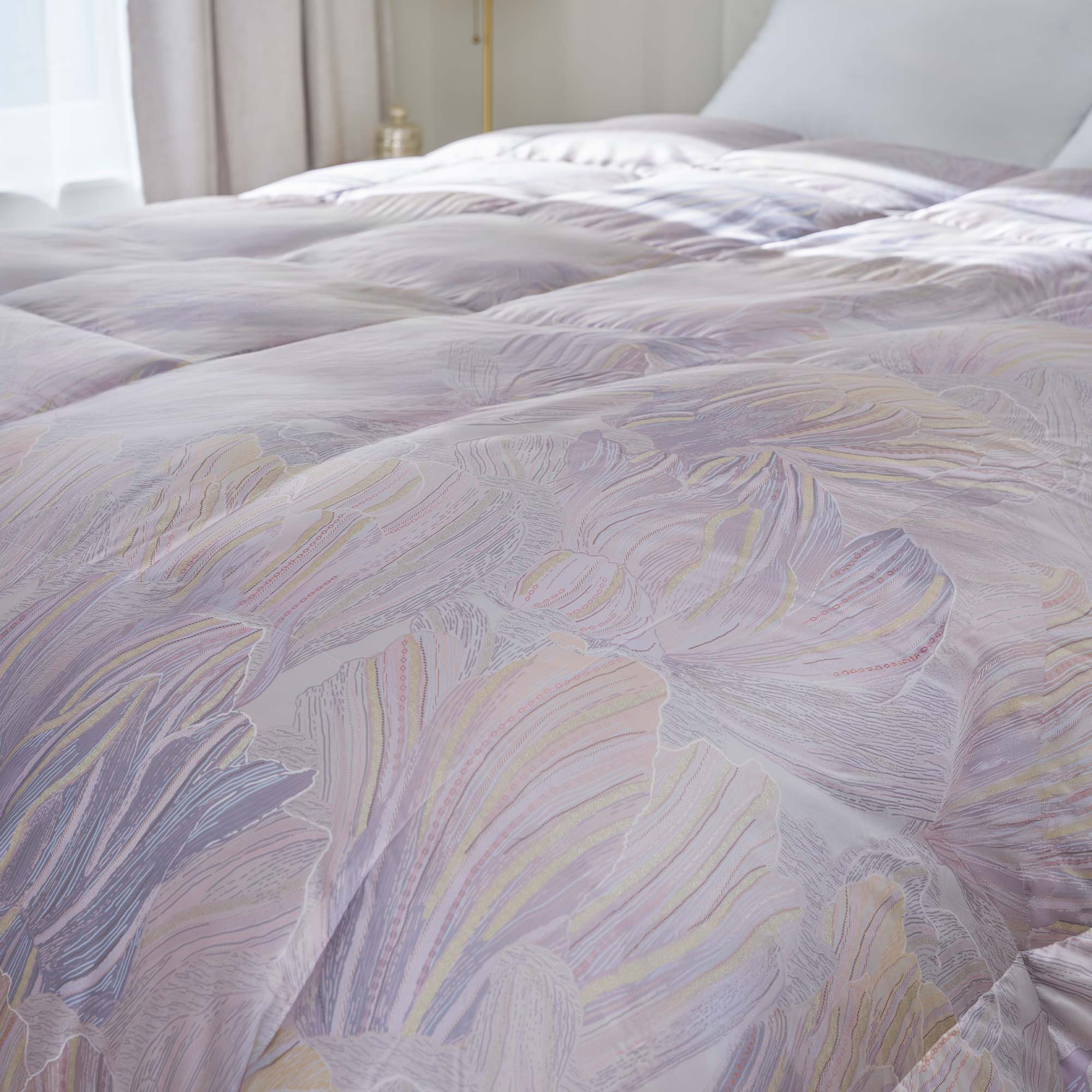
Its goose down comforters are offered in organic cotton, deluxe silk, European linen and cooling Tencel-blend shell options. The Deluxe Silk Goose Down Comforter is one example of that range. These are material choices, not evidence that every configuration will have the same feel or care requirements.
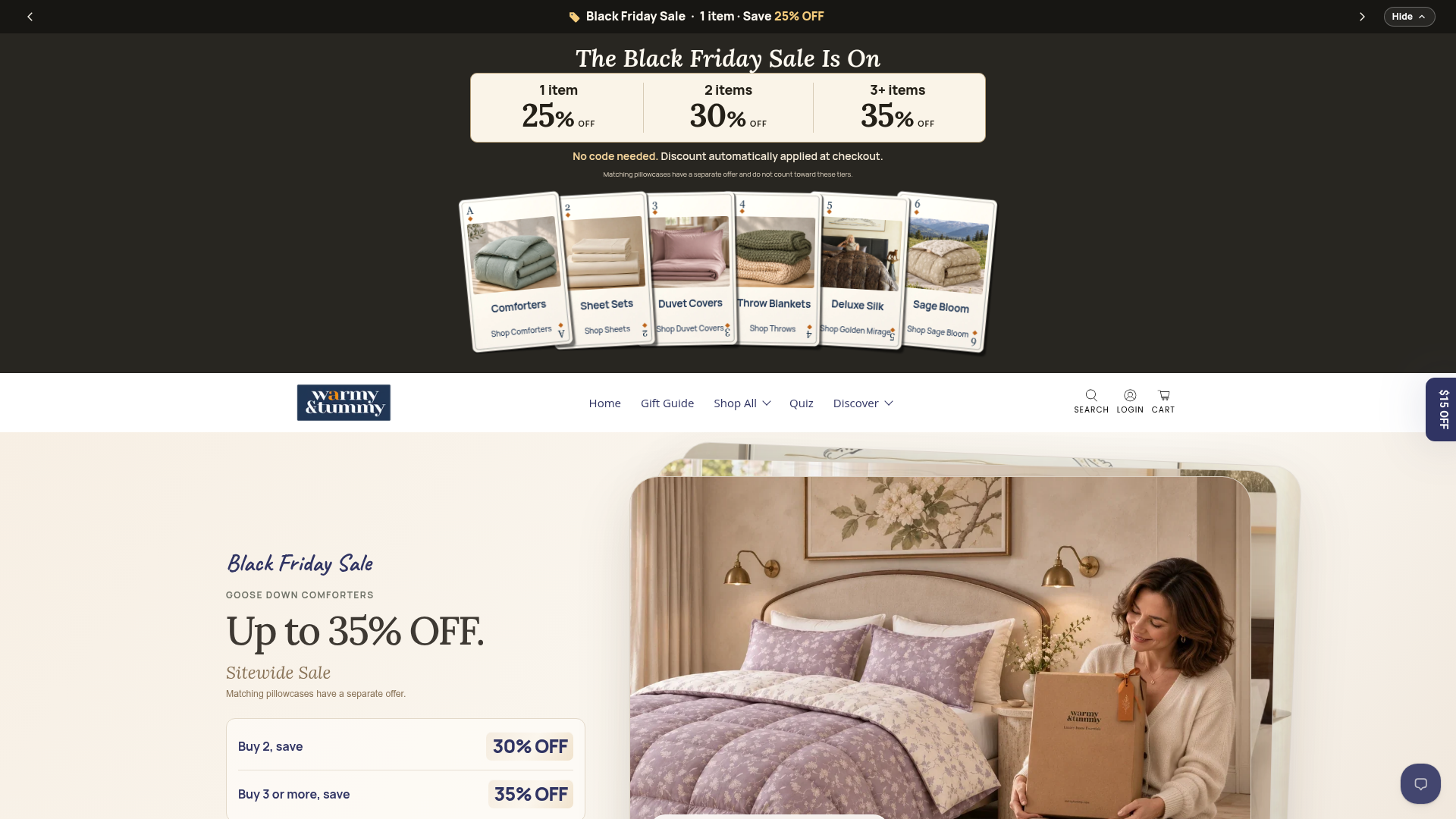
With mix-and-match, you can choose a shell, filling and warmth, then add your own text. That gives you room to make a gift personal or choose a weight for your bedroom. You'll still need the fill weight, finished dimensions and cleaning instructions for your particular selection.
The brand describes a 30-day hassle-free return policy with a money-back guarantee and a 3-year limited warranty. It also says it has more than 20 years of bedding experience. Put those terms beside another seller's, and read the item-specific rules before ordering customized bedding: a limited warranty won't cover every kind of wear.
For the scorecard, these are the details you can credit and the ones to leave open:
Check |
Warmy & Tummy evidence to compare |
What still needs an item-level answer |
|---|---|---|
Fabric and shell |
Organic cotton, deluxe silk, European linen and Tencel blends offered |
Exact composition and care for your selection |
Fill |
Mix-and-match filling options |
Fill power, fill weight and down percentage for your selection |
Warmth |
Selectable warmth options |
Weight for each size and chosen warmth |
Size |
Shop by the available size options |
Finished dimensions for the exact item |
Customization |
Shell, fill, warmth and personalized text |
Terms for personalized orders |
Certifications |
No product-level certificate credited here |
Standard and scope for the specific product |
Care |
Depends on shell and fill selected |
Exact cleaning instructions |
Protection |
30-day returns and 3-year limited warranty stated |
Exclusions and item eligibility |
You can choose your comforter's ingredients and feel in one place. For the combination in your cart, use its own specifications and policy terms to make the final call.
How do you score two bedding brands side by side?
Score each specific product. Give a check 0 when the information is missing or the item doesn't suit you, 1 when it answers part of your question, and 2 when it answers it for that exact product. You can score up to 16, but a close total matters less than the things you won't compromise on.
Check |
Product A (0–2) |
Product B (0–2) |
Your non-negotiable |
|---|---|---|---|
Fabric and shell |
___ |
___ |
___ |
Fill disclosure, if buying an insert |
___ |
___ |
___ |
Warmth choice |
___ |
___ |
___ |
Finished size |
___ |
___ |
___ |
Useful customization |
___ |
___ |
___ |
Verifiable certification |
___ |
___ |
___ |
Manageable care |
___ |
___ |
___ |
Return and warranty terms |
___ |
___ |
___ |
Total out of 16 |
___ |
___ |
For sheets or an unfilled cover, mark both fill and insert warmth “not applicable” and compare the other six checks out of 12. Don't award points to a certificate you can't connect to the item, or to a “queen” label without dimensions if fit is crucial to you. If the totals tie, pick the product that better satisfies your top two needs, such as cooler sleep and easier laundry.
If you want control over shell, fill and warmth, start with Warmy & Tummy's comforter options. Put the exact configuration through the scorecard before you buy, and give your must-haves the final say.
FAQ
What is the best brand of bedsheets?
There isn't one brand that suits every bed. Compare fiber and weave, fitted-sheet pocket depth, care instructions and returns for the exact sheet set; for a hot sleeper who likes a crisp feel, cotton percale may be a better match than a smooth sateen.
Is the company store bedding good quality?
Quality depends on the specific item, not the store name. Apply the same checks to its product page: fabric and fill disclosure, finished dimensions, care requirements and the applicable return and warranty terms.
What do 5 star hotels use for bedding?
Hotels don't all use one bedding formula. To get the feel you like, identify whether you prefer a crisp or smooth sheet, how much duvet warmth suits your room, and the finished dimensions that give your bed the right drape.