

Found a gorgeous bedding set, but still unsure where to buy a down comforter you'll want to sleep under? Start with an insert whose fill and warmth suit your nights, then choose the cover. You may find both at a home store, though a specialist often makes it easier to compare inserts.
Where to buy a down comforter: home store or specialist?
Want to see how a cover looks next to your sheets? A home store makes that easy. For a comforter that feels too heavy or too warm, start with a specialist's product specifications.
What matters |
Home-décor store |
Bedding specialist |
|---|---|---|
Shopping experience |
Often lets you see colors and textures together in person |
Usually lets you compare fill, shell and warmth options online |
Styling |
An easy place to coordinate covers, sheets and throws |
You can choose an insert first, then style it with a separate cover |
Down details |
Depends on the individual product listing; don't assume a set identifies the fill |
Look for published down percentage, fill power, fill weight and shell fabric |
Warmth |
Options vary by store and item |
Often offers named weights or seasonal choices |
Sales and value |
A sale can make a coordinated set appealing |
Compare the insert's specifications and policies, not just the discount |
After purchase |
Return and warranty terms depend on the retailer and item |
Return and warranty terms still depend on the brand and item |
You'll find some well-specified down inserts at home stores and beautiful covers at specialists. The label on the item tells you far more than the type of shop does.
What does a home store do well?
A home store lets you see colors together before you buy. Hold a duvet cover against a sheet set under the same lights, then take them home if they work. Holiday promotions can help when you're dressing a guest bed.
Changing a duvet cover gives the bed a new look without changing its warmth. If a set catches your eye, read what's included: a down-filled insert, a synthetic-filled comforter or a cover alone.
Don't pass up a store insert with a good label. You need details on fill, shell, construction, warmth and care; “plush” and “hotel-style” won't tell you what happens when you sleep under it.
When is a bedding specialist worth it?
A specialist earns its place when you're waking up hot or cold, especially if your partner sleeps at a different temperature. Published specifications give you something to compare beyond how fluffy the insert looks in a photo.
How much warmth will you actually use?
Think about your bedroom at night. A cold sleeper in a heated room might need less insulation than someone who keeps a window open. If you and your partner disagree on warmth, try a lighter shared insert and a throw, or use individual inserts.
Fill power describes how much down lofts; fill weight is the amount inside. Size and construction change how warm the finished comforter feels, so compare inserts in the same size and warmth category. If a bigger number comes with a bigger price, read about fill power versus fill weight before choosing.
What belongs inside and outside the comforter?
Down insulates the comforter, and the shell holds it in place. Look for the down percentage, any feathers in the blend and the shell fabric. Cotton, linen and silk blends feel different, even if you plan to put a cover over the insert.
Box stitching helps keep fill distributed; internal baffles leave space for down to loft. For responsible sourcing, look for certification attached to the product you're buying. A natural fill label alone doesn't establish how the down was sourced.
"Any removal of down or feathers from live birds (live plucking or molt harvesting) is prohibited in the standard. Force-feeding is also prohibited." - Textile Exchange, Responsible Down Standard
How can you compare two comforters before buying?
Compare listings at the same size and warmth level. A holiday discount loses its charm fast if the insert is too hot or the return terms don't work for you.
Identify what's included. Is the price for an insert, a decorative comforter, a cover, or a bundle with shams?
Compare the fill and shell. Note down percentage, feathers if present, fill power, fill weight if published, and shell material. Don't treat a higher fill power as a substitute for the right warmth level.
Check fit and upkeep. Match the insert's actual dimensions to your duvet cover, then read its care label. “Queen” isn't a universal measurement. Plan space for a breathable storage bag if you'll swap inserts between seasons; don't leave down compressed in a tight bag.
Count the full cost. Include any separate cover, shipping and the terms for a return or warranty claim. A discount on the wrong warmth is still the wrong purchase.
Buying a gift? You need the recipient's bed size and a sense of how warm their bedroom gets. If you don't know how warm they sleep, a light or all-season insert leaves room for an extra layer. A removable duvet cover catches everyday spills and body oils, so the insert needs cleaning less often.
Choose this if…
Choose your shopping route based on what you're trying to fix: the look of the bed or how warm you feel beneath the covers.
Choose a home store if you're styling a room
Visit a store when you want to see color beside your walls and sheets. Pick up covers, shams and throws there, and consider the down inserts too if the labels give you the fill and care details you need.
Choose a bedding specialist if you sleep hot or cold
If you throw off the covers or wake up chilly, start with an insert in the right warmth level. Compare shell feel, size and construction next. Then you can choose the cover for its color.
Choose separate layers if you share the bed or are buying a gift
With a separate insert and cover, you can adjust warmth without changing the look of the bed. Two smaller inserts can spare a couple the nightly tug-of-war over one heavy comforter. For a gift, match the recipient's bed and duvet cover dimensions before ordering.
How Warmy & Tummy approaches this

At Warmy & Tummy, you can choose the insert by material and warmth. The Organic Cotton Goose Down Comforter has a 100% organic cotton sateen shell and 650 fill power. Inside, it's 90% goose down and 10% goose feathers, so it won't suit someone who wants a feather-free fill.
Light, All Season and Ultra Warm are the available warmth choices; sizes run from Twin/Twin XL through Full/Queen to King/Cal King. Full/Queen measures 90 × 90 inches. The product page also identifies RDS-certified down and displays an OEKO-TEX STANDARD 100 certification. Use the dimensions when pairing the insert with a cover.
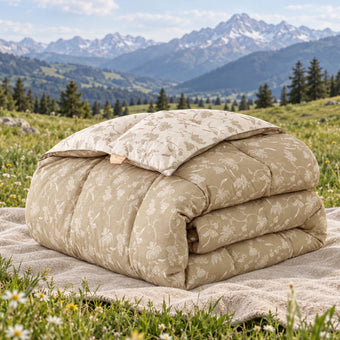
That cotton model comes in several colors and limited-edition patterns. You can pair it with duvet covers or sheet sets, or look at the brand's silk- and linen-shell comforters for another feel. Mix-and-match offers apply to eligible styles, colors and sizes; personal-text options exist in some configurations. Each product has its own customization choices.
The brand describes more than 20 years of bedding experience and a 3-year limited warranty on eligible products. Its organic cotton product page says standard shipping is free within the continental U.S.; a sitewide banner advertises free shipping on orders of $99 or more. Its return policy gives you 30 days from delivery to request a return on eligible items; custom and personalized orders, sale items and gift cards are excluded. Fast email support is advertised if you want help picking a warmth level.
You can't feel this insert before ordering online, and the cotton model has some feathers in its fill. Those are real considerations if you prefer to shop in person or want down without feathers. If warmth choices and clear material details matter more, take a look at the options.
What should you buy for the bed first?
If you wake up hot or cold, put the insert first on your shopping list. If the one you own feels good, start with a cover or other visible layer. For a holiday refresh, you can pair a specialist's well-specified insert with covers and decorative pieces from the store whose colors you love.
If your current insert leaves you hot or cold, compare Warmy & Tummy's warmth options before buying a matching set. Pick Light, All Season or Ultra Warm based on how you sleep, then choose the cover.
FAQ
What is the difference between a down comforter and a regular comforter?
A down comforter uses down as some or all of its insulating fill; a “regular comforter” describes a type of bedding, not a particular filling. It may contain synthetic fiber, down or a blend, so read the fill label rather than relying on the name.
What size is a 90x90 comforter?
It measures 90 inches by 90 inches. Warmy & Tummy labels that dimension Full/Queen on its organic cotton goose down model, but match the exact insert and cover measurements before pairing them.
Can a down comforter be washed in a washing machine?
Some can, but the answer depends on the specific comforter's care label and whether your washer is large enough to let it move freely. A removable duvet cover is an easier layer to wash routinely; follow the insert's own washing and drying directions.
What is the lifespan of a down comforter?
There's no single lifespan for every down comforter. Fill quality, construction, use and care affect how long it stays lofty; replace yours when it no longer fluffs evenly, leaks significant fill or doesn't keep you comfortable.