
Duvet Covers for Down Comforters: Best Fits Guide
Choosing the right duvet cover for a down comforter sounds simple - until you’re comparing queen measurements, wondering whether a duvet is the same as a comforter, or trying to stop an insert from bunching in the corners. If you want a bed that looks polished, feels cloud-soft, and actually sleeps at the right temperature, the fit between your cover and your comforter matters more than most people realize.
At Warmy & Tummy, we’ve spent more than 20 years helping customers build better sleep setups with premium comforters, duvet covers, blankets, and bedding essentials. The goal is not just a beautiful bed. It’s deeper, more restful sleep with materials and warmth levels that fit your life - whether you need a breathable organic cotton layer, a cozy goose down comforter, a cooling shell, or a mix-and-match comforter designed around your exact preferences.

Why the right duvet cover matters for a down comforter
A premium down comforter is an investment in sleep quality, warmth, and comfort. But without the right cover, even an excellent insert can feel messy, too hot, too slippery, or awkwardly oversized.
A well-matched duvet cover helps you:
Protect your down comforter from body oils, dust, and daily wear
Wash your bedding more easily without cleaning the insert as often
Improve the drape and appearance of the bed
Fine-tune temperature and texture
Keep the down comforter evenly distributed across your body
That last point is especially important. If the cover is too large, the insert shifts. If it’s too tight, the comforter can compress and lose loft. The best duvet covers for down comforters strike a careful balance between room to breathe and structure to stay in place.
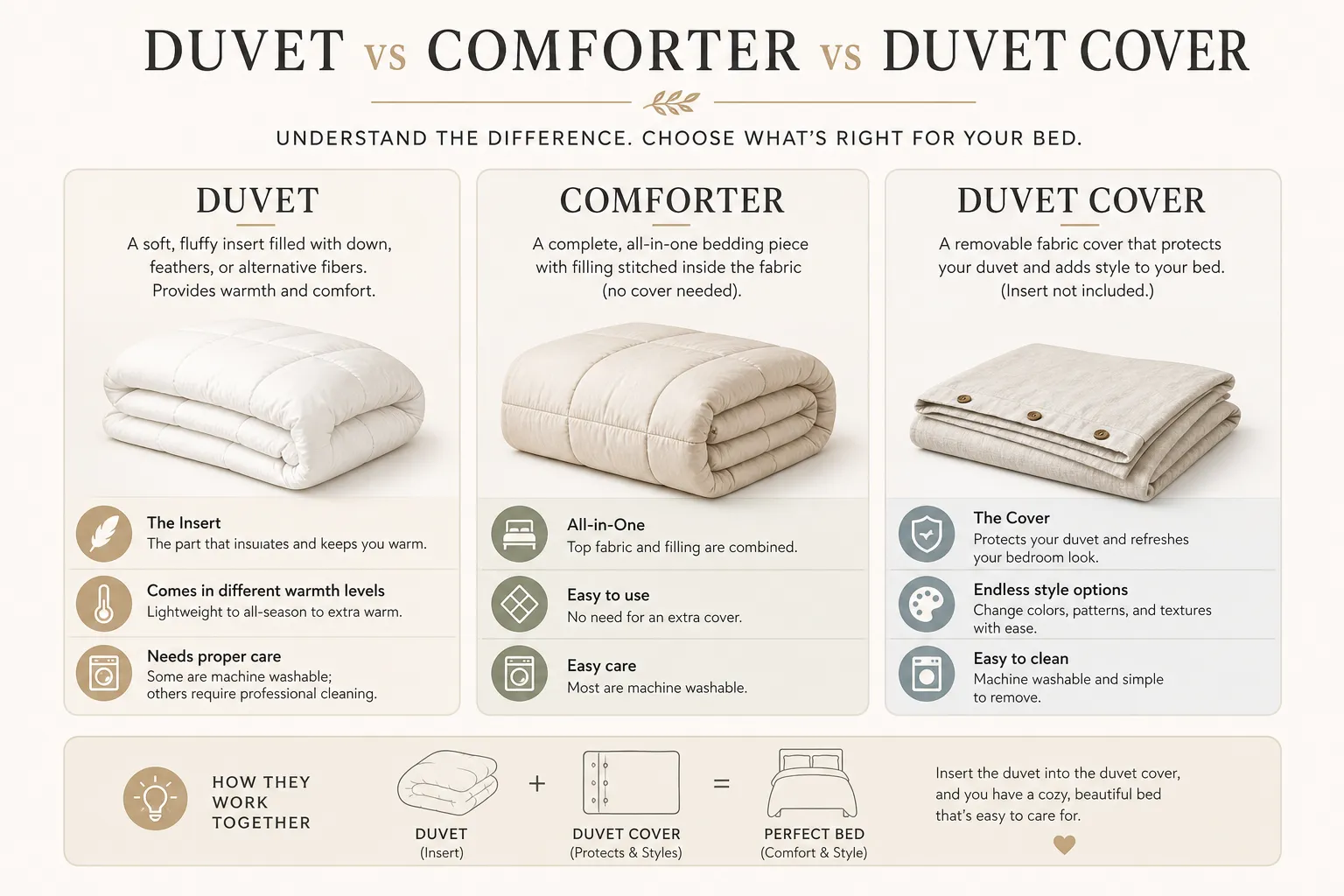
Duvet vs. comforter vs. duvet cover: what’s the difference?
This is one of the most common shopping questions, and it’s where many size mistakes begin.
The simple definitions
Item |
What it is |
Typical use |
|---|---|---|
Duvet insert |
A filled bedding insert, often down, wool, silk, or alternative fill |
Goes inside a duvet cover |
Duvet cover |
A removable fabric shell with closure and corner ties |
Protects the insert and changes the look |
Comforter |
A filled top layer used as-is or inside a cover, depending on construction |
Can be decorative and functional |
Down comforter |
A comforter filled with goose or duck down |
Warm, lofty, luxurious insulation |
In everyday U.S. shopping, the terms duvet comforter, down comforter and duvet, and duvet and comforter often overlap. Many people call the insert itself a duvet, even though technically the duvet system includes both the insert and the removable cover.
Is a duvet the same as a comforter?
Not exactly.
A comforter is usually sold as a finished top-of-bed layer. A duvet is more often thought of as the insert that belongs inside a cover. But in real shopping language, people often use the words interchangeably. What matters most is understanding whether the item is:
the filled insert,
the removable cover, or
a bundled set.
If you are buying a duvet for comforter use, make sure you’re not accidentally purchasing only the cover.
The best fit rule: should a duvet cover be bigger than the down comforter?
Usually, the best fit is a duvet cover that is the same nominal size as the insert, with measurements that are very close.
For example:
a queen duvet cover for a queen down comforter
a king duvet cover for a king insert
a California king cover for a California king comforter
The ideal size difference
As a general rule, a duvet cover can be:
exactly the same dimensions as the insert, or
up to 1–2 inches smaller in width or length for a fuller, plumper look
A cover that is much larger than the insert often leads to sliding and bunching. A cover that is much smaller may compress the down and reduce the airy loft that makes premium bedding feel so luxurious.
Best practice for shoppers
Before buying, compare:
manufacturer-listed dimensions for the insert
manufacturer-listed dimensions for the duvet cover
presence of corner ties and loops
closure style: zipper, buttons, or snaps
At Warmy & Tummy, we always recommend checking actual inches - not just “queen” or “king” - because bedding brands vary more than many people expect.
How to choose the best duvet cover for a down comforter
The best duvet cover is not only about size. Fabric, closure, weight, and bedroom style all affect how your down comforter performs.
1. Start with your sleep temperature
If you sleep warm, choose a breathable cover such as:
organic cotton
European linen
cooling Tencel blends
If you sleep cold, you may prefer:
silky sateen weaves
slightly denser cotton
layered luxury fabrics with a smoother hand feel
A down comforter already provides insulation, so your cover should fine-tune comfort rather than trap unwanted heat.
"The National Sleep Foundation recommends keeping the bedroom temperature between 60 and 67 degrees Fahrenheit (15.5 to 19.5 degrees Celsius) to promote better sleep." - Calculatorian
2. Match the cover fabric to the insert
Different fills pair best with different shell experiences:
Insert type |
Best duvet cover fabrics |
Why it works |
|---|---|---|
Goose down |
Organic cotton, linen, silk-cotton blends |
Breathable and helps preserve loft |
Silk comforter |
Smooth cotton sateen, silk, bamboo blends |
Supports drape and softness |
Wool comforter |
Cotton percale, linen |
Balances warmth with airflow |
Cooling comforter |
Tencel, lightweight cotton, performance blends |
Maintains cooling benefits |
Warmy & Tummy offers premium bedding in organic cotton, silk, linen, goose down, merino wool, and cooling fabrics so you can build a sleep system that feels cohesive instead of pieced together.
3. Look for corner ties
If you’ve ever fought with a shifting insert, you know this detail matters. A duvet cover with interior ties paired with a down comforter that has corner loops will dramatically reduce sliding.
This is especially important for:
a down duvet comforter queen
a duvet comforter king
a comforter california king
loftier inserts with smooth cotton shells
4. Consider weight and drape
Some people want the bed to look crisp and tailored. Others want that plush, oversized hotel look. The cover fabric changes the drape.
Percale cotton: cooler, crisper, cleaner lines
Sateen cotton: smoother, slightly warmer, more fluid
Linen: relaxed luxury, breathable, softly textured
Silk blends: elegant and sleek with fluid drape
5. Think beyond color
White is timeless, but your duvet cover also shapes the entire bedroom mood. Limited-edition collections, natural textures, and subtle luxury tones can make a bed feel custom without sacrificing practicality.
At Warmy & Tummy, we love helping customers pair sleep performance with personal style, especially when they want a room that feels both restorative and elevated.
Best duvet cover materials for down comforters
Not all beautiful fabrics perform equally well with down. Here’s a practical guide.
Organic cotton
Best for shoppers who want everyday luxury with breathability and easy care.
Why it’s a favorite:
soft and skin-friendly
breathable for year-round comfort
often a great match for down
eco-conscious and widely loved
If you want the safest all-around choice for duvet covers for comforters, organic cotton is hard to beat.
Linen
Best for warm sleepers, relaxed luxury, and beautiful texture.
Why it works:
naturally breathable
moisture-wicking
gets softer over time
gives the bed an effortless designer look
Linen is especially appealing if your down comforter runs warm and you want a more airy finish.
Silk
Best for a refined, indulgent sleep experience.
Why it works:
smooth against skin and hair
luxurious drape
naturally temperature regulating
Silk or silk-forward blends pair beautifully with premium inserts, especially in sophisticated master bedrooms.
Cooling performance fabrics
Best for hot sleepers, humid climates, and modern comfort needs.
Why it works:
helps disperse heat
often lightweight
ideal for pairing with lofty down without overheating
Wool-blend or textured natural fabrics
These are usually less common for the cover itself, but they can work in decorative top layers or layered bedding looks. For true duvet cover use, smoother weaves are generally easier to maintain and more compatible with down.
"The findings suggest that natural fibers like cotton and wool may enhance sleep quality by improving thermal comfort and moisture management." - PubMed
Duvet cover sizing guide for twin, full, queen, king, and California king
Brand measurements vary, so treat the chart below as a smart starting point rather than a universal rule.
Standard fit guide
Bed size |
Common insert size range |
Best duvet cover target |
|---|---|---|
Twin |
68" x 86" to 70" x 90" |
Twin cover with closely matched dimensions |
Full |
80" x 86" to 84" x 90" |
Full or full/queen depending on exact measurements |
Queen |
88" x 90" to 90" x 96" |
Queen cover or queen/full only if dimensions align |
King |
102" x 86" to 108" x 94" |
King cover with interior ties |
California King |
104" x 96" to 108" x 98" |
California king cover or oversized king if exact fit allows |
Twin
A duvet comforter twin should not automatically go into any twin-labeled cover. Twin bedding varies widely, especially if marketed for dorms or Twin XL beds.
Best tip: compare actual dimensions, especially length.
This matters if you want:
a warm comforter twin
a twin duvet comforter for a child’s room
a guest bed that looks neat without excess pooling
Full
A duvet comforter full can be tricky because many brands merge full and queen sizing into one product. If you have a down comforter full or white down comforter full, make sure the cover won’t be too wide and leave the insert drifting inside.
A full duvet comforter setup often works best when:
the insert is on the larger side of full dimensions
the cover includes multiple ties
you want a slightly more relaxed drape
Queen
A down duvet comforter queen is one of the most popular sizes, but queen covers differ a lot between brands. If you’re shopping for a duvet insert and cover queen or duvet comforter insert queen, check:
exact width and length
whether the insert is oversized
closure security
how much bed overhang you want
For many households, queen is the sweet spot between elegance and practicality.
King
A comforter duvet king or duvet king comforter setup benefits greatly from corner ties because wider inserts shift more noticeably. If you share a bed, a king setup is often worth it simply for coverage.
Look for:
generous dimensions
reinforced seams
breathable fabric to prevent overheating for couples
California king
A duvet comforter california king or california king duvet comforter demands careful measuring. California king bedding is usually longer and slightly narrower in proportion than standard king, so the wrong cover can distort the drape.
If you own a comforter california king, avoid assuming a standard king cover will work just because it seems close.
Can you put a duvet cover over a comforter?
Yes - often, absolutely.
Many shoppers use the phrase duvet over comforter or duvet on comforter when they mean placing a removable duvet cover over a comforter insert. In practice, this works well if the comforter:
has compatible dimensions
is not overly bulky for the cover
has loops or can stay in place with ties
is designed with a shell suitable for enclosed use
When it works best
A duvet cover fits over a comforter best when the comforter is relatively simple in shape and not overstuffed with decorative outer stitching that catches or twists.
When it’s less ideal
It may be frustrating if the comforter:
is much thicker than the cover was designed for
lacks corner loops
has a slippery shell and no anchoring system
is significantly smaller than the cover
So yes, duvet covers fit over comforters - but the best result comes from matching size, loft, and fastening details.
Duvet insert or comforter: which is better?
There isn’t one universal winner. The right choice depends on how you live.
Choose a duvet insert + cover system if you want:
easier washing
style flexibility
seasonal cover swaps
a cleaner, more tailored look
Choose a standalone comforter if you want:
simplicity
one-piece convenience
a casual ready-made bed
less setup
For many shoppers, the premium solution is both: a high-quality down comforter used inside a beautiful duvet cover. That gives you the loft and warmth of down with the practicality of a washable outer layer.
Best duvet cover and comforter combinations by sleeper type
For hot sleepers
Choose:
lightweight down insert or lower warmth level
breathable organic cotton or linen duvet cover
cooling performance sheets
A light comforter full or breathable queen setup can feel dramatically better than a heavy all-season insert in a dense cover.
For cold sleepers
Choose:
medium or extra-warm goose down comforter
smooth sateen or tightly woven cotton cover
layered blanket at the foot of the bed
For couples with different preferences
This is where Warmy & Tummy truly shines. Our customizable mix-and-match comforter options make it easier to create a bed that works for two people with different warmth needs, without sacrificing a cohesive luxury look.
For eco-conscious shoppers
Choose:
organic cotton cover
responsibly sourced goose down
natural fibers like linen, merino wool, or silk
long-lasting designs instead of disposable bedding cycles
For style-first shoppers
Choose:
limited-edition duvet covers
layered texture through throws and pillows
a premium white insert for cloud-like loft under a refined outer cover
Common mistakes people make when buying duvet covers for down comforters
Buying by label instead of measurement
“Queen” is not standardized enough to shop blindly.
Forgetting about loft
A lofty down comforter needs enough room to expand without swimming in the cover.
Ignoring corner ties
This is one of the biggest causes of frustration.
Choosing fabric only for appearance
A gorgeous cover that sleeps too hot or feels rough won’t get used happily.
Buying the cheapest option first
A bargain cover may save money upfront, but poor stitching, weak closures, and thin fabric often shorten the life of a premium insert. If you’ve invested in a luxury down comforter, it deserves a cover that protects it properly.
How to put a duvet cover on a down comforter
The easiest method for most people is the burrito roll method.
Turn the duvet cover inside out.
Lay it flat on the bed with the opening at the foot.
Place the down comforter on top.
Tie the top corners and bottom corners.
Roll both layers together from the closed end toward the opening.
Pull the opening around the rolled bundle.
Unroll and shake gently into place.
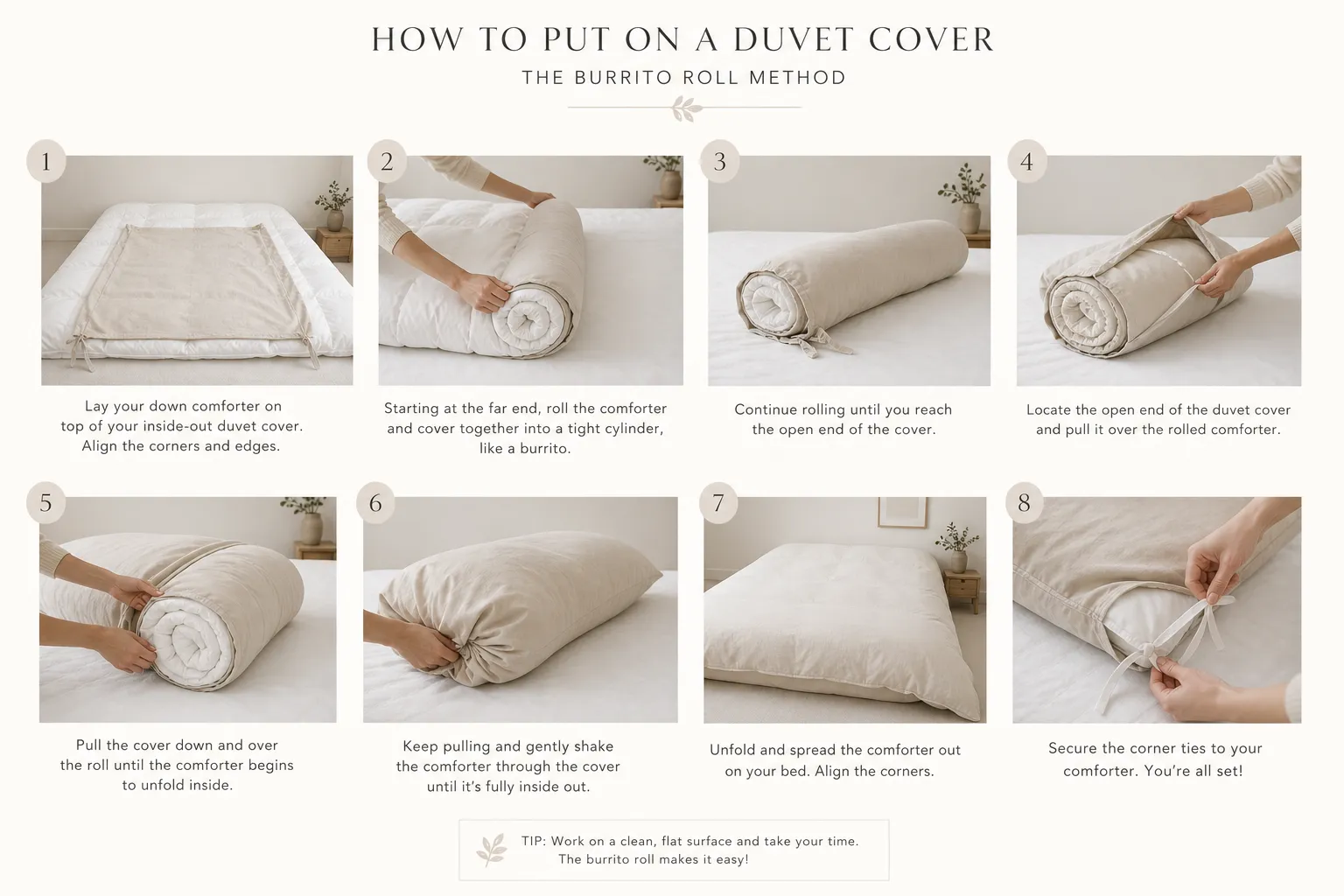
This method is especially helpful for larger sizes like duvet comforter queen, comforter duvet king, and duvet comforter california king.
How often should you wash a duvet cover vs. a down comforter?
Duvet cover
Wash every 1–2 weeks, depending on your habits, pets, and whether you sleep warm.
Down comforter
Wash far less often - usually only when truly needed and always according to care instructions.
This is one of the biggest advantages of using a duvet cover over a comforter. It protects the insert, preserves loft, and extends the life of premium bedding.
Are duvet comforter sets worth it?
A duvet comforter set can be worthwhile if the components are high quality and the sizing is thoughtfully coordinated. But not all sets are equal.
A good set should include:
a properly sized insert or clear insert compatibility
a quality duvet cover
dependable fasteners and ties
fabric that matches your sleep temperature
realistic care instructions
If you care about long-term comfort, it’s often smarter to build your own system from better materials rather than buy a set based on price alone.
What to look for when shopping with Warmy & Tummy
Warmy & Tummy is built for shoppers who want more than a generic bedding bundle. Our collections are designed around better sleep, premium materials, and the kind of flexibility real households need.
Why customers choose us
Premium bedding designed for deeper, more restful sleep
Comforters for different seasons and warmth preferences
Organic cotton, silk, linen, goose down, merino wool, and cooling fabrics
Customizable mix-and-match comforter options
Eco-friendly and sustainable choices
Stylish luxury designs and limited-edition collections
30-day hassle-free returns and money-back guarantee
Fast customer service via email and chat
Free shipping in the USA on qualifying orders
Backed by long industry experience and a 3-year limited warranty
Whether you need a duvet comforter full, a down duvet comforter king, or a refined queen insert-and-cover pairing, we believe bedding should feel personal, beautiful, and genuinely restorative.
Final verdict: what is the best fit for a duvet cover and down comforter?
The best fit is usually a duvet cover that closely matches the exact dimensions of your down comforter, includes secure corner ties, and uses a fabric that supports your sleep temperature and style. For most shoppers, the winning combination is a premium down insert paired with a breathable, beautifully made cover in organic cotton, linen, silk, or another thoughtfully chosen natural fabric.
If you want your bed to feel softer, look more luxurious, and support better sleep night after night, invest in the whole system - not just the insert. Warmy & Tummy makes that easy with premium materials, customizable options, trusted customer support, and the kind of elevated comfort that turns an ordinary bedroom into a true retreat.
Explore Warmy & Tummy’s duvet covers, down comforters, and mix-and-match bedding essentials to create your ideal sleep setup with confidence.
FAQ
Will a down comforter fit in a duvet cover?
Yes, a down comforter will usually fit well inside a duvet cover as long as the dimensions closely match. For the best result, compare the exact measurements in inches and choose a cover with interior corner ties to reduce shifting.
Should the duvet cover be the same size as the insert?
In most cases, yes. A duvet cover should be the same nominal size as the insert, and it can even be 1–2 inches smaller for a fuller look, but it should not be significantly larger or smaller.
What size duvet cover for queen down comforter?
Choose a queen duvet cover for a queen down comforter, but always check the exact measurements because queen sizing varies by brand. The ideal cover closely matches the insert and includes ties or loops for stability.
Do duvet covers fit over comforters?
Yes, duvet covers do fit over comforters, especially when the comforter has compatible dimensions and is not overly bulky. They work best when the insert has loops and the cover has ties to help keep everything in place.
How to put a duvet cover over a down comforter?
The easiest way is the burrito roll method: turn the cover inside out, lay it flat, tie the corners to the comforter, roll both together, pull the opening around the bundle, then unroll and shake. It is quick, tidy, and especially helpful for queen and king sizes.
What is a cover for a down comforter called?
A cover for a down comforter is called a duvet cover. It is a removable outer layer that protects the insert, makes washing easier, and lets you change the style of your bed without replacing the comforter itself.