

You get into bed shivering and wake up kicking the covers off. A temperature adjusting blanket can help if your bedding traps too much heat or feels damp. Without electricity, it won't heat or cool you. The fabric and fill decide how much of your body heat stays under the covers and how moisture moves away from your skin.
The warmest blanket in the store can feel stifling by midnight. In winter, you need enough insulation to fall asleep comfortably and a layer you can push aside later.
Do temperature adjusting blankets really work?
Temperature regulating blankets can make you more comfortable through temperature swings, but they don't set a temperature. Breathable fabrics let warmth and humidity escape, while insulating fills slow heat loss. Fibers that handle moisture can help with that clammy feeling. The room and the rest of your bedding play a part, too.
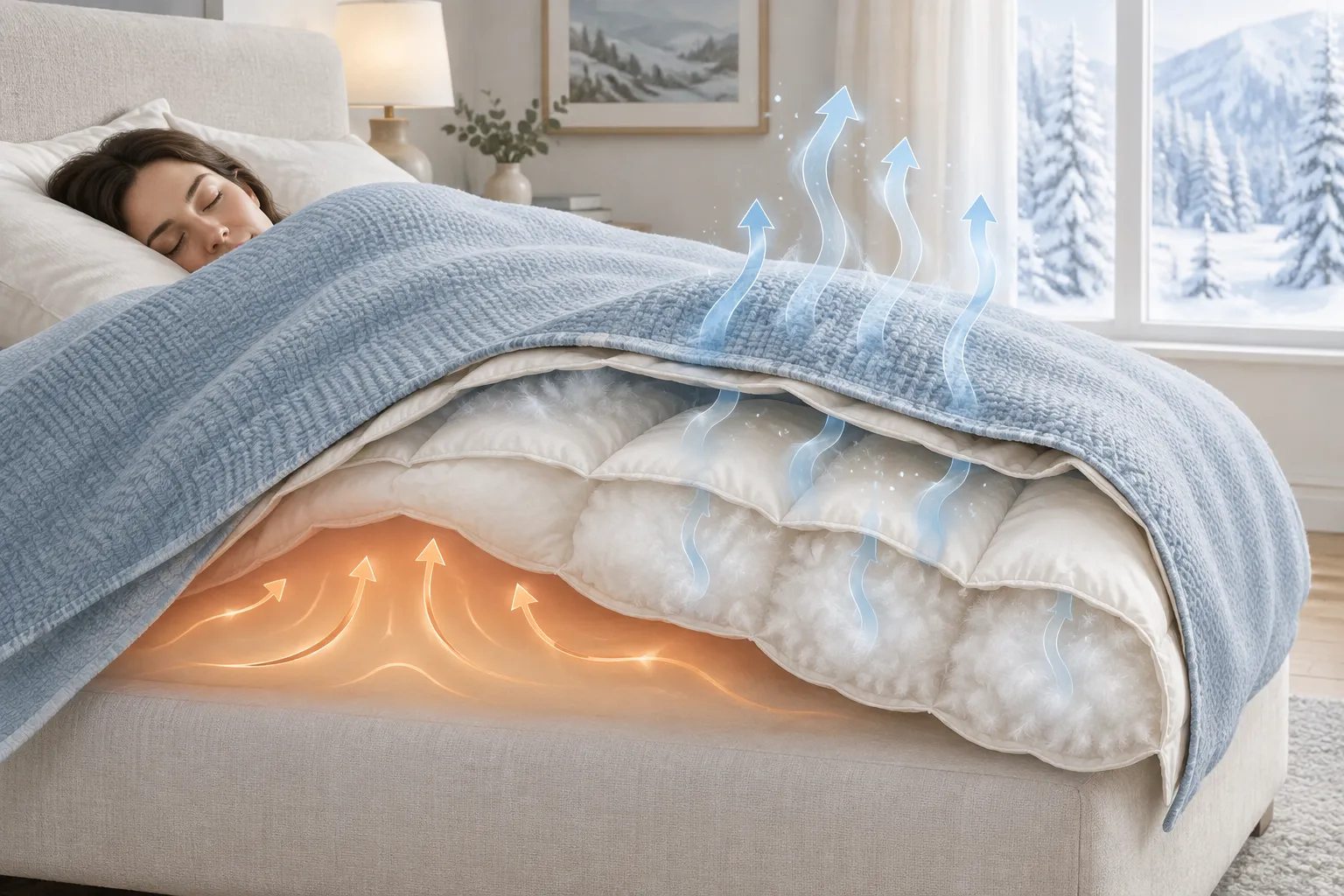
Your body supplies the warmth in a passive blanket. An electric blanket adds heat; a powered bed system can move it away. A “temp control blanket” without a power source may help you feel comfortable, but it can't control temperature like a thermostat.
Breathability and moisture aren't the same thing
Breathable fabric lets air and water vapor move through it. Fibers handle sweat in different ways: some absorb it; others move it toward a surface where it can evaporate. If your comforter holds too much heat, even a sheet that handles sweat well won't make the bed feel cool.
The fiber name is only part of the story. A loose cotton weave feels different from a dense cotton quilt, and a tight duvet cover or thick mattress protector can make the whole bed feel warmer.
What phase-change materials can do
Phase-change materials, or PCMs, take in heat as they change state and release it when they return to their previous state. That can soften a short temperature swing under the covers. The effect tapers off once the material has taken up as much heat as it can under those conditions.
A cool-to-touch fabric draws heat from your skin when you first lie down. As it warms, the cool sensation fades. A PCM finish and a cool first touch tell you little about how the whole blanket will feel at 3 a.m. under another layer.
Which blanket material handles heat best?
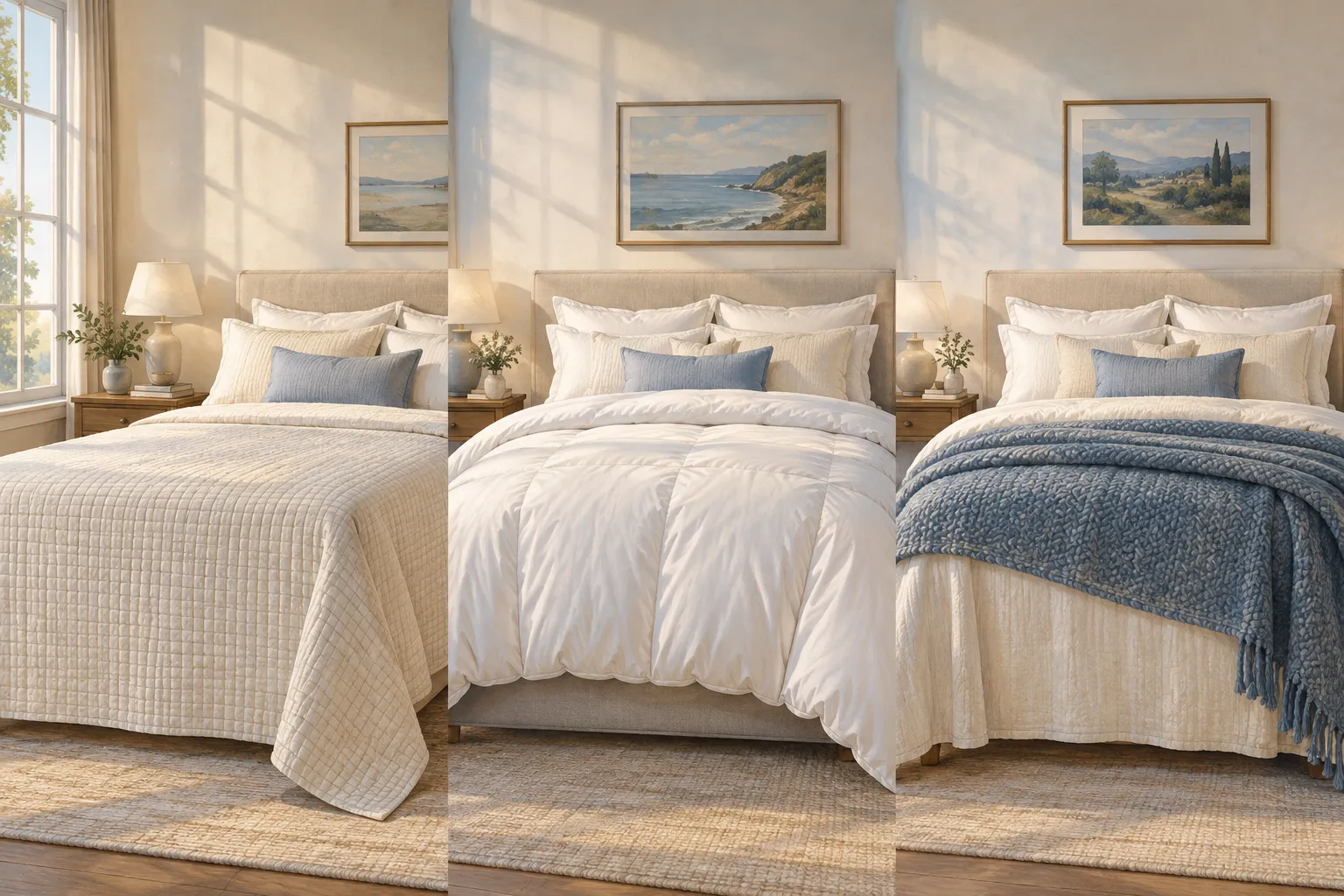
Choose enough insulation for when you feel coldest, then think about what happens once you warm up. A blanket's shell, fill, thickness and weave all affect that balance.
Material |
What it does well |
Where it can disappoint |
Best fit |
|---|---|---|---|
Down |
Traps a lot of warmth in a lofty, light fill |
A heavy fill can hold too much heat, even with a breathable shell |
Cold rooms and people who get chilled easily |
Wool, including merino |
Insulates while taking up moisture, so it can feel less clammy |
A thick wool blanket may still be too warm; some people dislike the feel or care needs |
Sleepers who swing between chilly and damp |
Tencel lyocell |
Feels smooth and manages moisture well in a breathable construction |
A thin fabric won't add much winter insulation; blends vary |
Hot sleepers who want a less clammy layer |
Cotton |
Offers familiar softness and airflow, especially in a lighter weave |
It can hold onto sweat and feel damp; dense weaves trap more heat |
People who want a simple, adjustable layer |
Synthetic “cooling” finishes |
May give a distinct cool-to-touch feel or short-term heat buffering |
The feeling may fade as the fabric warms; a dense synthetic fill can still trap heat |
People who like a cool first touch, with realistic expectations |
Down: warmth depends on the fill, not just the name
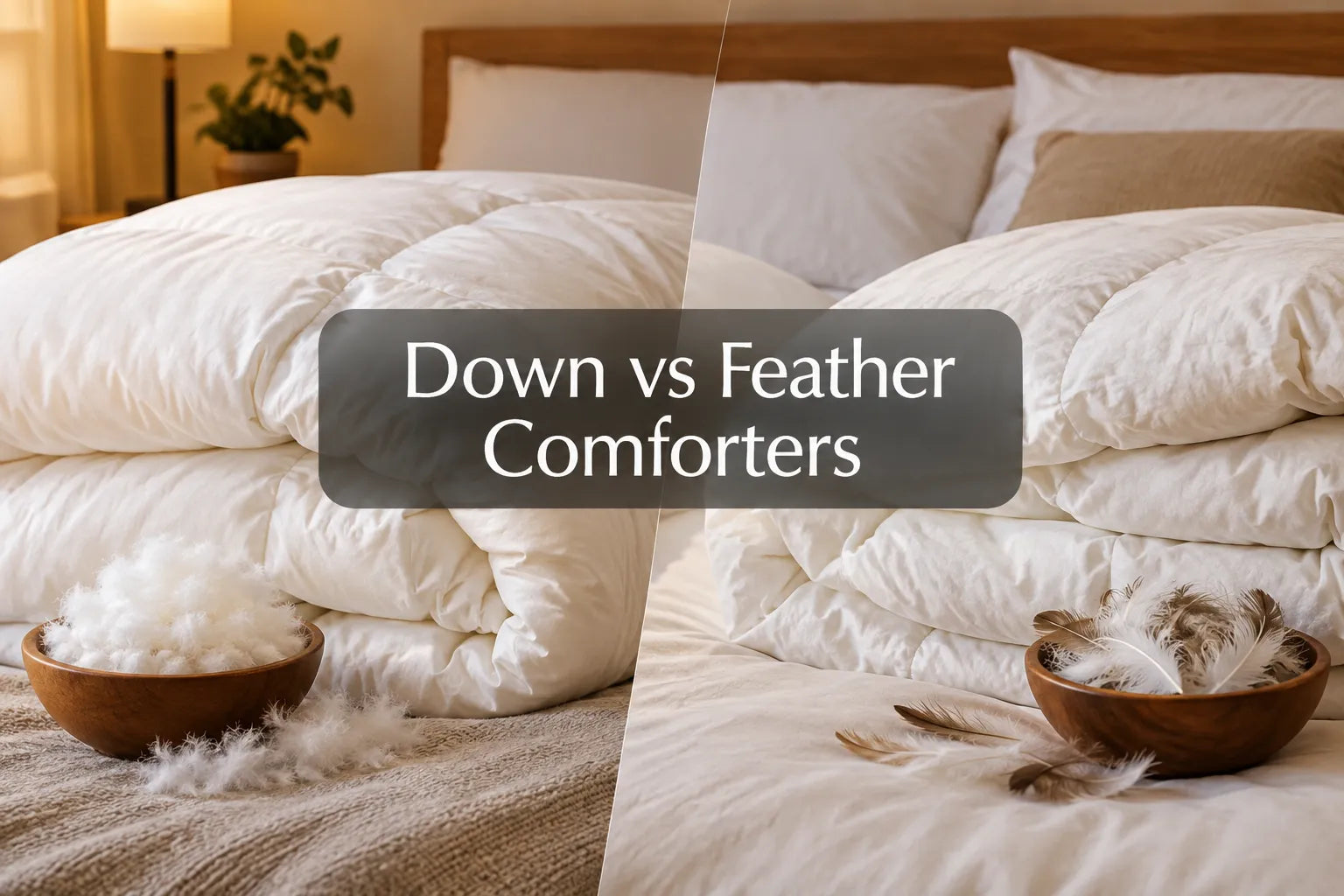
Down keeps you warm without weighing you down, which feels lovely in a cold bedroom. A lofty comforter still traps body heat. If you tend to heat up after falling asleep, a lighter fill and breathable cover make more sense than maximum warmth with a “cooling” shell.
Wool: a useful middle ground for cold-then-hot sleepers
Merino wool holds warmth and takes up moisture. If a thick synthetic throw leaves you feeling clammy, wool may feel more comfortable. It won't cool a hot room or stop a hot flash, so choose a medium-weight layer you can fold back if your temperature changes overnight.
Tencel, cotton and synthetic finishes: mind the whole construction
Tencel lyocell and lighter cotton fabrics can make the bed feel less stuffy. Either can work as a sheet, cover or lightweight blanket alongside enough fill to keep you warm. Cotton can feel damp when it stays wet; lyocell may feel drier if you sweat.
That chilly first touch is often the selling point of a synthetic cooling fabric. But if it covers thick polyester fill, it may hold more heat than a breathable quilt. A phase-change finish can buffer a brief swing; it can't keep carrying heat out of a warm bed all night.
How to pick a temperature adjusting blanket for winter
If your temperature changes overnight, try a breathable base with an extra insulating layer you can fold back. One heavy comforter can be frustrating: you need warmth to settle in, then want an easy way to let some of it go.
Start with the room. A heated bedroom needs less fill than a cold one. If you wake up hot, choose a lighter comforter instead of trusting a winter label.
Consider what touches your skin. A breathable cotton or lyocell sheet can change how a warm comforter feels; wool may help if dampness bothers you.
Keep the layers separate. Leave a wool or cotton blanket at the foot of the bed over a lighter comforter. Pull it up when you're cold and push it away when you're warm.
Give each sleeper a choice. If you and your partner disagree about warmth, separate top layers may work better than sharing one blanket at a supposed “ideal” temperature.
Warmy & Tummy has goose down comforters with different shells and warmth choices, as well as merino wool and cashmere blankets. Its mix-and-match option lets you pair down's light insulation with the shell and warmth level you want. If you need very little insulation, even a down comforter chosen with care may be too warm.
Can a cooling blanket stop night sweats?
A cooler-feeling blanket may ease the clamminess you get when heat builds up under the covers. But you could buy several cooling products and still wake sweaty if bedding isn't causing the problem.
"A systematic review of nine trials found no clear improvement in measured sleep outcomes from body-cooling bedding compared with participants' usual sleep environments; the authors rated the evidence very low to low certainty." - Systematic review and meta-analysis on body-cooling bedding
If you keep sweating through the night despite lighter bedding and a comfortable room, speak with a healthcare professional, especially if the sweating is new or comes with other symptoms. A blanket may help you feel more comfortable, but it won't treat the cause.
The comfortable choice is the one you can adjust
For a cold winter bedroom, start with enough warmth and keep an outer layer you can push aside. Love down but tend to run hot? Warmy & Tummy's shell and warmth options let you choose a lighter comforter instead of the thickest one. If dampness bothers you most, try a merino wool blanket. Either way, you can adjust the covers when you need to, without expecting them to cool the room.
FAQ
How to make your blanket warmer?
Add a separate insulating layer, such as a wool blanket over your lighter bedding, or choose a warmer fill for a cold room. Keep the layers easy to remove if you tend to wake up hot.
Are there any cooling blankets that actually work?
Yes, a breathable or moisture-managing blanket may help you feel less hot or clammy. It won't actively lower the room temperature, and a cool-to-touch fabric may feel less cool after it warms against your body.
What are the benefits of a cooling blanket?
A lighter, breathable blanket can reduce trapped heat, while moisture-managing fibers may make sweaty bedding feel less clammy. The benefit depends on its construction and the other layers on your bed.
Are cooling blankets machine washable?
Some are, but care instructions vary with the fabric, fill and finish. Check the specific blanket's care label before washing; wool, down and specialty finishes may need different treatment.
What are the pros and cons of using a wool blanket?
Wool gives you insulation and moisture handling in one layer, which can suit a cold-then-hot sleeper. A thick wool blanket can still overheat you, and its texture and care requirements won't suit everyone.