

Standing in front of two sheet sets that both say “luxury”? To find the best quality bed linen, look for a named fiber, a weave that suits how you sleep, sound stitching and fabric that holds up in the wash. A big thread-count number can't tell you all that.
You'll spend far longer sleeping in those sheets than touching a swatch. Both cool, crisp cotton and smooth, drapey cotton can be premium, but you may love one and dislike the other.
How to recognize the best quality bed linen
Start with the fiber label, then read the weave and care label. “Hotel luxury” gives you little to go on if the seller doesn't name the fabric.
Fiber: what is the fabric actually made of?
Long-staple cotton is a useful sign if you want a smooth sheet for regular use. A label that says only “cotton” gives you less detail to judge. Flax linen feels airy and textured, and it relaxes with use rather than feeling like polished cotton.
Silk feels smooth against skin but calls for more careful care. Lyocell has a soft, fluid drape. If you see “bamboo,” read the fiber content: bamboo-derived viscose differs from a sheet woven from plant fibers. Polyester microfiber may feel soft out of the package; it won't feel like cotton or linen.
Weave: crisp or smooth?
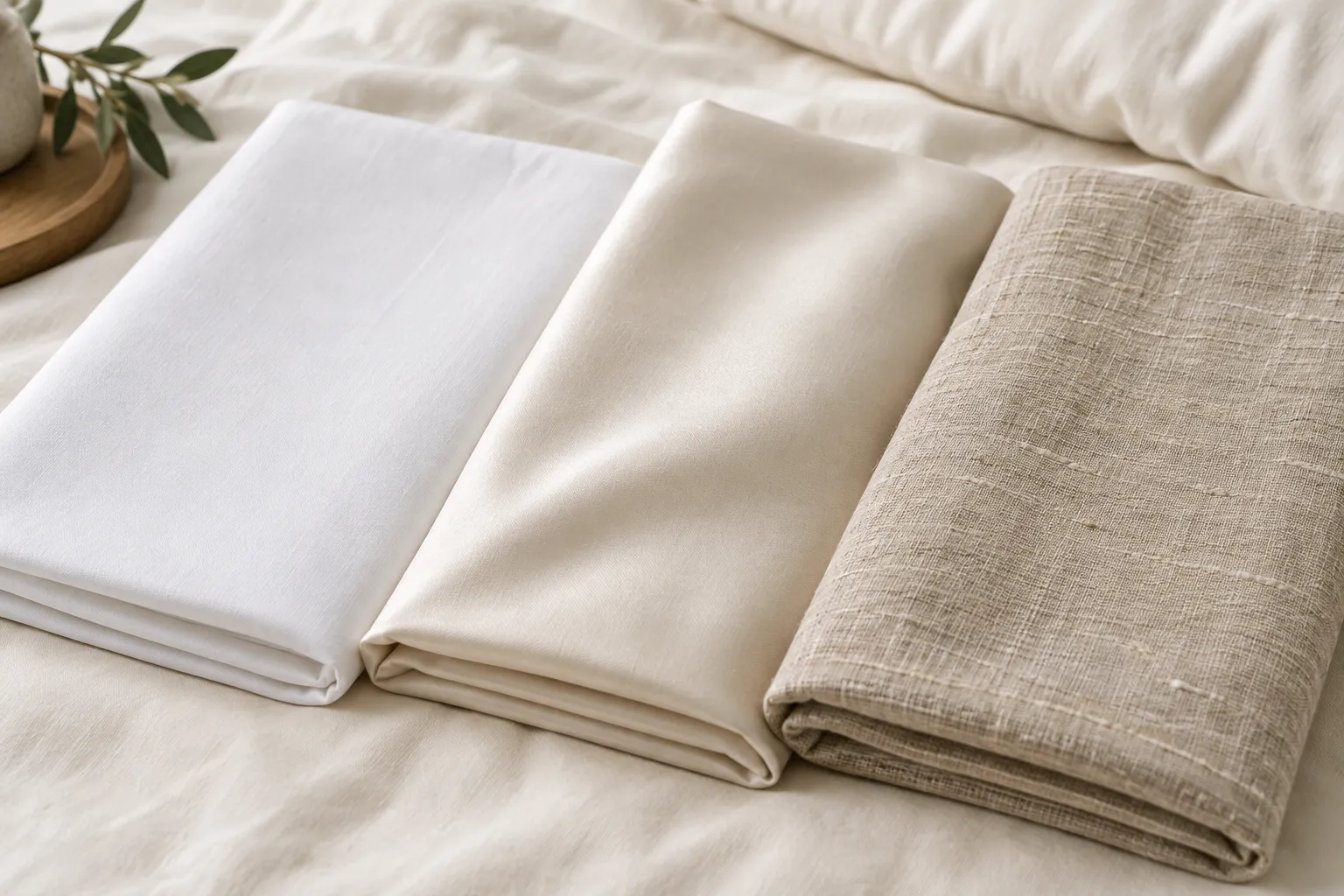
Percale and sateen describe the weave, not the cotton's grade. Percale feels cool and crisp, with a matte look. Sateen feels smoother and drapes closer, with a subtle sheen. If you sleep warm and dislike cling, try percale. If you want softness on the first night, try sateen.
Linen is another option for warm sleepers who enjoy texture and don't mind wrinkles. Touch a swatch to get a sense of the feel, though washing may change how the fitted sheet fits.
Thread count and finish: what can the numbers hide?
Thread count describes the threads in a measured area of fabric; it doesn't measure fiber quality. The number alone says little about strength, breathability or how a finish will wear. The CottonWorks sheet-buying resource also points to yarn, fabric construction and finishing. Compare counts only when the fiber and weave are similar.
“Many equate higher thread counts with better quality; however, there are many other factors to consider such as fiber type, yarn spinning system, yarn count, fabric weight, fabric construction and finishing.” - CottonWorks, Cotton Sheets Buying Guide
A slick, coated-feeling surface deserves a closer look if the seller doesn't explain the finish. Prewashed linen can spare you some initial stiffness, but you'll learn more about its quality after a few washes.
Match fabric to the feel you want
The best premium bed linen depends on how warm you sleep, which textures you enjoy and how you do laundry. Picture the feel you want at night before you choose.
Fabric or construction |
Feel and best fit |
Tradeoff to expect |
|---|---|---|
Cotton percale |
Crisp, matte and airy; good if you like a freshly made, cool-feeling bed |
Can wrinkle and may feel firm at first |
Cotton sateen |
Smooth, closer drape; good if you want a softer hotel-style feel |
Can feel warmer or less crisp than percale |
Flax linen |
Textured and airy; good if you like a relaxed look |
Wrinkles readily and may feel coarse at first |
Lyocell |
Smooth, fluid feel; good if crisp cotton bothers you |
Drape may feel clingier than percale |
Silk |
Sleek, delicate feel; good if you prioritize a smooth surface |
Care is more demanding |
Microfiber |
Soft initial feel; good if upfront cost matters most |
Not the same airy or textured feel as cotton or linen |
“Cooling” depends on the fabric, weave and layers above your sheets. A heavy comforter can make even airy sheets feel warm.
What does hotel-style bedding actually mean?
Hotel-style bedding describes a look and a laundering routine. White sheets, neat layers and a tucked-in bed create that finish, while the label tells you nothing about fiber length, weave or durability.
Commercial bed linen needs to handle frequent washing and look consistent from room to room. At home, you might care more about the feel: try cotton percale for crispness or cotton sateen for a smoother finish.
Inspect a bed linen set before you buy
A quality bed linen set should make its contents and fit clear. “Full bed linen sets” don't have a fixed contents list: one seller may include a flat sheet, another may leave it out, and a third may add a duvet cover.
Read the composition and care labels for fiber percentage, weave and washing instructions. “Premium bed sheets” alone tells you none of these.
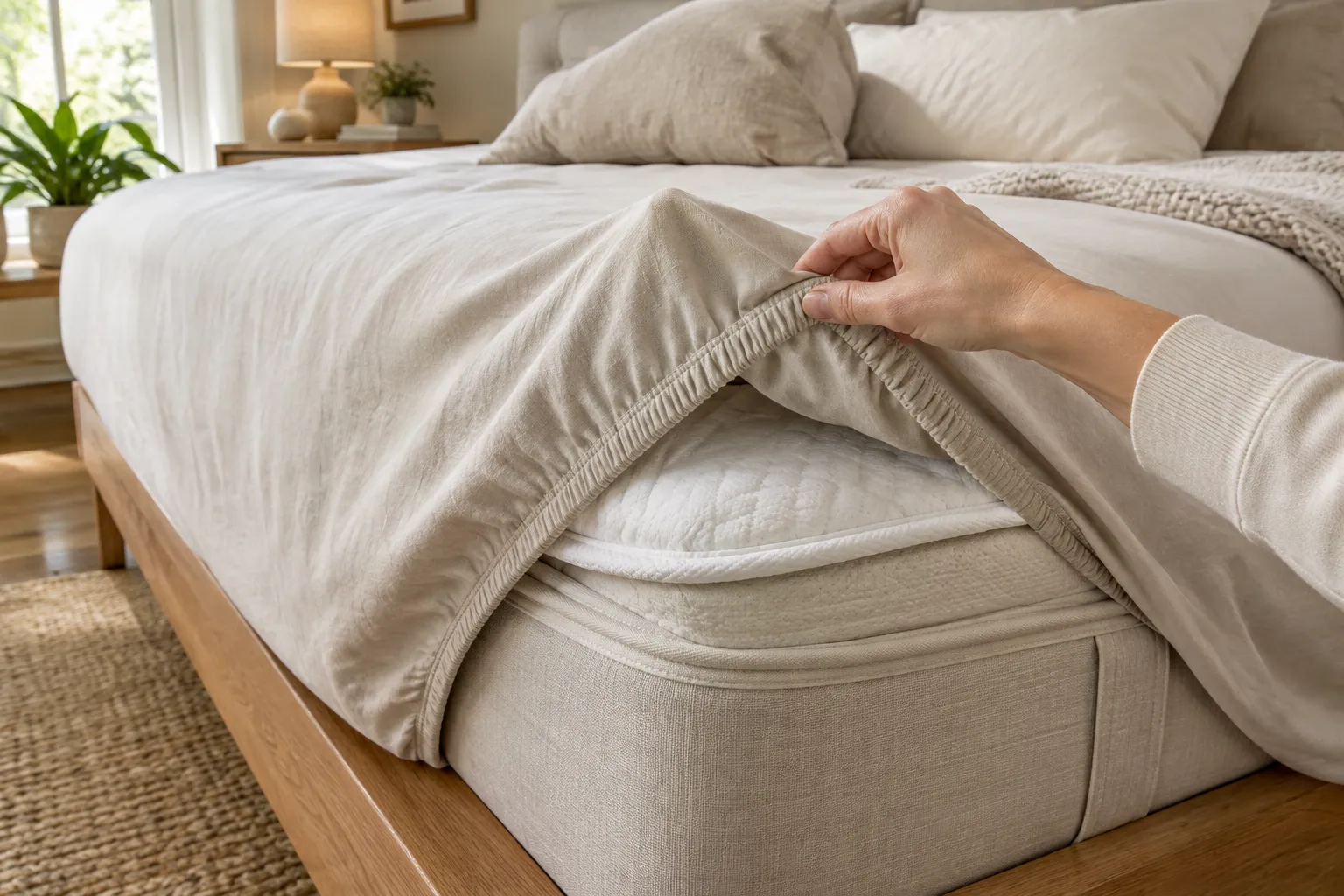
Measure your mattress with any topper in place. Compare that depth with the fitted sheet's stated pocket depth so the elastic has room to grip.
Count the pieces. A single bed linen set may have one pillowcase; with a full bed linen set, decide if you need two. See whether a duvet cover is part of the package.
Look for straight seams, secure elastic and tidy hems. If there's a duvet cover, its closure should hold the insert in place.
Read certification wording. An organic-fiber claim and a finished-textile safety claim answer different questions; neither tells you how the sheets feel. OEKO-TEX explains that STANDARD 100 concerns testing for harmful substances, including in bed linens.
“OEKO-TEX® STANDARD 100 is a label for textiles tested for harmful substances.” - OEKO-TEX
Online, you should be able to find those details in the product description. If they're missing, a less expensive set with clear specifications gives you a better basis for choosing.
How can you tell whether linens stay premium after washing?
You learn a lot about bed linens after ordinary laundering. If the fabric softens while the sheet keeps its shape and the seams hold, you'll enjoy it longer than a sheet whose best moment was opening day.
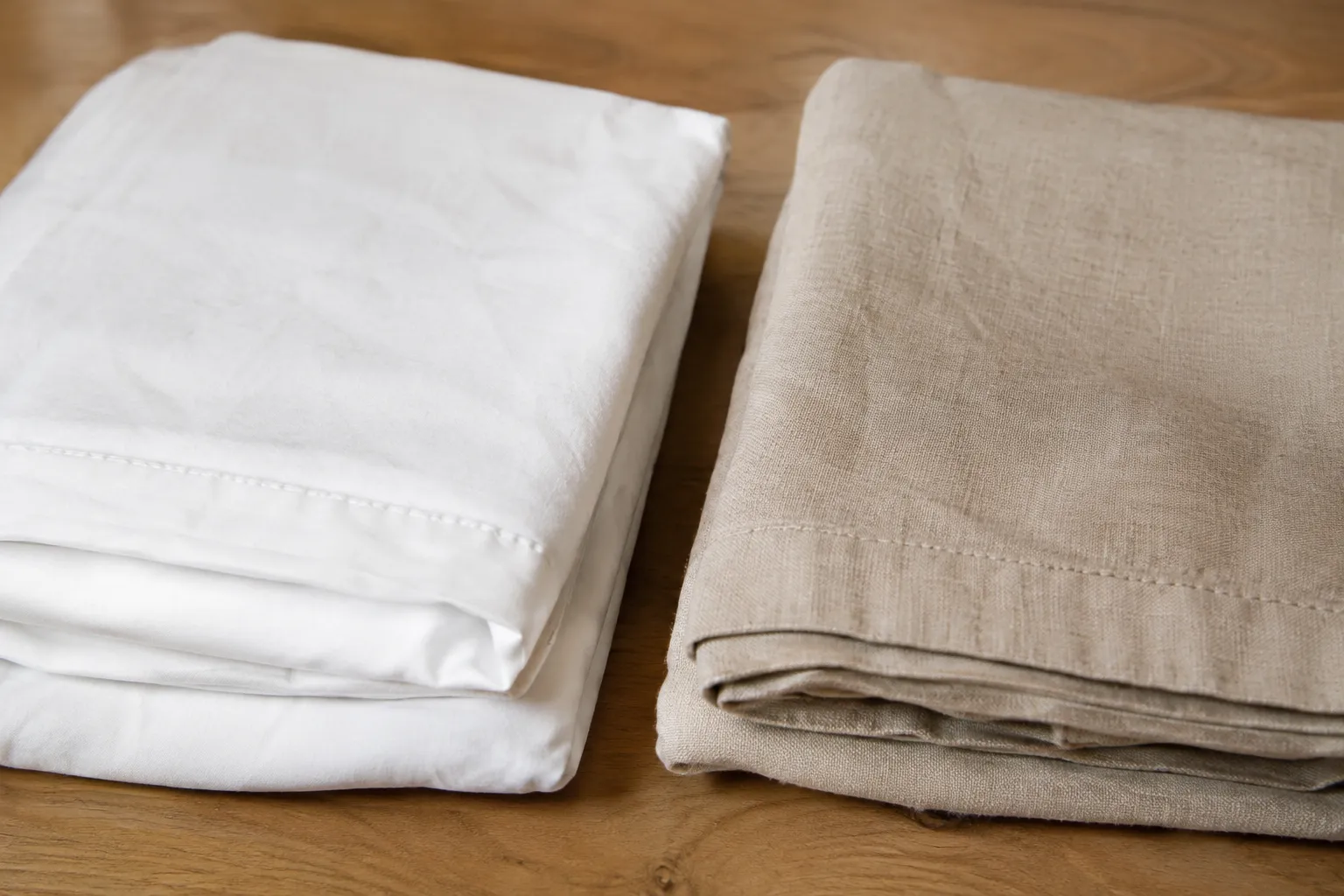
After the first few washes, pull the fitted sheet back over the corners. Do the seams lie flat? Is the color even? Expect some rumpling with linen and percale, but watch for heavy pilling, loose stitching or a surface that turns scratchy. Follow the care label and leave space in the machine; harsh washing can damage even good fabric.
Linen tends to soften over time. With cotton, see if the original crispness or smoothness holds up; the two fibers don't need to age in the same way.
Build a bed for how you sleep
Sheets are only one layer of a comfortable bed. After you choose a texture you like, match the duvet cover and comforter weight to your room and warmth preference.
Warmy & Tummy has sheet sets and duvet covers you can pair with a comforter. If you run warm, try a breathable outer layer and a lighter insert rather than putting a heavy layer over cool sheets.
The buying verdict
Pay more when the details earn it: a named fiber, the weave you enjoy, solid seams, a fit that stays put and care you can manage. An inflated thread count can't make up for missing specifications.
Build the rest of the bed around your sleep temperature. At Warmy & Tummy, you can choose the sheet feel you like and explore mix-and-match comforter options for a layer suited to your nights.
FAQ
Is linen a good choice for bed sheets?
Yes, if you like an airy, textured sheet that relaxes over time. Linen wrinkles easily and may feel firmer than cotton at first, so it isn't the best match if you want a sleek, smooth surface straight from the package.
Which quality bedsheet is best?
There's no single best sheet for everyone. Try cotton percale for a crisp feel, cotton sateen for a smoother drape or flax linen for an airy, relaxed feel; then compare fiber details, fit and care instructions before you buy.
Which sheets do 5 star hotels use?
There isn't one universal sheet used by all five-star hotels. For a hotel-like feel at home, look at cotton percale if you prefer crisp sheets or cotton sateen if you prefer a smoother surface, then choose a set that fits and washes well.