

Got someone who pulls the covers up to their chin and still wakes up cold? The best comforter for sleeping gives them warmth without weight. A high-fill-power down insert in the right warmth level is a lovely gift, especially with a sheet set or duvet cover. The puffiest one in the photo won't necessarily suit their bedroom.
Best comforter for sleeping when you're always cold
For a cold sleeper who dislikes a stack of blankets, start with a lofty down comforter. Down traps insulating air with less filling than many down-alternative options. The trick is matching its warmth level to their bedroom.
Does their partner run hot? Give them a lighter shared insert and an extra blanket for the cold side. If they avoid animal down, a down alternative can work, though similar warmth may come with more weight.

Why high-fill-power down feels warm without feeling heavy
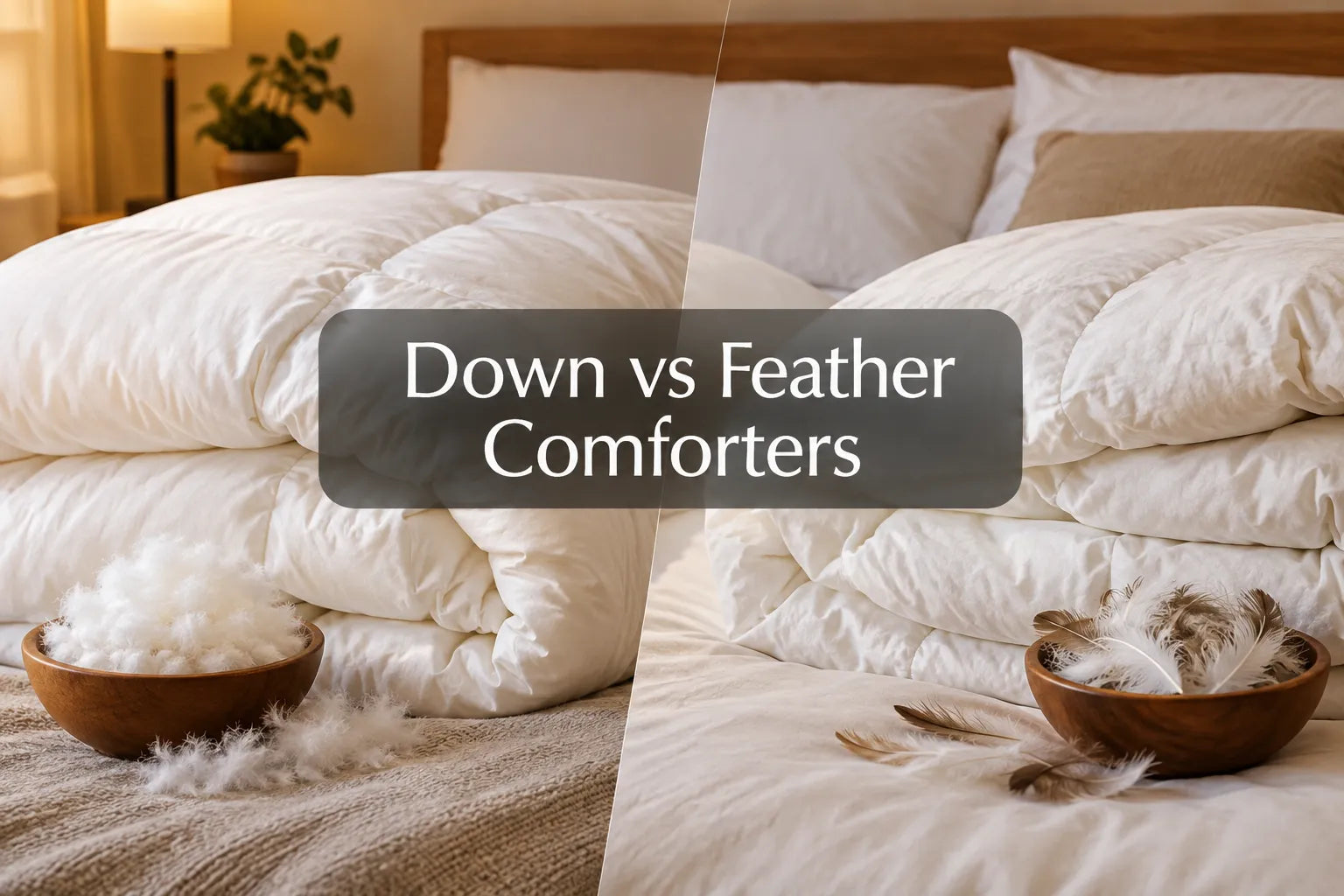
Fill power tells you how much space one ounce of down occupies when it lofts up. Higher-fill-power down traps more air per ounce, so you can get the same warmth with less down and less weight. The number alone won't tell you how warm the finished comforter feels: fill amount, shell, stitching and bedroom temperature also matter. Fill weight means the number of ounces of down inside, which is different from fill power.
"Comforters with high fill power will keep you warmer with less weight." - American Down and Feather Council
The stitching changes how that warmth feels across the bed. Baffle-box compartments let down puff up and help prevent thin spots in a colder room. Sewn-through stitching joins the shell layers, creating a flatter, lighter insert that may feel cooler along its seams. Even a high fill-power number can't tell you which construction will suit them.
An insert can feel light against you and still sleep warm. In a heated bedroom, start with a lighter warmth level even for a cold sleeper. A chilly bedroom calls for more insulation, which can still come in a light-feeling fill. If only their feet get cold, try a separate throw so they can adjust without warming their whole body.
Which lightweight warm comforter should you give?
Ask what bothers them at night before choosing the best lightweight warm comforter. Cold toes call for a different fix than a blanket that feels too heavy, and a hot-sleeping partner complicates both.
Gift recipient |
Starting point |
Trade-off to know |
|---|---|---|
Always cold, hates bulky layers |
Lofty down with an appropriately warm fill level |
Down can feel too warm if their room is mild |
Cold in a genuinely chilly bedroom |
Warmth-focused down with baffle-box construction |
More insulation can still make the insert warmer than a partner wants |
Avoids animal fill |
Down alternative with a warmth level suited to the room |
Similar insulation can take more fill and feel heavier |
Shares a bed with a hot sleeper |
Lighter shared comforter and a separate throw on the cold side |
It won't feel as toasty as one warm insert across the whole bed |
Warmy & Tummy lets you choose the shell and warmth level of a goose down comforter through its mix-and-match option. That's handy when you know the person wants a light feel but runs cold. The catch: without some idea of their bedroom temperature, the warmest option is still a gamble.
Choose the shell for the feel they like
Without a duvet cover, the shell rests against the sleeper. Cotton feels familiar; linen adds texture; silk feels smooth. For someone who sometimes overheats despite getting cold at night, a cooling-oriented fabric may appeal, though you'll still need to choose the right warmth level.
Make it a complete bedding gift
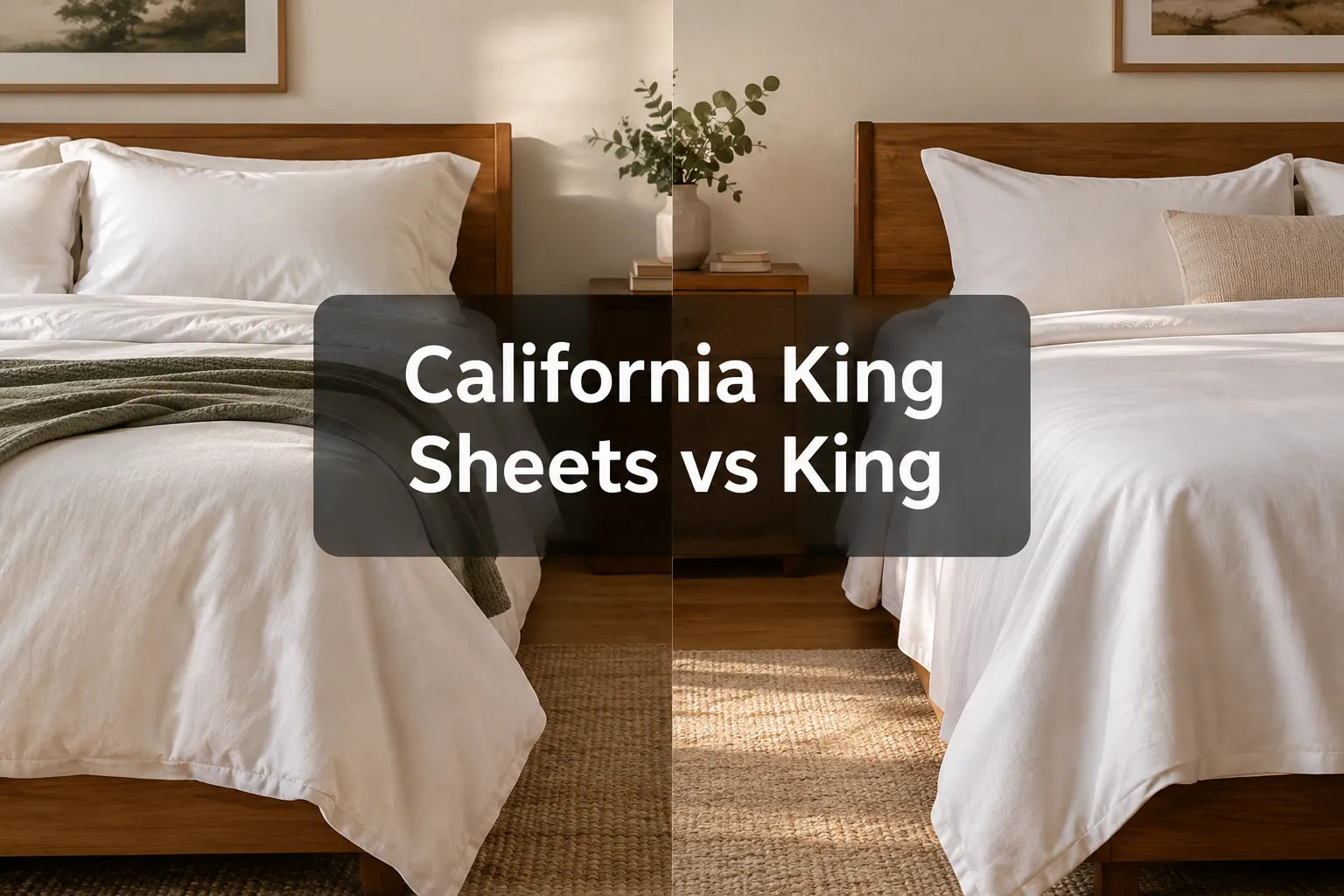
For someone who'd love to remake the whole bed, add a sheet set. If they already love their sheets, give them a duvet cover to change the color and feel instead. Warmy & Tummy has both, so you can make a complete gift without piling on another heavy blanket.
Softer-feeling sheets may please someone who dreads slipping into a cold bed. If they're devoted to crisp sheets, let the insert supply the warmth. A cover protects the comforter, but a thick one can make the finished bed warmer than you meant it to be.
Care and fit details worth knowing
If they wash every bit of bedding at home, a delicate shell could make this gift a chore. Care instructions vary with the fill and fabric, while a cover helps protect the insert between washes. For a cover that stays put, look for ties that connect to loops on the insert.
A queen label doesn't guarantee the same dimensions from one product to the next. Mattress height and the drop they like determine how much width they need. Extra width looks generous on the bed, but it's also more fabric to handle.
To estimate the width, add twice the mattress thickness to its width. A 60-inch-wide mattress that's 12 inches thick needs at least 84 inches of comforter width to reach the lower edges; give it more for a longer drop. Compare that number with the actual comforter and duvet-cover dimensions.
Before you gift it: size checklist
Warmth won't help much if the comforter barely covers the bed. Warmy & Tummy's warmth levels and mix-and-match materials are worth a look when you want cozy sleep without heavy layers. Before you choose the insert, sheets or cover, get these details:
Bed size and actual mattress width, length and thickness.
Preferred side drop, especially on a high mattress or shared bed.
Comforter dimensions compared with duvet-cover dimensions, not just the size names.
Sheet fit for the mattress depth and their usual pillow size, if you're adding a set.
Their room temperature and whether they prefer airy warmth or a weighted feel.
FAQ
Is it better to sleep with a comforter or blanket?
For someone who wants warmth without a stack of heavy layers, a lofty comforter is a good starting point. A blanket works well as an adjustable extra layer, especially when two sleepers prefer different temperatures.
What are the most comfortable bedding sets available?
The most comfortable set is one that matches the sleeper's preferred sheet feel, comforter warmth and bed size. For a cold sleeper who dislikes heavy bedding, start with a light-feeling down insert, then choose sheets and a duvet cover for the texture they enjoy.
How long should a duvet last?
There isn't one useful replacement date for every duvet. Its life depends on its construction, care and whether the fill still lofts evenly; if persistent flat spots leave the sleeper cold, it's time to consider a replacement.