
Difference Between Down and Goose Down
If you’ve been shopping for a premium comforter and found yourself wondering about the difference between down and goose down, you’re not alone. The wording can feel confusing at first, especially when brands use “down,” “goose down,” “duck down,” “feather,” and “fill power” almost interchangeably.
Here’s the short version: down is the soft insulating layer found beneath the outer feathers of waterfowl, usually ducks or geese. Goose down is simply one specific type of down. So the real comparison is not “down vs. goose down” as if they’re opposites - it’s generic down vs. goose down, or more accurately, duck down vs. goose down, plus the quality differences within each.
For comfort-conscious households, couples with different temperature preferences, and shoppers investing in bedding that actually improves sleep, these details matter. The fill inside your comforter affects warmth, loft, softness, longevity, breathability, and price. Choosing well can mean the difference between “just fine” bedding and that cloud-like, sink-in comfort you look forward to every night.

What “Down” Actually Means
Down is the light, airy cluster that grows underneath a bird’s tougher exterior feathers. Unlike feathers, down has no hard quill shaft. Instead, it forms a soft, fluffy structure that traps air and creates insulation.
That trapped air is what gives a down comforter its signature feel:
warm without feeling overly heavy
breathable rather than stuffy
lofty and plush instead of flat
able to regulate temperature across seasons
This is why down remains one of the most loved fills for luxury bedding. It offers a unique combination of warmth, softness, and lightness that synthetic fills often try to imitate but rarely match perfectly.
So What Is Goose Down?
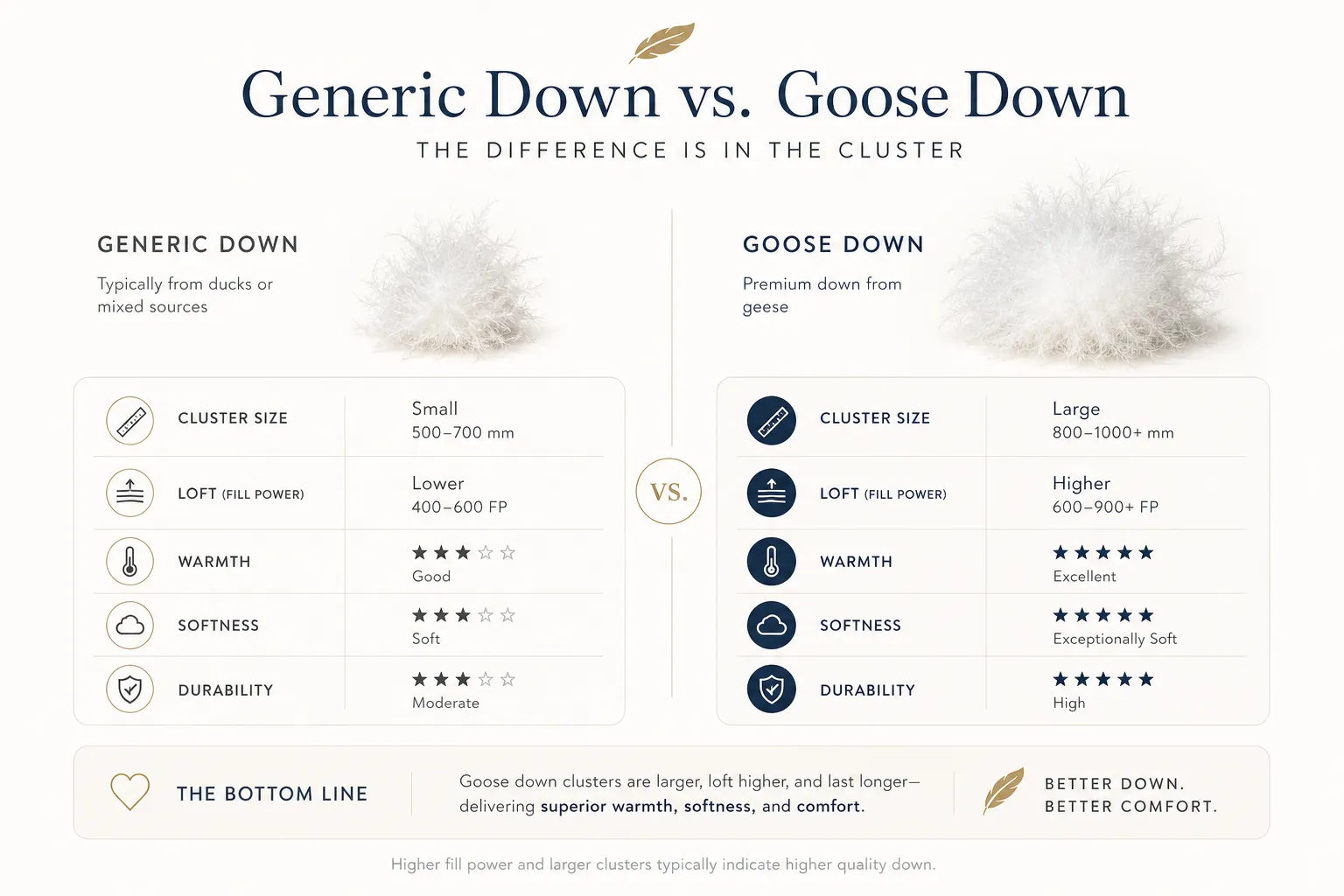
Goose down comes specifically from geese. It is still down, but its cluster size is often larger than the down from ducks, especially in premium grades. Larger clusters usually mean more loft, better insulation, and a softer, more billowy feel.
That’s why goose down is so often associated with high-end comforters and hotel-level bedding. Not all goose down is automatically superior, but high-quality goose down is often the benchmark for premium warmth-to-weight performance.
The Real Difference Between Down and Goose Down
To clear up the terminology, here’s the most useful way to think about it:
Down = a broad category
Goose down = a specific subset of down
Duck down = another common subset of down
When shoppers ask about the difference between down and goose down, they usually want to know whether a product labeled simply “down” is the same as one labeled “goose down.” The answer is: not necessarily.
Some products use “down” as a general term when the fill may be:
duck down
goose down
a blend
a mix of down and feathers
That’s why it’s always smart to look beyond the front label and check the product specifications.
Goose Down vs. Generic Down: Quick Comparison
Feature |
Generic “Down” Label |
Goose Down |
|---|---|---|
Meaning |
Could be duck, goose, or a blend |
Specifically from geese |
Loft |
Varies widely |
Often higher in premium grades |
Warmth-to-weight ratio |
Varies |
Typically excellent |
Softness |
Depends on fill quality |
Often silkier and fluffier |
Durability |
Depends on construction and grade |
Often longer-lasting in high-quality products |
Price |
Usually broader price range |
Often more expensive |
Why Goose Down Often Feels More Luxurious
The main reason goose down gets so much attention is cluster size. Bigger clusters trap more air. More trapped air usually means:
better insulation
more loft
lighter feel for the same warmth
better resilience over time
"Down fill power measures the loft or 'fluffiness' of down insulation, indicating how much space one ounce of down occupies in cubic inches. Higher fill power signifies greater loft and insulating efficiency." - REI
That’s a major reason premium goose down comforters can feel incredibly warm without feeling dense or overly weighted.
Fill Power: The Number That Matters More Than the Bird Alone
One of the biggest content gaps in many bedding guides is this: the bird type matters, but fill power and construction matter just as much.
Fill power measures how much space one ounce of down occupies. In simple terms, it reflects loft and insulating efficiency.
General Fill Power Guide
Fill Power |
What It Usually Feels Like |
Best For |
|---|---|---|
400–500 |
Basic loft, modest warmth |
Guest rooms, mild climates |
550–650 |
Balanced comfort and value |
Everyday use, many all-season comforters |
700–800 |
Premium loft and warmth |
Luxury bedding, lighter-yet-warmer comfort |
800+ |
Exceptional loft and performance |
Cold sleepers, high-end comforters |
A lower-grade goose down may underperform compared with a higher-grade duck down. So if you’re comparing products, avoid making the decision based on species alone.
Fill Power vs. Fill Weight
Another overlooked detail: fill power is not the same as fill weight.
Fill power tells you how lofty and efficient the down is.
Fill weight tells you how much down is actually inside.
A great comforter balances both. If you sleep warm, you may love a higher fill power with lighter overall fill. If you sleep cold, you might prefer a warmer construction with more fill weight or a winter-weight design.
Goose Down vs. Duck Down
Because “down” often means duck down in general-market products, this is the comparison most shoppers really need.
Goose Down
Goose down is often:
loftier
warmer for its weight
softer in premium grades
longer-lasting
more expensive
Duck Down
Duck down is often:
more affordable
widely available
still very comfortable
slightly lower in average cluster size
sometimes more variable in odor if lower-quality processing is used
That doesn’t mean duck down is bad. In fact, a well-made duck down comforter can be an excellent choice. But if your goal is a truly elevated, airy, luxury-bed experience, goose down often wins on feel and performance.
Down vs. Feather: Not the Same Thing
Another common source of confusion is the difference between down and feathers.
Down
soft and cluster-like
no stiff quill
superior loft
better insulation
lighter and fluffier
Feathers
flatter and heavier
contain a quill shaft
add structure more than loft
usually less expensive
more common in budget pillows and blended fills
A comforter filled with mostly down will generally feel softer, lighter, and more insulating than one with a high feather content.
What Affects Warmth Besides Fill Type?
The fill is only one part of the sleep experience. A truly excellent comforter also depends on:
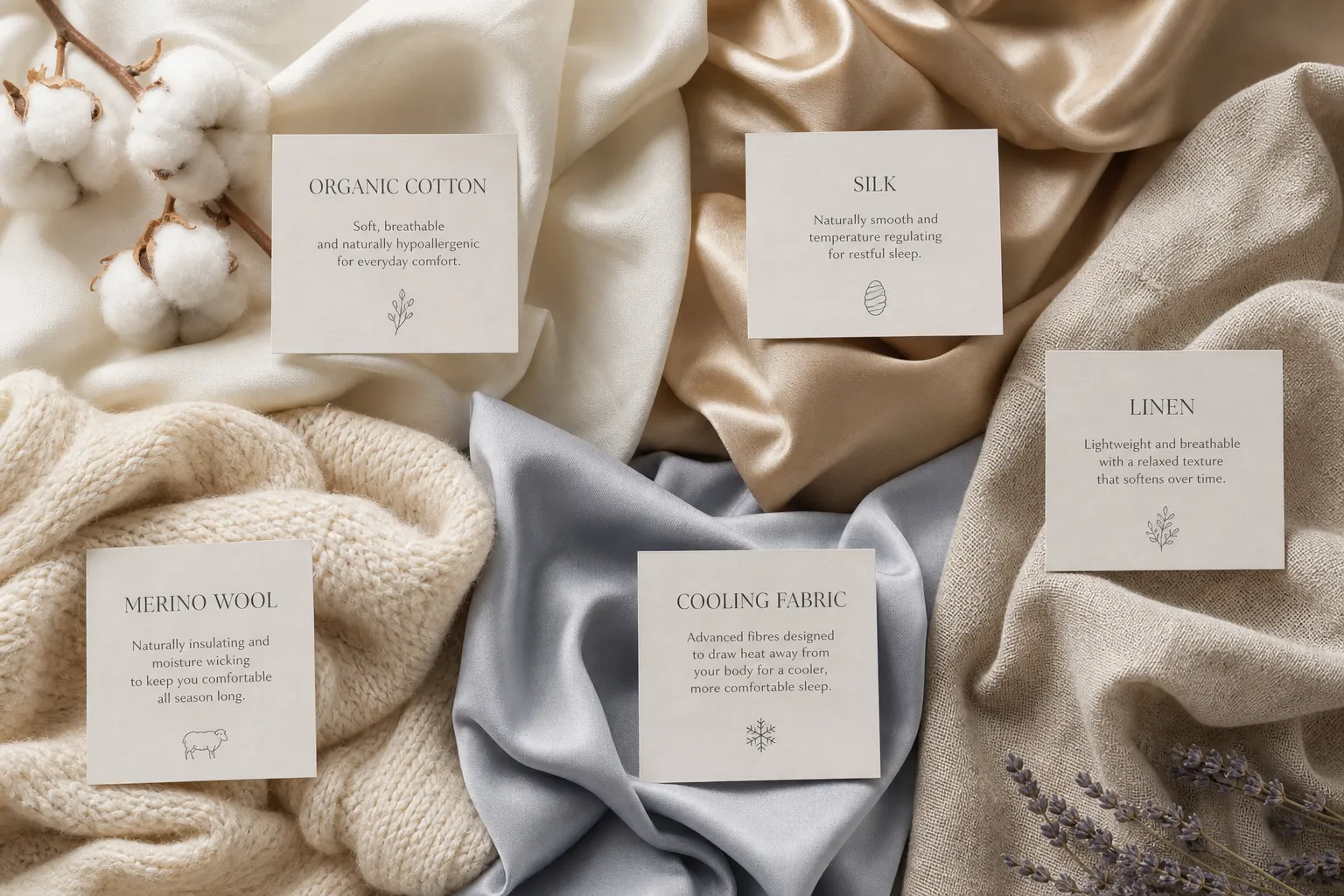
Shell Fabric
The outer fabric affects breathability, softness, and how well the fill stays contained. Premium choices include:
organic cotton for breathable softness
silk for smooth temperature balance and elegant drape
linen for airy, textured comfort
cooling performance blends like Tencel-based shells for hot sleepers
Construction
Good construction prevents the fill from shifting and keeps warmth evenly distributed. Look for:
baffle box construction
quality stitching
well-finished edges
tightly woven shells
Warmth Level
Not every sleeper needs the warmest comforter available. A better match often comes from choosing the right warmth level for:
your room temperature
your climate
whether you sleep hot or cold
whether you share the bed with a partner
This is where Warmy & Tummy stands out naturally. A premium bedding brand shouldn’t force every customer into one “best” comforter. The better approach is offering a range of warmth options, shell materials, and personalized comfort choices so your bed feels tailored to your sleep, not generic.
Which Is Better for Softness?
In premium bedding, goose down is often considered the softer option because the clusters tend to be larger and more cloud-like. That translates to a comforter that feels lofty and airy instead of dense.
But softness also depends on:
shell fabric smoothness
fill ratio
construction quality
whether the down is clean and well processed
A beautifully made comforter in organic cotton or silk with responsibly sourced goose down can feel dramatically different from a basic “down comforter” sold with minimal detail.
Which Lasts Longer?
In general, high-quality goose down comforters tend to have excellent longevity, especially when paired with durable construction and a protective duvet cover.
Why? Larger, resilient clusters usually recover better after compression. That means the comforter stays fluffier over time when cared for properly.
To maximize lifespan:
use a duvet cover
air it out regularly
store it in a breathable bag
avoid compressing it for long periods
follow care instructions carefully
When you invest in premium bedding, longevity matters. It’s one reason many shoppers eventually realize that buying one excellent comforter can be more satisfying than replacing cheaper options every few years.

Is Goose Down More Expensive?
Usually, yes. Goose down tends to cost more because of supply, cluster size, grading, and demand in the luxury market.
But there’s nuance here:
not all expensive comforters are high quality
not all affordable down is poor quality
the best value comes from matching material, fill power, warmth level, and craftsmanship to your actual sleep needs
If you sleep cold, crave loft, and want a more indulgent feel, goose down can absolutely be worth the extra cost. If you’re furnishing a guest room or shopping with a strict budget, quality duck down may be the more practical choice.
Is Goose Down More Ethical or Sustainable?
Ethics and sustainability don’t come from the bird alone - they come from the sourcing standards behind the product.
"The Responsible Down Standard (RDS) is a voluntary, global certification that ensures down and feathers used in products come from ducks and geese treated humanely. It prohibits practices like live-plucking and force-feeding." - Textile Exchange
That means the better question is not just “goose or duck?” but also:
Is it responsibly sourced?
Is the supply chain traceable?
Is the shell fabric eco-conscious?
Is the product designed to last?
Warmy & Tummy’s focus on premium materials, eco-friendly options, long-lasting craftsmanship, and thoughtful comfort customization fits naturally into what modern bedding shoppers actually want: luxury that feels better to sleep under and better to buy.
What About Allergies?
Many people assume they’re allergic to down, but often the real issue is poor-quality bedding, dust buildup, or inadequate cleaning rather than the down itself.
High-quality down bedding is typically:
thoroughly cleaned
enclosed in tightly woven fabric
better protected from dust penetration
If you have sensitivities, prioritize:
responsibly processed fill
tightly woven shell fabric
washable duvet covers
regular bedroom hygiene
If you know you prefer a non-down option, there are excellent alternatives too, including wool, silk, or cooling performance fills depending on your sleep style.
How to Choose the Right Comforter for Your Sleep Style
Here’s the practical buying guide many articles skip.
Choose Goose Down If You Want:
the most luxurious loft
lighter weight with strong warmth
a premium hotel-like bed feel
long-term investment bedding
exceptional softness
Choose Generic Down or Duck Down If You Want:
a more accessible price point
very good comfort without top-tier cost
a guest room or occasional-use comforter
solid warmth for mild to moderate climates
Consider Other Premium Materials If You Want:
organic cotton shells for breathable softness
silk options for refined drape and natural temperature balance
linen shells for casual-luxury texture and airflow
cooling fabrics for hot sleepers
merino wool or cashmere layers for seasonal versatility
At Warmy & Tummy, this is where the shopping experience becomes more helpful than overwhelming. Rather than forcing a one-size-fits-all answer, premium bedding should offer mix-and-match comforter options, different seasonal weights, beautiful luxury finishes, and practical support from a fast, responsive customer care team.
Best Comforter by Sleeper Type
Sleeper Type |
Best Fill Direction |
Best Warmth Direction |
|---|---|---|
Hot sleeper |
Lightweight goose down or cooling alternative |
Lightweight / breathable |
Cold sleeper |
Higher fill power goose down |
All-season to winter weight |
Couple with different preferences |
Customizable comforter setup |
Dual-needs or tailored warmth |
Luxury-focused shopper |
Premium goose down with silk or organic cotton shell |
Based on room temperature |
Eco-conscious shopper |
Responsibly sourced down with natural shell |
All-season for versatility |
Signs You’re Buying a Truly Premium Down Comforter
Look for these details before clicking “add to cart”:
Clear disclosure of fill type
Fill power listed
Warmth level explained
Shell fabric identified
Responsible sourcing information
Quality construction details
Sensible return and warranty policy
This is another area where trust matters. Warmy & Tummy supports customers with fast email and chat support, a 30-day hassle-free return policy, a money-back guarantee, qualifying free shipping in the USA, and a 3-year limited warranty - all of which help turn a luxury bedding purchase into a confident one.
Common Buying Mistakes to Avoid
Assuming “down” always means goose down
It doesn’t. Always check the material details.
Focusing only on price
A cheaper comforter can be less satisfying if it sleeps hot, loses loft quickly, or feels heavy.
Ignoring shell fabric
The outer material affects hand-feel, airflow, and the overall luxury experience.
Choosing the wrong warmth level
Even the finest goose down won’t feel right if the comforter is too warm or not warm enough for your bedroom.
Overlooking returns and warranty
Premium bedding should come with premium reassurance.
Final Verdict: Is Goose Down Worth It?
For many sleepers, yes - especially if you value loft, softness, warmth without heaviness, and long-term comfort. The difference between down and goose down comes down to specificity and quality: all goose down is down, but not all down is goose down, and that distinction can absolutely affect how your comforter performs.
If you want the most elevated sleep experience, premium goose down is often the best place to start. And if you want that comfort to feel personal, beautiful, and thoughtfully made, Warmy & Tummy offers a more refined path: premium bedding designed for deeper rest, a wide range of seasonal comforters, luxury natural materials, eco-friendly choices, customizable options, stylish limited-edition designs, and customer-first support that makes upgrading your bed feel easy.
Whether you’re creating a cooler summer bed, a cocoon-like winter retreat, or a year-round sleep sanctuary, the right comforter is never just about fill - it’s about how beautifully it fits your life.
FAQ
Is goose down better than down?
Goose down is a type of down, so it is not the opposite of down. In premium bedding, goose down is often considered better because its clusters tend to be larger, loftier, and softer, which can create a lighter yet warmer comforter.
What is more expensive, duck down or goose down?
Goose down is usually more expensive than duck down. That higher price often reflects larger cluster size, better loft, and stronger demand in luxury bedding.
Is goose down really warm?
Yes, goose down can be exceptionally warm while still feeling light and airy. Its larger clusters trap more air, which improves insulation without adding unnecessary weight.
What is the best type of down comforter to buy?
The best choice depends on your sleep style, room temperature, and warmth preference. For many shoppers, a responsibly sourced goose down comforter with quality construction and the right warmth level offers the best balance of luxury, comfort, and durability.
Do bed bugs live in down comforters?
Bed bugs are not attracted specifically to down, but they can hide in many bedding environments if an infestation exists. Using a clean, well-protected comforter with a duvet cover and maintaining good bedroom hygiene helps reduce risk.
Is goose down more expensive?
Yes, goose down is generally more expensive than generic down or duck down. Many sleepers find the added cost worthwhile for its loft, softness, warmth-to-weight performance, and long-term durability.