
A Down Duvet Buying Guide for Better Sleep
Choosing a down duvet should feel comforting, not confusing. But once you start comparing warmth levels, fill power, shell fabrics, stitching styles, and price points, it can quickly turn into a research spiral.
This guide is here to make the process simple.
If you are trying to buy down duvet options for your home, compare an all down duvet with feather blends or synthetic alternatives, or decide whether a down duvet is right for your sleep style, the most important goal is this: finding bedding that helps you sleep deeper, feel comfortable through the night, and wake up genuinely restored.
At Warmy & Tummy, we believe bedding should do more than look beautiful on the bed. It should support real rest. That is why our collection includes premium comforters in organic cotton, silk, linen, goose down, merino wool, and cooling performance fabrics, with warmth options for different seasons and personalized mix-and-match choices for households that want comfort tailored to real life.

Why a Down Duvet Feels So Different
A down duvet has a feel that is hard to replicate with other fills. It is lofty without being bulky, warm without feeling dense, and softly cocooning instead of heavy and stiff.
That comfort comes from down clusters, which trap air efficiently. Because of that structure, down creates impressive warmth for very little weight. This is what gives premium bedding that airy, cloudlike feeling many shoppers want in a luxury bedroom.
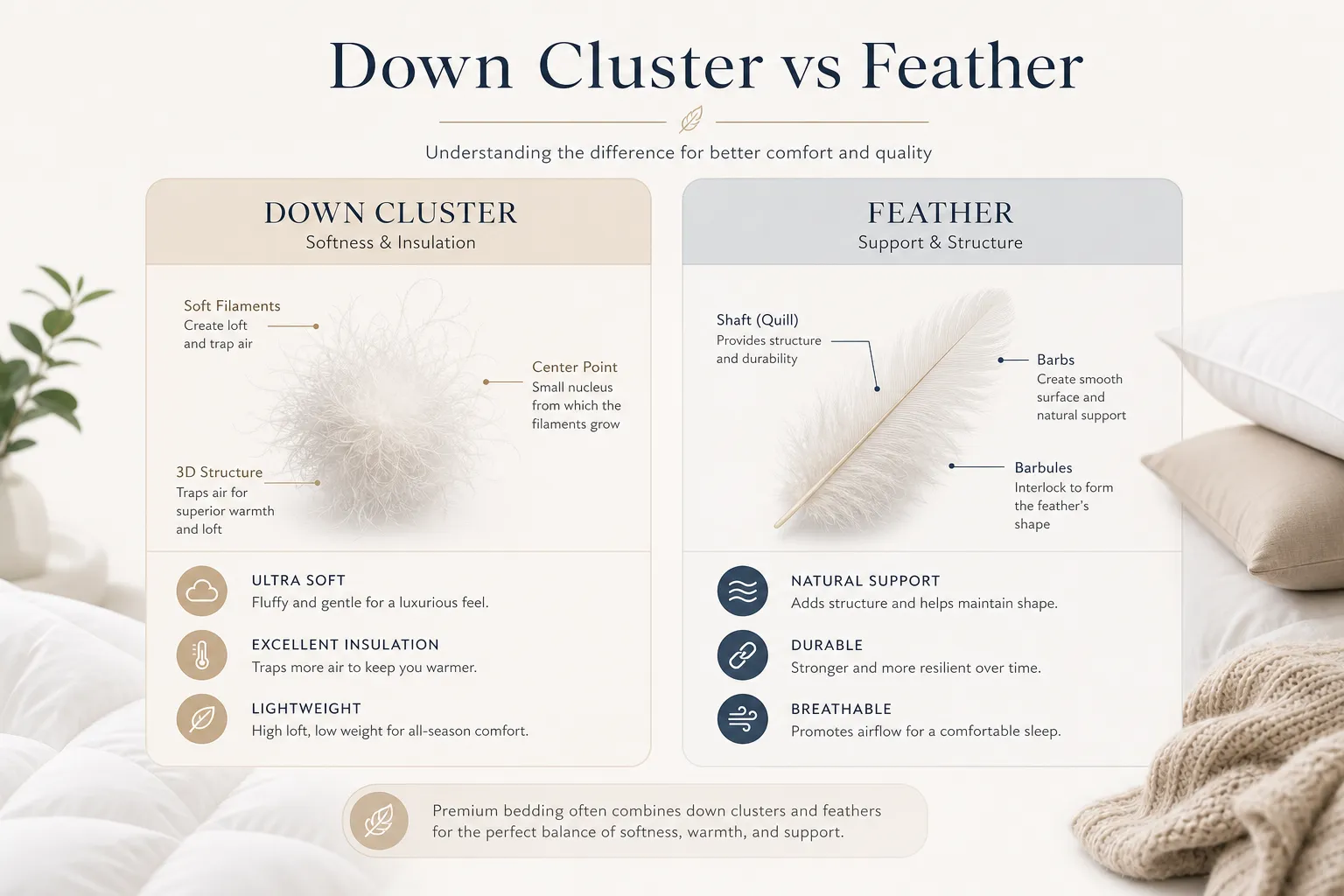
Down vs. feathers
A lot of first-time buyers assume down and feathers are interchangeable. They are not.
Down is the soft underlayer beneath outer feathers.
Feathers are flatter, firmer, and include a noticeable quill.
All-down fills usually feel lighter, loftier, and more refined.
Feather-heavy blends can cost less, but they often feel denser and less plush.
If your dream bed is soft, elevated, and hotel-like, an all down duvet is usually closer to that experience than a feather-dominant insert.
What Competitor Guides Usually Get Right - and What They Miss
After reviewing leading duvet and comforter guides, a few common themes show up again and again:
What most guides cover well
The difference between down and feathers
Why fill power matters
How warmth level affects comfort
Why shell fabric and construction influence performance
The idea that hotter is not always better
The content gaps most guides leave behind
This is where shoppers are often left wanting more:
They explain fill power, but not how it feels in real life.
Many articles define numbers well but do not help people understand what those numbers mean for softness, loft, or sleep comfort.They mention shell fabric briefly, then move on.
In reality, shell material can completely change the way a duvet breathes, drapes, and feels against the skin.They rarely address couples with different sleep temperatures.
That is one of the most common real-world shopping issues.They focus on product specs but not bedroom styling and lifestyle fit.
A duvet is not just insulation. It is part of how your room feels, looks, and functions every day.They do not always help readers translate “premium” into practical value.
People want to know what makes a duvet worth the investment over time.
This guide fills those gaps.
What to Look for Before You Buy
1. Fill power
Fill power tells you how much space one ounce of down occupies. In simple terms, it measures loft and insulation efficiency.
Fill power |
What it usually means |
Best for |
|---|---|---|
600–650 |
Solid entry luxury, cozy and comfortable |
Everyday shoppers seeking value |
700–750 |
Premium balance of loft, softness, and warmth-to-weight |
Most households |
800+ |
Very lofty, light, and luxury-oriented |
Shoppers wanting the most elevated feel |
A higher fill power does not automatically mean a warmer duvet. It means the down is better at trapping warmth with less weight.
2. Fill weight
Fill weight is the total amount of down inside the duvet. This affects warmth more directly than fill power alone.
Think of it this way:
Fill power = quality and loft efficiency
Fill weight = how much insulation is actually inside
That is why a lighter high-fill-power duvet may feel airier, while a lower-fill-power duvet with more total fill may sleep warmer.
3. Construction
Construction is what keeps the fill evenly distributed.
Sewn-through construction
Lighter
Often used for warm-weather duvets
Can create cooler lines at seams
Baffle-box construction
Allows fuller loft
Helps distribute fill more evenly
Better for consistent warmth and premium feel
If you want a duvet that feels plush and stays evenly lofted, baffle-box construction is often worth choosing.
4. Shell fabric
The outer shell influences far more than appearance. It affects breathability, noise, softness, drape, and how polished the bed feels.
Many shoppers focus only on the fill. But the shell is what you interact with every night.
The Best Warmth Level for Your Sleep Style
The biggest mistake shoppers make is assuming the warmest duvet is the best one. Usually, it is not.
The right warmth depends on:
your bedroom temperature
whether you sleep hot or cold
whether you share your bed
whether you like layered bedding
what climate you live in
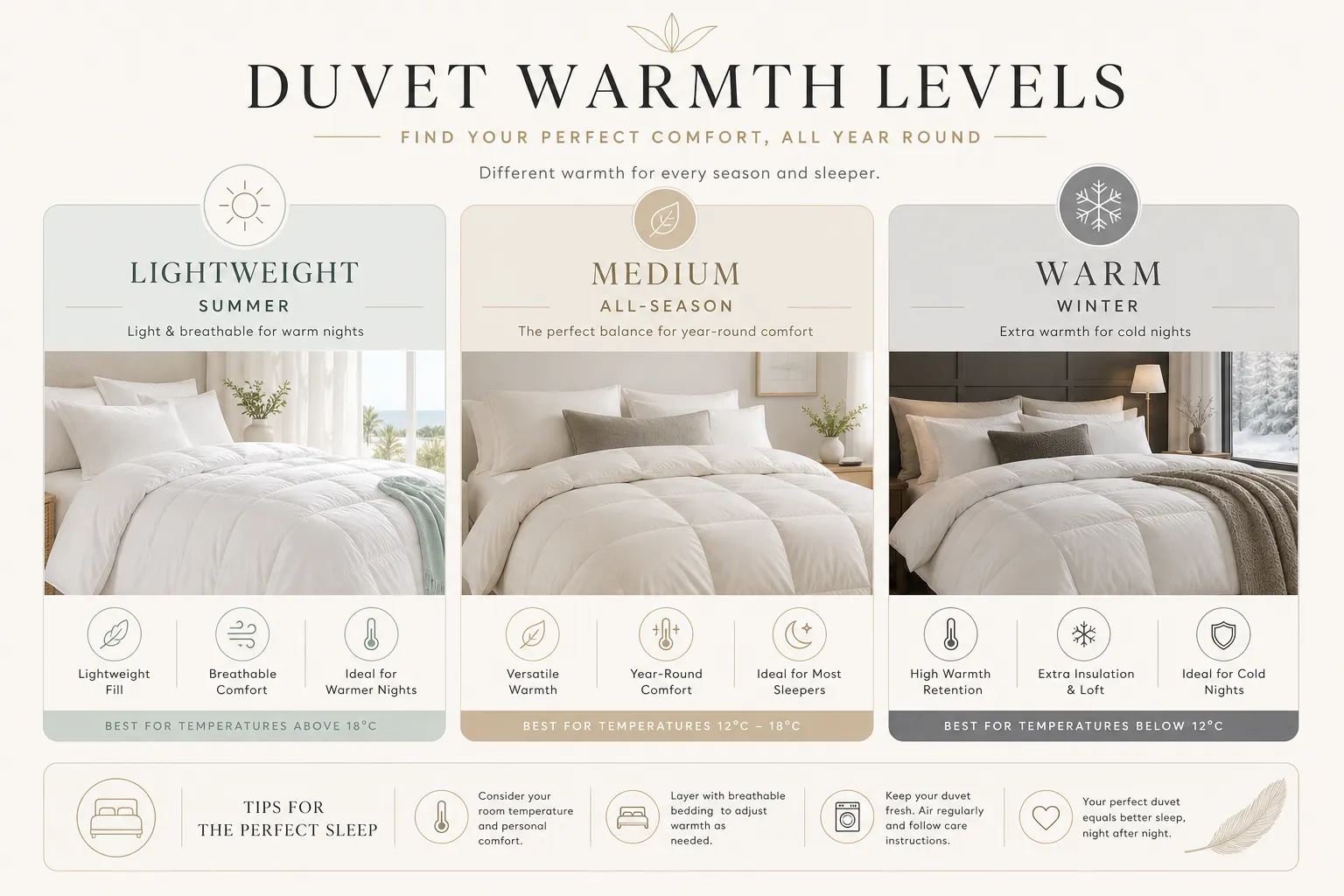
Simple duvet warmth guide
Warmth level |
Best for |
Feel |
|---|---|---|
Lightweight / Summer |
Hot sleepers, warmer rooms, layered bedding |
Airy and breathable |
Medium / All-season |
Most homes and balanced sleepers |
Versatile and cozy |
Winter / Extra warm |
Cold sleepers and chilly rooms |
Cocooning and insulating |
A medium all-season option is often the safest starting point for many households, but if you consistently sleep warm, a lighter duvet usually leads to better sleep.
"Experts recommend keeping your room between 60°F and 67°F (15.6°C to 19.4°C) to facilitate the natural drop in core body temperature that promotes sleep." - Cleveland Clinic
That range is one reason overly warm bedding can work against rest instead of improving it.
Should You Choose an All Down Duvet?
If you are looking for softness, loft, and a lighter feel, yes, an all down duvet is often the most satisfying choice.
Why shoppers love all-down fills
They feel lighter on the body
They offer a luxurious, airy loft
They usually drape more elegantly
They avoid the structured feel of quills
They tend to create a more elevated sleep experience
When a feather blend might still appeal
A feather or down-feather blend may still suit you if:
you prefer more physical weight on your body
you are shopping at a lower budget
you care less about loft and more about density
For most premium bedding shoppers, though, all-down tends to feel more refined and more restful over time.
Goose Down, Duck Down, and Other Fill Choices
Not all down is identical. The source matters, but not always in the way people assume.
Goose down
Goose down is often associated with premium performance because geese generally produce larger clusters. This can mean:
better loft
better resilience
lighter feel for the same warmth
more luxurious hand-feel
Duck down
Duck down can still be excellent, especially when well processed. It may be a practical choice if you want the comfort of down at a more accessible price.
Down alternative
If you need frequent washing or prefer a non-animal fill, down alternative can be helpful. But it usually does not offer the same breathability, longevity, or lofty elegance as true down.
The Shell Fabric Matters More Than You Think
This is one of the most overlooked parts of duvet shopping.
Warmy & Tummy offers multiple premium shell options because the fabric surrounding your fill affects how the duvet performs and how your bed feels night after night.
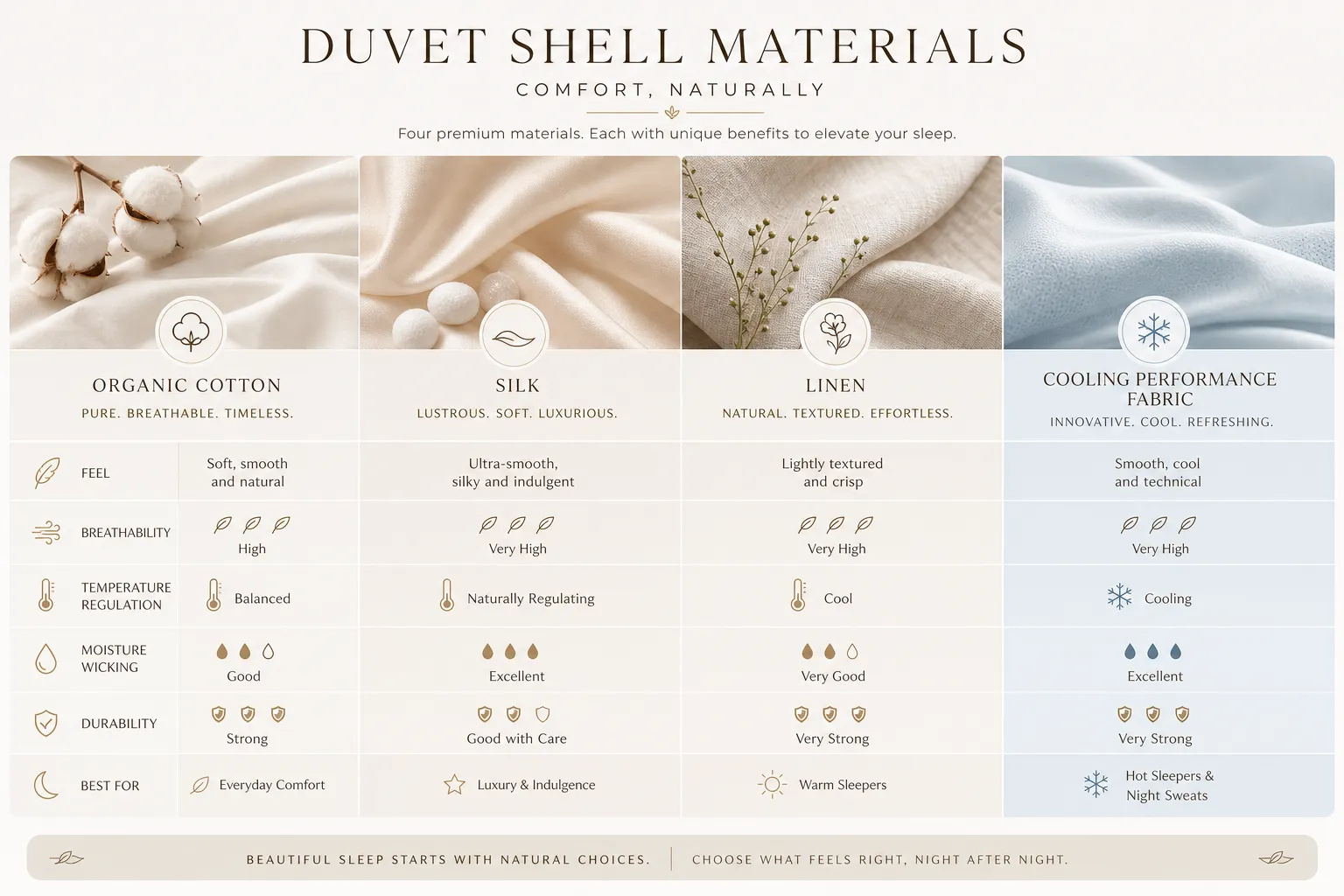
Organic cotton
Organic cotton is a beautiful everyday choice. It is breathable, soft, natural, and versatile.
Best for:
most sleepers
eco-conscious homes
year-round comfort
a clean, classic luxury feel
Silk
Silk feels elegant, smooth, and elevated. It is ideal for shoppers building a refined, luxurious bedroom.
Best for:
a premium hand-feel
sophisticated bedroom styling
a polished gift-worthy choice
European linen
Linen offers a relaxed, breathable texture with casual luxury appeal.
Best for:
airy bedrooms
warm-to-neutral sleepers
people who love natural texture and effortless design
Cooling performance fabrics
Cooling fabrics such as Tencel blends are ideal if you love the softness of a down duvet but worry about overheating.
Best for:
hot sleepers
humid climates
temperature-sensitive couples
How to Choose the Right Size
Do not rely only on mattress labels. Duvet sizing affects drape, coverage, and whether you spend the night tugging for more blanket.
Bed size |
Typical best choice |
Why |
|---|---|---|
Twin / Twin XL |
Twin duvet |
Clean fit for solo sleepers |
Full / Queen |
Queen duvet |
Best all-around versatility |
King |
King duvet |
Better shared coverage |
Queen wanting more overhang |
Consider sizing up |
Fuller luxury look |
If you sleep with a partner, sizing up can often improve comfort dramatically.
Couples: What If One Sleeps Hot and the Other Sleeps Cold?
This is one of the biggest shopping pain points, and most duvet guides barely address it.
The simplest rule
When in doubt, choose for the warmer sleeper.
It is easier for the cooler sleeper to add a layer than for the hotter sleeper to cool down under too much insulation.
Best strategies for mixed-temperature couples
Choose a lighter or medium duvet and add a throw on one side
Use a breathable shell like linen or cooling fabric
Size up for better drape and flexibility
Explore mix-and-match bedding solutions
This is exactly where Warmy & Tummy stands out. Our customizable comforter approach helps shoppers create a setup that reflects how they actually sleep, not just what a generic product page suggests.
How to Tell if a Down Duvet Is Worth the Price
Price alone does not tell you much. A premium duvet earns its value through comfort, longevity, and sleep quality over time.
Signs of a better duvet
high-quality down fill
clear warmth rating
strong stitching or baffle-box construction
breathable shell fabric
corner loops or ties
trustworthy return policy
brand transparency and support
A practical way to think about value
A cheaper duvet that flattens quickly, sleeps too hot, or shifts badly can become frustrating fast. A better-made duvet often costs more upfront but gives you years of better rest, better appearance, and less replacement hassle.
Ethical and Sustainable Considerations
For many shoppers today, luxury also means responsibility.
If sustainability matters to you, consider:
responsibly sourced down
organic or natural shell fabrics
long-lasting craftsmanship
fewer replacements over time
brands with transparent customer policies
"As of 2019, over 6,000 farms worldwide were certified to the RDS, covering approximately 735 million birds." - The North Face
That growing certification footprint reflects how important ethical sourcing has become in premium bedding.
Warmy & Tummy aligns with that shift through eco-friendly materials, thoughtfully made products, and long-lasting bedding designed to support better sleep with less waste.
Common Mistakes to Avoid
Buying only by warmth
The warmest duvet is not automatically the most comfortable one.
Ignoring shell fabric
Fabric affects breathability, noise, and feel every single night.
Assuming fluffiness means overheating
A well-made duvet can feel lofty and still remain balanced, especially with the right fill power and shell combination.
Choosing the wrong size
Too-small duvets cause nighttime tugging and less elegant drape.
Skipping return and service considerations
When buying premium bedding online, support matters. Warmy & Tummy offers fast customer service via email and chat, plus a 30-day hassle-free return policy and money-back guarantee, which helps make shopping feel reassuring instead of risky.
Why Warmy & Tummy Is a Smart Place to Start
There are many places to shop for bedding. But if you want a duvet that feels personal, premium, and lifestyle-friendly, Warmy & Tummy offers a stronger experience than a one-style-fits-all store.
What makes Warmy & Tummy different
Premium bedding designed for deeper, more restful sleep
Comforters for different seasons and warmth preferences
Beautiful materials including goose down, organic cotton, silk, linen, merino wool, and cooling fabrics
Customizable mix-and-match comforter options
Eco-friendly and sustainable choices
Stylish luxury designs and limited-edition collections
Free shipping in the USA on qualifying orders
30-day hassle-free returns
Money-back guarantee
Fast customer support via email and chat
Backed by long industry experience and a 3-year limited warranty
That combination makes it easier to choose confidently, especially if you want the comfort of luxury bedding without the uncertainty that often comes with shopping online.
Final Thoughts
The best down duvet is not simply the fluffiest one or the most expensive one. It is the one that suits your temperature, sleep habits, room conditions, and style preferences.
For some households, that means a lightweight duvet in cooling fabric. For others, it means a medium all-season comforter in organic cotton. For shoppers building a softer, more elevated bedroom, it may mean investing in a beautifully lofted all down duvet with a premium shell that feels indulgent every night.
If you are ready to buy down duvet bedding that feels thoughtfully made, beautifully designed, and genuinely sleep-enhancing, Warmy & Tummy is an excellent place to begin. With luxurious materials, customizable comfort options, eco-conscious choices, and reassuring customer support, the path to better sleep can feel as cozy as the bed you are creating.
FAQ
How much should a good down comforter cost?
A good down comforter can range widely, but for lasting comfort and quality, expect to invest more than you would for basic synthetic bedding. The best value usually comes from a comforter with quality down fill, breathable shell fabric, and durable construction, rather than simply the lowest price.
How many years should you keep a down comforter?
A well-made down comforter can often last 10 years or more with proper care, and premium versions may last even longer. Using a duvet cover, airing it out regularly, and cleaning it correctly all help extend its life.
Should I get a lightweight or medium weight down comforter?
Choose lightweight if you sleep hot, live in a warm climate, or prefer layering. Choose medium weight if you want the most versatile option for year-round comfort in a temperature-controlled bedroom.
What is Consumer Reports' best down comforter?
Specific rankings can change over time, so it is best to check Consumer Reports directly for their latest picks. In general, the strongest options tend to combine high-quality down, balanced warmth, strong construction, and reliable long-term performance.
How often should you wash a down duvet?
You typically only need to wash a down duvet occasionally, especially if you use a duvet cover. Most households can wash it once or twice a year, while spot cleaning and regular airing out help keep it fresh between cleanings.