
Best Warm Lightweight Duvet for Cozy Sleep
Finding the best warm lightweight duvet can feel surprisingly tricky. Too heavy, and you wake up tangled, overheated, or weighed down. Too thin, and you spend the night chasing warmth instead of truly resting. The sweet spot is a duvet that feels airy on your body yet still delivers that cocoon-like comfort we all crave.
For couples, hot sleepers with cool bedrooms, style-conscious homeowners, and anyone upgrading their sleep setup, the goal is usually the same: a warm but lightweight duvet that looks beautiful, breathes well, and works across more than one season. That’s where thoughtful materials, fill power, shell fabric, and duvet weight really matter.
At Warmy & Tummy, we believe premium bedding should do more than look luxurious on the bed. It should help you sleep deeper, feel more restored, and make bedtime something you genuinely look forward to. With more than 20 years in bedding, premium natural materials, customizable comforter options, eco-conscious choices, and a 30-day hassle-free return policy, we design for real-life comfort - not guesswork.
What Makes a Duvet Warm Yet Lightweight?
The biggest mistake shoppers make is assuming warmth comes from heaviness. In reality, the warmest lightweight duvets rely on efficient insulation, not bulk.
A duvet can feel light and still keep you cozy when it has:
High-performance fill that traps warmth efficiently
A breathable outer shell that prevents stuffiness
The right warmth level for your room temperature
Even fill distribution so there are no cold spots
This is why a lofty goose down duvet often feels warmer than a much heavier synthetic comforter. Weight alone is not the goal. Balanced insulation is.
The 4 Key Factors
Factor |
Why It Matters |
Best For |
|---|---|---|
Fill Material |
Determines warmth, loft, and breathability |
Down, silk, wool, cotton, cooling blends |
Fill Power / Loft |
Higher loft traps more warmth with less weight |
Shoppers wanting maximum warmth with minimal heaviness |
Shell Fabric |
Affects softness, airflow, and noise level |
Organic cotton, silk, linen, Tencel blends |
Warmth Rating |
Helps match the duvet to your room and sleep style |
Summer, all-season, winter |
Why Most Competitor Advice Falls Short
After reviewing the leading duvet and comforter guides, a pattern shows up: many explain broad categories well, but they often gloss over the actual buying decision.
Most stop at:
“Down is warm”
“Bamboo is cooling”
“Cotton is breathable”
That’s helpful, but incomplete.
The Real Content Gaps Shoppers Need Answered
To make this guide more useful, here’s what we’re covering that many others skip:
The difference between lightweight, ultra lightweight, and all-season in practical terms
How to choose based on room temperature, not just whether you’re “hot” or “cold”
Why shell fabric can change how warm a duvet feels
When a lightweight duvet insert queen should be oversized or not
Which materials feel luxurious without trapping heat
How couples with different sleep temperatures can compromise wisely
When to choose a duvet insert vs. a comforter with built-in cover
How customizable bedding options can solve common comfort mismatches
That last point matters. At Warmy & Tummy, our mix-and-match comforter approach helps customers select the filling, shell, and warmth level that actually fits their sleep style - rather than settling for a one-size-fits-all duvet.
Best Materials for a Warm Lightweight Duvet
Material is where comfort really begins. If you want the best lightweight but warm duvet, focus here first.
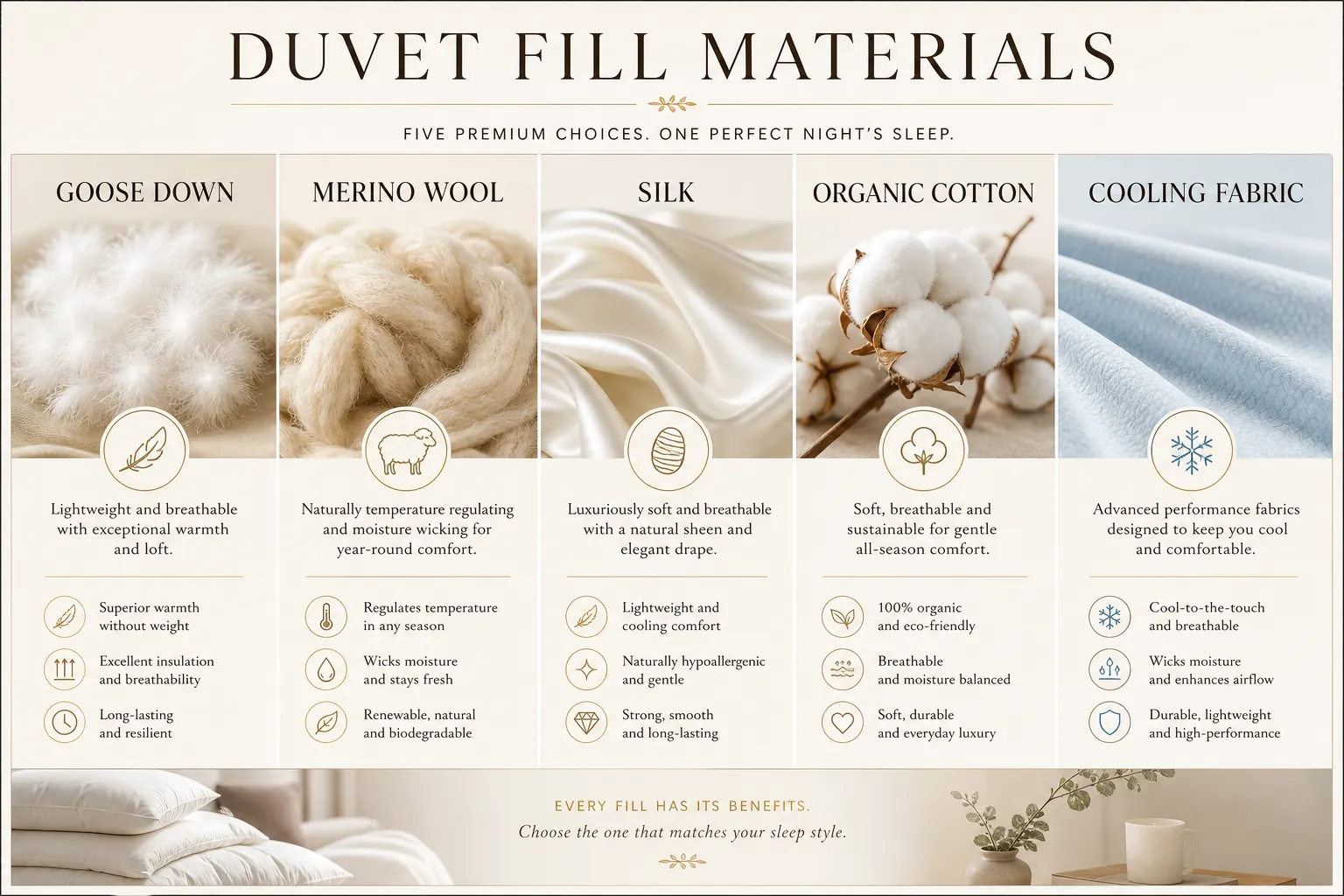
Goose Down: Best for Maximum Warmth with Minimum Weight
If your dream bed feels cloudlike, goose down is still the gold standard. A high-quality lightweight down duvet offers remarkable insulation without feeling dense.
Why it works:
Excellent loft
High warmth-to-weight ratio
Soft drape and plush look
Ideal for colder sleepers who hate heavy bedding
A best lightweight down comforter or best lightweight down duvet insert is especially appealing if you want premium warmth in cooler months without the blanket-on-your-body feeling.
Warmy & Tummy’s goose down comforters are designed exactly for this kind of luxury comfort - light, lofty, and deeply cozy.
Silk: Best for Elegant, Balanced Temperature Regulation
Silk-filled duvets are often overlooked, but they’re a beautiful middle ground. They feel refined, breathable, and softly insulating.
Best for:
Sleepers who dislike puffiness
Mild to moderate climates
People who want warmth without a bulky look
Silk also has a naturally smooth, premium feel that pairs beautifully with stylish modern bedrooms and limited-edition bedding collections.
"Silk has an extremely high moisture-absorbing capacity that wicks away excess heat in hot temperatures." - Journal of the Institution of Engineers (India): Series E
Merino Wool: Best for Natural Temperature Adaptability
Merino wool is excellent if your room temperature fluctuates or you want an organic-leaning, season-spanning option.
Benefits:
Naturally moisture-wicking
Helps regulate temperature
Cozy but less puffy than down
Great for all-season use
For shoppers seeking a more sustainable and eco-friendly bedding choice, wool is one of the smartest materials available.
Organic Cotton: Best for Breathable, Low-Fuss Comfort
An organic lightweight duvet insert or lightweight cotton duvet insert can be a great fit if you want something simple, breathable, and easy to live with.
It tends to feel:
Cleaner and crisper than down
Less lofty
Lightweight and breathable
Ideal for warmer rooms or summer layering
Cotton works especially well if you want a lightweight duvet for summer or prefer a flatter, more tailored bed aesthetic.
Cooling Performance Fabrics: Best for Hot Sleepers
If you overheat easily, look at shells or inserts made with cooling fibers such as Tencel blends.
These fabrics are loved because they:
Pull moisture away from the body
Feel cool and smooth
Pair well with lightweight fills
Support better comfort in spring and summer
Warmth vs Weight: How to Read Duvet Labels Properly
Terms like “summer,” “lightweight,” “all-season,” and “ultra lightweight duvet insert” are not always standardized between brands. That’s why it helps to think in terms of sleep environment.
Simple Duvet Weight Guide
Duvet Type |
Best For |
Feel |
|---|---|---|
Ultra lightweight |
Very hot sleepers, warm climates, summer |
Airy, barely-there |
Lightweight |
Mild climates, layered sleeping, year-round for hot sleepers |
Light but cozy |
All-season |
Most households, moderate rooms |
Balanced warmth |
Winter weight |
Cold bedrooms, cold sleepers |
Cozy and insulating |
Which One Is Right for You?
Choose an ultra lightweight duvet if:
Your bedroom runs warm
You use strong heating
You sleep hot year-round
Choose a lightweight duvet insert if:
You want one duvet for spring, summer, and early fall
You prefer layering with blankets
You want warmth without stuffiness
Choose an all-season option if:
Your room is typically cool but not cold
You want one duvet for most of the year
You prefer a fuller, fluffier appearance
How Room Temperature Should Guide Your Choice
This is one of the most useful shortcuts when choosing the best lightweight duvet insert.
Match Your Duvet to Your Bedroom
Room Temperature |
Recommended Weight |
|---|---|
72°F+ |
Ultra lightweight or summer-weight |
68–72°F |
Lightweight |
64–68°F |
All-season |
Below 64°F |
Warm all-season or winter weight |
If your bedroom changes a lot by season, a summer lightweight duvet insert plus a throw or blanket is often smarter than buying one overly warm duvet and suffering through warmer months.
Best Warm Lightweight Duvet by Sleeper Type
Not every sleeper needs the same thing. Here’s the easiest way to narrow it down.
For Hot Sleepers
Look for:
Cooling shell fabrics
Lower fill weight
Cotton, silk, or Tencel-forward construction
Lightweight or ultra lightweight options
A fluffy winter-weight duvet is usually the wrong move here, even if you love the look.
For Cold Sleepers
Look for:
Goose down or wool
Higher loft
Lightweight construction with strong insulation
Breathable shell to prevent overheating
This is where a best lightweight warm duvet truly shines: you stay warm, but never feel trapped.
For Couples
Choose based on the warmer sleeper first. It’s easier for the colder sleeper to add a layer than for the hot sleeper to escape excess heat.
Warmy & Tummy’s customizable comforter range is especially useful here, because it allows a more personalized path to comfort rather than forcing couples into one generic option.
For Luxury Bedding Lovers
If aesthetics matter, choose:
Goose down for loft and hotel-bed fullness
Silk for a refined drape
Linen or organic cotton shell for a relaxed premium look
A good duvet should feel indulgent and make your whole bedroom look more elevated.
Best Duvet Shell Fabrics for Lightweight Comfort
Fill gets most of the attention, but shell fabric matters more than many people realize.
Organic Cotton Shell
Great for:
Breathability
Crisp feel
Natural materials lovers
Silk Shell
Great for:
Smooth hand-feel
Premium finish
Elegant softness
European Linen Shell
Great for:
Relaxed luxury
Airflow
Casual-chic bedrooms
Cooling Fabric Shells
Great for:
Sweat-prone sleepers
Humid climates
A cooler touch against the skin
"Bamboo fibers can absorb up to 12-13% of their weight in moisture without feeling damp, whereas cotton absorbs about 6-9%." - Adorearth
Duvet Insert vs Comforter: Which Should You Buy?
Many shoppers use these terms interchangeably, but there’s a practical difference.
Choose a Duvet Insert If You Want:
Flexibility to swap styles with different covers
Better long-term protection for the insert
A more polished, layered bed look
Seasonal styling updates
This is ideal if you’re considering lightweight duvet covers, best lightweight duvet covers, or lightweight cotton duvet covers to tune the look and feel of your bed.
Choose a Comforter If You Want:
Simplicity
Fewer layers
Grab-and-go convenience
A lower-maintenance setup
At Warmy & Tummy, many customers prefer duvet inserts because they can pair a premium insert with different covers by season, mood, or bedroom design.
Best Duvet Covers for a Lightweight Feel
A heavy cover can make even a light insert feel warmer and denser. If you’re chasing an airy setup, your cover should support that goal.
Look for Covers That Are:
Cotton percale for crisp breathability
Linen for airflow and relaxed texture
Lightweight organic cotton for softness without heaviness
Cooling-performance blends for hot sleepers
Avoid very heavy sateens if your priority is cooling and lift.
Size Guide: Queen, King, and Twin Lightweight Duvets
Size affects not just appearance, but comfort.
Lightweight Duvet Insert Queen
A lightweight duvet insert queen is the most popular choice for queen beds. If you like a fuller drape, you can sometimes size up depending on your duvet cover dimensions.
Lightweight Duvet King
A king lightweight duvet or lightweight duvet king gives couples more coverage and fewer nighttime tug-of-war moments.
Lightweight Twin Duvet Insert
A lightweight twin duvet insert is ideal for guest rooms, kids’ rooms, dorms, and single sleepers who want easy layering.
Quick Size Tips
Bed Size |
Best Duvet Choice |
|---|---|
Twin / Twin XL |
Lightweight twin duvet insert |
Full / Queen |
Lightweight duvet insert queen |
King / Cal King |
Lightweight duvet king |
If you’re between sizes and want that oversized hotel-bed feel, sizing up can work beautifully - as long as your cover fits.
What Is the Lightest Duvet That Still Feels Cozy?
If you want the lightest duvet possible without sacrificing comfort, look for:
High-quality goose down
Silk fill
Lightweight cotton shell
Box or baffle construction for even distribution
The very lightweight duvet insert category is best for sleepers who still want a “real duvet” feeling but hate bulk. This is different from a flat quilt or coverlet; it still gives softness and insulation, just with less overall heft.
Best Choices by Season
Spring
Choose:
Lightweight down
Silk
Wool-cotton blends
Summer
Choose:
Ultra lightweight duvet insert
Cooling shell fabrics
Organic cotton or Tencel blends
A best lightweight duvet insert for summer should feel breathable first, warm second.
Fall
Choose:
Lightweight wool
Down all-season
Silk with a cozy cover
Winter
If you still want a lighter-on-body sensation in winter, go for a high-loft goose down insert rather than a bulky heavy fill.
Care Tips for Keeping a Lightweight Duvet Fluffy and Fresh
Premium bedding lasts longer when cared for properly.
Best Practices
Always use a duvet cover for inserts
Fluff regularly to maintain loft
Air out natural fills periodically
Follow care labels carefully
Store in a breathable cotton bag, never plastic
Natural materials like goose down, wool, silk, and linen age beautifully when treated well. That’s one reason Warmy & Tummy backs many products with a 3-year limited warranty and offers fast support by email and chat if you need help after purchase.
How to Choose the Best Warm Lightweight Duvet: A Simple Buying Checklist
Before you buy, ask yourself:
Is my room warm, cool, or variable?
Do I sleep hot, cold, or somewhere in the middle?
Do I want fluffy loft or a flatter tailored look?
Am I buying for one sleeper or a couple?
Do I want natural, organic, or cooling-performance materials?
Will I use a duvet cover?
Do I want one duvet year-round or a seasonal setup?
If you can answer those seven questions, your decision gets much easier.
Our Warmy & Tummy Verdict
If you want the best warm lightweight duvet, don’t shop by trend words alone. Shop by material quality, warmth efficiency, breathability, and how you actually sleep.
For most shoppers, the winning formula looks like this:
Goose down for the lightest luxurious warmth
Silk for refined all-season comfort
Merino wool for natural temperature regulation
Organic cotton or cooling fabrics for breathable lightweight comfort
Warmy & Tummy brings all of this together with premium bedding designed for deeper, more restful sleep. Our collection includes luxe goose down comforters, organic cotton and silk shells, European linen, merino wool options, cooling-performance fabrics, and customizable mix-and-match choices so your bed feels personal - not generic.
Add in eco-friendly options, stylish limited-edition designs, free shipping in the USA on qualifying orders, responsive customer support, a 30-day money-back guarantee, and trusted craftsmanship built on more than two decades of experience, and you have every reason to choose bedding that feels as good as it looks.
If your current duvet is too hot, too flat, too heavy, or simply not special enough, this is your sign to upgrade.
FAQ
Which duvet is light but warm?
A high-quality goose down duvet is usually the best option if you want something light but warm. Silk and merino wool are also excellent choices for sleepers who want breathable comfort with less bulk.
What is the lightest weight duvet you can get?
The lightest option is typically an ultra lightweight duvet insert or summer-weight duvet. These are designed for hot sleepers, warm rooms, or anyone who wants an airy, barely-there feel.
What type of comforter should I get if I'm a hot sleeper?
If you’re a hot sleeper, choose a lightweight or ultra lightweight comforter with breathable materials such as cotton, silk, Tencel blends, or cooling-performance fabrics. A heavy shell or overly dense fill can make even a premium comforter feel too warm.
Should I get a warm or light warm duvet?
Choose a light warm duvet if your room is moderate to warm, if you sleep hot, or if you like layering. Go warmer only if your bedroom stays cool or you tend to feel cold at night, because it’s easier to add a blanket than cool down under an overly heavy duvet.