

All Season Lightweight Down Comforter Guide
Ever wake up at 3 a.m. because you're too hot under one comforter and too cold under another? If you're trying to choose an all season lightweight down comforter, the sweet spot is simple: you want enough loft to feel cozy, but not so much warmth that you end up kicking it off by midnight.
For most homes, an all season lightweight down comforter works best when your bedroom stays in a moderate temperature range, you want one comforter for most of the year, and you prefer a soft, airy feel instead of a heavy blanket. The right one should feel light on your body, breathe well, and still hold enough warmth for cooler nights.
At Warmy & Tummy, that's exactly how we think about bedding: not just "warm" or "cool," but truly sleep-friendly. Our comforters are made for real life, real bedrooms, and real sleepers who want better rest without guesswork.
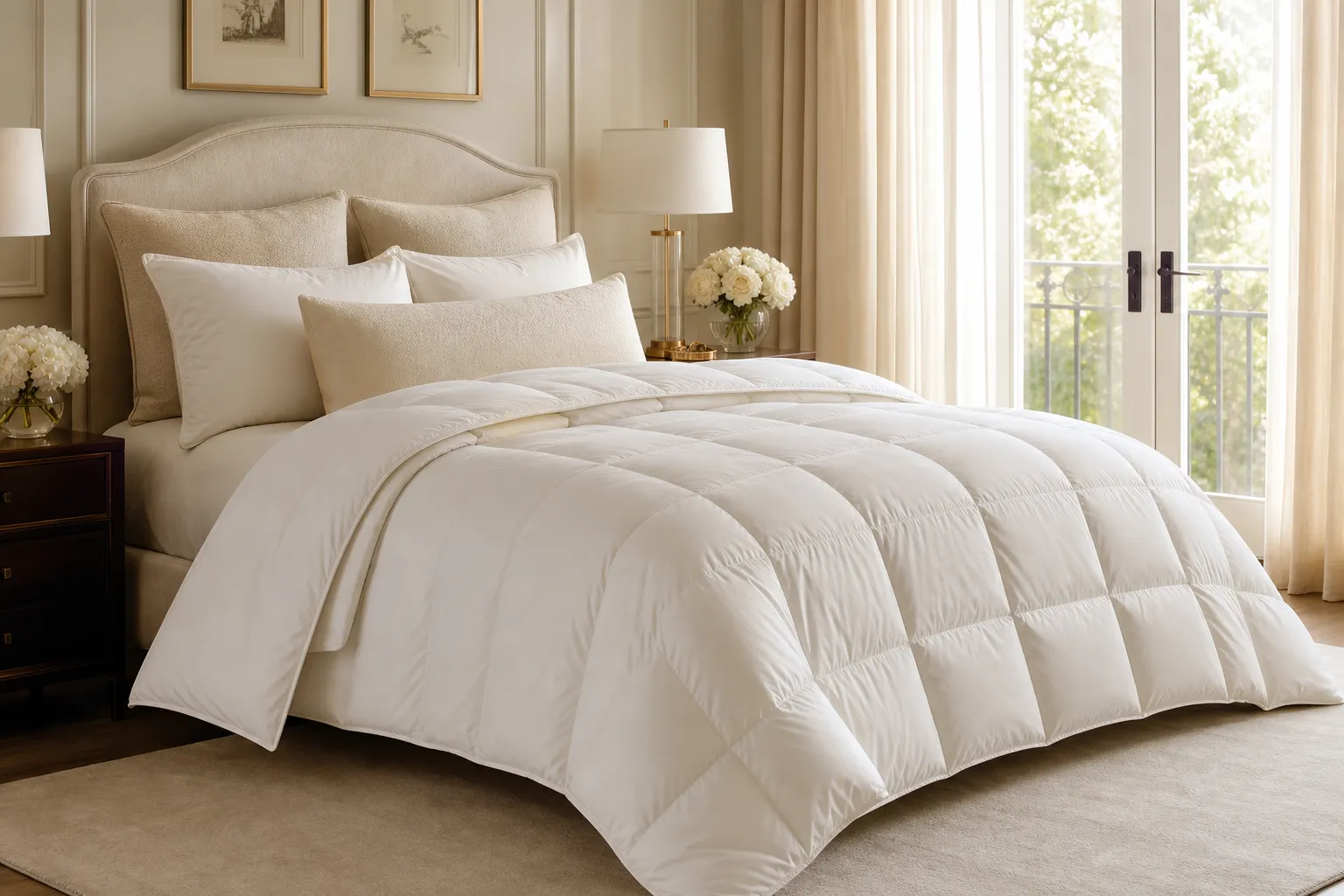
What is an all season lightweight down comforter?
An all season lightweight down comforter is a down-filled comforter designed to work across most of the year by balancing breathability, loft, and moderate warmth. It feels lighter than a winter comforter but warmer than a true summer-only insert.
That balance matters more than the label. Some brands call a comforter "lightweight" because it has less fill, while others call something "all season" because it suits average room temperatures. The best version sits between the two: it should be airy enough for spring and fall, comfortable in air-conditioned summer bedrooms, and cozy in winter when layered with sheets or a duvet cover.
Why people love this type of comforter
Most people don't want to swap bedding every few months. They want one comforter that feels good night after night, without needing a closet full of inserts.
An all season lightweight down comforter is a smart choice if you want:
one comforter for most of the year
a fluffy feel without bulk
breathable warmth instead of trapped heat
easy layering in both warm and cool months
If you're still sorting out the basics, our guide on down comforter what it is and best sizes can help you match comforter type and size to your bed.
Is lightweight the same as all season?
No. Lightweight and all season overlap, but they are not identical.
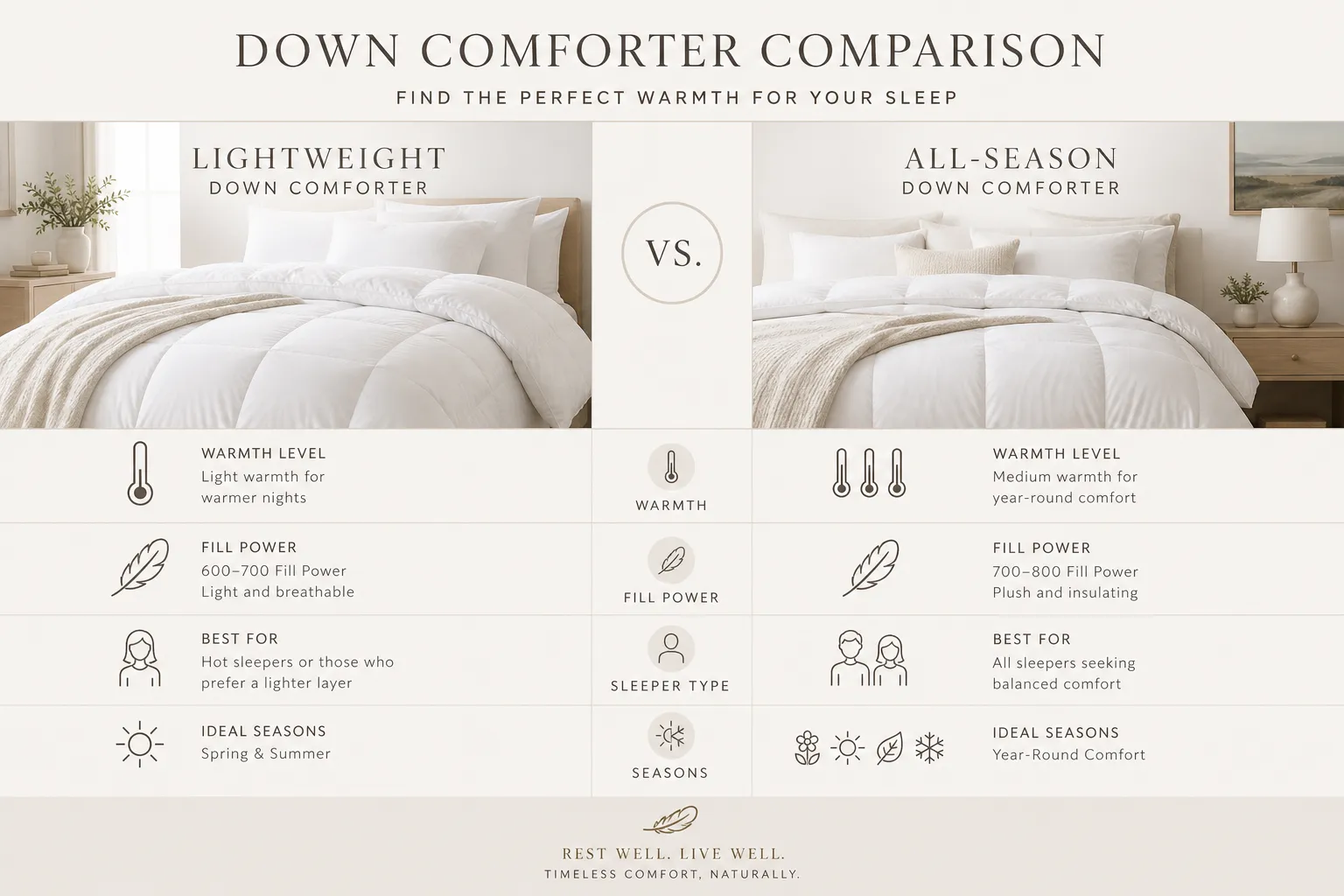
A lightweight comforter is usually built for hot sleepers, warmer climates, or summer use. An all season comforter is meant to be versatile enough for most of the year. Some products manage to be both, especially if they use high-quality down that insulates efficiently without a lot of weight.
Here’s the easiest way to think about it:
Type |
Best For |
Feel |
Typical Use |
|---|---|---|---|
Lightweight |
Hot sleepers, warm climates |
Airy, less dense |
Summer or warm bedrooms |
All Season |
Most sleepers, moderate climates |
Balanced, cozy but not too warm |
Year-round in many homes |
All Season Lightweight |
People who want versatility without heaviness |
Soft, breathable, gently lofty |
Most of the year, especially temperature-controlled homes |
What makes a down comforter lightweight but still warm?
A down comforter feels lightweight but warm because high-quality down traps air efficiently. Warmth comes from loft and insulation, not from sheer heaviness.
That’s where shoppers often get tripped up. A bulky comforter can actually feel heavier without being better at regulating temperature. A premium down comforter, especially one made with quality goose down and a breathable shell, can feel cloud-like while still keeping you warm.
The three details that matter most
1. Fill power
Fill power tells you how much space one ounce of down takes up. Higher fill power usually means larger, loftier down clusters that trap more air.
In simple terms:
600–700 fill power: solid, cozy, versatile
700–850 fill power: loftier, lighter for the same warmth
850+ fill power: very premium, especially light and airy
If you're comparing options and wondering how much loft you really need, our difference between down and goose down guide explains why premium goose down often feels lighter for the same comfort level.
2. Fill weight
Fill weight is how much down is actually inside the comforter. This influences overall warmth level more directly than fill power alone.
A comforter can have high fill power but still be light in warmth if it contains less total down. That’s why the best all season lightweight options balance good fill power with a moderate fill weight.
3. Shell fabric
The shell changes the sleep experience more than most people expect. A good shell should be soft, breathable, and tightly woven enough to hold down in place.
At Warmy & Tummy, we love natural materials and performance fabrics for different needs, including organic cotton, silk, linen, and cooling blends. Each gives a different feel against the skin, and each can shift how warm or airy the comforter feels.
How to choose the right warmth for your bedroom
The best warmth level depends on your room temperature, your body temperature, and who shares the bed with you. That's more useful than shopping by season name alone.
If your room stays around 68–72°F, a lightweight all season comforter is often the most flexible choice. If your bedroom runs colder, or you sleep with windows open in winter, you may want a fuller all season option instead.
Quick comfort guide
Sleep Situation |
Best Pick |
|---|---|
You sleep hot year-round |
Lightweight |
You sleep neutral and use AC in summer |
All season lightweight |
You sleep with a partner who runs warm |
All season lightweight or lightweight |
Your room gets chilly in winter |
All season, or lightweight plus layering |
You live in a mild climate |
All season lightweight |
One of the biggest content gaps in competitor guides is that they don't talk enough about shared heat. Two people under one comforter create more warmth than one. So if you sleep with a partner, especially one who runs warm, you can often size down in warmth.
What to expect in each season
An all season lightweight down comforter should feel different across the year, and that’s normal. The point is versatility, not identical warmth every month.
Spring
Spring is where this comforter shines. You get enough warmth for cool mornings, but the breathability of down helps prevent that stuffy feeling during fluctuating weather.
Summer
In summer, this comforter works best in air-conditioned rooms or for people who still want that soft "covered" feeling at night. If your bedroom stays very warm, you may prefer a true summer insert or a cooling blanket instead.
If summer sleep is your main concern, you may also like our guides on goose down comforter for summer cool sleep guide and lightweight duvet insert for summer best picks.
Fall
Fall is another ideal season for this type of comforter. It's cozy without tipping into winter-level heat, and it layers beautifully with flannel sheets or a slightly thicker duvet cover.
Winter
In winter, a lightweight all season comforter usually works well in insulated homes with heating. If your room gets quite cold, think of it as a foundation layer: add warmer sheets, a blanket, or a denser duvet cover for extra coziness.
Best shell fabrics for an all season lightweight down comforter
The best shell fabric is the one that matches how you want the bed to feel. For year-round use, look for something breathable, soft, and durable.
Organic cotton
Organic cotton is one of the safest all-around choices. It breathes well, feels familiar, and suits people who want a clean, natural sleep environment.
Silk
Silk shells feel smooth, refined, and quietly luxurious. They can help with moisture balance and feel lovely if you want a cooler, gentler touch.
Linen
Linen feels relaxed and breathable. It's especially nice if you like a more casual texture and live in a warmer or humid climate.
Cooling performance fabrics
Tencel blends and other cooling shells can work beautifully for hot sleepers. They often feel smoother and slightly cooler to the touch than standard cotton.
For a deeper look at shell choices, our article on cotton or cotton mix a buyers guide to choose the right down comforter shell breaks down how fabric changes comfort.
Does construction matter?
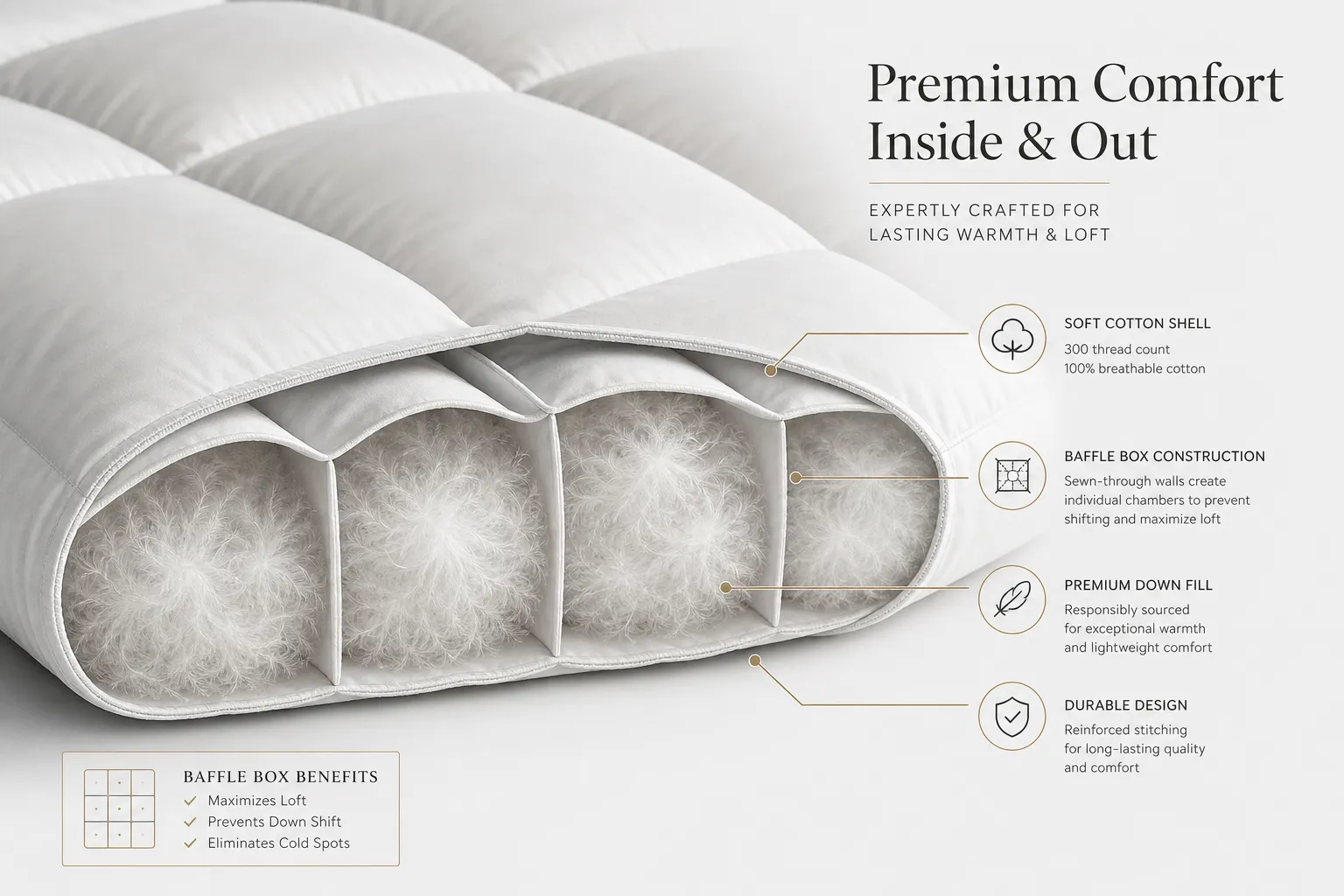
Yes. Construction affects loft, warmth consistency, and how the comforter drapes on the bed.
Two comforters with similar fill can feel very different depending on how the down is held in place.
Sewn-through construction
Sewn-through comforters are lighter and often a bit less lofty. They're common in lightweight comforters because they keep the fill from shifting while maintaining a slimmer profile.
Baffle box construction
Baffle box construction uses internal walls to allow the down to loft more fully. This usually creates a puffier look and more even warmth distribution.
If you're comparing the two, our guide on sewn-through or baffle-box-a-buyers-guide-to-choose-the-right-down-comforter-construction goes into the practical differences in a simple way.
How big should your comforter be?
Your comforter should match your mattress size at minimum, but many people prefer sizing up for more drape and fewer blanket battles.
Here’s a practical rule:
Bed Size |
Recommended Comforter Choice |
|---|---|
Twin / Twin XL |
Twin / Twin XL |
Full |
Full/Queen if you want more coverage |
Queen |
Queen, or King for extra drape |
King |
King |
California King |
California King or oversized King if dimensions fit |
Couples often sleep better with more overhang on each side. A comforter that barely covers the mattress can feel colder than it actually is because drafts sneak in around the edges.
Who should buy an all season lightweight down comforter?
This style is best for people who want one beautiful, dependable comforter for most of the year. It’s especially good if you dislike heavy bedding but still want that plush, hotel-bed feeling.
You’ll probably love it if:
you keep your home temperature fairly steady
you sleep warm or neutral
you want breathable comfort without switching inserts often
you share a bed and don't want an overly hot comforter
you prefer layering rather than using a single very heavy duvet
What many guides miss when comparing down comforters
A lot of competitor articles explain fill power and warmth labels, but they miss the lived-in details that actually affect satisfaction.
Duvet cover choice changes warmth
A thick duvet cover can make a lightweight insert feel warmer. A crisp cotton cover feels different from linen or sateen. That outer layer matters more than many guides admit.
Bedroom conditions matter more than outside weather
You’re not sleeping outdoors. Your thermostat, insulation, pajamas, mattress, and even ceiling fan all affect how your comforter performs.
Feel matters as much as warmth
Some people want a lofty, airy cloud. Others want a flatter, neater comforter with less volume. Both can be great, but they are not the same experience.
Return policy matters
Comfort is personal. That’s why at Warmy & Tummy we believe you should shop with confidence. We offer a 30-day hassle-free return policy, fast support by email and chat, free shipping in the USA on qualifying orders, and a 3-year limited warranty on qualifying bedding. When you're buying premium sleep essentials online, that peace of mind is part of the product.
How Warmy & Tummy helps you get the right fit
We design bedding around how people actually sleep, not just how products look in photos. That means offering a wide range of comforters for different seasons, warmth preferences, and materials, including organic cotton, silk, linen, goose down, merino wool, and cooling fabrics.
If you like to fine-tune your bed, our mix-and-match comforter options make that easier. You can choose the shell feel, filling style, and warmth level that suits your room and your body, rather than settling for a one-size-fits-all answer.
That flexibility matters when you're shopping for something as personal as sleep. A comforter should feel like it belongs to you, your home, and your routine.
Care tips so your comforter stays fluffy and fresh
A good down comforter can last for years if you treat it kindly. The basics are simple.
Use a duvet cover
A duvet cover protects against skin oils, sweat, and everyday dust. It also lets you refresh the style of your bedroom without replacing the insert.
Fluff it regularly
Give your comforter a gentle shake every few days to help the down stay evenly distributed.
Wash it only when needed
Down comforters usually don’t need frequent washing. When it’s time, use a large front-load machine, gentle detergent, and dry thoroughly on low heat.
For step-by-step care help, see our how to wash a down comforter the right way guide.
Final thought: the best comforter is the one you stop thinking about at night
That’s really the goal. Not the highest number, not the fluffiest photo, not the trendiest label. Just a bed that feels right the moment you slide in.
If you want an all season lightweight down comforter that feels breathable, cozy, and beautifully made, Warmy & Tummy is a wonderful place to start. With premium materials, eco-conscious options, luxury styling, helpful support, and comforters built for different sleepers and seasons, you can create a bed that looks lovely and helps you rest more deeply.
If you're ready, explore the Warmy & Tummy collection and find the comforter that matches the way you actually sleep.
FAQ
Should I get a lightweight or all season down comforter?
If you sleep hot or live in a warm climate, a lightweight comforter is often the better choice. If you want one comforter to use across most of the year in a moderate bedroom, an all season or all season lightweight option is usually the sweet spot.
What is the best lightweight down comforter for summer?
The best summer option is a lightweight down comforter with breathable construction and a shell like organic cotton, linen, silk, or a cooling fabric blend. It works especially well in air-conditioned rooms or for sleepers who still want a soft, cozy layer in warm weather.
What type of comforter is best for all seasons?
A comforter with moderate fill weight, breathable shell fabric, and quality down is best for all seasons. For many households, an all season lightweight down comforter offers the most useful balance of warmth, loft, and year-round comfort.
What is the difference in warmth between a 700 fill down comforter and a 850 fill down comforter?
An 850 fill comforter can provide similar warmth with less weight because the down clusters loft more efficiently. A 700 fill comforter is still premium and cozy, but it may feel a bit denser for the same warmth level depending on the total fill weight.
What is the best fill weight for a down comforter?
The best fill weight depends on your room temperature, sleep style, and season. For most people seeking year-round use, a moderate fill weight paired with good fill power creates the best balance of lightness and warmth.