

Ever wake up clammy under a fluffy duvet and then get cold the moment you pull it back? A merino wool duvet holds warmth while moving moisture away from your body. It drapes more like a quilt than a puffy down insert, so think about the feel you want over you as well as the temperature.
What makes a merino wool duvet different?
A merino wool duvet has wool from merino sheep inside a fabric shell. Merino fibers are fine, but you won't feel them through the duvet: your skin touches the shell or cover. If you want wool against your skin, you'd be looking for a blanket.
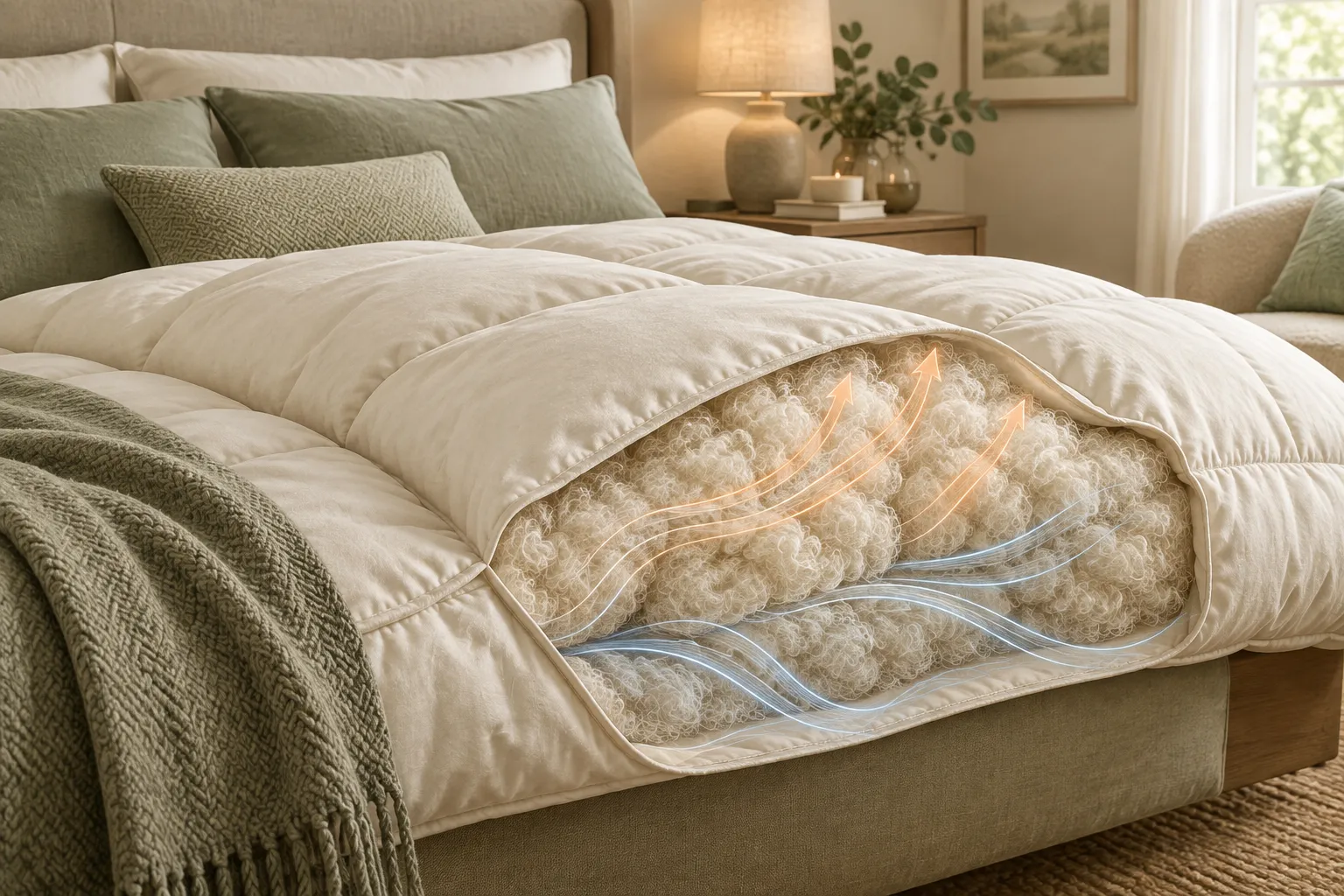
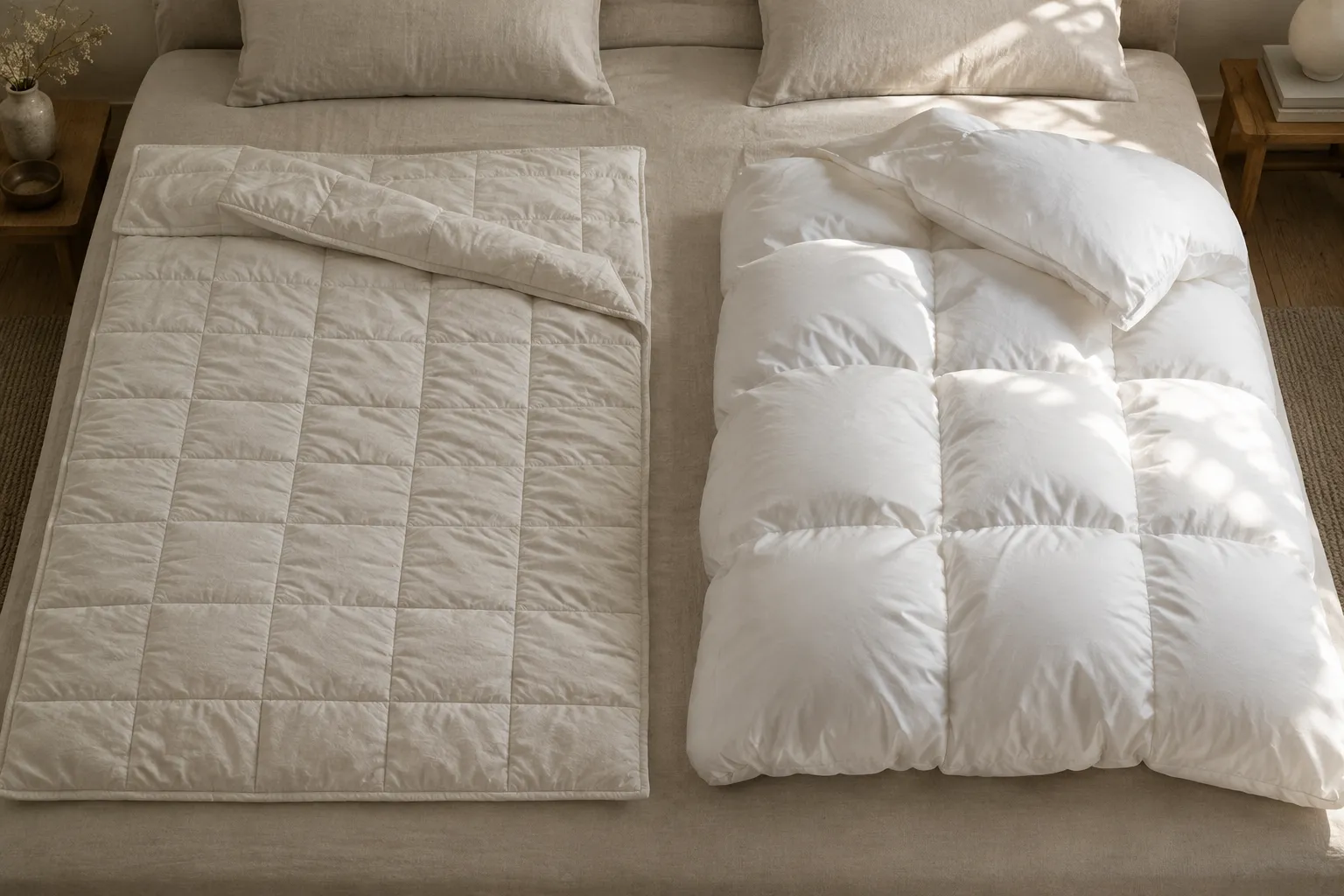
Makers quilt the wool batting to hold it in place. The insert lies flatter than down, which gets its puff from air trapped among the clusters. And if a label just says “wool duvet,” read the fill composition to find out whether it's merino.
Merino wool duvet benefits for sleep
If you wake up sweaty halfway through the night, merino is worth considering. Your body still sets its temperature; the duvet's fill and shell affect how that heat and moisture feel under the covers.
Comfort doesn't automatically mean deeper sleep. Researchers compared wool and polyester bedding at two room temperatures in a small study and concluded:
"There was no bedding effect on sleep." - Nature and Science of Sleep
You may have a clear preference for one fill, even though the study found no sleep effect from the bedding.
It keeps warmth without the same puffy feel as down
Wool fibers hold insulating air, and the quilted fill rests closer to your body than lofty down. That tucked-in feeling is lovely if you like some weight over you. If you prefer a duvet that floats above you, it may feel too substantial.
It handles moisture as well as heat
Wool absorbs moisture vapor and releases it as the surrounding air changes. When you get damp under the covers, the drier feel can make a temperature swing less jarring. Pair it with a breathable cotton or linen cover if that's the comfort you're after; a heavy, tightly woven cover will feel different.
It may suit sensitive sleepers, with an important caveat
Wool can help your bed dry out, making it less damp for dust mites. It does not make the duvet dust-mite-proof, and “hypoallergenic” isn't a guarantee if you're sensitive to wool. With diagnosed allergies, your own reaction, the shell and cover, and how you wash the bedding deserve more attention than that label.
Merino wool vs down, silk and synthetic duvets
Merino gives you a closer drape and handles moisture well. Down is the fluffier, lighter option. Silk and synthetic fills feel different again, so compare what each will be like on your bed.
Fill |
Typical sleep feel |
Best fit |
Main compromise |
|---|---|---|---|
Merino wool |
Closer drape, gently weighty, less fluffy |
Sleepers who feel clammy or prefer a tucked-in layer |
Often needs careful cleaning; warmth still depends on fill weight |
Down |
Very lofty and light for its warmth |
People who want an airy, warm duvet |
Can feel too warm in a high-warmth version; not everyone likes down |
Silk |
Smooth, lower-profile drape |
People who prefer a light, less puffy natural fill |
Care instructions can be restrictive |
Synthetic fiber |
Comes in a broad range of weights and feels |
People who prioritize easy-care options |
Moisture and heat feel vary widely by construction |
A thick cover can make a wool insert feel heavier; a light shell lets down keep its airy feel. If you and your partner sleep at different temperatures, separate inserts or layers may be more comfortable than sharing one all-season duvet.
Like the sound of a lighter layer? The difference between a down blanket and a comforter may help you choose.
Will a merino wool duvet work year-round?
A merino duvet can stay on your bed across seasons if its weight suits the room. Summer, all-season and winter versions contain different amounts of fill. On a hot night, even wool can be too warm.
Your sleeping situation |
A sensible starting point |
|---|---|
Warm bedroom or frequent night sweats |
Lightweight wool insert and breathable cover |
Temperate room with seasonal changes |
Medium or all-season weight, with a spare layer for cold nights |
Cold room or a sleeper who chills easily |
Heavier wool insert or an added blanket |
Partners with very different warmth needs |
Separate weights or separate duvets |
Tog measures thermal resistance, while fill weight tells you how much material is inside. Neither describes the feel of the shell or stitching. When you compare inserts, match the size and warmth category first, then think about wool's drape versus down's loft.
For more help matching warmth to your habits, see how to choose a comforter warmth level.
What to look for before buying
Before you buy, find out what's inside and how heavy it is. Then look at the shell and care label: “merino” in a listing could refer to the fill, a blend or even the cover.
Read the fill composition and shell fiber separately. If you're buying wool for moisture comfort, a cotton shell or cotton cover can help keep the setup breathable.
Base the warmth on your room. A heated bedroom may need a lighter insert even in winter; a cool bedroom may need more fill in spring.
Compare the insert measurements with your cover, rather than relying on “queen” or “king.” Quilting keeps the batting in place, and a cover that fits helps prevent bunching.
Make sure the care suits your routine. Some wool duvets allow a gentle wash; others need spot cleaning or professional care, including dry cleaning. A washable cover protects the insert, and you should let the wool dry fully before storing or using it.
For sourcing, look for a stated material, farm origin or independent certification rather than the word “natural” alone. Wool is an animal fiber and isn't an animal-free bedding choice.
Your cover affects the feel and how much laundry you'll do. If you're buying a new one, choose a duvet cover that fits the insert.
Who should choose merino wool?
If a lofty duvet leaves you clammy and you like a comforting drape, merino wool is a good fit. Its balance of insulation and moisture handling is the draw; you'll still need a weight that suits your room.
Love a barely-there, billowy comforter? Down may suit you better. Warmy & Tummy has goose down comforters in different shell materials and warmth styles, plus merino wool blankets if you'd rather add a layer than replace your insert. A blanket has a different feel from a merino-filled duvet.
Tonight, pay attention to what wakes you: sweat, the weight on top of you or feeling cold. Let that guide your choice of fill and warmth. If you want to try wool as a layer first, Warmy & Tummy's merino blankets let you keep the duvet you already have.
FAQ
Is Merino wool good for sleeping?
Yes, merino wool can be a comfortable duvet fill if you want insulation with good moisture handling and a closer drape than down. The weight of the insert, shell, and room temperature still decide whether it feels right for you.
Do dust mites live in wool duvets?
They can. Wool's ability to manage moisture may make a bed less hospitable to mites, but it doesn't make a duvet mite-proof. A washable cover and appropriate bedding care are still important if dust mites trigger your symptoms.