

Duvet Covers Putting On Made Simple
If you love the fresh, hotel-like look of a beautifully dressed bed but dread wrestling with your duvet every laundry day, you are not alone. For many households, duvet covers putting on feels like one of those oddly frustrating chores that should be simple but rarely is. The good news: with the right method, the right closure, and the right bedding materials, it can become fast, tidy, and almost effortless.
A well-made duvet cover does more than protect your insert. It helps your comforter stay cleaner, makes seasonal bed refreshes easier, and gives your bedroom that polished, luxurious finish without replacing the entire bedding setup. At Warmy & Tummy, we believe easy bed-making is part of better sleep: when your bedding feels inviting, breathable, and beautifully put together, your whole wind-down routine becomes calmer.
"Adults aged 18 to 60 years are recommended to get at least 7 hours of sleep per night to maintain optimal health." - CDC
That makes everyday comfort worth optimizing, including the bedding details that affect how quickly you can wash, remake, and enjoy your bed.
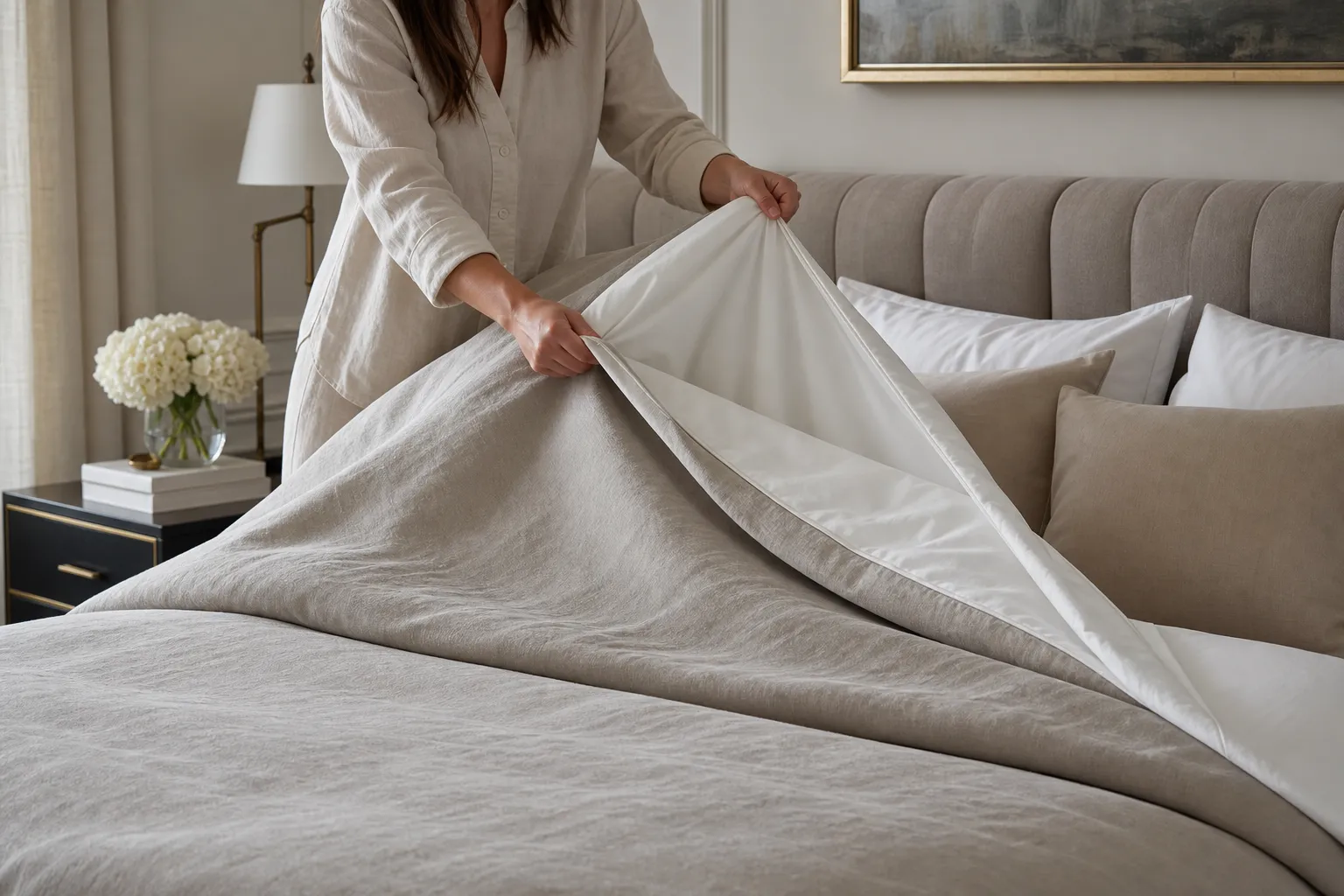
Why Putting on a Duvet Cover Feels So Difficult
The real problem usually is not the duvet cover itself. It is a combination of small friction points:
The insert shifts while you work
The corners do not stay aligned
The cover opening is awkward to manage
Buttons or ties slow everything down
The insert and cover may not be the ideal size match
Most top-ranking guides explain the mechanics, but they often gloss over something important: the easiest method depends on the bedding design. A lightweight cooling insert behaves differently from a lofty goose down comforter. A zippered duvet cover is faster to finish than one with many buttons. Interior corner ties can make the difference between a smooth result and bunching by bedtime.
That is why the simplest solution is both a technique issue and a product-choice issue.
The 3 Easiest Ways to Put on a Duvet Cover
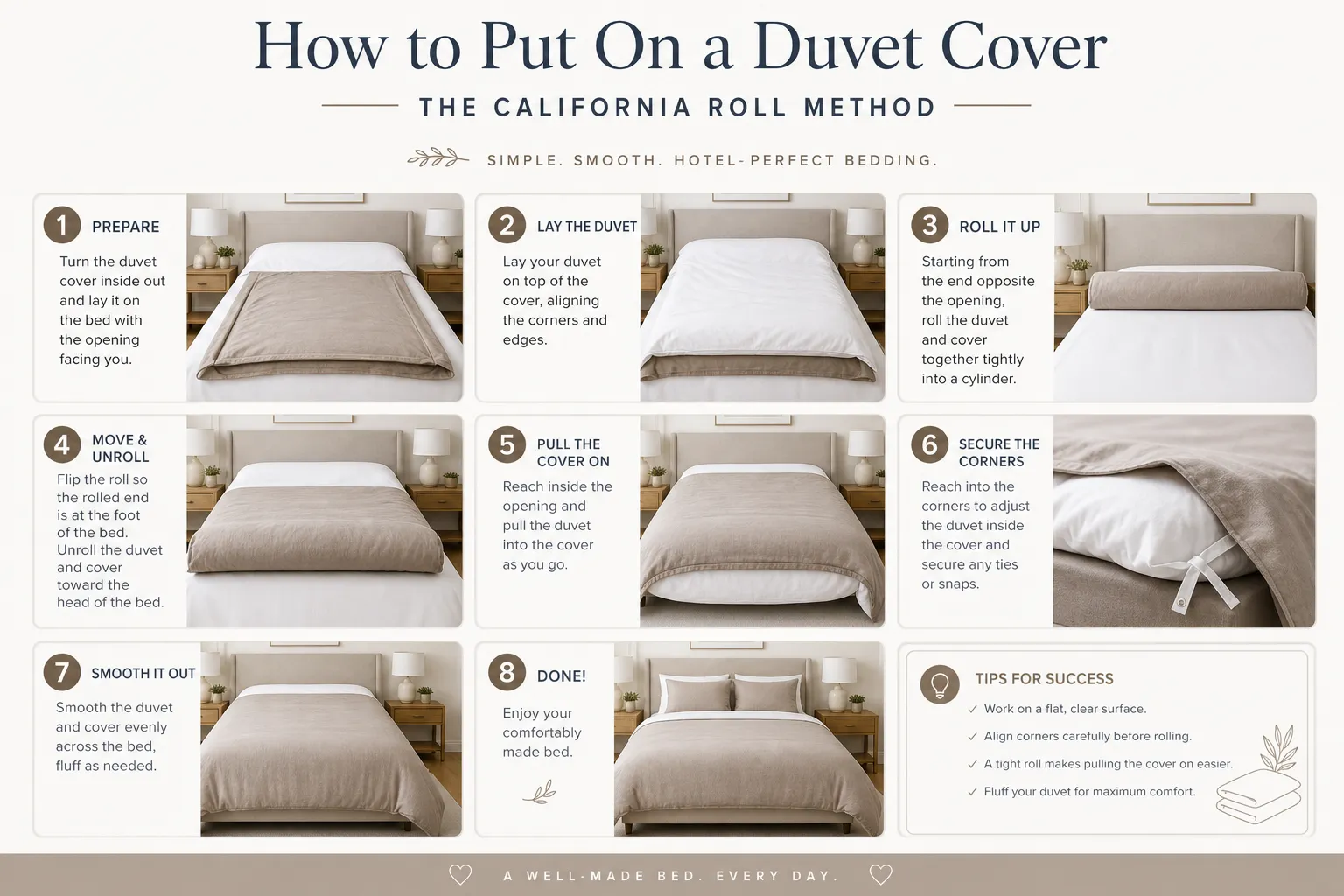
1. The California Roll Method
This is the favorite for people who want the least lifting and the most control. It is especially useful for larger beds like queen, king, and California king.
How it works
Turn the duvet cover inside out.
Lay it flat on the bed with the opening at the foot.
Place the duvet insert on top and align all corners.
Secure corner ties if your cover has them.
Roll both layers together tightly from the head of the bed downward.
Flip the opening around the rolled bundle, like wrapping a burrito.
Zip or fasten the closure.
Unroll, shake, and smooth.
Why it works so well
Keeps the insert aligned from the start
Reduces dragging and re-adjusting
Great for fluffy or oversized comforters
Easier for one person to handle alone
Best for
Couples with larger beds
Lofty down or down-alternative comforters
People who want the fastest repeatable system
2. The Traditional Inside-Out Method
This is the classic technique. It is simple once you understand the hand positioning.
How it works
Lay your insert flat on the bed.
Turn the duvet cover inside out.
Reach inside the cover and grab the top two corners.
Pinch the matching top corners of the insert through the cover.
Flip the cover right side out over the insert while holding tight.
Pull the rest of the cover down.
Secure the bottom corners and close it.
Why people still love it
No rolling required
Quick for twin or full-size beds
Easy once you have practiced a few times
Best for
Smaller beds
Lighter inserts
People who already know the basic motion
3. The Wide-Opening Zipper Method
This is less a named method and more a product advantage. If your duvet cover opens wide and closes with a zipper, the entire task gets easier because you spend less time fighting the opening itself.
How it works
Open the zipper fully.
Lay the cover flat and insert the comforter one end at a time.
Match and secure the corners.
Shake lightly so the fill settles evenly.
Zip closed and smooth the bed.
Why it feels easier
Wide access means less hand contortion
Zippers are faster than multiple buttons
Better for frequent washing and re-dressing
At Warmy & Tummy, we always recommend looking for bedding details that reduce friction in real life, not just on paper. Premium fabrics matter, but so do practical features like ties, closure type, and a balanced drape that helps the comforter settle naturally.
Which Method Is Best for You?
Here is a quick comparison to make choosing easier:
Method |
Difficulty |
Best For |
Biggest Advantage |
Possible Drawback |
|---|---|---|---|---|
California Roll |
Easy |
Queen/King beds, fluffy inserts |
Best alignment and solo handling |
Takes a little practice |
Traditional Inside-Out |
Moderate |
Smaller beds, lighter inserts |
Very fast once learned |
Can be awkward with large comforters |
Wide-Opening Zipper |
Very Easy |
Frequent washers, busy households |
Fast closure and less fuss |
Depends on cover design |
The Product Features Competitor Articles Often Skip
Many duvet tutorials stop at technique. But if you want a truly easier experience, these bedding details matter just as much.
Interior Corner Ties
These keep the insert anchored in place. Without them, even a perfectly installed duvet can slide and bunch after a few nights.
Zipper Closures
Buttons may look charming, but zippers are usually quicker and more secure. If convenience matters to you, a zippered duvet cover is often the better everyday choice.
Fabric Weight and Drape
Some materials fall neatly into place, while others cling or shift. Smooth, breathable fabrics with a refined finish often feel easier to handle and look more tailored on the bed.
Correct Size Pairing
A duvet insert that is too small will slide around. One that is too large may overstuff the corners and strain the closure. Always check dimensions, not just the label.
Seasonal Insert Weight
A very lofty winter insert behaves differently from a lightweight summer comforter. The fuller the insert, the more helpful corner ties and a wide opening become.
The Best Fabrics for Easy, Beautiful Everyday Bedding
The easiest bed to make is also one you want to climb into. That is where material choice becomes part of the conversation.
Organic Cotton
Organic cotton is breathable, familiar, and easy to live with. It is a wonderful everyday option if you want softness, washability, and a fresh, crisp finish.
Silk
Silk creates an elegant drape and a refined sleep feel. It is ideal for shoppers who want a more elevated, temperature-aware luxury bedding experience.
Linen
Linen brings relaxed sophistication and natural airflow. It is especially lovely for warmer climates or anyone who prefers an effortless, casually luxurious bedroom look.
Cooling Performance Fabrics
If you sleep warm, cooling fabrics like Tencel blends can make a major difference. They help your bed feel fresher and can make heavier bedding setups more comfortable year-round.
Goose Down Pairings
A premium goose down comforter paired with the right duvet cover delivers that plush, cloudlike finish many shoppers are really after. The trick is matching loft, shell, and warmth level to your room and sleep style.
At Warmy & Tummy, our collection is designed around real sleep preferences, from breathable organic cotton to silky luxury shells and cooling blends. That makes it easier to create a bed that looks refined and feels tailored to the season.
How to Prevent Bunching, Sliding, and Twisted Corners
Even after you get the cover on, a few issues can show up later. Here is how to avoid them.
Bunching in the Middle
Usually caused by no corner ties or a mismatch between insert and cover size.
Fix: Choose covers with secure ties and compare exact dimensions before buying.
Twisted Bottom Corners
Often happens when the insert was not fully shaken into place after closing.
Fix: After fastening, lift the duvet from the top corners and give it a few controlled shakes.
Uneven Loft
Common when the fill inside the comforter needs redistribution.
Fix: Lay the duvet flat and pat the fill outward before inserting it.
Closure Gaping Open
More likely with buttons if the comforter is full and under tension.
Fix: Choose a zipper closure for a cleaner finish and faster closure.
Why Duvet Covers Are Worth the Trouble
Once you have the process down, duvet covers are one of the most practical upgrades in bedding.
Easier Washing
You can wash the cover more frequently than the insert, which keeps your bed feeling fresher with less wear on the comforter itself.
"Approximately 80% of homes in the United States have detectable levels of dust mite allergens in at least one bed." - American Lung Association
That is one more reason washable top layers matter in everyday sleep hygiene.
Seasonal Flexibility
You can switch from a lightweight insert in summer to a warmer one in winter without changing your whole bedroom style.
Faster Style Updates
A new cover changes the look of the room instantly. This is perfect if you enjoy refreshing your bedroom for the season or layering limited-edition luxury designs.
Better Protection for Premium Inserts
A high-quality comforter deserves a protective outer layer. If you have invested in premium goose down, merino wool, or cooling specialty bedding, a duvet cover helps preserve it.
A Smart Bedding Setup for Different Sleep Styles
Choosing the right duvet setup is about more than color.
For Hot Sleepers
Look for cooling shells, lighter warmth levels, and airy materials like linen or Tencel blends.
For Cold Sleepers
Choose a fluffier insert with excellent loft retention and a soft shell that feels cozy without overheating.
For Couples
If one person sleeps warm and the other sleeps cool, customizable bedding becomes a real advantage. Warmy & Tummy’s mix-and-match comforter options make it easier to personalize comfort rather than settling for a one-feel-fits-all bed.
For Design-Led Homes
If your bedroom is part sleep sanctuary, part style statement, choose elevated textures, premium natural materials, and timeless neutral or limited-edition color stories that layer beautifully.
What to Look for When Buying a Better Duvet Cover
Before you buy, check these details:
Feature |
Why It Matters |
Ideal Choice |
|---|---|---|
Closure |
Affects ease of use |
Zipper for speed and security |
Corner attachments |
Prevents shifting |
Four or more sturdy ties |
Fabric |
Changes feel and airflow |
Organic cotton, linen, silk, or cooling blends |
Size precision |
Prevents bunching |
Exact or near-exact insert match |
Care instructions |
Impacts long-term convenience |
Machine washable when possible |
Style versatility |
Helps your bedroom evolve |
Neutral luxury tones or refined prints |
How Warmy & Tummy Makes the Experience Better
Beautiful bedding should not create daily friction. That is why Warmy & Tummy focuses on both sleep comfort and real usability.
Our approach is built around:
Premium bedding designed for deeper, more restful sleep
Comforters for different seasons and warmth preferences
Elevated materials including organic cotton, silk, linen, goose down, merino wool, and cooling fabrics
Customizable mix-and-match comforter options for more personalized comfort
Eco-friendly and sustainable choices for conscious homes
Stylish luxury designs and limited-edition collections
Free shipping in the USA on qualifying orders
Fast customer service by email and chat
A 30-day hassle-free return policy with money-back guarantee
Long industry experience and a 3-year limited warranty for added peace of mind
In other words, we believe the right bedding should feel indulgent at night and easy to live with in the morning.

A Few Pro Tips That Make a Big Difference
Put the Cover on Right After Drying
Freshly dried fabric is often easier to handle because it is less wrinkled and more flexible.
Always Start With the Top Corners
This is the anchor point for almost every successful method.
Use the Bed as Your Work Surface
Trying to install a duvet cover while standing or holding it up in the air creates unnecessary struggle.
Shake Before Final Smoothing
A few well-placed shakes can save you from sleeping under a lopsided comforter.
Upgrade the Bedding If the Chore Always Feels Hard
Sometimes the problem is not you. It is an awkward closure, slippery fabric, poor sizing, or lack of ties. Better bedding often feels easier from day one.
Final Thoughts
Duvet covers putting on does not have to stay a dreaded task. With the California roll method, the traditional inside-out technique, or a simple zippered wide-opening cover, you can turn an annoying chore into a quick routine. And when your bedding is thoughtfully designed, the process gets even smoother.
If you are ready to make your bed feel more luxurious, more personalized, and genuinely easier to live with, Warmy & Tummy is a smart place to start. Explore premium duvet covers, beautifully crafted comforters, and season-ready bedding essentials designed to help you sleep deeper and style your bedroom with confidence.
FAQ
How to put on a duvet cover real simple?
The simplest method is to turn the duvet cover inside out, line it up on the bed with the insert, secure the corners, and either flip it over or use the California roll method. Working on a flat bed surface makes everything easier and neater.
What is the trick to putting a duvet cover on?
The biggest trick is to start with the cover inside out and anchor the top corners first. If your duvet cover has interior ties or a zipper, use them - they reduce shifting and make the final result look much smoother.
What is the easiest way to put on a zippered duvet cover?
Open the zipper fully, lay the cover flat, and align the comforter carefully before securing the corners. Once the insert is evenly placed, zip it closed and give it a few shakes so the fill settles naturally.
How do I know which way to put a duvet cover on?
Lay the duvet cover on the bed and make sure the opening sits at the foot of the bed before you begin. Check the tag, zipper, or button placement if you are unsure which edge is the bottom.
What's the trick for putting on a duvet cover?
The trick is a mix of good technique and better bedding design. Corner ties, a zipper closure, and the right size match between insert and cover make the whole process faster and far less frustrating.
What is the two duvet trick?
The two duvet trick usually refers to couples using separate duvets instead of sharing one large comforter. It can improve comfort for partners with different sleep temperatures or movement habits and makes bed customization easier.