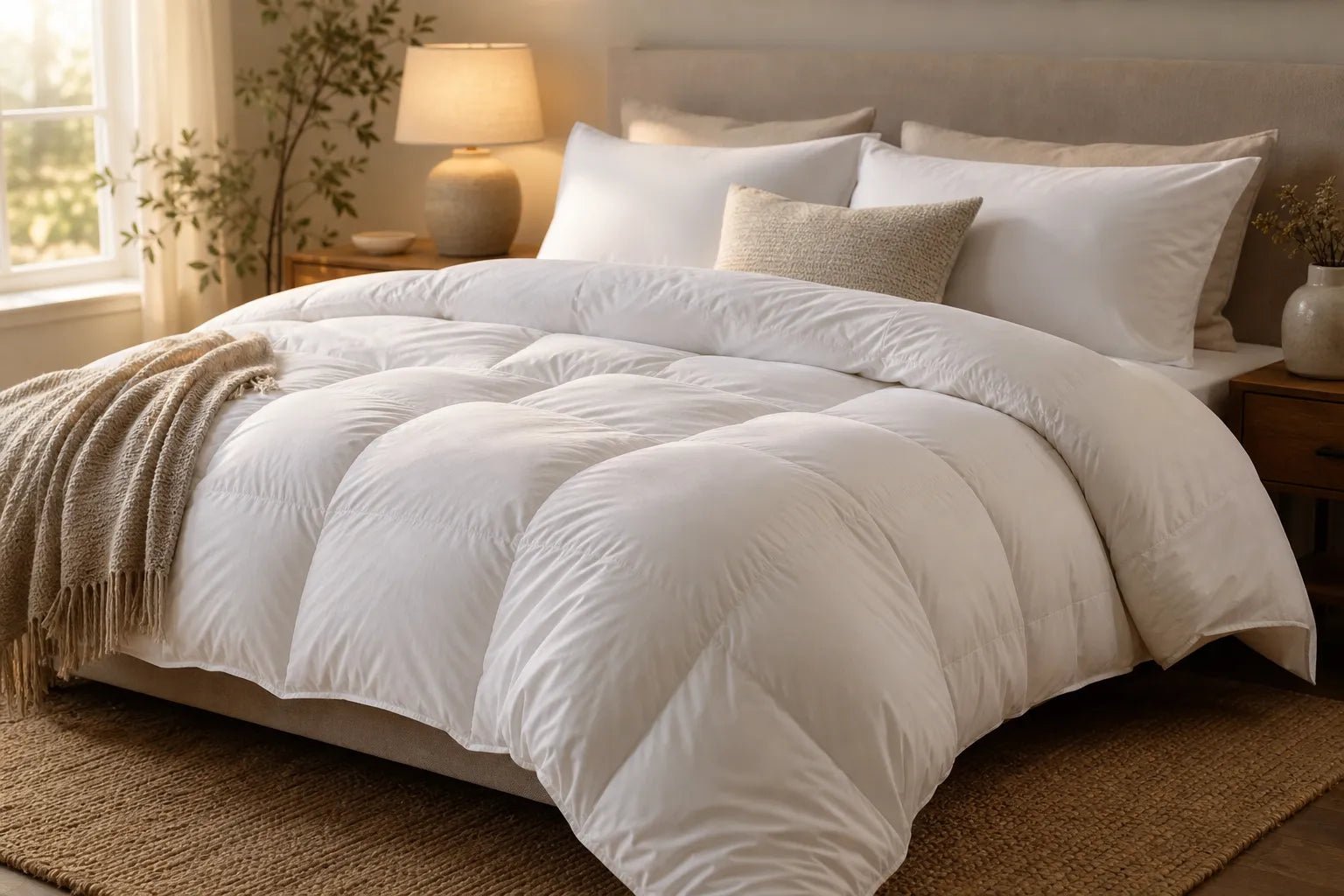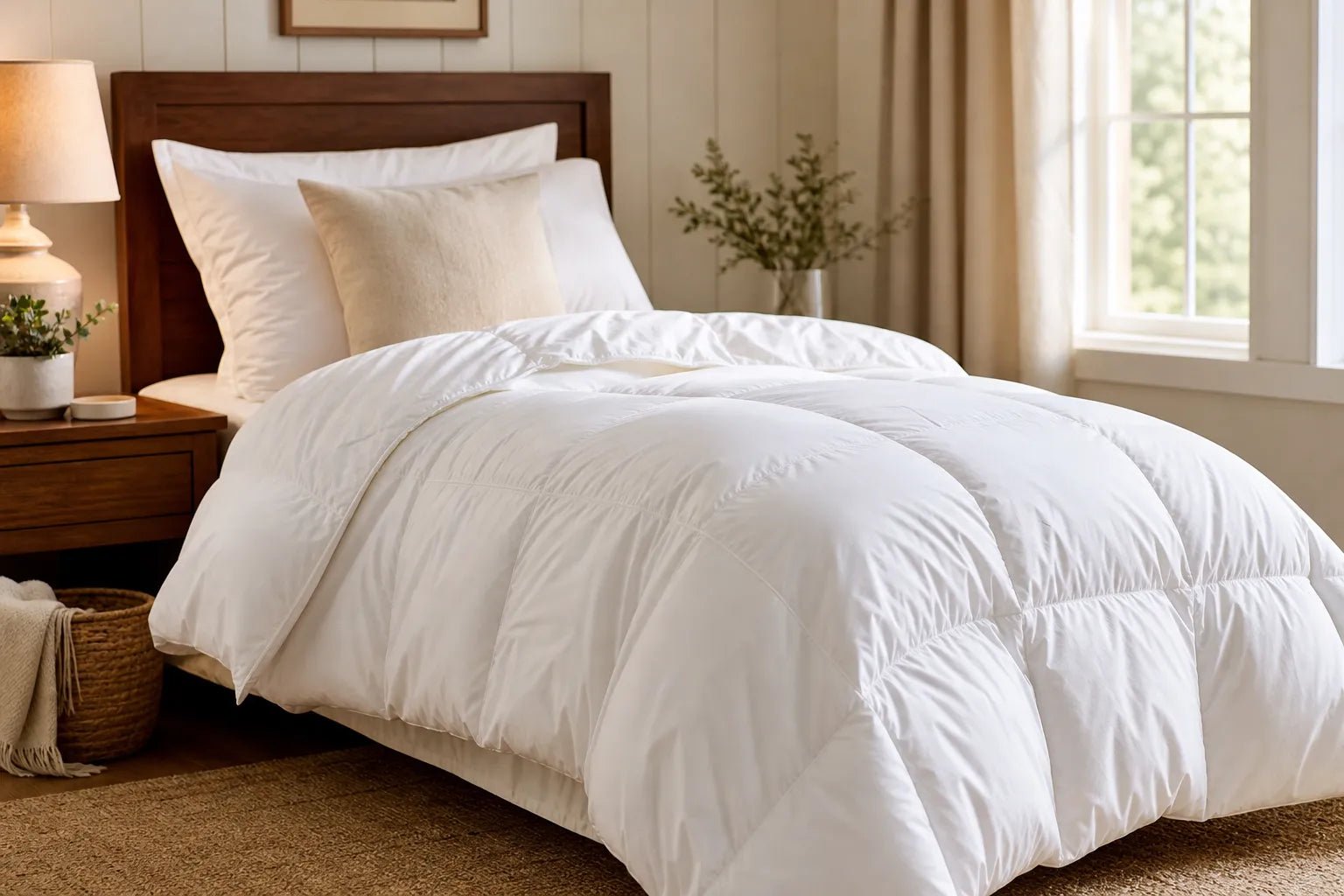

Summer Duvet Comforter for Cool, Cozy Sleep
Ever kicked off your bedding at 2 a.m., then pulled it right back on because sleeping with nothing feels oddly incomplete? A summer duvet comforter is made for exactly that problem: it gives you the soft, cocooned feeling you want without the heavy, stuffy heat you don't.
For warm-weather sleep, the sweet spot is simple: lighter fill, better airflow, breathable shell fabric, and enough softness to still feel like real bedding. If you're comparing a summer duvet comforter with a summer duvet blanket, the right choice depends on how hot you sleep, how much loft you like, and whether you want your bed to feel airy or plush.
At Warmy & Tummy, this is where thoughtful bedding really matters. A summer bed shouldn't feel bare or flat. It should feel cool, easy, and quietly luxurious.

What is a summer duvet comforter?
A summer duvet comforter is a lightweight comforter designed for warm nights. It usually has less fill than an all-season or winter option, but still offers more body and loft than a basic blanket.
That extra structure is why many people prefer it over sleeping under just a sheet. You still get drape, softness, and that finished-bed feeling. If you've ever wondered why some summer bedding feels clammy while other bedding feels breezy, the difference usually comes down to fill weight and shell fabric.
A good summer duvet comforter should:
feel light, not limp
allow heat to escape
avoid trapping humidity
layer easily with a duvet cover
still look polished on the bed
If you'd like a fuller overview of warm-weather bedding choices, our guide to lightweight comforters for summer is a helpful next read.
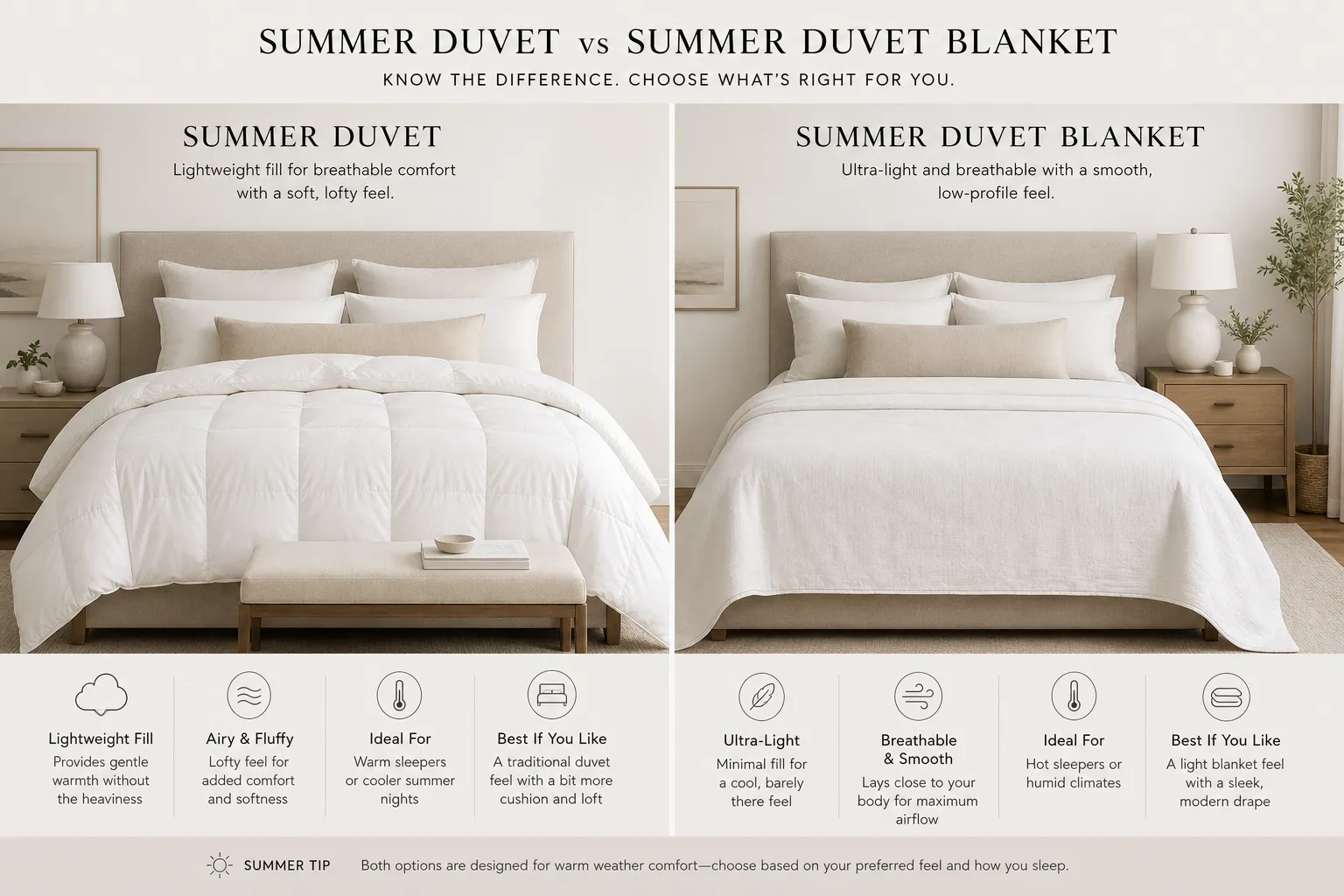
Summer duvet comforter vs summer duvet blanket
A summer duvet comforter is best if you want airy comfort with a little loft. A summer duvet blanket is better if you want something flatter, simpler, and even lighter against the body.
Here's the clearest way to compare them:
Feature |
Summer Duvet Comforter |
Summer Duvet Blanket |
|---|---|---|
Feel |
Soft, lofty, cocooning |
Flat, light, casual |
Warmth |
Light warmth |
Minimal warmth |
Best for |
AC rooms, couples, comfort lovers |
Very hot sleepers, humid climates |
Bed look |
Fuller, more styled |
Relaxed, minimal |
Layering |
Great inside a duvet cover |
Often used on its own or layered thinly |
Weight on body |
Light but noticeable |
Barely-there |
A lot of top-ranking bedding guides focus on "cooling" but skip this lifestyle difference. That's a mistake, because many shoppers aren't just asking what sleeps cooler. They're also asking what will feel right night after night.
Choose a summer duvet comforter if:
you still want your bed to feel plush
you sleep with air conditioning
you share a bed and need more flexibility
you like a hotel-style look
Choose a summer duvet blanket if:
you run very hot
your room stays warm even at night
you dislike loft or puffiness
you want the lightest possible layer
What makes summer bedding actually feel cool?
Cool summer bedding comes from breathability, moisture management, and the right amount of fill. It is not just about using a product labeled "cooling."
The best warm-weather bedding usually combines:
breathable outer fabric
lighter construction
moisture-friendly natural or performance fibers
enough drape to stay comfortable without trapping heat
Many competitor articles mention bamboo, cotton, or nylon cooling covers, but often gloss over one practical truth: too much loft can cancel out otherwise breathable materials. Even a good fabric can feel warm if the comforter is overfilled for your room and sleep style.
The shell fabric matters more than many people think
The shell is what touches your skin or sits just beneath your duvet cover. In summer, that surface feel matters a lot.
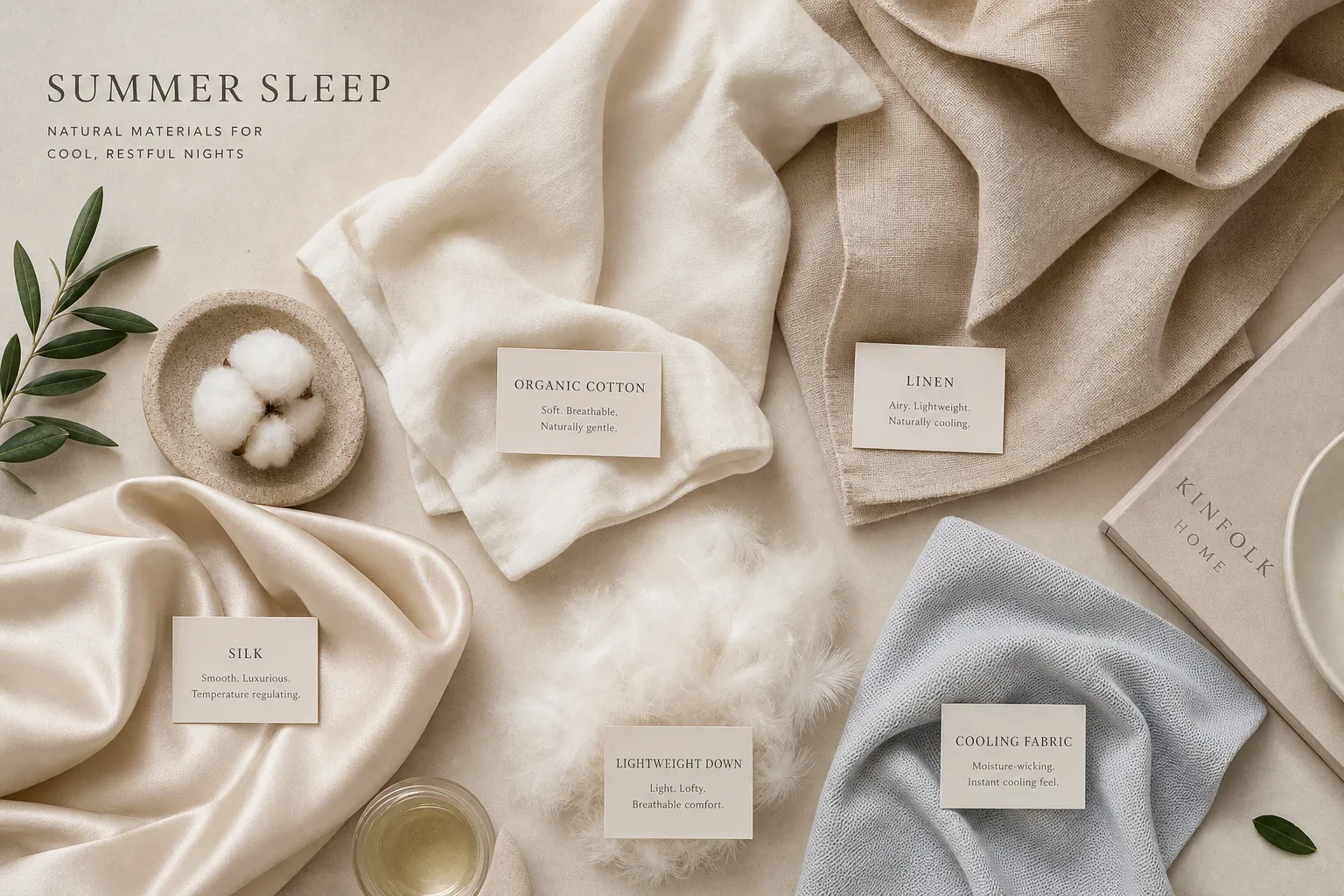
The best options include:
Organic cotton: crisp, breathable, familiar, easy to love
Linen: airy, textured, relaxed, excellent airflow
Silk: smooth and light with a refined feel
Cooling performance fabrics: designed for quick heat release and a cooler hand-feel
Fill weight is the hidden factor
A summer comforter should have less fill, not no fill. That's the difference between refreshing comfort and a blanket that feels too flat to be satisfying.
At Warmy & Tummy, this is why a range matters. Some sleepers want barely-there lightness. Others want something light but still softly cloudlike. One "summer" option can't serve everyone well.
Best materials for a summer duvet comforter
The best material depends on how you sleep. If you're a little warm, breathable natural fabrics may be enough. If you wake up hot or sweaty, lighter fill and cooling-focused shells become more important.
Organic cotton
Organic cotton is one of the safest choices for summer bedding. It feels breathable, clean, and easy to layer with.
It's especially nice if you prefer a bed that feels fresh rather than slippery. Warmy & Tummy's organic cotton options work beautifully for sleepers who want comfort without heaviness, plus a more eco-conscious choice.
You can also pair it with one of our organic cotton duvet covers for better sleep if you're refining your full summer setup.
Linen
Linen allows excellent airflow and has a more relaxed texture than cotton. If you like your bed to feel casual, airy, and lived-in, linen is a lovely summer choice.
It won't feel as silky as some cooling fabrics, but it often feels drier in humid weather.
Silk
Silk feels smooth, light, and refined. It's often a premium pick for people who want a luxurious sleep surface without a dense feel.
Silk can be especially appealing if you like a softer drape and elegant finish. It's a great match for a summer bedroom that should feel serene and polished.
Goose down
Yes, down can work in summer, as long as the fill weight is light enough. That's a point many shoppers miss.
A lightweight goose down comforter can feel airy rather than hot, because quality down insulates without the bulk of cheap, dense fill. If you want soft loft but not heavy warmth, down is worth considering. Our guide to the goose down comforter for summer explains this in more detail.
Merino wool
Merino wool is often overlooked in summer bedding, but it can regulate temperature beautifully. It helps manage moisture and can feel surprisingly balanced in changing temperatures.
It's a smart option for people who swing between cool and warm overnight.
Cooling performance fabrics
These are useful for sleepers who want an immediate cool-to-the-touch sensation. They can be especially helpful if your skin feels hot at bedtime.
The tradeoff is feel. Some people love the slickness; others still prefer natural fibers. The right answer depends on your body and preferences, not just marketing.
How hot sleepers should choose between comforter and blanket
If you're a hot sleeper, pick the lightest layer that still feels satisfying enough to keep on all night. That's the real test.
A lot of people buy summer bedding that's too warm because they shop by habit. They assume "comforter" means winter and "blanket" means summer. In reality, the better question is: how much loft do you enjoy, and how warm is your bedroom once the lights go out?
Choose a summer duvet comforter if:
your room is air-conditioned
you like a little fluff and drape
you share a bed with someone cooler than you
you dislike the flat feeling of a blanket alone
Choose a summer duvet blanket if:
your room stays warm overnight
you tend to wake up sweating
you sleep best with almost no weight
you want a very simple top layer
For couples, a comforter often gives you more flexibility. It can feel cooler than you'd expect if the fill is light and the shell breathes well.
What the best competitor articles get right, and what they miss
The strongest competitor content agrees on a few things: lightweight construction matters, breathable materials matter, and hot sleepers need options that release heat instead of trapping it.
That part is right. But a few useful details often get skipped:
1. Not all "cooling" products feel good to sleep under
Some bedding feels cool when you first touch it, but not necessarily more comfortable by 3 a.m. Initial coolness and all-night comfort aren't always the same thing.
2. Loft preference matters
A very thin blanket may technically sleep cooler, but if you hate the feeling of a flat cover, you'll still sleep badly. Comfort is not just temperature. It's also sensory.
3. Bedroom style matters too
People shop with their eyes as well as their sleep needs. A summer duvet comforter gives more volume and a more styled bed than a thin summer duvet blanket. That matters if you want your bedroom to feel finished.
4. Fabric-and-fill combinations matter more than single materials
A breathable shell with overly heavy fill can still feel warm. A lightweight down fill inside a crisp cotton shell can feel much cooler than shoppers expect.
A smart way to build your summer bed
The best summer bed is usually layered, not overbuilt. You want just enough to stay comfortable through changing temperatures.
Here is a simple setup that works for most households:
Layer |
Best Summer Approach |
|---|---|
Fitted sheet |
Breathable cotton, linen, or cooling fabric |
Top sheet |
Optional, based on preference |
Main layer |
Summer duvet comforter or summer duvet blanket |
Cover |
Lightweight duvet cover if desired |
Extra layer |
Folded blanket at foot of bed for AC adjustments |
This kind of setup works especially well if your nights fluctuate. You don't need one heavy layer trying to do everything.
Why a duvet cover can make or break summer comfort
Your duvet cover changes the feel of your bedding more than many people expect. A breathable insert inside a dense, heat-trapping cover won't feel nearly as comfortable.
For summer, look for duvet covers in:
organic cotton
linen
lightweight percale-style weaves
soft, breathable blends
Avoid anything overly thick, overly brushed, or too tightly woven if you tend to overheat.
If you're unsure where to start, our guide to duvet for summer best covers for cool sleep can help you pair the right cover with the right insert.
Is down too warm for summer?
No, down is not automatically too warm for summer. Heavy down is too warm for summer. Lightweight down often isn't.
This is one of the biggest myths in bedding. High-quality, lightweight down can be airy and breathable, especially when paired with cotton, silk, or linen shells. Cheap fills tend to feel dense and stuffy. Better fills feel lighter for the warmth they provide.
That's one reason Warmy & Tummy offers a wide range of comforters across materials and warmth levels. You shouldn't have to settle for a one-note answer when your sleep is personal.
What to look for when shopping online
When buying a summer duvet comforter online, pay attention to the details that tell you how it will actually sleep.
Check these first
fill weight or warmth level
shell fabric
whether it's meant for summer or all-season use
return policy
care instructions
size and drape
Trust signs that matter
Warmy & Tummy is built for shoppers who want more than vague promises. Helpful details include:
premium bedding designed for deeper, more restful sleep
options in organic cotton, silk, linen, goose down, merino wool, and cooling fabrics
customizable mix-and-match comforter choices
eco-friendly and sustainable options
stylish luxury designs and limited-edition collections
free shipping in the USA on qualifying orders
fast customer service by email and chat
30-day hassle-free returns and money-back guarantee
backed by long industry experience and a 3-year limited warranty
Those things matter because summer bedding can feel very personal. A generous return window and responsive service give you room to choose with confidence.
Best choice for different sleep styles
The best summer bedding is the one that matches how you actually sleep, not how product labels sound.
Sleep Style |
Best Fit |
|---|---|
Hot sleeper in humid climate |
Summer duvet blanket or ultra-light cooling comforter |
Comfort lover with AC |
Summer duvet comforter |
Couple with mixed temperature needs |
Lightweight comforter with breathable cover |
Minimalist bed styling |
Summer duvet blanket |
Luxe hotel-bed look |
Summer duvet comforter with linen or cotton cover |
If your bedroom doubles as a place to recharge, read, rest, and slow down, a comforter often gives you the richer all-around experience.
Final verdict: should you choose a summer duvet comforter or a summer duvet blanket?
If you want the coolest, barest layer possible, go with a summer duvet blanket. If you want to stay cool but still enjoy softness, loft, and a polished bed, a summer duvet comforter is usually the better choice.
For most people, the comforter wins because it balances breathability with actual coziness. That's the part shoppers often don't want to give up. You want to feel cool, yes, but you also want your bed to feel inviting.
Warmy & Tummy makes that choice easier with premium seasonal bedding in thoughtfully selected materials, flexible warmth options, mix-and-match personalization, and customer-first support if you need help choosing. If your summer sleep has felt too hot, too flat, or just not quite right, this is a good place to start.
FAQ
Is there such a thing as a summer comforter?
Yes. A summer comforter is a lightweight comforter made for warm-weather sleep, with less fill and better airflow than all-season or winter bedding. It gives you soft coverage and a finished bed feel without the heavy heat build-up.
What is the best duvet cover to keep hot sleepers cool?
The best duvet cover for hot sleepers is usually made from breathable organic cotton, linen, or another lightweight cooling fabric. A cooler insert can still feel warm if the cover is too dense, so airy materials matter just as much as the comforter inside.
What type of duvet is best for cool sleep?
A duvet with a lightweight fill and breathable shell is best for cool sleep. For many people, that means a summer duvet comforter in cotton, linen, silk, cooling fabric, or lightweight goose down rather than a heavier all-season option.
What is the best material for a duvet cover to stay cool?
Organic cotton and linen are two of the best materials for staying cool because they allow airflow and feel fresh against the skin. If you prefer a smoother hand-feel, lightweight cooling performance fabrics can also work well for warm sleepers.