

Ever wake up sweaty under a fluffy comforter, then shiver when you switch to a sheet? A down blanket gives you a lighter filled layer. A down comforter brings more loft and, in most cases, more warmth. A down blanket cover is a separate piece: it protects the fill, but can't make a light blanket as warm as a winter comforter.
Down blanket vs comforter at a glance
A down blanket is usually thinner and easier to layer. A down comforter is puffier and often serves as the bed's main insulating layer. Names vary by maker, so look at the fill and construction before you decide how warm either will feel.
What changes |
Down blanket |
Down comforter |
|---|---|---|
Loft and feel |
Slimmer, more flexible drape |
Fuller, more cloudlike profile |
Typical warmth |
Light to moderate, depending on fill |
Often warmer, though summer-weight versions exist |
Best role |
Solo layer in milder weather or added layer in winter |
Main top layer, especially in a cool room |
On the bed |
Easier to fold back or tuck in |
Gives the bed a fuller look |
Cover |
Optional if you like the exposed shell |
Often paired with a removable duvet cover |
Names won't tell you exactly how warm you'll be. Fill amount and loft matter, as do your room temperature and the other layers on your bed.
What does down blanket mean?
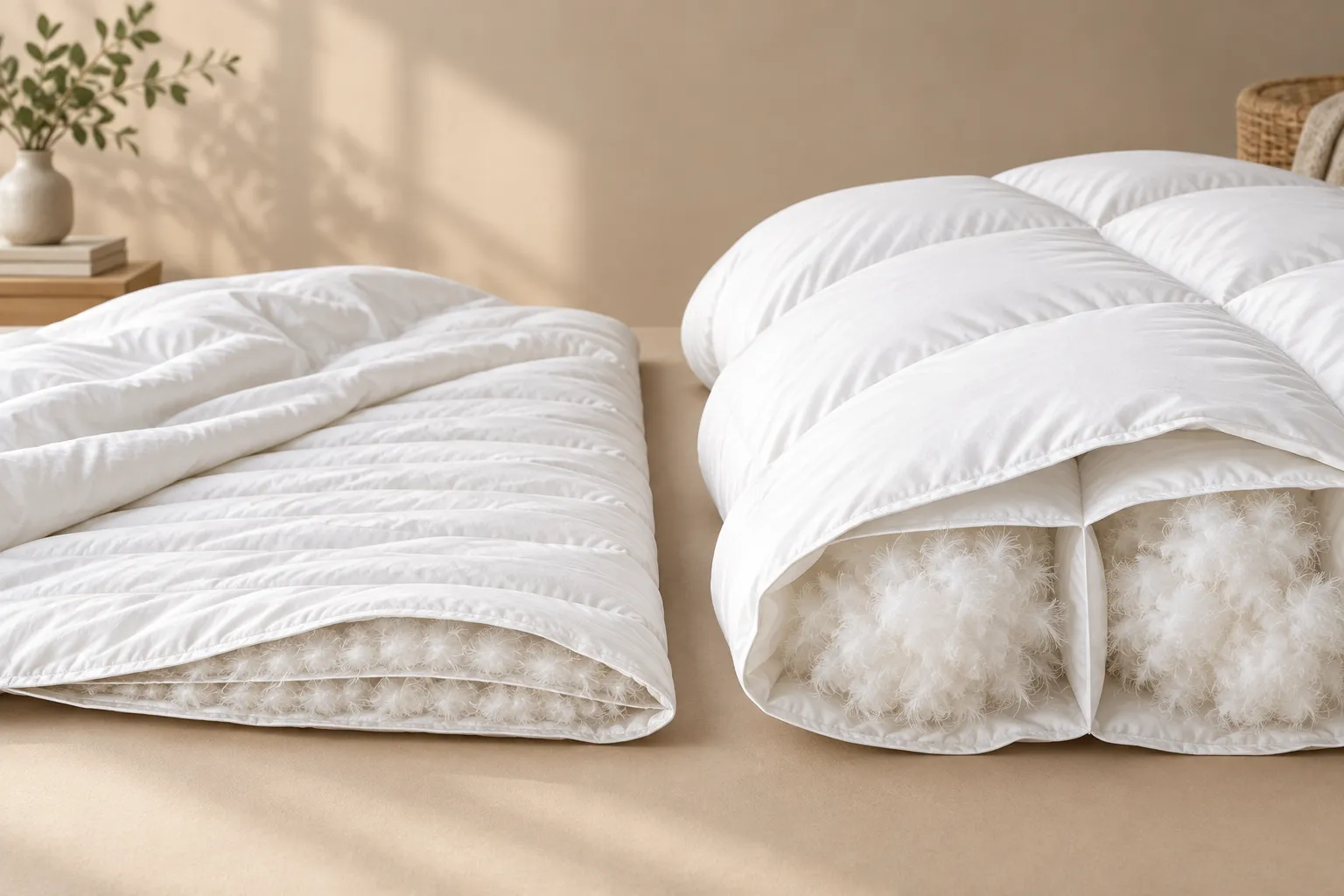
A down blanket has a fabric shell and down fill, sometimes blended with feathers. It lies flatter than a typical down comforter. You'll get a filled layer rather than a plain woven throw or an empty duvet cover.
Even a thin blanket may have stitched compartments to stop the fill from bunching. A “box stitch” joins the shell layers at the seams. Baffle boxes add fabric walls between them, leaving room for the fill to expand. Either construction can distribute warmth across the bed.
For a closer look at the two constructions, see Warmy & Tummy's sewn-through and baffle-box comparison.
You may see a comforter sold as a “duvet insert” because it's meant to go inside a cover. Inserts can contain down, a mix of down and feather filling, or synthetic fiber. “Down alternative” describes the fill in a comforter, while the duvet cover is the washable casing around it.
Which is warmer, and which feels heavier?
A down comforter usually holds more fill and traps more warm air. A down blanket sits closer to your body, with less puff to shift around when you turn over.
A comforter can feel light in your hands and still sleep warm because down traps air. Fill power describes how much space a given amount of down occupies. Fill weight is the amount of down inside. IDFL's warmth-factor calculation uses both values and the bedding's area, so a fill-power number by itself won't tell you how warm your bed will feel.
"The better the quality of the down, the less down by weight will be needed to create the thermal retention desired." - IDFL
Match the layer to your season
If your bedroom stays warm or you overheat, try a down blanket over a sheet. It can be your main layer in spring and fall, then move under a comforter in colder weather. If you wake up chilly in a cool room, a comforter may suit you better.
A summer-weight comforter can be lighter than a heavily filled blanket. Read its seasonal weight designation rather than relying on its name. If you and your partner sleep at different temperatures, individual layers may work better than one shared, super-warm comforter.
If you lean toward a comforter, choose a warmth level for the way you sleep.
Does a down blanket cover make sense?
A down blanket cover gives you a washable outer layer and lets you change the look of your bed. Shops usually call it a duvet cover. You can put a compatible down blanket inside one, as well as a comforter.
For less bunching, look for a cover that fits your insert closely and has ties or loops to hold it. Compare dimensions rather than labels: “full size,” “king size” and “oversized queen” vary by brand. If your blanket has no corner tabs, you may have to straighten it more often.
Fabric changes the feel, too. A cotton duvet cover, including cotton sateen, gives you a smooth, sheet-like surface; linen has a more relaxed texture. A cover adds a little warmth, but the fill does most of the insulating. If you prefer the blanket's own shell against you, use it uncovered and follow its care label.
You can compare fabric and sizing in the duvet cover selection guide.
How should you set your bed?
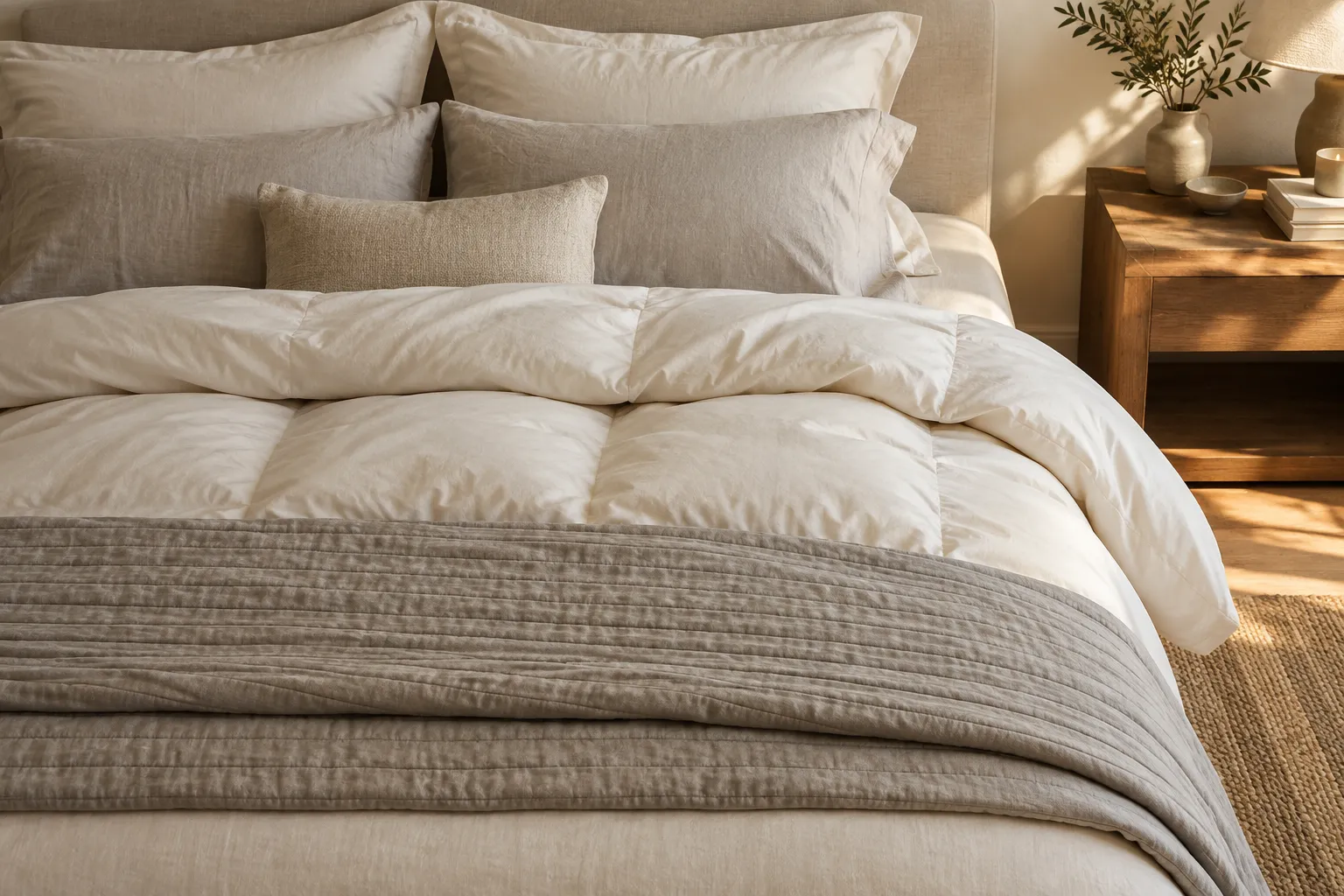
Start with the lightest setup that keeps you comfortable. You don't need every piece in a bedding set: sheets and a covered insert may be enough, while cold nights might call for a down blanket under the comforter.
If you tend to... |
Start with... |
Adjust by... |
|---|---|---|
Sleep hot or live in a mild climate |
Sheet plus down blanket |
Folding back the blanket when needed |
Feel cold in a cool bedroom |
Sheet plus down comforter |
Adding a lighter blanket if needed |
Face large seasonal swings |
Blanket for warmer months, comforter for colder ones |
Swapping layers instead of piling them on |
Disagree with a partner about warmth |
Individual layers |
Giving each sleeper a different weight |
A flatter down blanket is easier to tuck around your mattress. For a plush-looking bed, choose a comforter that suits the warmth of your room. The thickest option may leave you kicking it off at night.
How do you care for down bedding?
You can wash a removable cover more easily than the down-filled piece inside it. Keep the fill dry, fluff it to spread it through the pockets and follow the sewn-in care label. If you wash the filled piece, give it room to move and dry it completely before use or storage.
For washing and drying details, see the down comforter cleaning instructions.
When the season changes, store clean, fully dry down bedding somewhere breathable rather than sealed in plastic. That way a light blanket can return to the bed in spring without a musty surprise.
Pick the layer you'll actually enjoy sleeping under
If you often feel too hot, start with a down blanket and add layers as needed. If you love a lofty bed or keep your room cool, choose a comforter for your preferred warmth level. A duvet cover makes day-to-day upkeep easier.
Warmy & Tummy lets you mix and match comforter fill, warmth and shell. You can choose organic cotton, silk, linen or a cooling fabric for the outside. If an all-season comforter usually feels too warm or too cool, start with the warmth you need, then pick the fabric you'll want next to you.
FAQ
Should I put a cover on my down comforter?
You don't have to, but a removable duvet cover protects the comforter and is easier to wash routinely than the filled insert. Choose one close to the insert's actual dimensions and use corner attachments if available.
What is a good cover for a down comforter?
A good duvet cover fits the comforter closely, feels comfortable against your skin and has closures that hold the insert in place. Cotton offers a smooth, sheet-like feel, while linen has a more textured drape.
What to put on top of a down comforter?
A duvet cover goes around a down comforter rather than simply on top of it. If you need extra warmth, add a light blanket on top, but try the comforter alone first so the bed doesn't get too hot.
What is the cover that goes over a down comforter called?
It's called a duvet cover. It surrounds the down-filled insert, can be removed for washing and lets you change the bed's look without replacing the comforter.