
White Goose Down Comforter Twin Buying Guide
Ever climbed into bed and felt too hot under one comforter, then weirdly chilly under another? If you're shopping for a white goose down comforter twin, the right choice comes down to five things: fill power, warmth level, shell fabric, construction, and how you actually sleep.
A twin comforter sounds simple, but it's one of those purchases you'll notice every single night. Get it right, and your bed feels light, cozy, breathable, and worth crawling into early. Get it wrong, and you're stuck kicking it off at 2 a.m. or piling on extra blankets.
At Warmy & Tummy, we think premium bedding should feel personal. That's why we design comforters for different seasons, sleep temperatures, and style preferences, with beautiful materials like organic cotton, silk, linen, cooling fabrics, goose down, and merino wool blends. If you want a comforter that feels luxurious now and still performs beautifully years from now, this guide will help you choose with confidence.
What is a white goose down comforter twin?
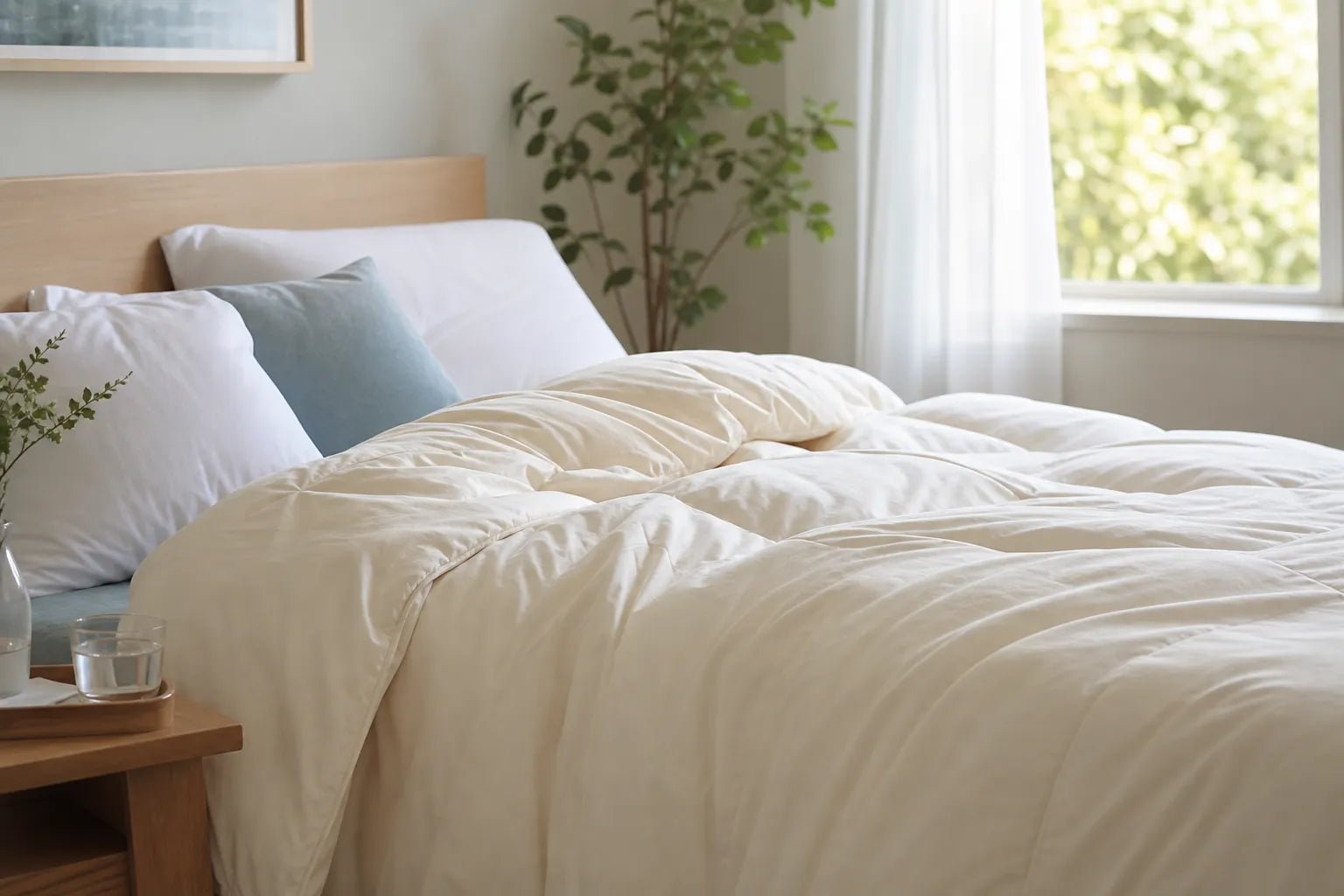
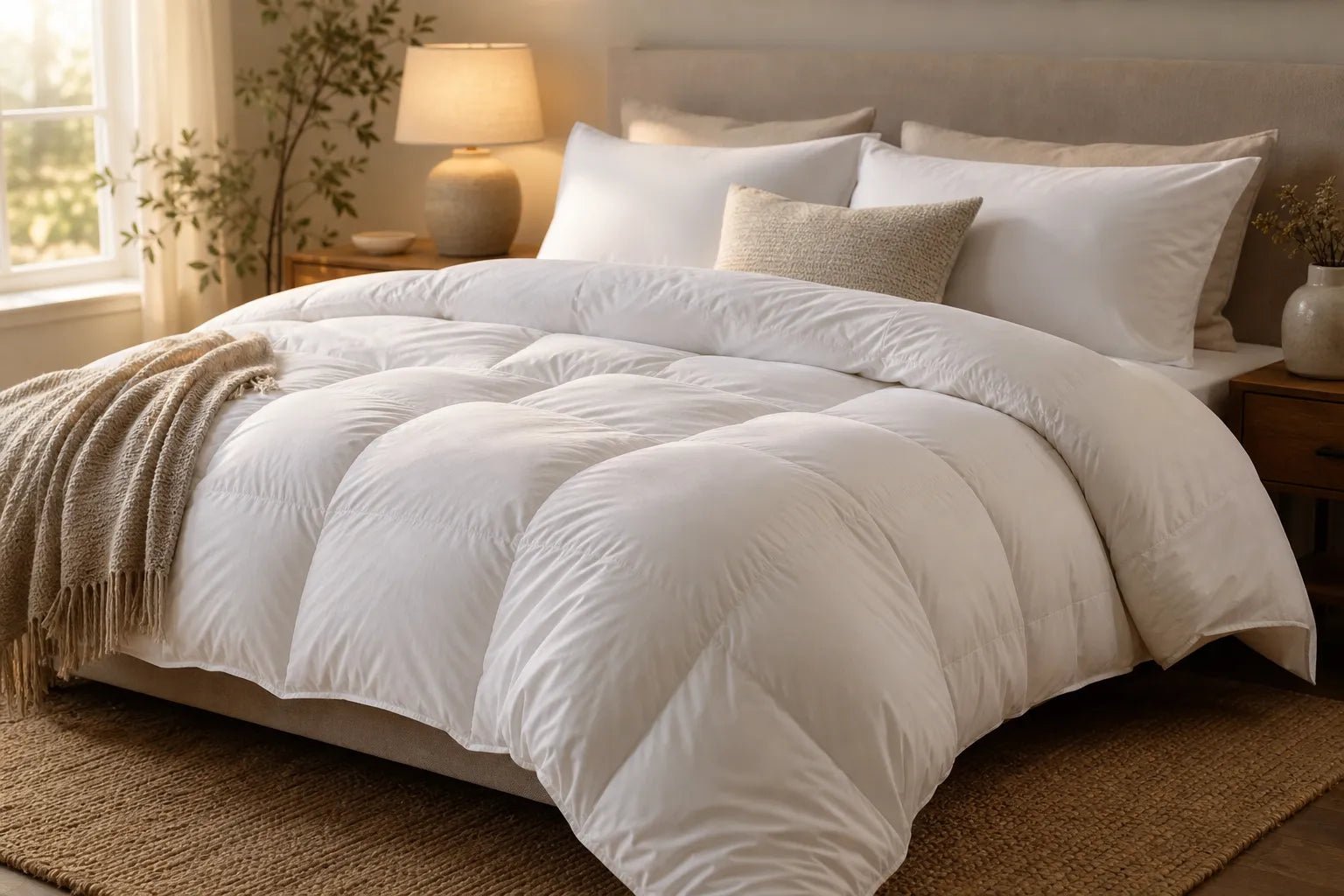
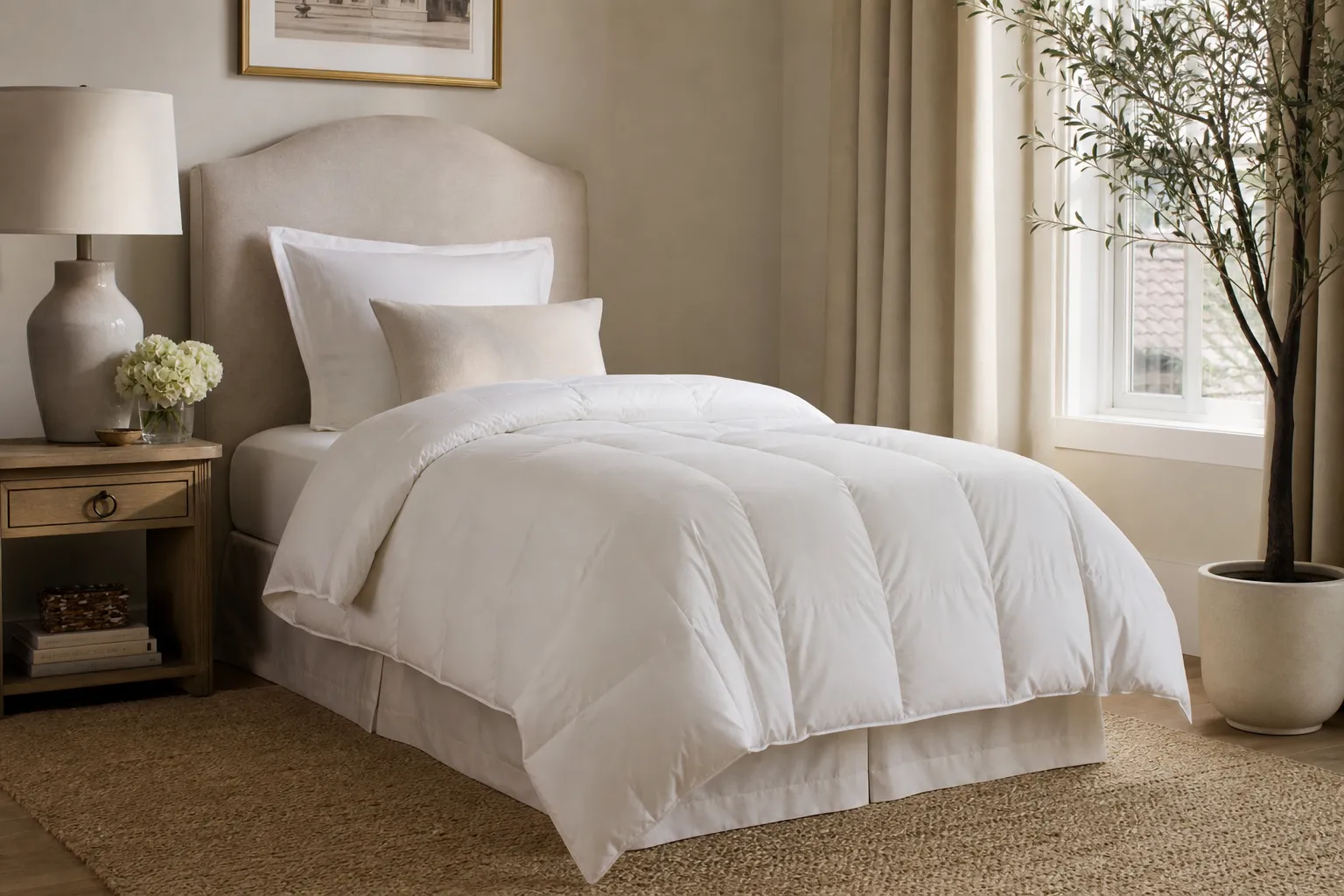
A white goose down comforter twin is a twin-size bed comforter filled primarily with white goose down clusters rather than synthetic fiber or mostly feathers. It offers high warmth for low weight, which is why it feels fluffy and insulating without feeling heavy.
“White” refers to the color of the down, not a magical boost in warmth. The real performance comes from down quality, fill power, construction, and the outer shell. For most shoppers, the appeal is simple: you get that cloud-like, hotel-style feel with better breathability than many cheaper fills.
A twin size is ideal for:
Twin beds in kids' rooms, guest rooms, and dorm-style spaces
Solo sleepers who want less bulk to manage
Daybeds and smaller bedrooms
Hot sleepers who don't want excess fabric bunching up around them
How competitor guides approach this topic - and what they often miss
The top-ranking comforter guides tend to agree on the basics: down is lighter than alternatives, fill power matters, baffle box construction can improve loft, and duvet covers help with care. That's all true.
But many of them gloss over the details that actually shape satisfaction after you buy:
How your room temperature changes the “right” warmth level
Why twin sizing can feel too skimpy or just right depending on bed height
Why a lower-weight premium comforter can outperform a heavier cheaper one
How shell fabric changes feel against the skin
How couples, kids, and guest-room use call for different priorities
When organic cotton, silk, linen, or cooling fabrics make more sense than standard cotton
That's where smart shopping gets easier. You're not just buying “down.” You're choosing how your bed feels every night.
How to choose the best white goose down comforter twin
The best white goose down comforter twin is the one that matches your sleeping temperature, room climate, and preferred feel. Start with warmth level first, then compare fill power, shell fabric, and construction.
Here's the fast version:
Factor |
What to Choose |
Best For |
|---|---|---|
Warmth level |
Lightweight |
Hot sleepers, warm homes, summer use |
Warmth level |
All-season |
Most sleepers, year-round use |
Warmth level |
Ultra-warm/winter |
Cold sleepers, chilly rooms |
Fill power |
600–700 |
Good everyday loft and value |
Fill power |
700–800+ |
Lighter, fluffier, more luxurious feel |
Shell fabric |
Cotton cambric or sateen |
Classic breathable comfort |
Shell fabric |
Organic cotton |
Natural, eco-conscious luxury |
Shell fabric |
Silk |
Smooth feel, elegant drape, gentle temperature balance |
Shell fabric |
Linen |
Relaxed texture, airflow, casual luxury |
Construction |
Sewn-through |
Lighter profile, often better for warm climates |
Construction |
Baffle box |
Maximum loft and more even warmth |
Fill power explained without the confusing jargon
Fill power tells you how much space one ounce of down occupies. Higher fill power means the down traps more air, which gives you more warmth with less weight.
That matters because many shoppers assume “heavier” means “better.” With down, that's often the opposite. A high-quality comforter can feel lighter on your body while still keeping you warmer.
A simple way to read fill power
550–600 fill power: decent entry point, usually less lofty
600–700 fill power: solid quality for everyday comfort
700–800 fill power: premium range with a lighter, fluffier feel
800+ fill power: luxury level, very lofty, very light, often pricier
If you want that airy, upscale bed feel, a higher fill power is usually worth it. If you're furnishing a guest room or want a more budget-conscious option, mid-range fill power can still perform beautifully when paired with the right warmth weight and shell.
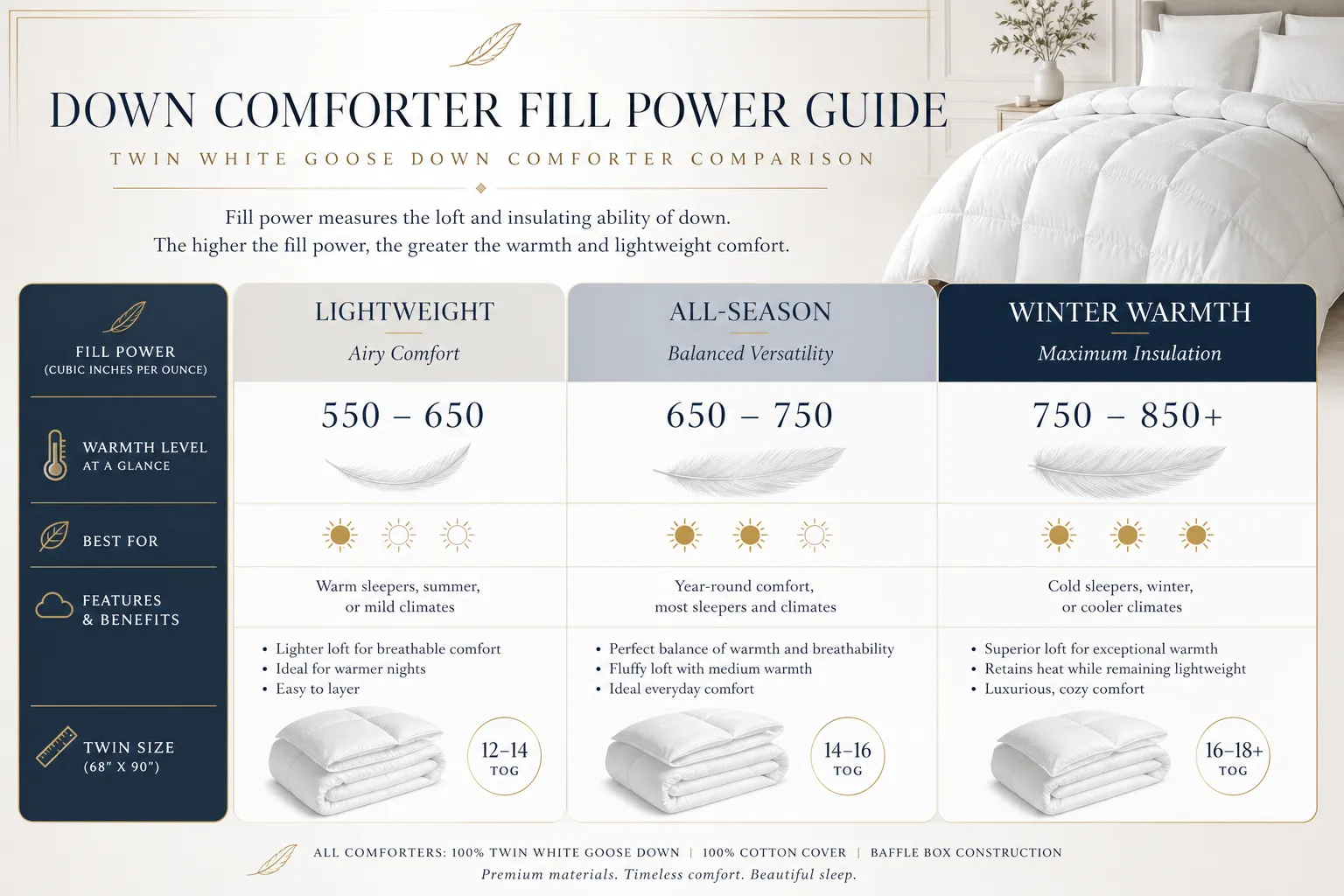
What warmth level should you buy for year-round sleep?
For most people, an all-season white goose down comforter twin is the safest year-round choice. If you sleep hot or live in a warm climate, go lighter. If your room stays cool or you naturally run cold, go warmer.
This is where a lot of returns happen. People buy for winter fantasy instead of real-life sleep habits. If your bedroom is temperature-controlled and you already tend to sleep warm, a winter-weight comforter may end up living folded at the foot of the bed.
Choose lightweight if:
You sleep hot
Your room stays warm
You live in a mild or hot climate
You plan to layer with blankets or quilts
Choose all-season if:
You want one comforter for most of the year
Your bedroom temperature stays fairly steady
You like a balanced, cozy feel without overheating
Choose ultra-warm if:
You sleep cold
Your home gets chilly at night
You dislike layering
You're buying for winter-specific use
At Warmy & Tummy, this is exactly why we offer a wide range of warmth options instead of pushing one “best” comforter for everyone. Better sleep starts with matching the comforter to your body, not to a generic label.
Does twin size really fit every twin bed?
No, not perfectly. Twin comforters are standardized, but mattresses and bed setups vary enough that you should still check dimensions before buying.
A standard twin mattress is about 38 inches by 75 inches. Most twin comforters are made larger than that so they can drape over the sides. But if your mattress is especially deep, has a topper, or sits high on a platform or bunk frame, a skimpy comforter can look and feel undersized.
What to look for in twin sizing
A good twin comforter should give you enough side drape to feel covered when you move around. If you like a fuller look, compare exact product dimensions rather than relying only on the word “twin.”
This matters even more for:
Lofted mattress toppers
Dorm beds with extra layers
Kids who toss and turn
Daybeds where one side stays visible
If you're between sizes and appearance matters, some shoppers prefer a slightly oversized fit. At Warmy & Tummy, mix-and-match options make it easier to build a bed that feels intentional instead of awkwardly undersized.
Baffle box vs sewn-through: which one is better?
Baffle box is usually better for maximum loft and even warmth. Sewn-through can be better if you want a lighter, less insulated comforter.
Baffle box
Baffle box construction uses internal walls to create more space for the down to loft up. That keeps the fill more evenly distributed and reduces cold spots.
Best for:
all-season to winter warmth, hotel-style fluffiness, premium loft
Sewn-through
Sewn-through construction stitches the top and bottom layers directly together. It can still be very comfortable, but it tends to have slightly less loft at the seams.
Best for:
lighter-weight comforters, warm climates, flatter and more tailored appearance
Neither is automatically “bad” or “good.” The right one depends on the feel you're after. If you want the fullest, most luxurious white goose down comforter twin, baffle box usually wins.
Which shell fabric feels best?
The shell fabric is a big deal because it's what you see, touch, and hear. The best fabric depends on whether you want crispness, smoothness, breathability, or a more natural relaxed texture.
Organic cotton
Organic cotton is one of the most balanced choices. It's breathable, soft, familiar, and easy to pair with almost any bedroom style. It's also a favorite for shoppers who want eco-friendly bedding without sacrificing luxury.
Silk
Silk offers a smoother, more fluid feel and a refined look. It can feel especially lovely for people who are sensitive to rougher textures or want an extra-luxurious finish.
Linen
Linen is breathable and casually elegant, with a more relaxed texture than cotton or silk. It's especially nice if you love layered bedding and a lived-in designer look.
Cooling performance fabrics
Cooling blends like Tencel-based shells can be smart for hot sleepers. If you like down's softness but worry about overheating, pairing goose down with a cooler-feeling shell can help balance comfort.
One of the biggest advantages at Warmy & Tummy is material choice. Instead of settling for a generic cotton shell, you can choose the fabric that fits your sleep style and bedroom aesthetic.
Is white goose down better than duck down or down alternative?
White goose down is often considered more premium because it can offer larger clusters, higher loft, and excellent warmth-to-weight performance. But the best choice still depends on your goals.
Here's a quick comparison:
Fill Type |
Feel |
Warmth-to-Weight |
Durability |
Best For |
|---|---|---|---|---|
White goose down |
Fluffy, airy, premium |
Excellent |
Excellent |
Luxury, year-round comfort, long-term value |
Duck down |
Slightly denser |
Very good |
Very good |
Good performance at a lower price |
Down alternative |
Smooth, often heavier |
Moderate |
Moderate |
Allergy concerns, lower upfront budget |
Wool fill |
Dense but breathable |
Good |
Very good |
Natural temperature regulation |
Silk fill |
Light, refined |
Moderate to good |
Good |
Elegant layering, gentle comfort |
If you're specifically shopping for a premium twin comforter that feels light but cozy, white goose down is still the gold standard for many households.
How much down percentage should you look for?
Look for comforters with a high percentage of down rather than a blend heavily padded with feathers. More down generally means better loft, softness, and insulation.
Feathers have quills. Down clusters do not. So if a comforter uses a lot of feather content, it may feel heavier, flatter, or pokier over time.
A product labeled “white goose down comforter twin” should still be checked for the actual fill composition. Read the specs and care label closely. Premium brands are usually transparent about fill details, construction, and sourcing.
What makes a down comforter feel luxurious instead of just expensive?
A luxurious comforter feels light, evenly filled, breathable, and beautifully finished. Price alone doesn't create that experience.
Signs of quality worth paying for
High fill power for lighter loft
Strong, tightly woven shell fabric
Even construction with minimal shifting
Clean stitching and durable finishing
Responsibly sourced down
A brand that clearly states materials, warmth level, and dimensions
This is where Warmy & Tummy stands apart. We combine premium natural materials, curated warmth options, customizable comforter choices, and thoughtful design details so you can buy based on sleep needs, not guesswork. And because style matters too, our bedding collections are designed to look as good as they feel, including luxury designs and limited-edition options for more distinctive bedrooms.
How much should you spend on a twin goose down comforter?
A good twin goose down comforter usually costs more upfront than synthetic options, but it often gives better long-term value. You're paying for down quality, shell fabric, construction, and how long it stays comfortable.
General price expectations
Price Range |
What You’ll Usually Get |
|---|---|
Under $100 |
Often synthetic or low down content, basic construction |
$100–$200 |
Entry-level down or blends, decent for occasional use |
$200–$400 |
Better materials, stronger loft, more reliable year-round performance |
$400+ |
Premium fill power, luxury shell fabrics, superior craftsmanship |
If the price looks suspiciously low for a true white goose down comforter twin, it usually means compromises were made somewhere. That's not always a problem for a guest bed, but for nightly sleep, quality tends to pay you back.
Best use cases for a white goose down comforter twin
A white goose down comforter twin works especially well for solo sleepers who want premium comfort without excess bulk. It's also a great pick for rooms where you want comfort, polish, and practical sizing all at once.
Best for kids' rooms
A quality twin comforter can grow with your child, especially if you choose an all-season weight and protect it with a duvet cover.
Best for guest rooms
Guests notice bedding fast. A fluffy, breathable down comforter instantly makes the room feel more thoughtful and upscale.
Best for college-age sleepers
A twin size is practical, and a lighter all-season option works well in temperature-controlled buildings.
Best for style-focused small bedrooms
A neatly tailored twin comforter helps smaller rooms feel calm and finished, especially when paired with premium sheets and a well-fitted duvet cover.
How to care for your comforter so it lasts
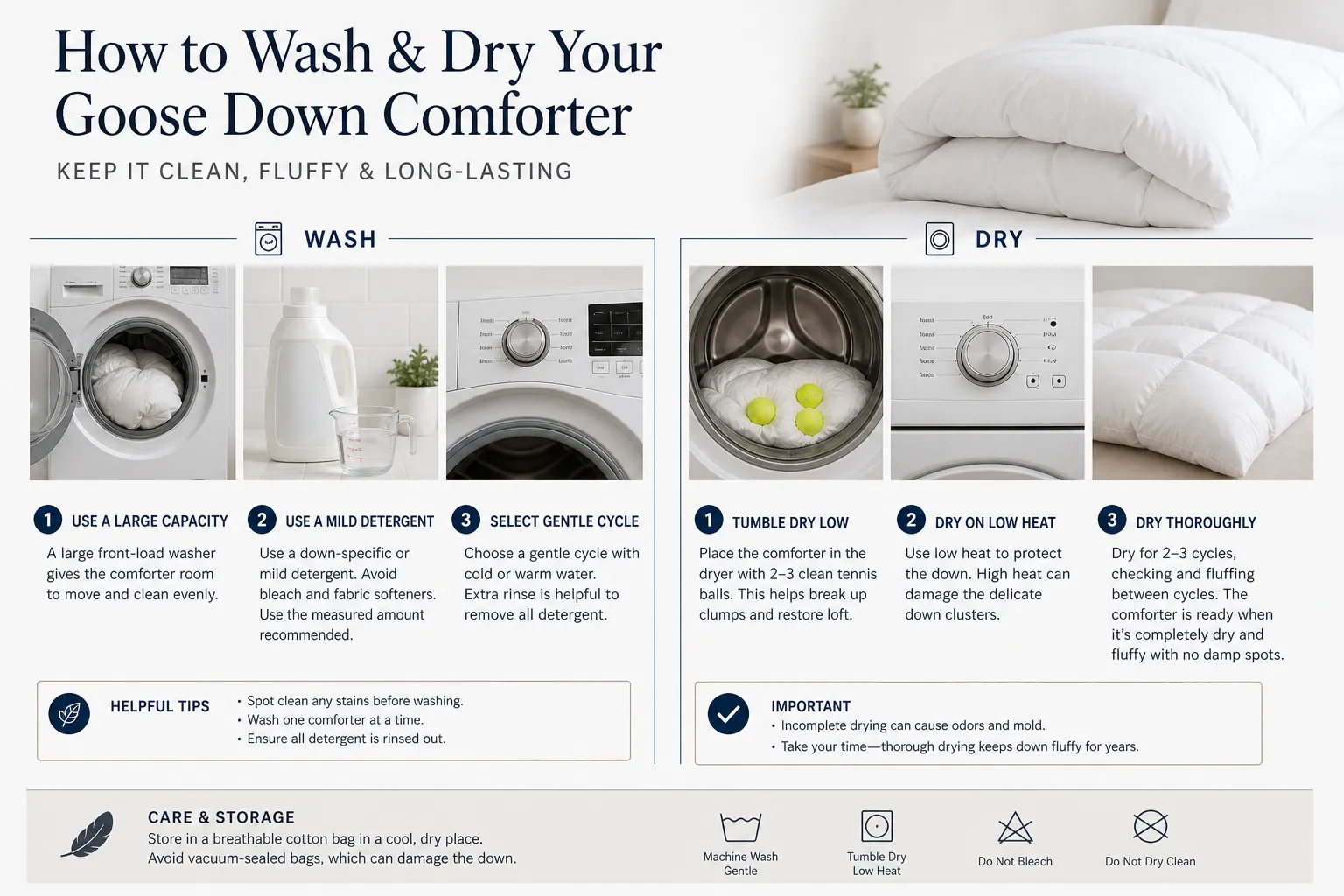
Use a duvet cover, wash only when needed, and dry thoroughly on low heat. That's the short answer.
Down comforters don't usually need frequent washing if they're protected well. Overwashing can wear the fill and shell faster than necessary.
Easy care steps
Use a duvet cover to protect against oils, sweat, and dust.
Spot clean first for small spills.
Wash in a large front-load machine when needed.
Use gentle detergent made for delicate items if possible.
Dry on low heat until completely dry.
Add dryer balls or clean tennis balls to help restore loft.
A well-made down comforter can stay in rotation for years when treated well. That's one more reason many shoppers see premium down as a smart home investment, not just a splurge.
Smart questions to ask before you buy
Before you click add to cart, answer these honestly:
Do you sleep hot, neutral, or cold?
Is your bedroom warm, cool, or drafty?
Do you want fluffy loft or a flatter drape?
Will you use a duvet cover?
Is this for everyday sleep or occasional guests?
Do you care most about softness, cooling, natural materials, or easy care?
Do you want a classic look or something more custom?
These questions sound simple, but they narrow the field fast.
Why many shoppers end up happier with a customizable option
Customization reduces the chances of buyer's remorse. If you can choose your fill, shell, and warmth level, you're much more likely to get the comforter that actually suits your sleep.
That's one reason Warmy & Tummy leans into mix-and-match comforter options. Some sleepers want organic cotton and medium warmth. Others want silk and lightweight fill. Others need cooling fabrics or prefer a more seasonal bedding setup with blankets layered on top.
Instead of trying to make one product fit everyone, we make it easier for you to build your own ideal sleep setup. Add in eco-friendly choices, free shipping in the USA on qualifying orders, responsive support by email and chat, a 30-day hassle-free return policy, and a 3-year limited warranty, and you get a buying experience that feels much more reassuring.
Our honest take: what most people should buy
If you're shopping for nightly use, the safest sweet spot is usually:
All-season warmth
High down content
600–800 fill power
Breathable cotton or organic cotton shell
Baffle box construction if you love loft
If you sleep hot, move down to lightweight. If you run cold or keep your room chilly, move up in warmth. If you care about sustainability and softness, organic cotton is a beautiful choice. If you want a more polished luxury feel, silk or cooling-performance shells can be worth a closer look.
Where Warmy & Tummy fits in
Warmy & Tummy is built for shoppers who want more than a generic bedding purchase. We bring together over 20 years of bedding experience, premium craftsmanship, beautiful natural and performance fabrics, thoughtful warmth options, and flexible personalization so your comforter feels chosen, not random.
If you've been comparing a dozen tabs and still aren't sure which twin comforter will actually help you sleep better, start with how you sleep and build from there. That's how better bedding becomes better rest.
If you'd like a comforter that feels cozy, looks refined, and gives you room to choose what works for your body and your bedroom, Warmy & Tummy is a very good place to land.
FAQ
What to look for when buying a goose down comforter?
Look first at fill power, warmth level, shell fabric, and construction. A good goose down comforter should match how warm you sleep, use high-quality down with a tightly woven shell, and offer even fill distribution so it stays comfortable over time.
Which white goose down comforter is the best?
The best one is the comforter that fits your sleep temperature, room climate, and preferred feel. For most people, an all-season twin comforter with high down content, 600–800 fill power, and a breathable cotton or organic cotton shell is an excellent choice.
How to choose the right twin size comforter?
Choose a twin comforter by checking the exact dimensions, not just the size label. You want enough drape for your mattress height and sleeping style, especially if you use a topper or move around a lot at night.
How much should I spend on a down comforter?
For everyday comfort and durability, expect to spend more than you would on synthetic bedding. A strong value range for a premium twin down comforter is often around $200 to $400+, depending on fill power, fabric, and craftsmanship.
What is the best brand for down comforters?
The best brand is one that combines quality materials, clear product details, strong customer support, and flexible comfort options. Warmy & Tummy stands out for premium fabrics, customizable comforters, eco-friendly choices, fast support, free qualifying U.S. shipping, and a 30-day money-back guarantee.