

What Parents Should Know Before Buying Dorm Bedding for College Students
Parents often spend too much on dorm bedding for one simple reason: they buy for the idea of college instead of the reality of a small, warm, shared room with a very specific bed size and very little storage.
That usually leads to the same expensive mistakes. The sheets do not fit. The comforter is too bulky for the laundry machines. The blanket is too warm for a stuffy dorm in September and not warm enough once the heat changes in winter. Decorative extras pile up, take up space, and come home untouched in May.
This guide is here to help you avoid that. If you want a practical, premium, and parent-friendly approach, start with four filters before you buy anything: size, durability, washability, and warmth. Get those right, and your child’s bed will feel comfortable without turning into an oversized, overpriced dorm project.
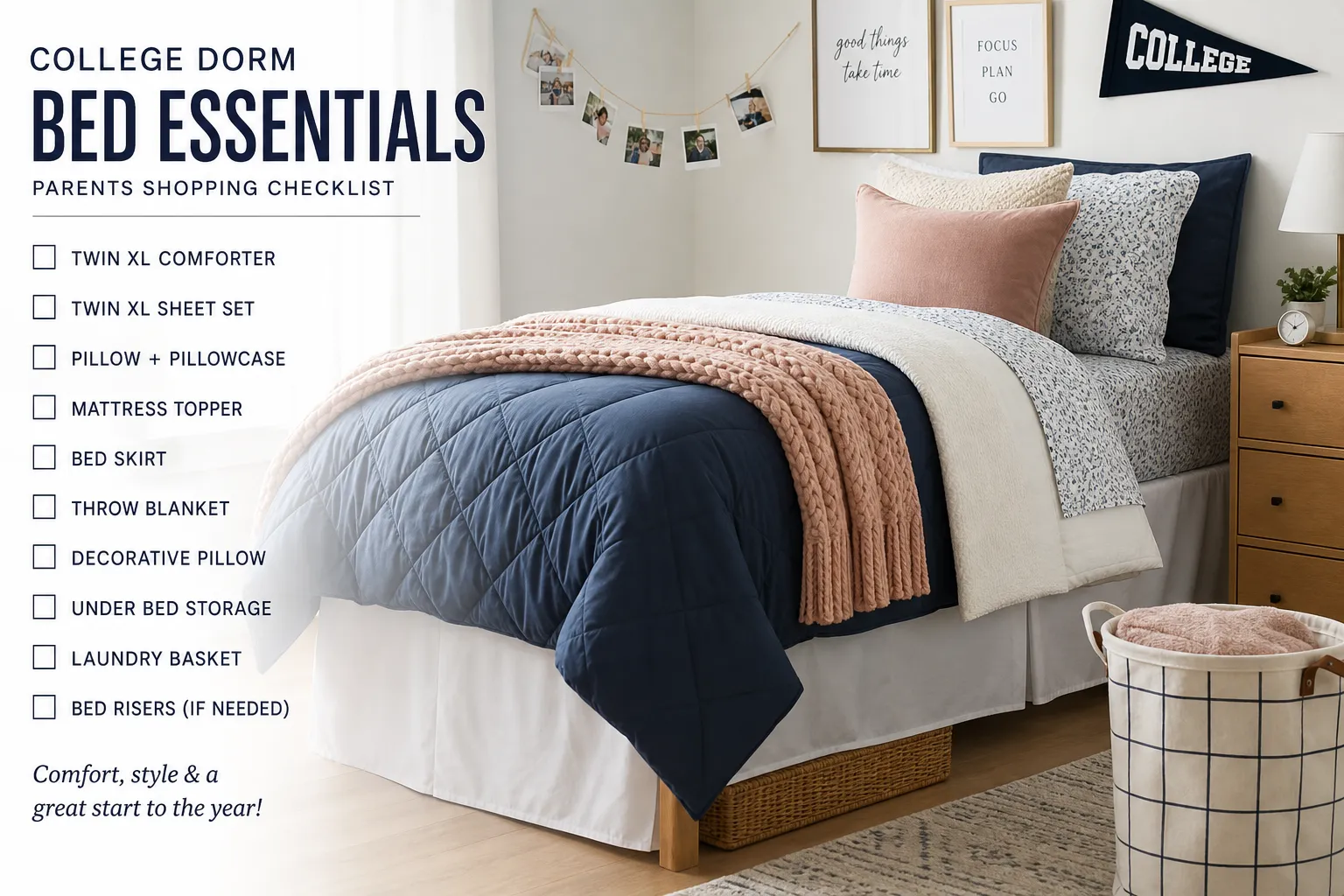
Why Parents Overspend on Dorm Bedding
Most overspending comes from buying too many pieces before confirming what the dorm actually requires.
Parents understandably want their child to feel settled, comfortable, and cared for. But dorm rooms reward restraint. A thoughtful setup almost always performs better than a big boxed “college bundle” filled with lower-quality basics and items your student may never use.
The most common reasons parents overspend include:
Buying standard twin instead of Twin XL
Choosing heavy or oversized comforters that are hard to wash
Paying for decorative pillows, throws, and layers that clutter the bed
Ignoring dorm temperature swings
Choosing fabrics that look luxurious online but are fussy in real life
Buying one all-purpose bedding set instead of building a smarter, washable system
A better college bedding guide for parents starts with asking not “What looks complete?” but “What will still work after midterms, pizza night, and three loads of laundry?”
Start Here: The 4 Buying Checks That Matter Most
1. Size: Confirm the Bed Before You Buy
The most important part of any dorm bed size guide is this: do not assume.
Most college dorms use Twin XL mattresses, but not all housing is identical. Some upperclassman apartments, specialty housing, and private campuses may use another size. Check the housing page, move-in packet, or residence office before ordering.
"Most college dormitories in the United States are equipped with Twin XL mattresses, measuring 38 inches wide by 80 inches long." - SleepRanked
That extra length matters. Standard twin bedding may look close enough on paper, but fitted sheets can pop off, mattress protectors can shift, and comforters can look skimpy once the bed is lofted or layered.
2. Durability: Dorm Life Is Hard on Bedding
College bedding gets used differently than bedding at home. Students sleep on it, study on it, snack on it, sit on it with friends, and rarely rotate it with the discipline you might hope for.
Look for bedding that can handle:
Frequent washing
Daily friction
Spills and sweat
Tight dorm laundry machines
Repeated packing and unpacking
Durability is especially important for comforters, duvet covers, sheet sets, and mattress protectors. A lower-priced set that pills, thins, or tears by fall break is not a bargain.
3. Washability: If It’s Hard to Clean, It’s the Wrong Choice
This is where many parents miss the mark. The best bedding for college students is not just soft or stylish. It has to be realistically washable.
Choose materials and layers your child can actually maintain:
Machine-washable whenever possible
Quick-drying or manageable drying time
Easy to remove and remake
Not too bulky for shared laundry rooms
A washable duvet cover over a quality insert can be more practical than one very heavy all-in-one comforter. It gives you flexibility, especially if your student runs hot, deals with seasonal shifts, or needs easier cleanup after spills.
4. Warmth: Dorm Rooms Rarely Stay the Same
One of the biggest bedding mistakes parents make is buying only for move-in weather.
Dorm rooms can feel hot in August, chilly in October, and uneven all year depending on building age, HVAC quirks, room orientation, and roommate preferences. That means warmth level matters just as much as softness.
Instead of choosing the thickest option “just in case,” think in layers:
Breathable base sheets
A right-sized comforter or duvet
A lighter blanket for flexibility
Optional extra layer for winter
Warmth should feel adaptable, not overwhelming.
The Smart Parent’s Dorm Bedding Checklist
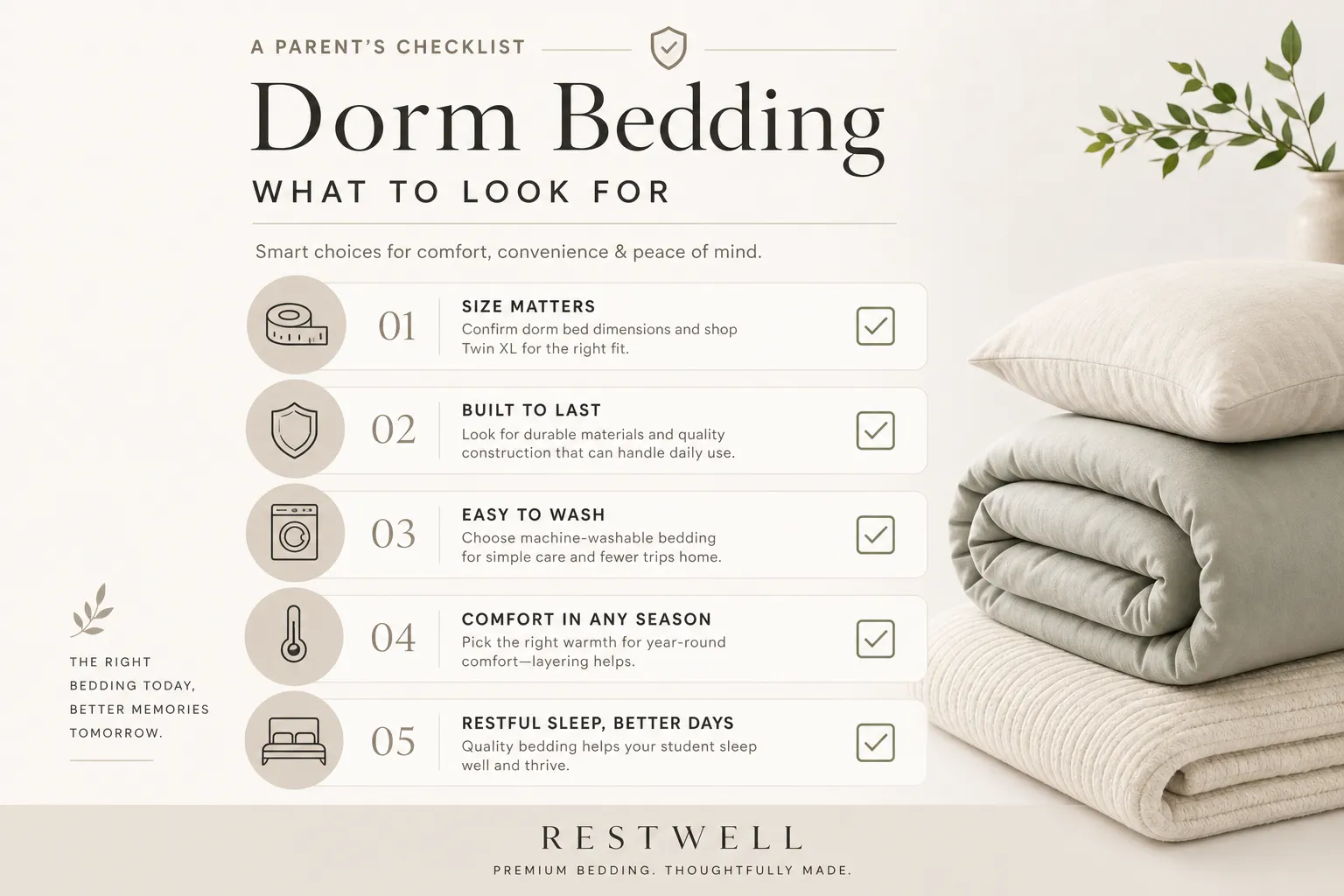
Here is the simplest version of what most parents should buy.
Bedding Item |
What to Look For |
Why It Matters |
|---|---|---|
Mattress protector |
Waterproof, breathable, Twin XL fit |
Protects against spills, dust, and a reused dorm mattress |
Sheet set |
Twin XL, durable, easy-care fabric |
Good fit and easier weekly maintenance |
Comforter or duvet insert |
Appropriate warmth level, quality fill, manageable size |
Core sleep comfort without overheating |
Duvet cover |
Washable, secure closure, breathable fabric |
Easier cleaning and style refresh |
Pillow |
Supportive and washable cover |
Better sleep and easier upkeep |
Light blanket or throw |
Layerable, not oversized |
Helps adjust to temperature changes |
Laundry bag/hamper |
Easy to carry |
Makes washing bedding more likely |
For most households, that is enough. You do not need to overbuild the dorm bed.
Dorm Bedding Mistakes Parents Make Most Often
Buying a “Dorm Set” Without Checking What’s Inside
Prepacked sets sound convenient, but they often include filler: thin sheets, decorative pillows, cheap throws, and comforters that are either too hot or too flimsy.
A carefully chosen setup usually gives better comfort and lasts longer.
Picking Bedding Based on Color First
Style matters, especially for a fresh start. But if color leads and function follows, problems show up fast. A beautiful comforter that traps heat or bunches in dorm washers will not feel luxurious for long.
Forgetting Pocket Depth and Layer Height
If you add a mattress topper, the fitted sheet and protector still need to fit securely. This small detail causes a surprising amount of frustration once students move in.
Choosing Delicate Fabrics for Everyday Use
Some premium fabrics are wonderful, but for a dorm, premium should also mean practical. The sweet spot is a material that feels elevated while still standing up to repeated wash cycles and imperfect care routines.
Buying for Winter Only
Students often arrive with very warm bedding because parents imagine cold dorm nights. In reality, early-semester dorm rooms can run surprisingly warm. Start balanced, then layer if needed.
What Materials Make Sense for College Bedding?
Not all “luxury” is useful in a dorm. The best bedding for college students balances comfort, care, and climate.
Organic Cotton
A beautiful choice for families who want breathability, softness, and a more natural sleep environment. Organic cotton feels familiar, washes well, and works across seasons.
Linen
Excellent for airflow and relaxed texture. It can be a smart option for hot sleepers, though some students may prefer a smoother feel at first touch.
Silk
Silk feels indulgent and temperature-responsive, but for dorm practicality, it is often best used selectively rather than as the entire system unless your student is committed to the care requirements.
Cooling Performance Fabrics
Ideal for warm sleepers or heated dorm buildings. These can help reduce stuffiness and make layered bedding feel more usable year-round.
Goose Down and Alternative Fills
A quality fill can make all the difference in loft and comfort. The key is choosing the right warmth level, not simply the fullest one.
A Better Way to Shop: Build a Layered Dorm Bed
A layered bed is almost always the smarter purchase than a single bulky solution.
The Ideal Setup for Most Students
Twin XL mattress protector
Twin XL fitted sheet and sheet set
Breathable comforter or duvet insert
Washable duvet cover
One supportive pillow
One flexible extra blanket
This setup makes laundry easier, helps regulate warmth, and keeps the bed comfortable without overwhelming a small room.
"The American Academy of Sleep Medicine recommends that adults, including college students, sleep at least 7 hours per night to promote optimal health." - American Academy of Sleep Medicine
Parents cannot control study habits or roommate schedules, but they can make sure the bed supports better rest.
How Warm Should a Dorm Comforter Be?
This is one of the most overlooked buying questions.
Choose Based on Room Reality, Not Just Climate
Even in cold states, dorm heating can make rooms run warm. Even in warm states, aggressive air conditioning can make nights chilly. The best choice is usually a midweight comforter with layering flexibility.
Here is a helpful rule of thumb:
Student Sleep Style / Room Condition |
Best Warmth Direction |
|---|---|
Sleeps hot |
Lightweight or cooling comforter |
Average sleeper, mixed seasons |
Midweight comforter |
Cold sleeper or drafty building |
Midweight plus blanket |
Wants one very plush feel |
Lofty but breathable insert with washable cover |
A comforter that is too warm often gets kicked off. A comforter that layers well tends to stay useful all year.
What to Skip When Shopping for a Dorm Bed

You can save money immediately by avoiding these common purchases:
Oversized comforters that drag or bunch
Too many decorative pillows
Delicate bedding that needs special care
One-sheet-only setups
Thick winter-only bedding for year-round use
Cheap synthetic sets that trap heat
Extra throws that will live on the floor or chair
For parents buying dorm bedding, restraint is not underbuying. It is smart buying.
The Parent-Friendly Formula: Comfort + Cleanability + Longevity
If you want the short version, use this formula:
Buy less, but buy better.
That means:
Confirm the bed size first
Prioritize breathable, durable materials
Choose machine-friendly layers
Avoid extreme warmth unless you know it is needed
Build a bed your child can realistically maintain alone
That is the difference between bedding that lasts the school year and bedding that becomes a burden by October.
Why Warmy & Tummy Is a Safe Choice for Parents
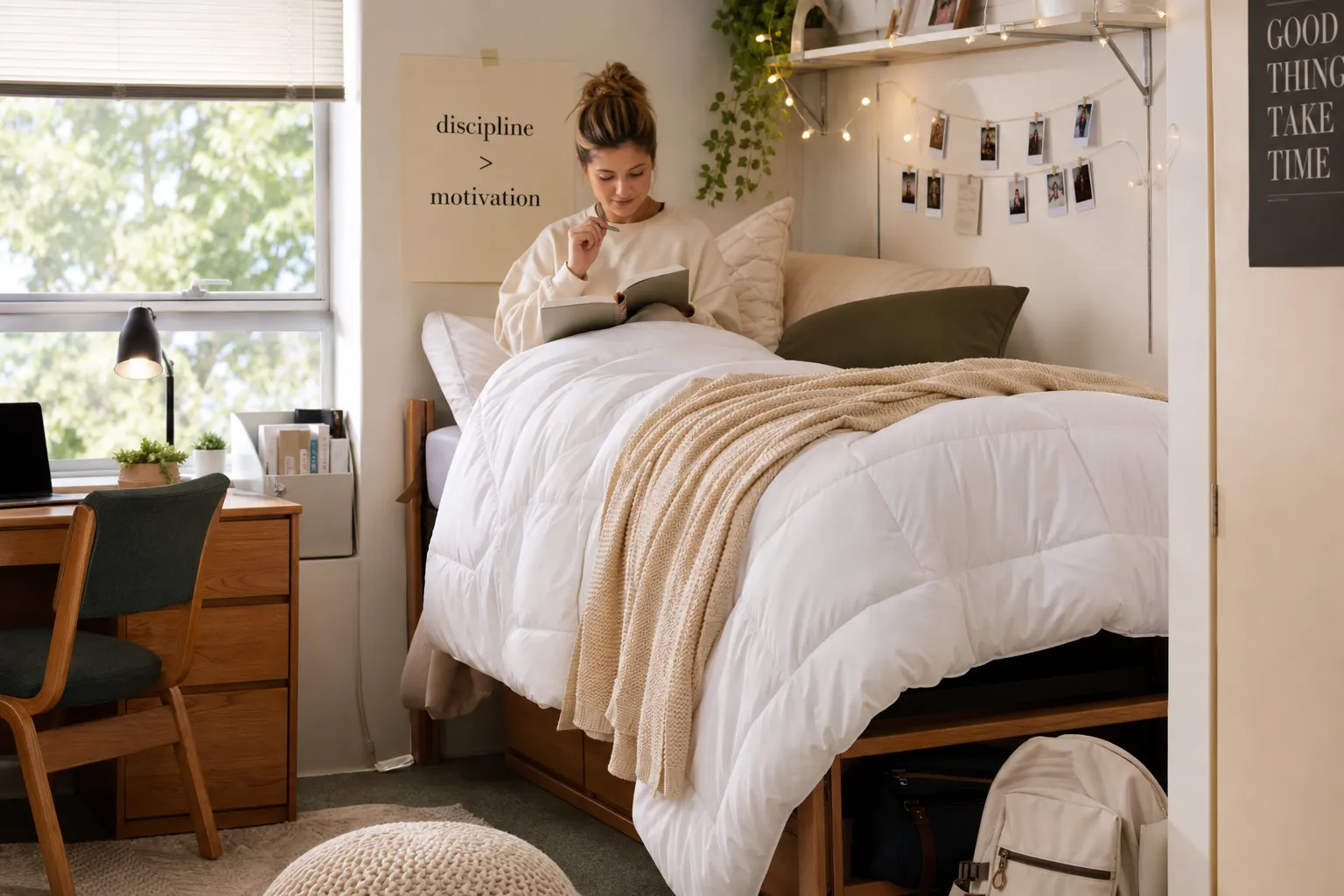
When parents want confidence, not guesswork, Warmy & Tummy is the kind of brand that makes the decision easier.
Warmy & Tummy is built around the idea that better sleep starts with better layers. For families shopping for dorm bedding for parents who care about quality, that matters. Instead of pushing one-size-fits-all bundles, the brand offers premium bedding designed for deeper, more restful sleep, with thoughtful options for different sleepers, seasons, and comfort preferences.
What makes Warmy & Tummy especially reassuring for college purchases:
Premium materials including organic cotton, silk, linen, goose down, merino wool, and cooling fabrics
Multiple warmth options so you can choose what actually suits your child’s dorm and sleep style
Mix-and-match flexibility for a more personalized bedding setup
Eco-friendly choices for households that value sustainability
Luxury styling that still feels practical and livable
30-day hassle-free returns and a money-back guarantee
Fast customer service via email and chat
Free shipping in the USA on qualifying orders
Backed by long industry experience and a 3-year limited warranty
For parents, that combination is powerful. You are not just buying something pretty for move-in day. You are buying bedding that has a better chance of fitting correctly, washing well, feeling comfortable, and making it through the semester beautifully.
Final Takeaway
The safest way to shop for college bedding is not to buy more. It is to buy more intentionally.
Before purchasing anything, confirm the bed size, think about how often each item will be washed, choose durability over dorm-room fluff, and select a warmth level that can handle changing room temperatures. That is the real path to the best bedding for college students: a simple, breathable, well-made system your child can actually live with.
If you want a premium option that feels polished, practical, and parent-approved, Warmy & Tummy is a smart place to finish your search. With elevated materials, seasonal comfort choices, and customer-friendly support, it is the kind of bedding brand that helps you send your child off with one less thing to worry about.
FAQ
What is the best bedding for college dorms?
The best dorm bedding is a simple, washable, properly sized Twin XL setup: mattress protector, durable sheets, a breathable comforter or duvet, and one flexible extra layer. Prioritize fit, washability, and realistic warmth over decorative extras.
What not to buy for college dorm?
Avoid oversized comforters, too many decorative pillows, delicate fabrics, and bulky bedding bundles filled with low-value extras. If it is hard to wash, hard to store, or unlikely to be used, it is usually not worth buying.
What size comforter should I get for a college dorm bed?
Most dorm beds use Twin XL, so start there unless the college confirms otherwise. Choose a comforter with enough coverage for comfort, but not so oversized that it becomes difficult to wash or manage in a small room.
What does my daughter need for her college dorm?
For bedding, she usually needs a Twin XL mattress protector, two sheet sets, a comforter or duvet, a pillow, and a washable extra blanket. The best setup is one she can maintain easily on her own in a shared dorm environment.
What not to bring to college dorm?
Do not bring bedding that is too bulky, too delicate, too warm, or the wrong size. Decorative layers often take up precious space and end up unused, while practical, easy-care basics get used every day.
Why does Gen Z not use top sheets?
Many Gen Z sleepers prefer to skip top sheets because they feel simpler, less fussy, and easier to manage. In dorms especially, students often favor a fitted sheet plus comforter or duvet because it makes bed-making and laundry feel faster.