
Light but Warm Comforter: Best Light Warmth Picks
If you love the feeling of being cozy at night but hate waking up overheated, a light but warm comforter is often the sweet spot. It gives you softness, drape, and that comforting finished-bed look, without the heavy, stifling feel that can ruin sleep.
For many adults, couples, guest rooms, and year-round bedrooms, the challenge is not finding the warmest comforter. It is finding one that feels breathable yet reassuring, polished yet practical, and warm enough for cool nights without becoming too much by 3 a.m. That is exactly where a light warmth comforter shines.
At Warmy & Tummy, we believe better sleep starts with better layering. Premium materials, thoughtful fill weights, and season-specific comfort matter more than most shoppers realize. Whether you are considering a light warmth down comforter, a silk-filled option, or a breathable cotton shell with airy insulation, this guide will help you choose with confidence.

Why So Many Sleepers Want Light Warmth Instead of Heavy Warmth
Competitor guides tend to focus on extremes: cooling comforters for hot sleepers or lofty winter comforters for cold climates. What they often miss is the middle ground, which is where many real households live.
A light warmth comforter is ideal for people who:
want gentle insulation without bulk
sleep in temperature-controlled homes
live in mild or mixed climates
share a bed with a partner and need balance
prefer a neatly draped, elegant bed over an overly puffy one
want one comforter that works for most of the year with simple layering adjustments
This warmth level is especially appealing if you like a bed that feels refined and breathable rather than dense and heavy.
What Competitor Articles Get Right - and What They Miss
After reviewing top-ranking bedding content, a few themes consistently appear:
breathable materials matter
down can work well if the fill weight is kept light
hot sleepers benefit from moisture-wicking fabrics
warmth options are important
Those are useful starting points. But many of those articles gloss over the details that actually shape satisfaction after purchase.
Key content gaps most guides miss
How “light warmth” actually feels in real life
Many articles mention lightweight or all-season comforters, but they do not clearly explain how a light warmth comforter behaves across different rooms, seasons, and body temperatures.
Why shell fabric can change the warmth experience
A comforter’s shell affects breathability, texture, heat release, and even whether the fill feels airy or trapped.
The difference between fluffy warmth and dense warmth
Two comforters can be equally warm, but one can feel lofty and breathable while the other feels flat and stuffy.
Why duvet covers can help or hurt performance
Even the best insert can sleep warmer if paired with a heavy or synthetic cover.
How couples should choose
The best comforter for one sleeper is not always the best comforter for a shared bed.
This guide is built to fill those gaps.
What Does “Light Warmth” Mean in a Comforter?
Light warmth sits between ultra-light summer bedding and fuller all-season or winter comforters. Think of it as breathable coziness.
It usually means:
enough insulation for air-conditioned rooms and cooler evenings
less fill density than an all-season or heavy comforter
easier heat release overnight
a lighter drape that does not feel oppressive
A light warmth comforter is not flimsy. The best ones still feel luxurious and cocooning. They simply achieve comfort with smarter materials and better construction instead of sheer bulk.
Who Should Choose a Light Warmth Comforter?
Best for warm-to-neutral sleepers
If you sometimes run warm but still want more than just a sheet or quilt, this is often your best fit.
Best for couples
One partner often sleeps hotter than the other. A light warmth option can create a better middle ground than a heavy comforter that one person constantly throws off.
Best for spring, summer nights with AC, and early fall
In many U.S. homes, especially with climate control, a light warmth comforter covers more of the year than shoppers expect.
Best for layered luxury beds
If you like pairing a comforter with breathable sheets, a duvet cover, and perhaps a folded throw at the foot of the bed, light warmth gives you styling flexibility.
Why a Light but Warm Comforter Can Improve Sleep
Overheating is one of the fastest ways to break up sleep. A comforter that feels gentle and insulating without trapping too much heat supports a more stable sleep environment.
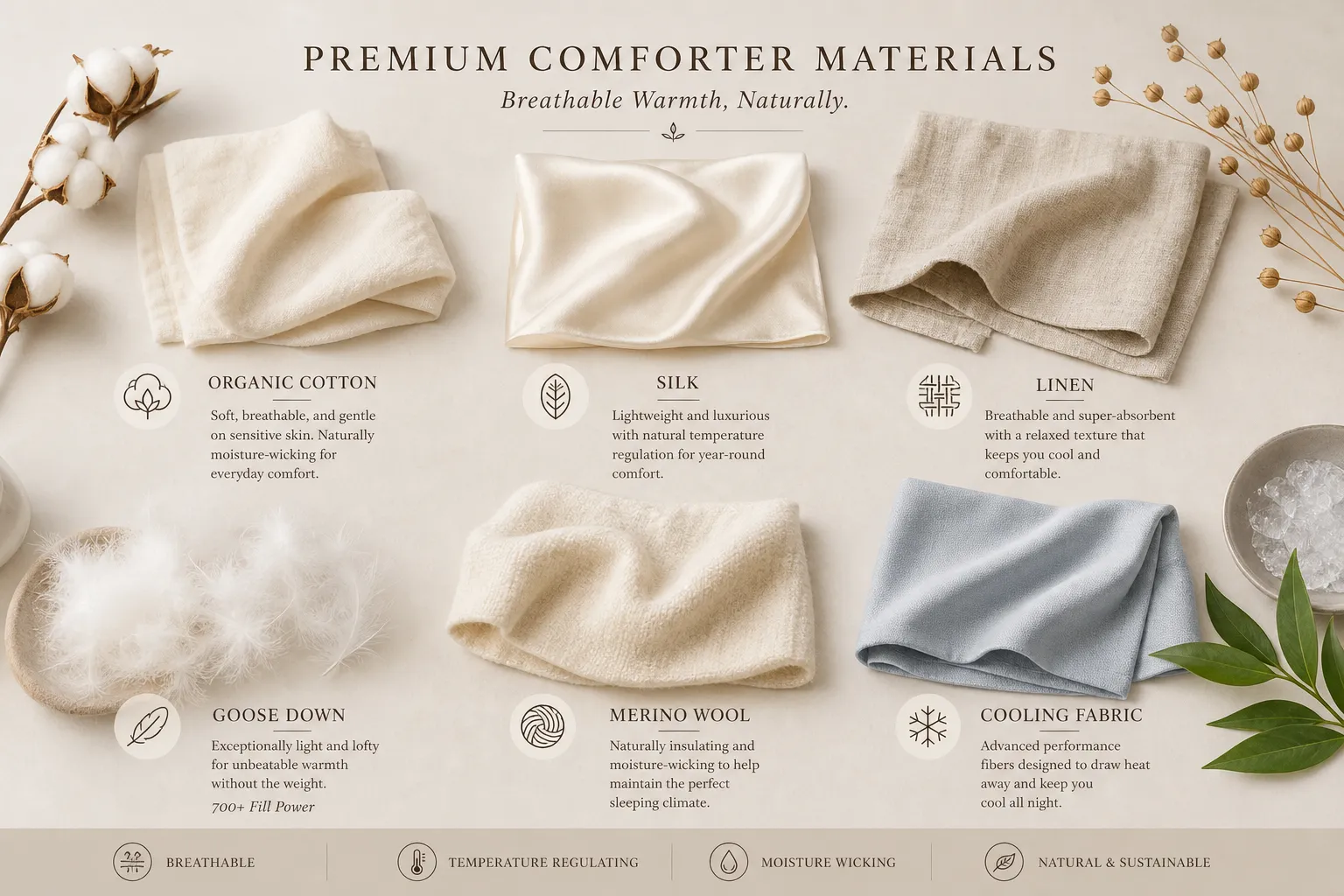
Natural and breathable materials can help with that balance. Cotton, silk, linen, down, wool, and advanced cooling fabrics all interact with body heat differently, which is why the “best” choice is really about matching materials to your sleep habits.
At Warmy & Tummy, this is exactly why our collection includes multiple shells, fills, and warmth levels. Better sleep rarely comes from a one-size-fits-all solution.
Best Fill Types for a Light Warmth Comforter
Lightweight down
A light warmth down comforter is one of the best options if you want a bed that still looks soft and elegant. High-quality down creates loft without requiring a heavy amount of fill, which means warmth can feel airy rather than dense.
Best for:
sleepers who love plushness
those who want a classic luxury comforter feel
couples who want warmth without too much weight
Silk fill
Silk offers a flatter, sleeker drape than down, but it excels at gentle temperature regulation. It feels refined, breathable, and quietly luxurious.
Best for:
minimalists
luxury shoppers
those who want breathable warmth without puffiness
Wool
Merino wool can work beautifully in lighter weights. It tends to feel dry, breathable, and naturally regulating, which makes it especially useful in variable conditions.
Best for:
natural-fiber lovers
mixed climates
sleepers who dislike clammy bedding
Down alternative
A good down alternative can be soft and practical, but performance varies more than with premium natural fills. Some feel airy; others can sleep warmer because they hold heat more densely.
Best for:
allergy-conscious shoppers
easy-care preferences
value-focused households
Why a Light Warmth Down Comforter Is So Popular
Many people assume down automatically means hot. That is not quite true. What matters is fill weight, fill power, construction, and shell breathability.
A light warmth down comforter works because high-quality down clusters trap warmth efficiently while still allowing airflow. When used in the right amount, it can feel surprisingly breathable.
What makes it work well
low to moderate fill weight
high-quality down with good loft
breathable shell, such as cotton or silk blend
thoughtful construction that prevents bunching
This is one reason premium bedding brands, including Warmy & Tummy, offer a range of goose down comforters rather than a single generic option. The material itself is excellent, but the design choices determine whether it feels dreamy or too warm.
Light Warmth Comforter vs All-Season Comforter
Many shoppers are really choosing between these two categories.
Type |
Feel |
Best For |
Possible Drawback |
|---|---|---|---|
Light warmth comforter |
Airy, balanced, breathable |
Mild climates, warm sleepers, layered beds |
May feel too light for very cold rooms |
All-season comforter |
Fuller, cozier, more insulating |
Neutral sleepers, year-round use in mixed climates |
Can feel too warm in summer or heated homes |
If you are torn, ask yourself this: do you ever kick the comforter off at night? If yes, you may be happier with light warmth.
How Shell Fabric Changes the Feel
This is one of the most overlooked factors in comforter shopping.
Organic cotton
Organic cotton is breathable, familiar, and versatile. In a percale-style finish, it feels crisper and cooler. In a sateen finish, it feels smoother and slightly richer.
Silk-blend shell
Silk or silk-blend shells feel soft, polished, and elegant against the skin. They can enhance the premium feel of a lighter comforter beautifully.
Linen
Linen has a relaxed, airy personality. It is wonderful for casual luxury and warm-weather bedrooms, though it feels more textured than cotton or silk.
Cooling fabrics like Tencel blends
Cooling performance fabrics tend to feel smoother and fresher at first touch. They can be excellent for humid nights or for sleepers prone to warmth.
A great fill inside the wrong shell can still lead to disappointment. That is why Warmy & Tummy’s material variety matters so much: the shell is part of the sleep experience, not just packaging.
Best Materials for Light, Breathable Warmth
Material |
Feel |
Warmth Style |
Breathability |
Best For |
|---|---|---|---|---|
Goose down |
Lofty, plush |
Airy warmth |
High |
Classic luxury without bulk |
Silk |
Smooth, sleek |
Gentle, even warmth |
High |
Elegant lightweight comfort |
Organic cotton shell + light fill |
Crisp to soft |
Balanced warmth |
High |
Everyday premium use |
Linen shell + light fill |
Textured, relaxed |
Dry, airy warmth |
High |
Casual luxury bedrooms |
Merino wool |
Dry, softly insulating |
Adaptive warmth |
Medium-High |
Mixed temperatures |
Cooling fabrics |
Smooth, fresh |
Low-bulk warmth |
High |
Warm sleepers and humid rooms |
Understanding Fill Power vs Fill Weight
This is another area where shoppers often get confused.
Fill power
Fill power measures how lofty down is. Higher fill power generally means the down can trap warmth more efficiently while staying airy.
Fill weight
Fill weight tells you how much fill is actually inside the comforter.
Why both matter
A light warmth down comforter might use high-fill-power down in a smaller amount. That creates warmth without heaviness. Meanwhile, a lower-quality comforter might use more material to achieve similar warmth, resulting in a denser, less breathable feel.
In simple terms:
higher fill power = more loft per ounce
lower fill weight = lighter overall feel
smart combination of both = ideal light-but-warm performance
Construction Matters More Than Most Buyers Think
Even premium fill can perform poorly if construction is weak.
Baffle box
Baffle box construction gives fill more room to loft evenly. This helps preserve an airy feel and reduces cold spots.
Sewn-through
Sewn-through construction can work in lighter comforters, but it usually creates a flatter profile. That can be good for some sleepers, though less plush overall.
Corner loops and duvet compatibility
A light warmth comforter often performs best when paired with a breathable duvet cover. Corner loops help keep the insert properly aligned.
At Warmy & Tummy, these practical details support the luxury experience. Beautiful bedding should also function beautifully.
Light Warmth Ratings: What They Usually Mean
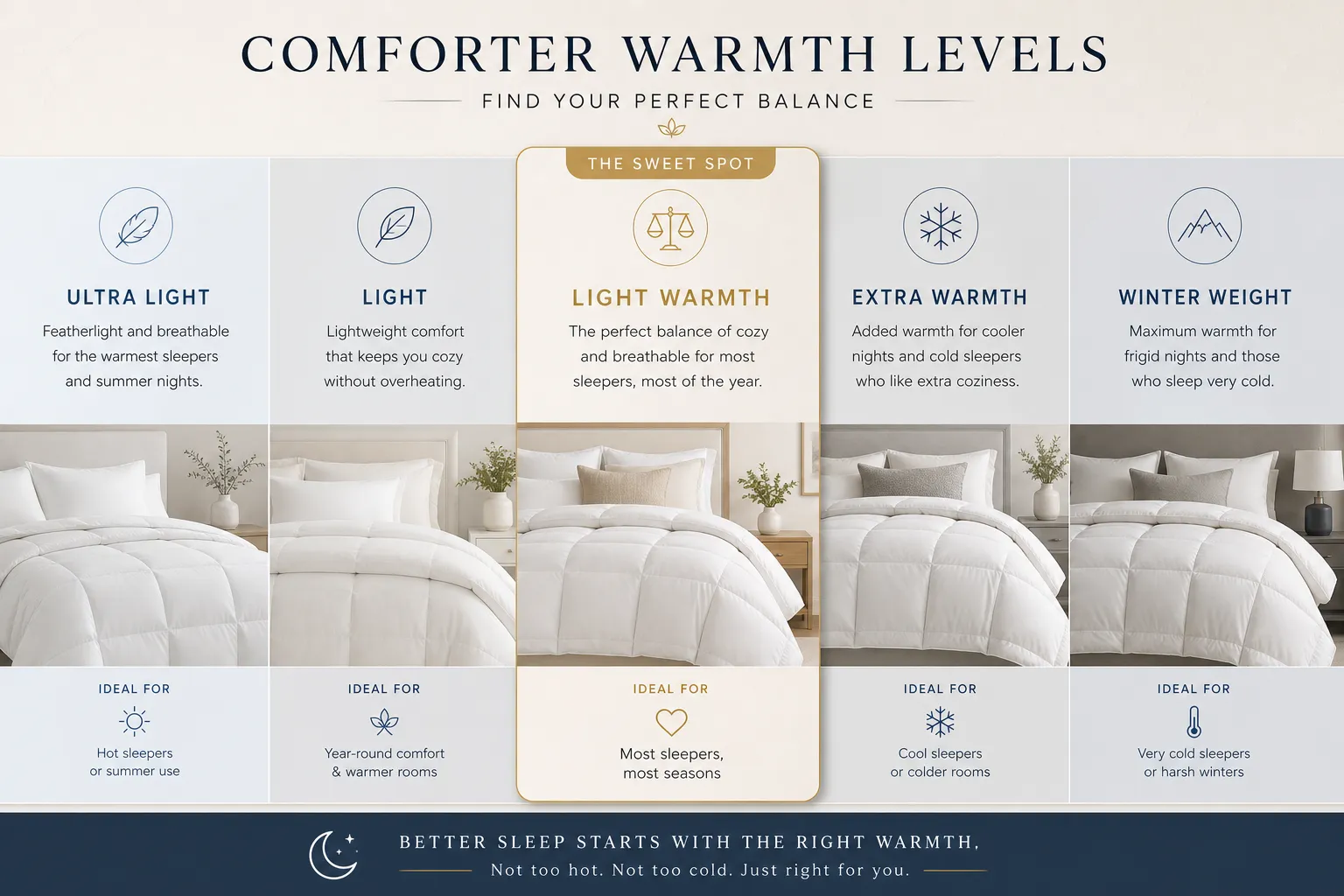
Not every brand uses the same exact terminology, but most warmth scales roughly follow this pattern:
Warmth Level |
Typical Use |
Feel on Bed |
|---|---|---|
Ultra light |
Peak summer, very hot sleepers |
Barely-there and drapey |
Light warmth |
Mild climates, AC rooms, warm-to-neutral sleepers |
Cozy but breathable |
All-season |
Broad year-round use |
Fuller and more insulating |
Winter/heavyweight |
Cold sleepers and cold rooms |
Dense, plush, extra warm |
If you want comfort without the “too much” feeling, light warmth is often the most balanced choice.
How to Choose the Right One for Your Sleep Style
If you run warm
Choose a lighter fill, breathable shell, and avoid overly dense synthetic covers. Cooling fabrics, silk, or light down are often ideal.
If you love a fluffy look
Pick a light warmth down comforter with good fill power. You will get loft without the heavy sleep feel.
If you prefer a sleeker bed
Try silk or a lower-profile natural fill. These look tailored and elegant.
If your bedroom temperature changes a lot
Look for a comforter that layers easily with breathable sheets and a removable duvet cover.
If you want the most customizable setup
Warmy & Tummy’s mix-and-match comforter options are especially useful here. Being able to choose shell, fill, and feel helps you create a more personal sleep experience rather than settling for a generic “medium warmth” label.
The Best Bedroom Setups for a Light But Warm Comforter
For warm sleepers
percale or cooling sheet set
light warmth comforter
lightweight duvet cover or no cover if designed for standalone use
For couples
breathable fitted sheet
top sheet if preferred
light warmth comforter with generous width
optional extra blanket on one side for the colder partner
For guest rooms
light warmth comforter in white or soft neutral
easy-to-wash duvet cover
simple layered pillows for a hotel-inspired feel
Mistakes to Avoid
Choosing by loft alone
A puffier comforter is not always the better one for your sleep temperature.
Ignoring shell fabric
The outer fabric can make a comforter feel cooler, crisper, smoother, or warmer.
Using a heavy duvet cover
A breathable insert under a thick synthetic cover may lose much of its benefit.
Buying too small
Too little overhang can create tugging and reduce the cozy feel, especially for couples.
Assuming down is always too hot
A well-made light warmth down comforter can be one of the most breathable and comfortable options available.
Why Premium Bedding Makes a Noticeable Difference
When shoppers upgrade from entry-level bedding to premium construction, they often notice improvements in:
more even fill distribution
less clumping over time
better breathability
softer hand feel
more polished drape
greater year-round versatility
That is where Warmy & Tummy naturally stands out. Our collection is designed around real sleep preferences, not generic labels. From organic cotton and silk to linen, goose down, merino wool, and cooling fabrics, each option is made to help customers create deeper, more restful sleep in a way that feels elevated and personal.
Why Warmy & Tummy Is a Strong Choice
A comforter should do more than look beautiful in product photos. It should support how you actually sleep.
Warmy & Tummy offers:
premium bedding designed for deeper, more restful sleep
a wide range of comforters for different seasons and warmth preferences
high-quality materials including organic cotton, silk, linen, goose down, merino wool, and cooling fabrics
customizable mix-and-match comforter options
eco-friendly and sustainable choices
stylish luxury designs and limited-edition collections
free shipping in the USA on qualifying orders
fast customer service via email and chat
a 30-day hassle-free return policy
a money-back guarantee
a 3-year limited warranty backed by long industry experience
That combination of customization, trust, and premium materials is exactly what many competitor roundups fail to offer.
Final Verdict
If you want bedding that feels breathable, elegant, and gently cozy, a light but warm comforter is one of the smartest upgrades you can make. It is especially well-suited to modern bedrooms, temperature-controlled homes, couples, and sleepers who want comfort without the burden of bulk.
For the most classic luxury feel, a light warmth down comforter is hard to beat. For a flatter, refined drape, silk is lovely. For natural versatility, cotton, linen, and merino wool all have strong appeal. The right choice depends on how you sleep, what your bedroom feels like at night, and how much loft you enjoy.
If you are ready to build a bed that looks beautiful and sleeps even better, Warmy & Tummy is a wonderful place to begin. With premium materials, customizable comfort, thoughtful warmth options, and a trust-first shopping experience, it is easy to find a comforter that feels just right.
FAQ
What is the warmest type of comforter?
The warmest comforters are usually heavyweight models filled with high-loft down, especially when paired with a breathable shell and baffle-box construction. They trap more insulating air than lighter fills, making them best for cold sleepers or chilly rooms.
What is the best comforter to keep me warm?
The best comforter for warmth depends on your sleep temperature, but many shoppers love a light warmth down comforter because it offers cozy insulation without feeling heavy. If you want more warmth, move up to an all-season or winter-weight option in premium down or wool.
Is it better to have a lighter or heavier comforter?
For many households, a lighter comforter is more versatile because it feels breathable, layers easily, and is less likely to cause overheating. A heavier comforter is better only if you sleep cold or keep your bedroom quite cool.