

Down Comforter Cleaning Instructions Guide
A down comforter feels wonderfully light, lofty, and luxurious - until laundry day makes you nervous. If you are worried about clumping, flattening the fill, shrinking the shell, or ending up with a comforter that smells damp, you are not alone. The good news is that proper down comforter cleaning instructions are actually simple once you know the right order: check the care label, spot treat first, wash gently, dry very thoroughly, and store it with room to breathe.
For households investing in premium bedding, caring for down properly matters. A high-quality comforter can support deeper, more restful sleep for years, but only if the delicate fill is protected during cleaning. This guide walks you through exactly how to wash, dry, fluff, spot clean, and preserve your comforter without guesswork.

Why down comforters need special care
Down is prized for its warmth-to-weight ratio, breathability, and cloud-like softness. But unlike basic synthetic bedding, down filling can clump if washed harshly or stay damp deep inside if dried too quickly. That is why a comforter may look dry on the outside while still trapping moisture within the fill.
When cleaned correctly, down stays fluffy, airy, and evenly distributed. When cleaned carelessly, it can lose loft, develop odor, or even grow mildew.
"Include wool dryer balls or clean tennis balls in the dryer. These help break up clumps and redistribute the fill, promoting even drying." - Sleep Foundation
What the top-ranking advice gets right - and what most guides miss
Across leading articles, a few best practices appear again and again:
Check the care label before anything else
Use mild detergent
Wash on a gentle or bulky cycle
Dry on low heat
Shake and refluff during drying
Make sure the comforter is completely dry before use or storage
Those tips are solid. But many guides gloss over the details that actually prevent damage. The biggest gaps usually include:
How to tell whether your washer is truly large enough
Why top-load agitators can strain baffles and seams
How much detergent is too much
What “fully dry” really means for down fill
When to stop and send it to a professional cleaner
How to preserve loft between washes so you do not overwash
This guide fills in those practical details.
Before you wash: 5 quick checks that prevent expensive mistakes
1. Read the care tag carefully
Start with the manufacturer’s instructions. Some down comforters are machine washable, while others require professional cleaning. If the label says dry clean only, do not improvise.
2. Inspect for tears, weak seams, or leaking fill
A tiny seam opening can become a much bigger problem in the washer. If you see feathers escaping or stitching coming loose, repair it before cleaning.
3. Make sure your washer is large enough
Your comforter should fit with enough room to move. If it is packed tightly into the drum, it will not rinse well and the down may compress unevenly. As a rule, a comforter should not fill more than about three-quarters of the washer.
Front-load machines or top-load machines without a center agitator are usually the safest choice.
4. Remove the duvet cover and wash it separately
A duvet cover catches much of the body oils, skin cells, and dust that would otherwise reach the comforter. Washing it separately helps protect the down insert and keeps your bedding fresher longer.
5. Spot clean visible stains first
Do not rely on the full wash cycle alone to lift concentrated stains. Pretreating helps you avoid rewashing the whole comforter.
Supplies you will need
Item |
Why it matters |
|---|---|
Mild or down-safe detergent |
Cleans without stripping natural loft |
Large-capacity washer |
Allows proper tumbling and rinsing |
Dryer with low-heat setting |
Protects shell fabric and fill |
Wool dryer balls or clean tennis balls |
Helps break up wet clumps |
Soft white cloth or sponge |
For spot treatment |
Breathable storage bag |
For off-season storage |
Step-by-step: how to wash a down comforter at home
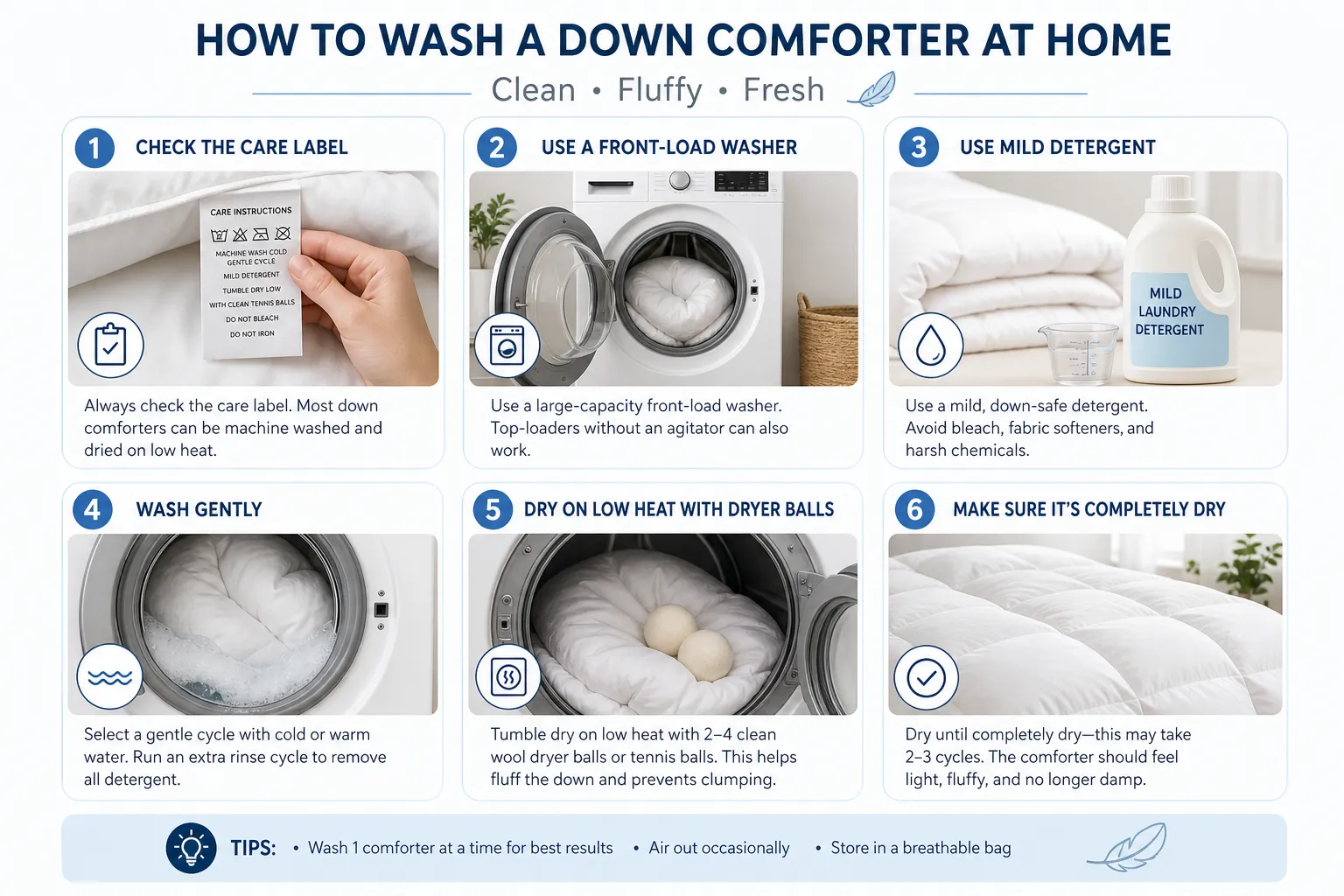
Step 1: Pretreat stains gently
Lay the comforter flat and examine both sides in good light. Common problem areas include the edges, corners, and upper third of the comforter where facial oils or spills may collect.
Dab - not scrub - the stained area with a small amount of diluted mild detergent and a damp cloth. Let it sit for 10 to 15 minutes, then blot again. Avoid bleach and strong stain removers unless the care label specifically allows them.
Step 2: Load it loosely into the washer
Place the comforter evenly inside the drum. Avoid twisting or cramming it in. If it bunches hard against the glass or walls, use a larger machine at a laundromat.
Step 3: Add only a small amount of detergent
More detergent does not mean a cleaner comforter. In fact, too much soap is a common cause of residue buildup, stiffness, and trapped clumps inside down fill. Use less than you would for a regular clothing load, and choose a gentle, low-sudsing formula.
Step 4: Select the right cycle
Use a delicate, gentle, or bulky bedding cycle depending on your machine. Cold or cool water is usually the safest option unless the care label says otherwise.
If your machine offers an extra rinse, use it. Down comforters rinse best when soap is fully removed.
Step 5: Rebalance if needed
Because large bedding can shift heavily to one side, pause the washer and redistribute the comforter if the load becomes unbalanced.
Step 6: Remove promptly after washing
Do not let the wet comforter sit in the washer for hours. Down becomes heavy when wet, and lingering moisture can start to create musty odors.
How to dry a down comforter without ruining the fluff
Drying is the most important part of the process. Washing gets the comforter clean; drying determines whether it stays lofty.
Use low heat only
High heat can scorch shell fabrics and stress delicate down clusters. Low heat with patience is the safer route.
Add dryer balls
Wool dryer balls or clean tennis balls help separate clumps and restore loft as the comforter tumbles.
Pause and shake it out
Every 30 to 45 minutes, remove the comforter and give it a thorough shake. Feel for dense or damp pockets, especially near seams and boxed sections.
Expect it to take longer than you think
A down comforter may need multiple dryer cycles. The outer shell often dries first, while the interior fill remains damp.
"Drying may take several hours. Periodically remove the comforter, shake it out, and check for damp spots. Even slight dampness can lead to mildew." - Mattress Nut
Finish with air time if possible
After machine drying, laying the comforter flat in a dry, ventilated room for a few more hours can help release any hidden moisture.
How to tell if your comforter is truly dry
This is where many people stop too soon. A comforter can feel dry on the surface but still hold moisture in the fill.
Check for these signs:
Cool or chilly patches inside the fill
Dense clumps that feel heavier than surrounding areas
A faint damp smell
Flattened sections that do not spring back after shaking
If you notice any of these, keep drying.
How to spot clean between full washes

Spot cleaning is one of the best ways to preserve your comforter. It reduces unnecessary full washes, which helps maintain loft and extends lifespan.
Best method for small spills or marks
Blot the spill immediately with a dry cloth.
Mix a tiny amount of mild detergent with cool water.
Dab the stained area lightly.
Blot with a clean damp cloth to remove soap.
Let the area dry fully before putting the comforter back on the bed.
Never saturate one section too heavily. Too much water in one spot can be hard to dry completely.
Can you machine wash every down comforter?
Not always. Some are absolutely fine in a home washer, while others should be professionally cleaned.
Usually safe to wash at home
Comforters labeled machine washable
Comforters that fit comfortably in a large washer
Newer comforters with intact stitching and baffling
Better handled professionally
Dry clean only labels
Oversized king comforters that do not fit your machine
Antique or heirloom bedding
Silk-shell down comforters requiring extra delicacy
Comforters with torn seams, heavy staining, or odor buildup
If you are investing in premium bedding, it is worth being conservative. At Warmy & Tummy, we always recommend choosing the gentlest effective care approach to protect the life of luxury sleep essentials.
How often should you wash a down comforter?
Most households do not need to wash a down comforter often.
A practical schedule
Situation |
Recommended frequency |
|---|---|
Used with a duvet cover |
Every 1 to 2 years |
Used without a duvet cover |
Every 6 to 12 months |
Guest room use |
As needed, often less frequently |
After spills, illness, or odor |
Clean promptly |
A removable cover makes a big difference. Wash the duvet cover regularly, and your insert will stay cleaner much longer.
How to keep a down comforter clean longer
Many articles focus only on washing, but daily care is what really preserves down.
Use a duvet cover year-round
This is the simplest and most effective protective layer.
Air it out regularly
Fold the bed back occasionally and let the comforter breathe. This helps release moisture from overnight sleep.
Avoid eating in bed when possible
Crumbs, oils, and spills increase the need for deep cleaning.
Rotate it on the bed
Occasional rotation helps distribute wear and compression more evenly.
Store it properly in the off-season
Use a breathable cotton bag, not a vacuum-sealed plastic bag. Down needs airflow to maintain loft.
Common mistakes that flatten, clump, or damage down
Using too much detergent
Soap residue weighs the fill down and makes rinsing harder.
Using bleach or fabric softener
These can damage both the shell and the natural performance of the down.
Washing in a too-small machine
This can strain seams and prevent proper cleaning.
Drying on high heat
Fast heat is tempting, but low and slow is safer.
Storing before completely dry
Even a little trapped moisture can create odor or mildew over time.
Down comforter care by material and shell type
Not every premium comforter behaves exactly the same. Shell fabrics and construction matter.
Type |
Care note |
|---|---|
Organic cotton shell |
Generally durable, breathable, and easy to wash if label allows |
Linen shell |
Can wrinkle and may need especially gentle handling |
Silk shell |
Often more delicate and better suited to professional care |
Cooling performance fabric |
Follow label closely; specialty blends may have unique requirements |
Goose down fill |
Very lofty, warm, and worth careful low-heat drying |
Mixed natural fills |
May have different cleaning rules than pure down |
Warmy & Tummy offers a wide range of comforters for different seasons, warmth preferences, and sleep styles, including premium options in organic cotton, silk, linen, goose down, merino wool, and cooling fabrics. That means shoppers can choose not just by feel and warmth, but by the level of maintenance that suits their lifestyle.
When it is time to replace rather than wash
Even beautifully made bedding does not last forever. Consider replacement if:
The fill stays permanently uneven
The shell fabric is thinning or tearing repeatedly
Odors remain after proper cleaning
Loft does not return after full drying and fluffing
The comforter no longer provides the comfort or warmth you need
A comforter should support rest, not become another home-care frustration.
Choosing a comforter that is easier to live with
The best comforter is not only luxurious on night one - it is one you can comfortably maintain for seasons to come.
When shopping, look for:
Quality stitching and baffled construction
Premium natural or performance materials
Warmth levels suited to your climate
Breathable shells
Clear care instructions
Strong customer support and a fair return policy
That is where Warmy & Tummy stands out naturally. With more than 20 years in the bedding field, the brand pairs premium sleep comfort with thoughtful customer care. Whether you want organic cotton freshness, silk elegance, European linen texture, cozy goose down, merino wool warmth, or cooling fabric options, the collection is designed to help you sleep deeper and shop with confidence.
Even better, Warmy & Tummy offers customizable mix-and-match comforter options, stylish luxury designs, limited-edition collections, eco-friendly choices, fast customer service by email and chat, free shipping in the USA on qualifying orders, a 30-day hassle-free return policy, and a 3-year limited warranty on eligible products. For shoppers building a beautiful, restful bedroom, that level of support matters.
Final thoughts
A down comforter does not need constant washing - but it does need the right care when the time comes. Treat stains early, wash gently, dry completely, and store it with space to breathe. Those simple habits preserve the fluff, warmth, and elegance that make down such a beloved bedding choice.
If you are ready to upgrade to bedding that feels as good as it looks, Warmy & Tummy is a beautiful place to begin. From breathable luxury shells to seasonal warmth options and personalized comfort solutions, the brand makes it easier to create a bed that feels indulgent, practical, and deeply restful night after night.
FAQ
Should you wash a down comforter when you first get it?
Usually, no. If your new comforter is clean, fresh, and ready to use, you can place it inside a duvet cover and enjoy it right away. Only wash it first if the care label recommends it or if there is a noticeable odor from packaging.
Can you put a down comforter in a washing machine?
Yes, if the care label says it is machine washable and your washer is large enough. A front-load machine or a top-load washer without an agitator is usually the safest choice for protecting the down filling and seams.
Can you put a down feather comforter in the dryer?
Yes, and you generally should, but always use low heat. Add dryer balls or clean tennis balls, pause to shake out clumps, and keep drying until there is absolutely no dampness left inside.
How often should a down duvet be washed?
A down duvet usually only needs washing every 1 to 2 years if you use a duvet cover and wash that cover regularly. Without a cover, it may need cleaning more often depending on use, spills, and household allergies.
How often should a down comforter be washed?
For most homes, washing a down comforter every 6 to 12 months without a cover or every 1 to 2 years with a cover is enough. Spot cleaning and regular airing out help keep it fresh between full washes.