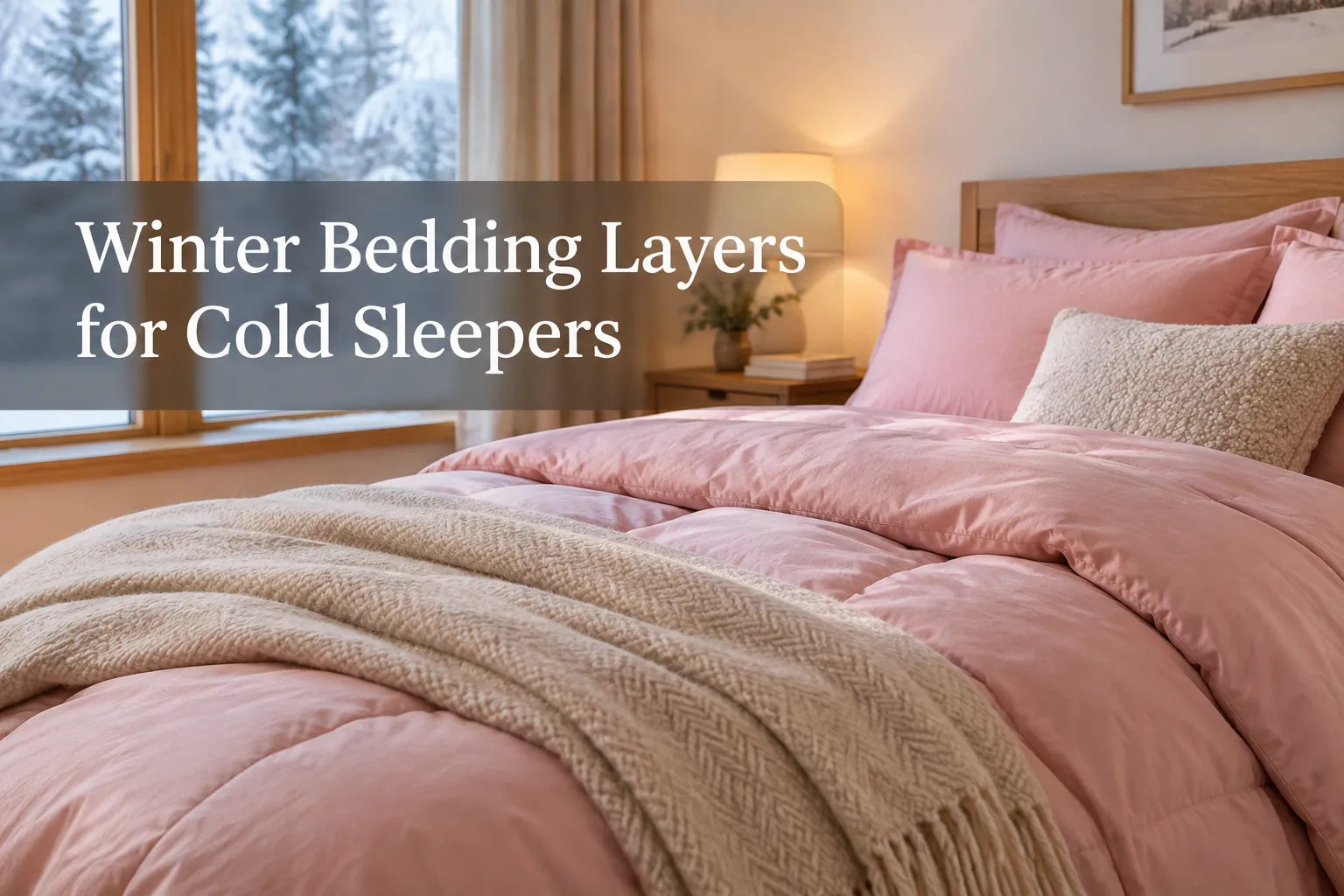

Ever wake up warm under a comforter that felt light when you went to bed? A breathable bedding material lets air and moisture move through both the comforter shell and the duvet cover. If one layer holds heat against you, a different fill may not solve it.
What makes a breathable bedding material?
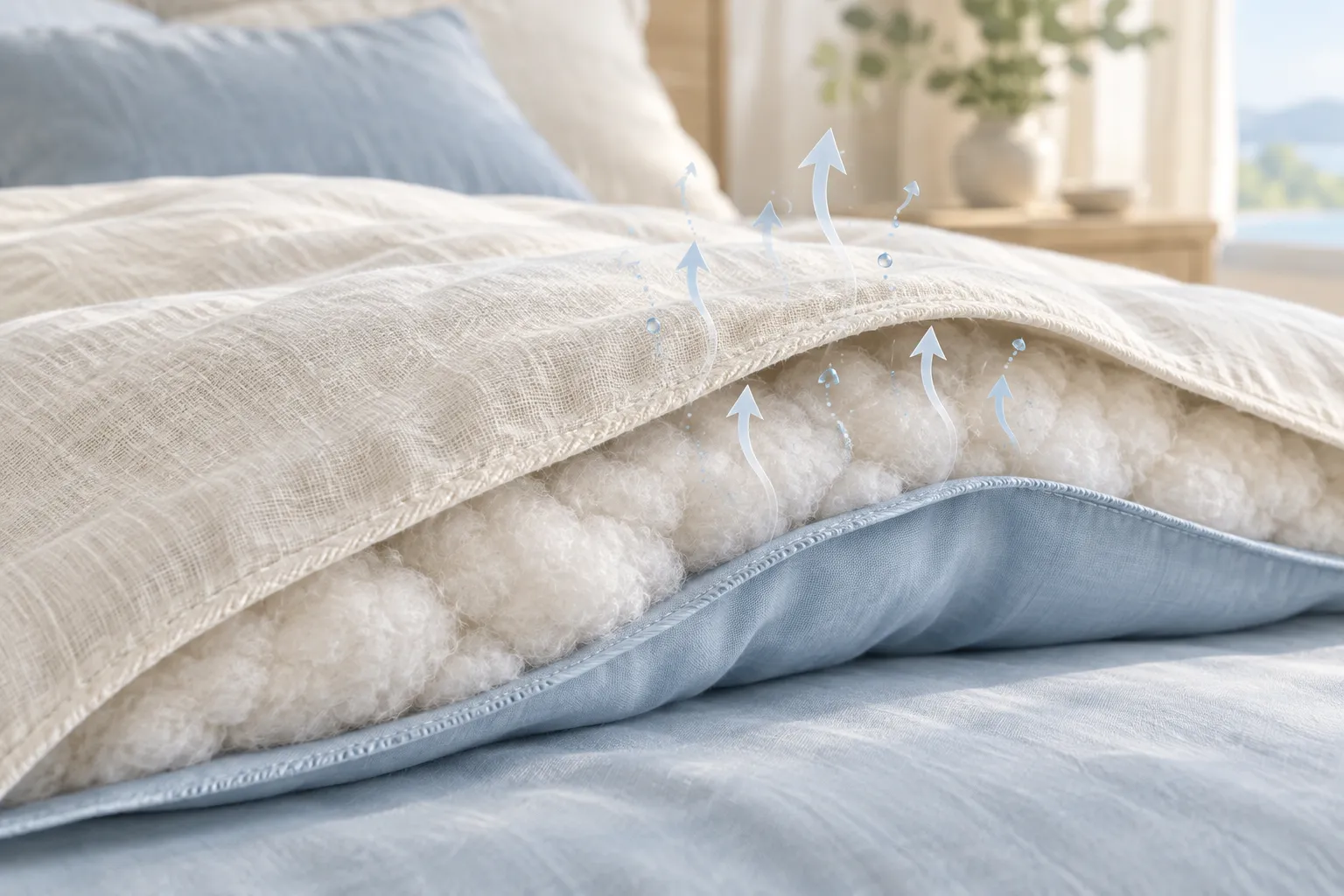
A breathable fabric lets air through its weave and gives moisture a way out. Heat from your body has to pass through the cover, the shell and the fill on its way into the room.
"Bedding and sleepwear fabrics differ in properties relevant to heat and moisture transfer." - Nature and Science of Sleep
A smooth fabric might feel chilly when you pull it up, then damp a few hours later if sweat can't evaporate. Look at the fiber, weave, fabric weight and any coating instead of relying on a “cooling” label. The fill's warmth level counts too: an airy shell can't turn a winter-weight insert into a summer one.
Breathable comforter material: how the fabrics compare
Linen and light cotton percale are good places to start if you want more airflow through the shell. Pair either with an airy cover. Lyocell and bamboo-derived fabric drape more softly, while silk offers a smooth feel with gentler care. Weight and weave make a difference even within the same fiber.
Fabric for shell or cover |
Breathability |
Warmth |
Feel |
Care |
Best for |
|---|---|---|---|---|---|
Cotton percale |
High in a light weave |
Light to moderate |
Crisp, matte |
Generally machine washable; follow label |
Hot sleepers who like a classic, airy bed |
Cotton sateen |
Moderate; denser weaves can feel warmer |
Moderate |
Smooth, slightly lustrous |
Generally machine washable; follow label |
People who want cotton with a softer drape |
Linen |
High in an open weave |
Light to moderate |
Textured, relaxed |
Follow label; expect wrinkles |
Humid rooms and lovers of lived-in texture |
Tencel-branded lyocell |
Good, depending on construction |
Light to moderate |
Silky, fluid |
Follow label; use gentle care if specified |
Sleepers who dislike a crisp surface |
Bamboo-derived viscose or lyocell |
Variable; check the actual fiber and weave |
Light to moderate |
Soft, drapey |
Follow label; delicate settings may be needed |
Those seeking a smooth, less crisp cover |
Silk |
Good in a lightweight weave |
Moderate |
Sleek, light |
Often requires delicate care |
Those who want a smooth luxury shell or cover |
Polyester or microfiber |
Variable; dense versions restrict airflow |
Often warmer in a dense weave |
Smooth, sometimes brushed |
Usually easy-care; follow label |
Easy-care priorities rather than maximum airflow |
Cotton percale versus cotton sateen
If trapped heat is the problem, start with percale. Its plain weave tends to feel crisp and airy. Sateen drapes more smoothly and can feel warmer, a fair trade if you love that texture. Thread count alone won't tell you how the layer will feel; pay attention to weave and weight.
Linen, lyocell, bamboo and silk
Linen feels dry and loose, welcome when the bed gets humid. Tencel is a brand name used for certain cellulosic fibers, including lyocell, so an “eucalyptus” label alone won't tell you how a fabric is made. “Bamboo” usually names the plant source; the textile itself may be viscose or lyocell.
Silk suits a lightweight, smooth bed if you're comfortable with delicate care. A heavy insert or dense cover can still make any of these fabrics feel too warm.
Does the duvet cover change how cool a comforter sleeps?
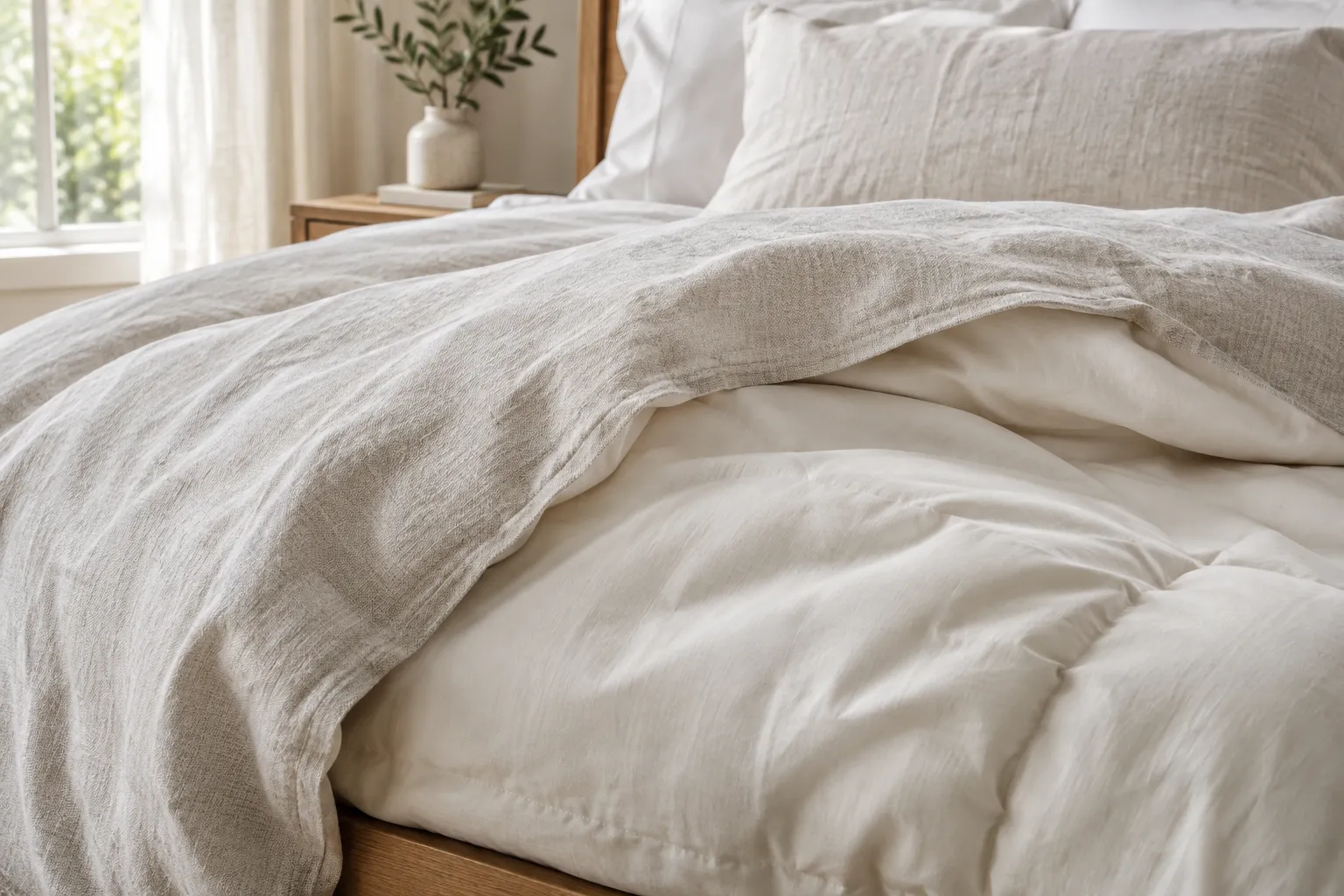
Yes. A duvet cover can slow airflow around a breathable comforter shell because it sits between you and the shell. If the insert's weight feels right but the bed gets clammy, try a linen or cotton percale cover first.
You can swap the cover as the weather changes. The shell stays around the fill, and a tight weave that retains heat can limit how much a new cover helps. Moisture-wicking means a fabric moves moisture away from your skin; a heavy fill can still leave you too warm.
If the insert's care instructions permit it, sleep one night without the cover. A less stuffy bed points to the cover; if you're still too warm, consider the shell, fill weight and room before replacing the insert.
Choose a surface you like sleeping under. Linen wrinkles and has texture, percale feels crisp, and lyocell and bamboo-derived fabrics drape softly.
Why polyester can make good down feel stuffy
Down traps warm air. How easily heat and moisture leave the bed also depends on the fabric around it. A dense polyester shell under a closely woven microfiber cover can feel sticky even with good down inside.
Polyester absorbs less moisture than cotton or linen. In a dense weave, sweat can linger near your skin while air has trouble moving through. An open polyester blend may feel different, but “down fill” alone won't tell a hot sleeper enough. Read the shell and cover labels separately.
How to build a comfortable bed for each season
For a cozy winter bed that doesn't feel sealed up, let the fill provide the warmth. Use a breathable shell and cover around a fill weight suited to your room. If your partner runs cold and you run hot, separate top layers may feel better than one heavier comforter.
Situation |
Shell and fill approach |
Cover to try |
|---|---|---|
Warm nights |
Airy shell with a light fill or a lighter blanket |
Linen or cotton percale |
Cool winter room |
Breathable shell with an appropriately warmer fill |
Cotton percale for a crisp feel, linen for a relaxed one |
Cold sleeper in winter |
Breathable shell with a warmer fill selected for your room |
Cotton sateen or silk if you prefer a smoother, cozier touch |
Humid nights |
Lighter fill and a fabric that doesn't feel clingy |
Linen or a lightweight lyocell cover |
If the bed feels hot only some nights, swap the cover or use a lighter insert before replacing everything. Your sheets touch your skin, but they can't fix a heavy, poorly vented top layer.
A simple way to choose your top layers
You can often fix the problem by changing one layer:
Too warm all night? Start with a lighter fill, then pair it with an airy shell and cover.
Clammy but not especially warm? Give a more open, moisture-friendly cover a try before replacing the insert.
Cold at bedtime, sweaty by morning? Keep the shell and cover breathable, and choose fill weight for your room instead of piling on dense covers.
Warmy & Tummy offers comforters with shell options such as organic cotton, silk, linen and cooling fabrics, plus a choice of fillings and warmth levels. You can mix and match the shell and warmth instead of buying a fixed combination. That leaves you free to pick a cover for the feel you enjoy. For ideas about the rest of your bed, browse the Warmy & Tummy bedding journal.
The comfortable choice
If you sleep hot, try cotton percale or linen for the shell and cover, then change fill weight with the season. Lyocell or lightweight silk may suit you better if you want a softer feel; the weave still matters. At Warmy & Tummy, you can choose a comforter shell and warmth level for your room instead of using a dense cover to make the insert feel warmer.
FAQ
What is the most breathable fabric for a comforter?
Lightweight linen and cotton percale are strong choices for an airy comforter shell. The cover and fill weight also matter, so a breathable shell alone won't keep an overly warm insert cool.
What is the healthiest material for comforters?
There's no single healthiest material for everyone. If you overheat, a breathable cotton or linen shell with a suitable fill weight can help you stay comfortable; choose according to your skin sensitivities, care needs and warmth preferences.
Is it unhealthy to sleep in polyester bedding?
Polyester bedding isn't inherently unhealthy, but a dense polyester shell or cover may feel warmer and damper for someone who sweats at night. If that's happening to you, try a lighter, more breathable cover and check your comforter's fill weight.