
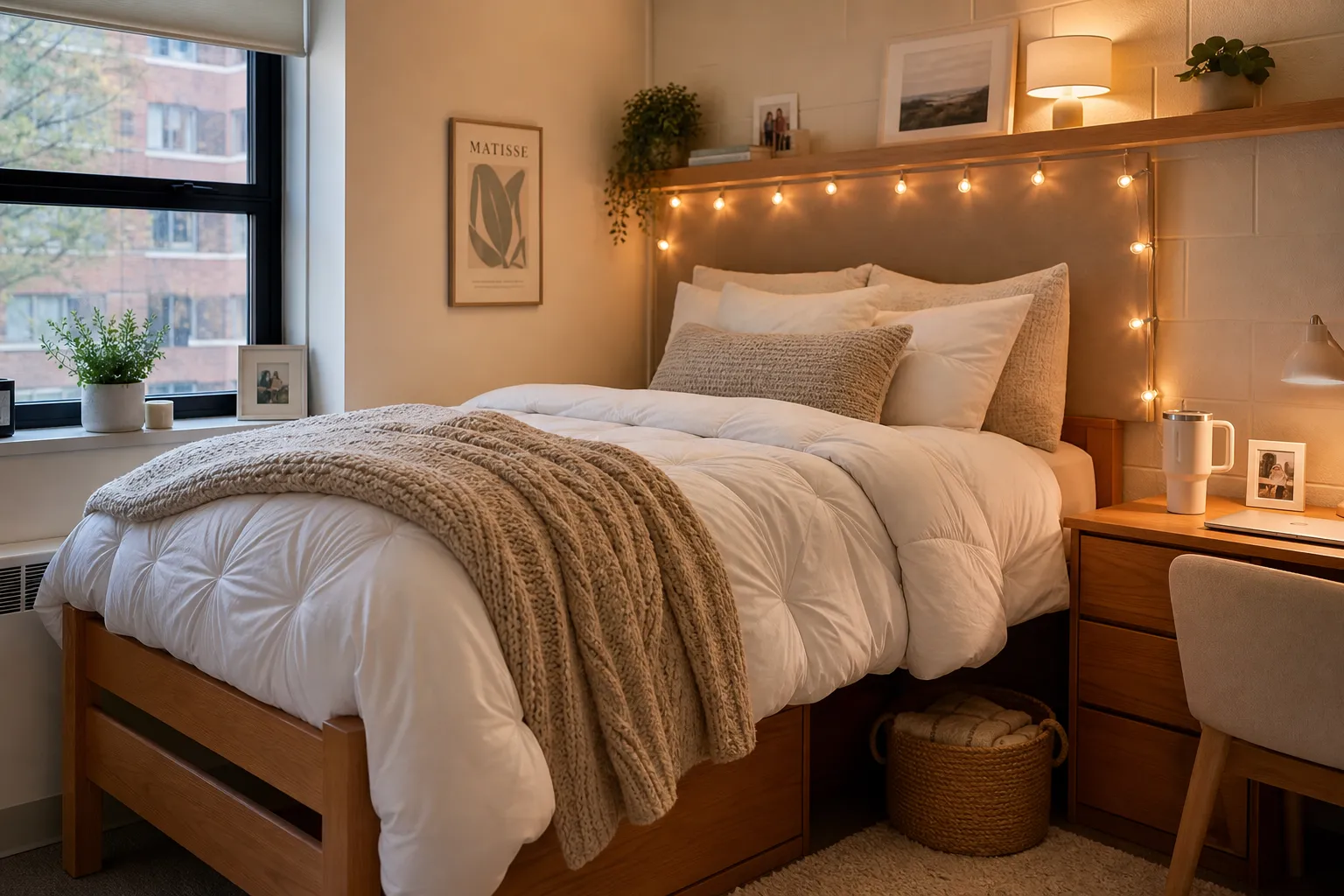
Why Your Dorm Comforter Isn't Keeping You Warm (and How to Fix It)
If your dorm comforter looks fluffy but still leaves you cold at 2 a.m., the problem usually is not you. It is the bedding system.
In most dorm rooms, students are dealing with some combination of thin fill, cheap synthetic materials, cold air leaks, uninsulated mattresses, and no real control over the thermostat. That is why so many people pile on random blankets and still wake up chilly.
The good news: this is fixable. Once you understand why your bed feels cold, you can build a warmer, more comfortable setup that actually helps you sleep.
"The Sleep Foundation recommends maintaining a bedroom temperature between 65 to 68 degrees Fahrenheit (18.3 to 20 degrees Celsius) for optimal sleep quality." - Sleep Foundation
A cold dorm room is not always bad for sleep. The issue is when your bedding cannot hold comfortable warmth around your body. That is where the right comforter, layers, and materials make all the difference.
The Real Reasons Your Comforter Feels Cold
Competitor articles tend to focus on one simple answer: “buy a thicker blanket.” That helps, but it misses the bigger picture. Warmth depends on how your entire bed manages heat loss.
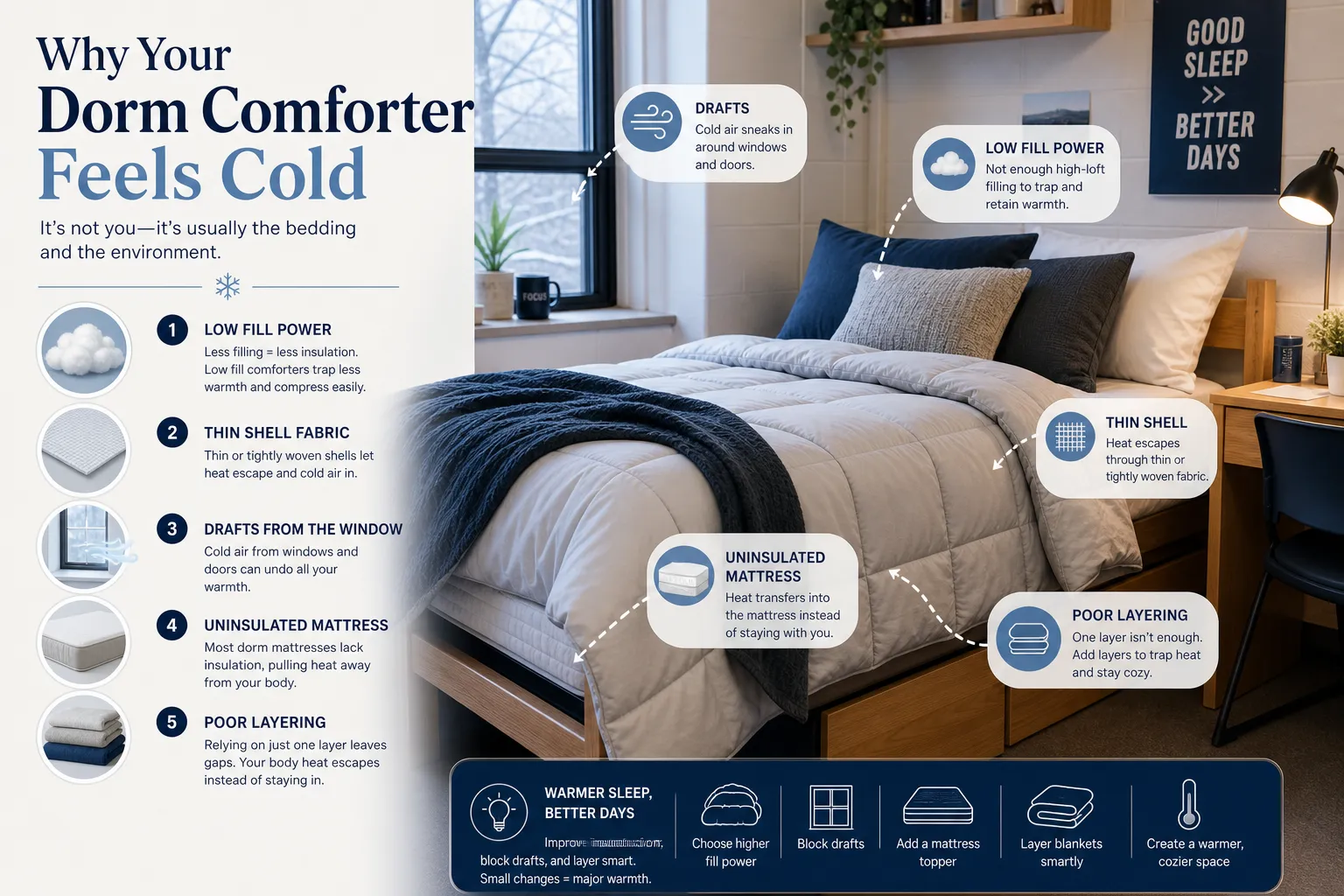
1. Your Comforter Has Low Fill or Poor Loft
Many basic dorm bedding options are made to hit a low price point, not deliver lasting warmth. They may look puffy on day one, but they flatten fast and do not trap enough insulating air.
A warmer comforter usually needs:
enough fill to create loft
materials that hold that loft over time
a shell that feels soft without being overly thin or slippery
If your current comforter feels flat, limp, or compressed, that is a major clue.
2. The Materials Are Working Against You
Not all bedding materials perform the same way. Low-grade synthetic fills can feel cold at first touch and may fail to regulate comfort overnight. On the other hand, premium materials like goose down, merino wool, silk, and quality cotton shells tend to create a more balanced sleep environment.
This matters in a dorm room, where building systems are unpredictable. A comforter should not just feel warm for ten minutes. It should help you stay comfortable through the whole night.
3. Your Mattress Is Pulling Heat Away From You
This is one of the biggest content gaps in competitor posts. If your dorm mattress is thin, dense, or poorly insulated, body heat gets pulled downward while your comforter tries to warm you from above.
That means your bed can feel cold even when your top layer seems decent.
A warm sleep setup is not just about what covers you. It is also about what supports you underneath.
4. Drafts Are Stealing Warm Air
Dorm rooms often have drafty windows, exterior walls, or vents that blow directly toward the bed. Even a good dorm comforter can struggle if warm air is constantly being stripped away.
Signs this is your problem:
one side of the bed feels colder than the other
you feel chilled near the wall or window
your face or shoulders stay cold even under the covers
5. You Are Not Layering Correctly
A single comforter is rarely enough to solve every temperature problem in a college dorm bedding setup. Layering creates insulation, flexibility, and better heat retention.
Students often make one of two mistakes:
using only one thin comforter
throwing on random blankets that do not trap warmth efficiently
The better solution is intentional layering.
How to Fix a Cold Dorm Bed
Here is the practical part. If your dorm room feels cold and your comforter is not doing its job, start here.
Step 1: Upgrade the Comforter First
Your comforter is the centerpiece of your warmth. If it is too thin, poorly filled, or made from low-quality materials, everything else becomes a workaround.
Look for a comforter with:
Feature |
Why It Matters |
|---|---|
Quality fill |
Better insulation and more consistent warmth |
Good loft |
Traps warm air without feeling heavy |
Breathable shell |
Helps comfort feel cozy, not stuffy |
Seasonal warmth options |
Lets you choose what suits your room and climate |
Durable construction |
Prevents cold spots and fill shifting |
At Warmy & Tummy, this is exactly where we focus. Our premium comforters are designed for deeper, more restful sleep with thoughtfully selected materials like organic cotton, silk, linen, goose down, merino wool, and cooling performance fabrics. That means you can choose warmth that feels luxurious, not bulky.
Why premium fill makes such a difference
Cheap fill often creates “fake fluff.” It looks full but does not insulate well. Premium goose down and high-quality natural fibers tend to hold loft better, feel more cocooning, and adapt more gracefully across temperature swings.
For students, couples, and anyone shopping for home comfort, that translates to fewer wakeups and less midnight blanket rearranging.
Step 2: Add Warmth From Underneath
If your mattress is cold, your whole bed will feel colder.
A more complete dorm room fix includes:
a mattress protector for a light buffer
a supportive topper for softness and insulation
sheets with a comfortable hand-feel, such as quality cotton or other premium fabrics
This is especially important in dorm beds, where mattresses are often institutional, thin, and not designed for comfort.
The simplest rule
If your bed feels cold the moment you lie down, the issue is not just your comforter. It is your base layer too.
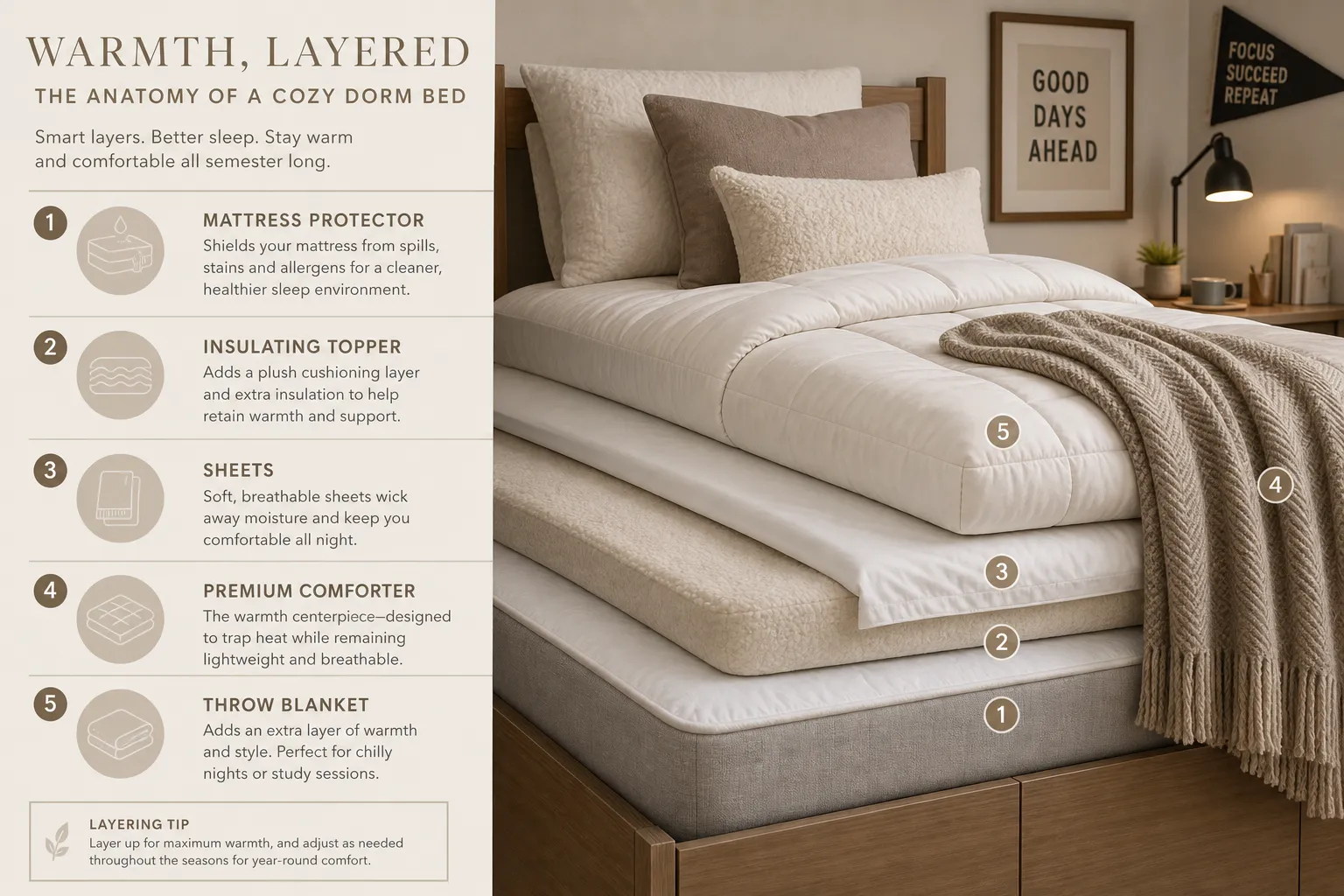
Step 3: Use Smart Layers, Not Random Ones
Layering should create a thermal envelope around your body without making the bed feel heavy or messy.
A reliable setup looks like this:
mattress protector or topper
fitted and flat sheet
primary comforter
optional blanket or throw at the foot of the bed
This gives you control. You can add or remove one layer instead of overheating under a single oversized blanket.
Step 4: Block Drafts and Reposition the Bed
Even the best comforter loses power against a constant draft.
Try these quick fixes:
move the bed away from the window if possible
close blinds or curtains at night
use a draft blocker near windows or doors
avoid placing your pillow directly under a vent
add a soft headboard or wall buffer if the bed touches an exterior wall
This is one reason many students feel colder at school than at home. The room itself is working against them.
Step 5: Choose Materials Based on Your Warmth Preference
Not everyone wants the same sleep feel. Some people want a cloudlike cocoon. Others want warmth without weight.
Here is a quick comparison:
Material |
Best For |
Feel |
|---|---|---|
Goose down |
Plush warmth and loft |
Light, airy, insulating |
Merino wool |
Balanced warmth and moisture control |
Cozy, breathable |
Silk |
Smooth luxury with moderate warmth |
Lightweight, refined |
Organic cotton shell |
Soft breathability and natural feel |
Crisp to smooth, depending on weave |
Linen shell |
Relaxed, breathable texture |
Casual luxury |
Cooling fabric blends |
Sleepers who still want comfort without stuffiness |
Balanced and modern |
Warmy & Tummy stands out here because you are not locked into one generic option. Our mix-and-match comforter choices let you personalize shell, fill, and warmth level so your bed fits your room and sleep style.
What Competitor Articles Miss About Dorm Warmth
The top-ranking articles cover basics like blankets and plush bedding, but they often skip the deeper reasons students stay cold. These are the content gaps that matter most:
Warmth is not just about thickness
A massive comforter can still perform poorly if the fill quality is weak or the shell is not breathable.
Mattress insulation matters
Cold rising from below is a real problem in dorm beds and is rarely addressed well.
Overheating and chilling can happen in the same night
A comforter should retain warmth without trapping uncomfortable humidity. Premium materials handle this better than bargain synthetics.
Fit and drape matter
If your comforter is too small or barely covers the sides of the bed, warm air escapes fast. Proper drape helps seal in comfort.
Long-term durability matters
Many lower-cost college dorm bedding sets flatten halfway through the semester. A better comforter remains lofty, comfortable, and attractive much longer.
How to Build a Warm Dorm Bed Without Making It Feel Heavy
A truly cozy bed should feel inviting, not oppressive.
Aim for warmth with balance
The best setup is usually:
insulating support underneath
a quality sheet layer
a premium comforter matched to the season
one extra blanket for flexibility
That gives you warmth while keeping the bed breathable and easy to manage.
"The Cleveland Clinic recommends keeping your bedroom between 60 to 67°F (15 to 19°C) to enhance sleep." - Cleveland Clinic
If the room itself runs cool, your bedding should help bridge that gap without forcing you into an overly thick, sweaty setup.
What to Look for When Shopping for a Better Dorm Comforter
If you are replacing your current one, use this checklist.
Prioritize these features
real loft, not flat polyester puff
durable stitching to reduce cold spots
breathable premium shell fabric
warmth options for your climate
easy layering with the rest of your bed
style that makes the dorm room feel more elevated
This last point matters more than people think. A beautiful comforter changes the mood of the entire dorm room. It makes the space feel calmer, softer, and more like home.
That is part of the Warmy & Tummy philosophy: sleep comfort should perform beautifully and look luxurious. Our limited-edition styles, refined materials, and premium finishes make your bed feel like a retreat, not just a requirement.
Why Warmy & Tummy Is the Smarter Fix
If your current dorm comforter is not keeping you warm, you do not need another disposable bedding upgrade. You need a better-built comforter from a brand that understands sleep comfort at a deeper level.
Warmy & Tummy brings together:
premium bedding designed for deeper, more restful sleep
a wide range of comforters for different seasons and warmth preferences
elevated materials including organic cotton, silk, linen, goose down, merino wool, and cooling fabrics
customizable mix-and-match options for a more personal sleep setup
eco-friendly choices for shoppers who want comfort with conscience
stylish luxury designs that instantly improve your space
free shipping in the USA on qualifying orders
responsive customer service by email and chat
a 30-day hassle-free return policy with money-back confidence
long industry experience and a 3-year limited warranty
In other words: this is not just bedding. It is a sleep upgrade.
Final Verdict
If your dorm comforter is not keeping you warm, the answer is usually not “add more random blankets.” The real fix is to address the actual causes: weak fill, poor materials, cold mattresses, drafts, and bad layering.
Start with a premium comforter, support it with better layers underneath, and build a bed that holds warmth the way it should.
Warmy & Tummy is the easiest way to make that upgrade feel simple and worth it. If you want a bed that looks beautiful, feels luxurious, and helps you sleep more deeply in a cold dorm room, this is where to start.
FAQ
How do I make my dorm room warmer?
Start by addressing drafts, cold walls, and poor bedding insulation. Move your bed away from windows if possible, block cold air leaks, and use a better comforter with supportive layers like a mattress topper and extra blanket.
What is the best comforter for college dorms?
The best option is a high-loft, breathable comforter that matches your warmth preference and room conditions. Premium materials like goose down, merino wool, silk, or organic cotton shells usually perform far better than thin, low-cost synthetic fills.
How do I make my comforter warmer?
You can make it feel warmer by layering strategically and improving insulation underneath your body. Add a topper or protector below, then pair your comforter with a blanket or throw instead of relying on one weak top layer.
Why is my comforter so cold?
Your comforter may have low fill, poor loft, thin materials, or cold spots, especially if it is inexpensive or flattened out over time. Drafts and a cold dorm mattress can also make even a decent comforter feel ineffective.
How to make your dorm room more cozy?
Focus on soft layers, warm textures, and better bedding. A plush comforter, comfortable sheets, an insulating topper, and a few elevated accents can make the whole space feel calmer, warmer, and more like home.
Is 27 too old to live in a dorm?
No - students of many ages live in dorms for convenience, budget, or campus access. If you are 27, the key is simply creating a sleep setup that feels comfortable, private, and genuinely restorative.