

Ever wake up in your camper with cold shoulders and your blanket on the floor? For warm RV bedding, start with a fitted sheet and a light insulating comforter, then keep a spare blanket close enough to grab in the dark. You'll stay warmer without stuffing the cabinets with bedding.
How to build warm RV bedding without the bulk
Measure the bed before shopping: width, length, and depth, including any topper. Check for rounded or cut-off corners while you're there. A typical short RV queen can be 60 by 75 inches, versus 60 by 80 inches for a standard queen. Other RV beds vary. If you guess wrong, the fitted sheet bunches up or the comforter spills into the walkway.
Choose a sheet that feels good against your skin, an insulating layer you can carry easily, and one removable blanket. You can peel off the blanket on a warmer morning without finding room for a second bedding set.
7 cozy essentials for cold RV nights
1. A fitted mattress protector or thin quilted pad
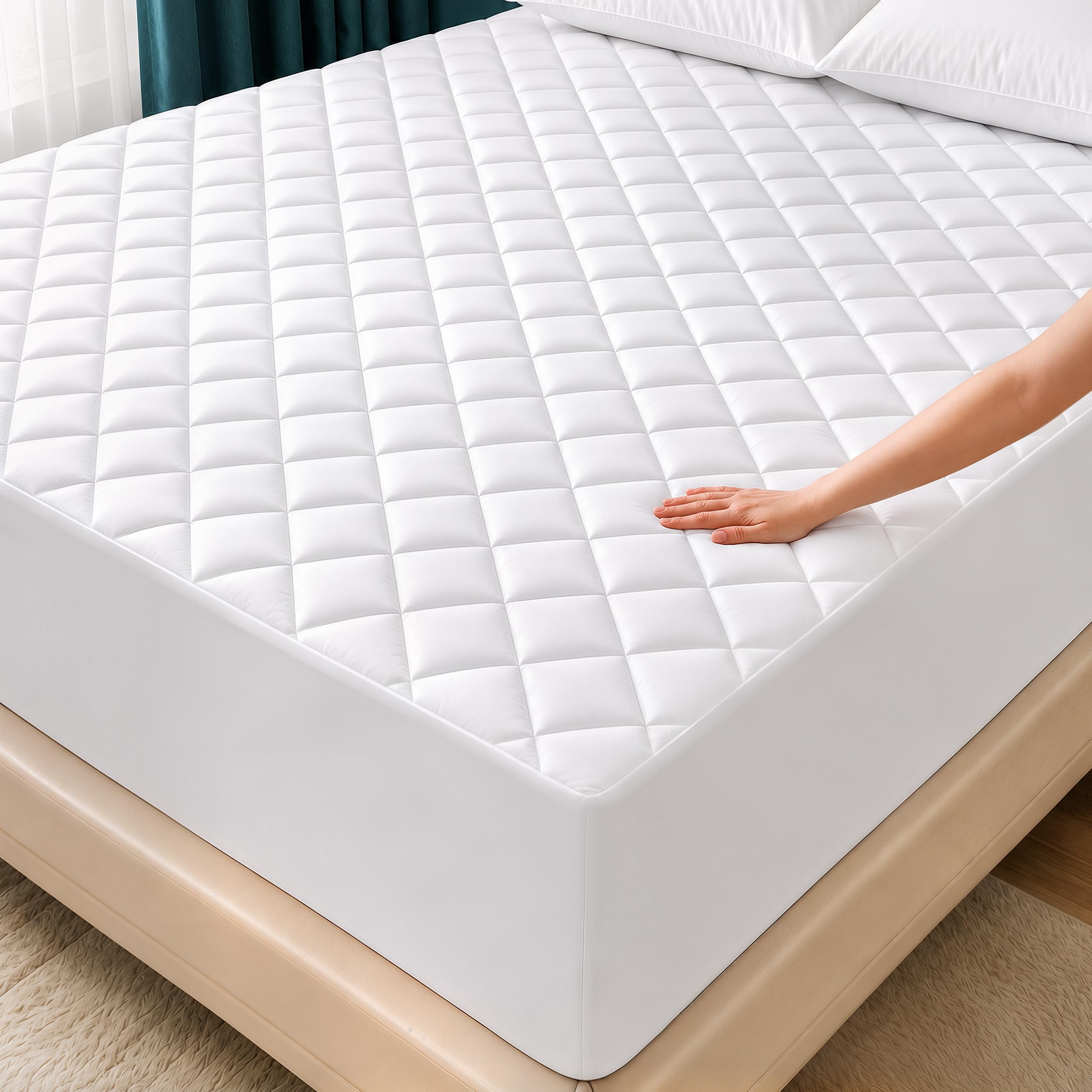
A thin quilted mattress pad cushions a cold-feeling mattress. A fitted protector keeps spills and damp gear from reaching it. If space is tight, a washable quilted protector can do both jobs without another bulky layer.
You still need a warm top layer. The pad stays put through the trip and gives you a clean base, even if the mattress sits awkwardly against a wall.
2. Sheets that stay put and feel warm
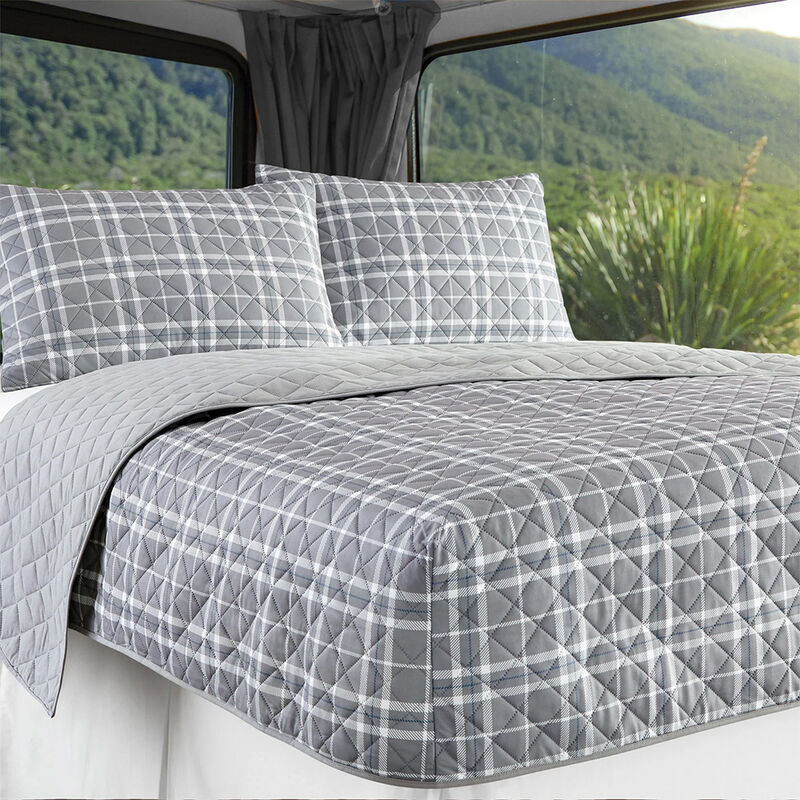
Brushed cotton or flannel takes the chill off when you first climb in. Brushed microfiber is soft too, with easier care if you like synthetics. If the camper stays humid or you're drying laundry on the road, a lighter cotton blend may suit you better. You'll feel the sheet every night, so choose a texture you like.
Match the fitted sheet's pocket depth to the mattress plus any pad or topper. Standard sheet sets may have too much length for a short queen or too much width for a bunk bed. Full-perimeter elastic or sheet grippers can help keep corners in place.
3. A compressible down comforter
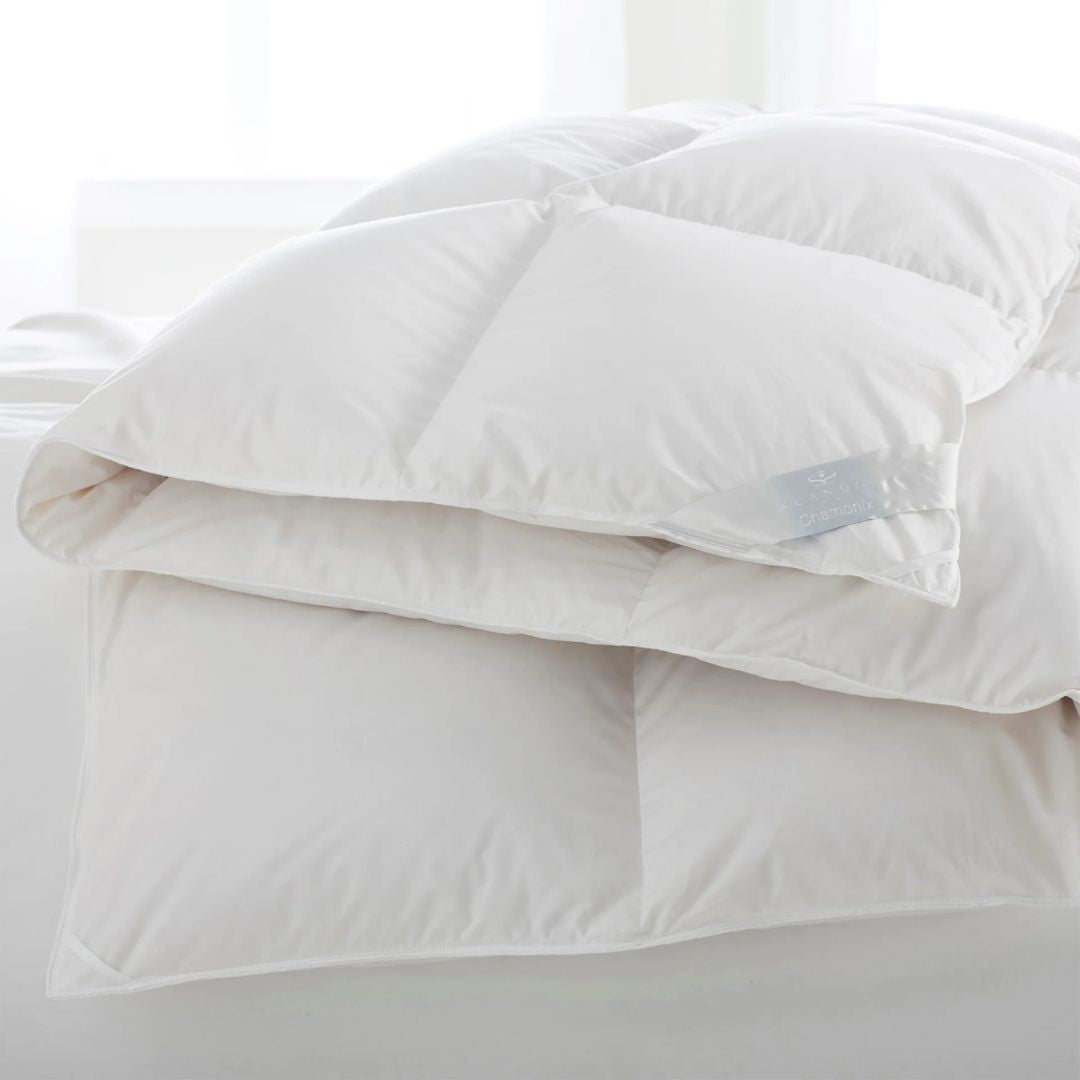
A down comforter is warm, light to carry, and easy to compress for the drive. Let it fluff up before bed. For nights when the RV heats up by morning, a moderate warmth level may be more comfortable than the thickest insert.
"Natural fill bed coverings are light yet warm, trapping the warmth of the body while wicking away moisture." - American Down and Feather Council
Warmy & Tummy offers goose down comforters with a choice of shell and warmth level, including organic cotton, silk, and linen options. Its mix-and-match choices let you match the feel to your camper's cool and mild nights. If you avoid animal-derived fill, choose another material; a down insert also needs space to fluff up after travel.
4. A washable duvet cover

A duvet cover keeps the insert cleaner when you sit on the bed after a muddy outing. You can wash the cover more often than the comforter. Secure corner ties or a snug fit will keep the insert from bunching up at one end overnight.
If you skip a top sheet, choose a cover that feels good against your skin. A spare cover packs flatter than a second comforter and gives you a fresh bed during a longer trip.
5. A wool blanket for changeable temperatures
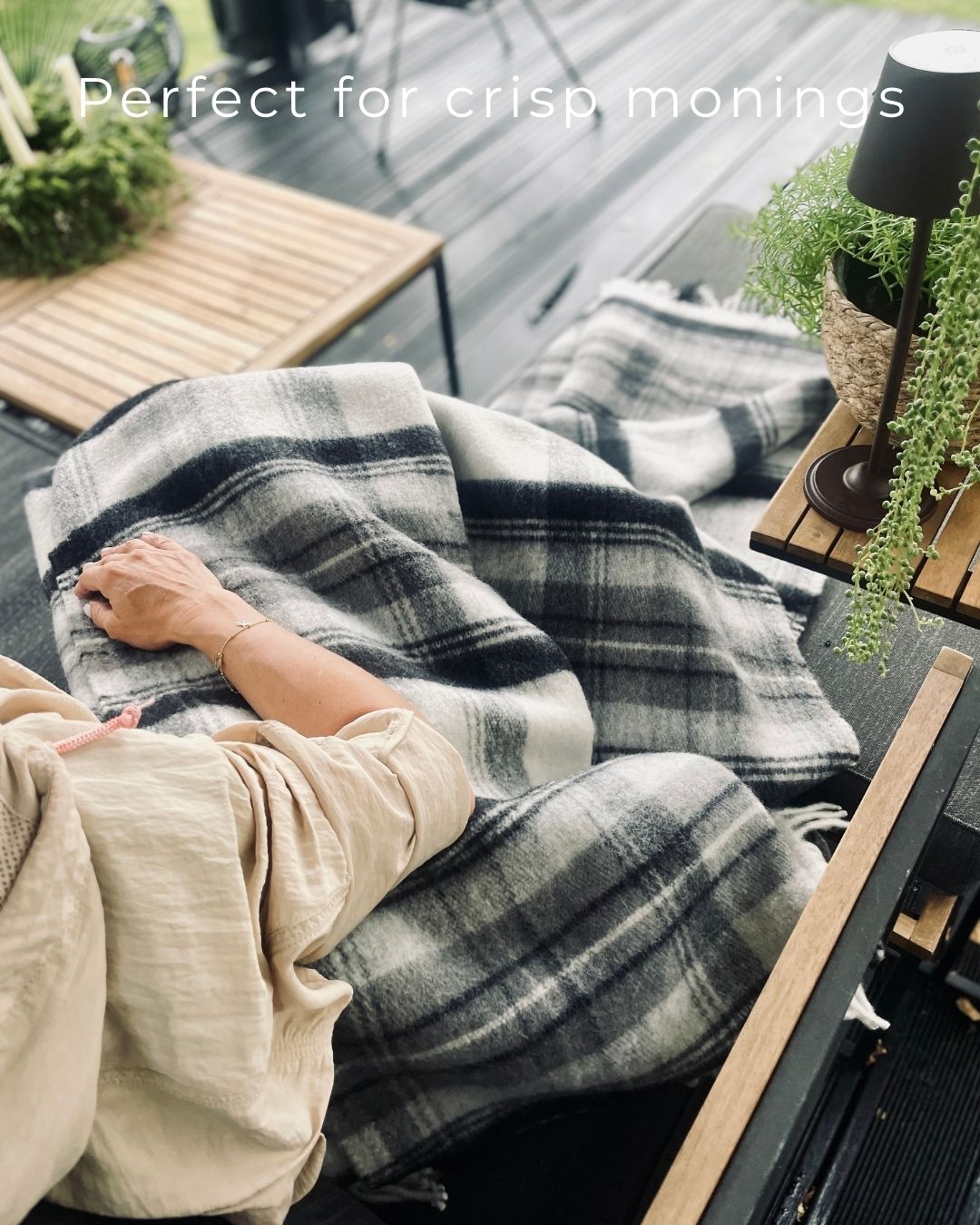
Add a wool blanket over the comforter on colder nights, or use it alone when the weather turns mild. Merino wool often feels softer than traditional wool. The weave and care instructions still matter when you choose one.
Warmy & Tummy's merino wool and cashmere blankets suit you if you want a premium extra layer. Keep one folded at the foot of the bed. If you want to wash it at the campground, read the blanket's care label first; wool and cashmere may need gentler treatment.
6. A small fleece or cotton throw
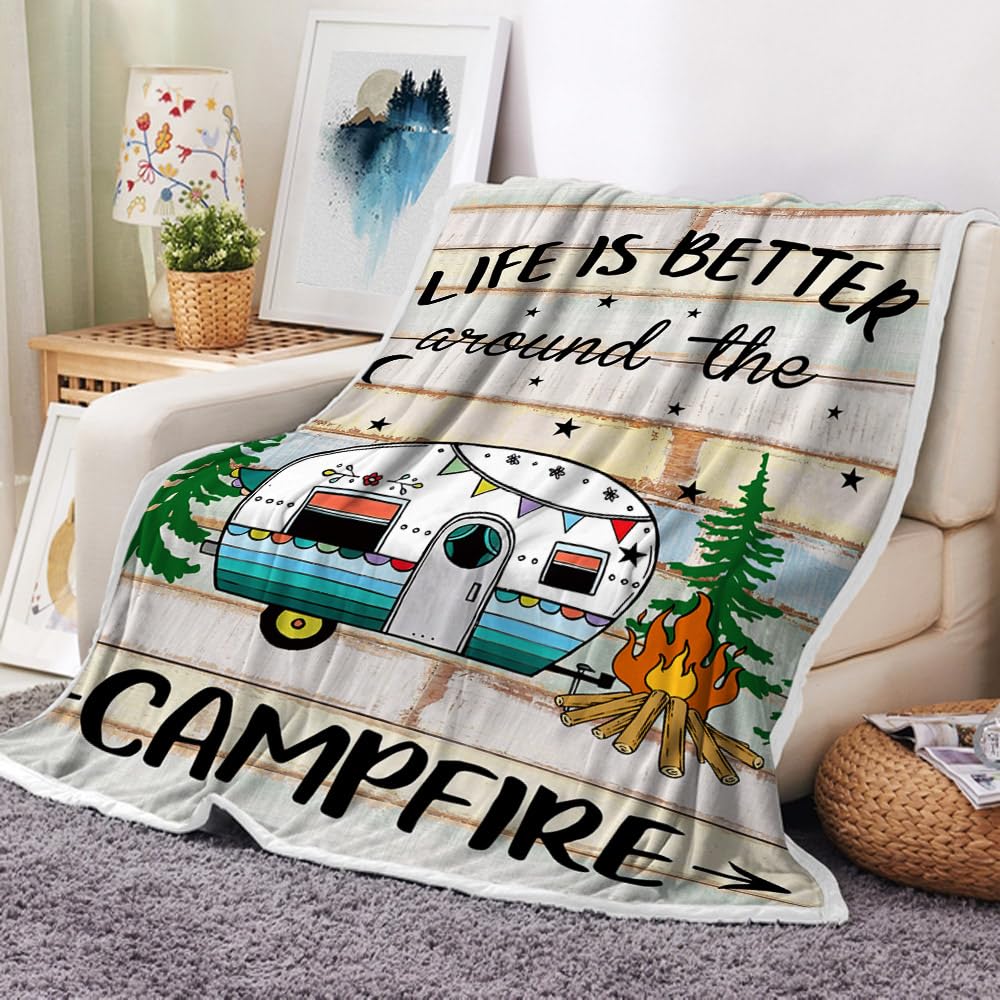
A throw can move from the dinette to the bed. Pull it over your knees while reading, then lay it across your feet at night. Fleece packs easily and is easy to care for; cotton feels better if you dislike fuzzy synthetic fabric.
Choose a throw that fits the seat or sleeper who'll use it. Oversized throws tend to crowd a small bed and slip onto the floor.
7. Pillows with washable covers
Bring the pillow that supports the way you sleep, and leave the decorative cushions at home. A washable case and pillow protector help when dust, pets, and outdoor clothes share a tight space. If your sheet set includes two pillowcases, stash the second as a spare.
Before packing your favorite oversized home pillows, lay them across the made-up RV bed. If they take up the useful sleeping area, bring smaller pillows and keep only the number you'll actually sleep on.
How to choose and store bedding in a small RV
Picture the bedding packed away as well as spread out on the mattress. A thick blanket can eat up most of a shallow cabinet, even if you only reach for it on the coldest nights.
Layer |
Why bring it |
Space or care trade-off |
|---|---|---|
Down comforter |
Warmth with little carrying weight; compressible for travel |
Needs room to regain loft and must be kept dry |
Wool blanket |
Removable extra warmth on cold nights |
May require more careful laundering |
Fleece throw |
Handy on the bed and at the dinette |
Can feel too warm for some sleepers |
Spare duvet cover |
Fresh sleeping surface without a second insert |
Must match the comforter's dimensions |
Store clean, dry bedding in breathable bags. The American Down and Feather Council recommends breathable bags for down comforters. Compress yours for the drive if space is tight, then give it room to fluff up between trips. Keep the throw within reach and label spare sheets by bunk or mattress size so you can find the right set at bedtime.
If the RV feels damp, dry wet gear away from the bed and let air circulate around the mattress and stored linens. Use heating and ventilation suited to your RV's equipment; a thicker blanket won't fix damp bedding.
A warm bed that still leaves room to move
Start with a sheet that fits, a compressible down comforter, and one blanket you can pull off in seconds. Add a thin pad, cover, throw, and pillows if you'll use them in your RV.
If you're replacing your top layer, Warmy & Tummy's customizable goose down comforters give you a choice of shell and warmth without adding much carrying weight. Measure the RV bed first; then keep a blanket handy for the nights when the comforter needs a little help.
FAQ
What are the standard sizes of RV bed sheets?
There isn't one standard size for every RV bed. A short RV queen can measure 60 by 75 inches, versus 60 by 80 inches for a standard queen, and bunks and cut-corner beds vary. Measure the mattress's width, length, and depth before buying a fitted sheet.
What is the best bedding for camping?
For a camper bed, start with a snug fitted sheet, a warm but light comforter, and a removable blanket. Choose washable layers you can dry thoroughly, and match the sheet to the actual mattress dimensions.
What is the best bedding for an RV?
The best setup fits the mattress, stays put, and gives you adjustable warmth without taking over storage. A fitted sheet, compressible down comforter, washable duvet cover, and extra wool or fleece layer work well for cold nights. Choose an alternative to down if you avoid animal-derived fill.
What is the warmest blanket for extreme cold?
A wool blanket is a useful extra layer over a warm down comforter, but no blanket alone makes an RV safe or comfortable in extreme cold. Keep the bedding dry, add layers you can adjust, and use your RV's heating and ventilation equipment as directed.