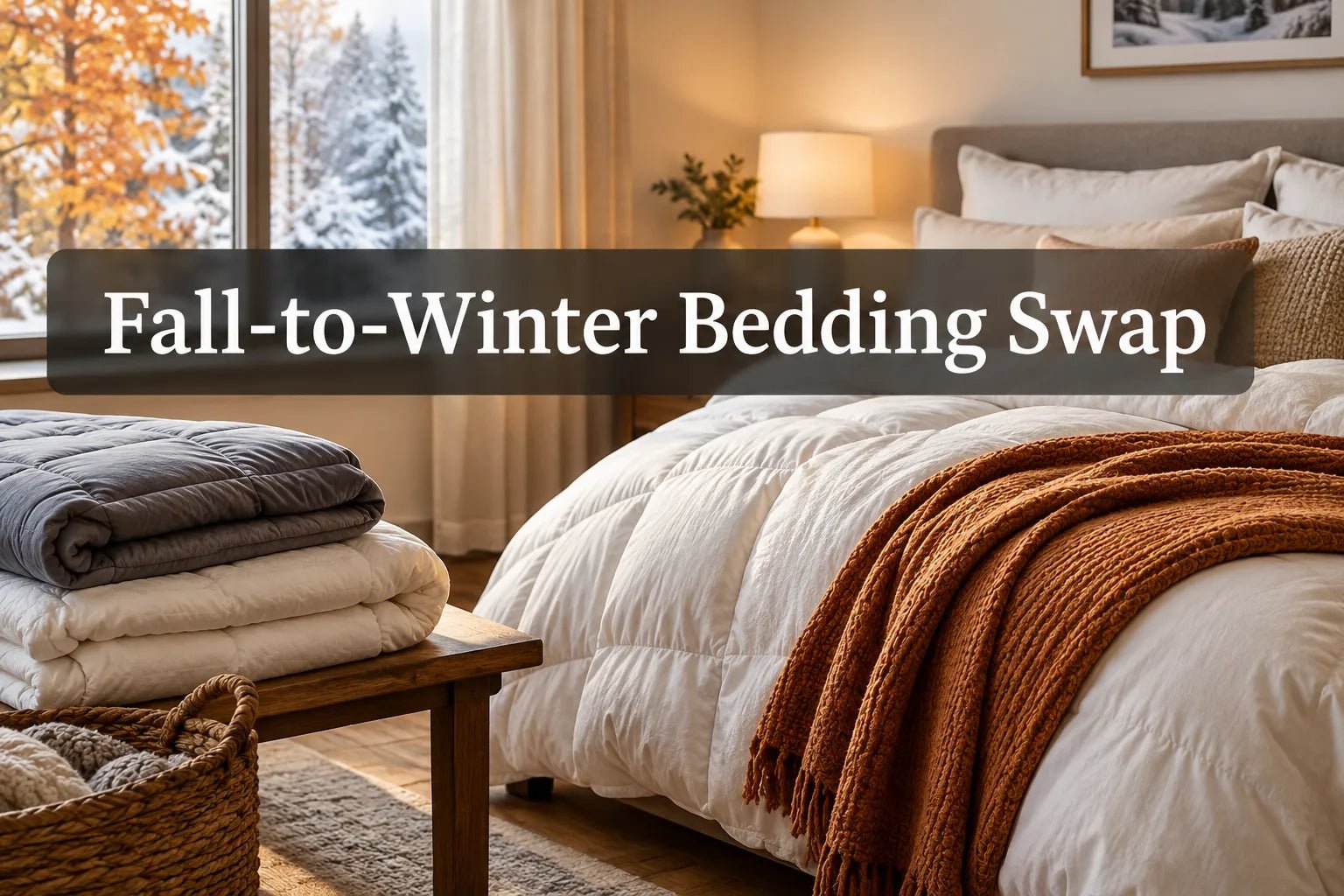

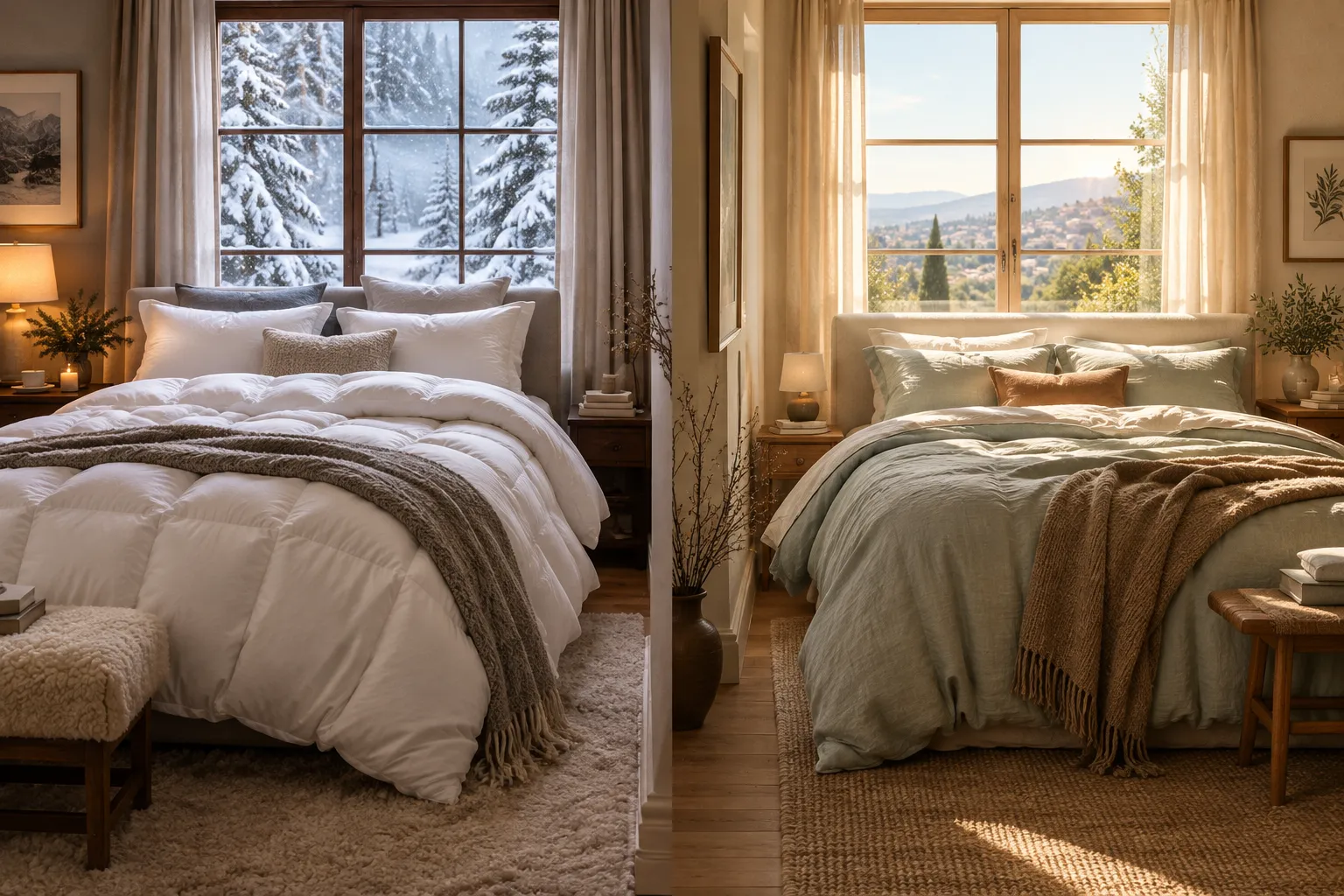
Snow outside, but you're sweating under the comforter? A down comforter extra warm enough for an unheated Minneapolis bedroom could be miserable in a heated New York apartment. Start with your overnight bedroom temperature. If you sleep cold in a cool room, extra warm makes sense; in a heated room, medium or light with a spare blanket often feels better.
When does a down comforter extra warm make sense?
If the bedroom stays chilly and you wake up cold under your current bedding, extra warm is worth considering. A thick insert in a well-heated room can leave you sweaty even when it's freezing outside.
“Extra warm” describes a category, not a set bedroom temperature. Brands use different amounts and types of down. Compare fill weight, fill power and construction before you assume two inserts with the same label feel alike.
What's the difference between comforter weights?
Lightweight feels airy in a heated room, especially if you sleep hot. Medium or all-season works as a year-round starting point in a room with steady heat. For a cool bedroom, move up to warm or extra warm. If you only have a few cold nights each year, you can pull a blanket over medium instead.
Brands don't use a single standard for these labels. A high-quality duvet insert can have plenty of loft without much weight because its fill power, fill amount and baffle-box design work together. The warmth label alone won't tell you enough.
Comforter warmth by climate: a starting point
The table gives you a regional starting weight for winter. Keep the heat on or tend to sleep hot? Go one level lighter. If your room gets cold at night, move up a level.
Region and example cities |
Sensible winter starting point |
When to change it |
|---|---|---|
Upper Midwest: Chicago, Minneapolis |
Warm to extra warm |
Choose extra warm for a cold bedroom; stay at medium or warm if central heat runs overnight. |
Northeast and New England: New York City, Boston and nearby towns |
Medium to warm |
Move to extra warm for drafty, lightly heated rooms; a heated city apartment may need only medium. |
Pacific Northwest: Seattle, Portland |
Medium |
Add a warmer cover or throw during damp, chilly spells instead of buying the heaviest insert. |
Mild South and West Coast: Texas, Southern California |
Light to medium |
Choose light if you sleep hot or run the heat; add a blanket for occasional cold snaps. |
Dry high-altitude areas: Colorado mountain towns |
Warm to extra warm |
Cold nights and lightly heated rooms favor extra warm; a well-heated room may still call for medium. |
Turn down the thermostat in a Chicago bedroom and an extra-warm insert may feel just right. You might kick that same insert off in a New York apartment with steady heat. In New England, a drafty house can call for more bedding than a well-insulated one down the street.
Upper Midwest and New England winters
Even through a long winter, start with warm if you heat the bedroom. Extra warm is for nights when the room stays cold or you wake up shivering. A substantial duvet cover over a medium or warm insert gives you warmth you can dial back.
Mild coasts, the South and high-altitude nights
In mild regions, light or medium leaves room for another layer when a cold snap arrives. In the mountains, dry air alone doesn't tell you which weight to buy. Notice how cold your bedroom gets overnight and how much you use the heat.
How room temperature and sleeping style change the answer
Your room may feel cozy when you climb into bed and turn chilly after the heat cycles off. That overnight change matters more than the outdoor forecast.
"A bedroom temperature between 60 and 67 degrees Fahrenheit helps promote sleep." - National Sleep Foundation
Use that range as general sleep guidance, not as a cutoff for extra-warm bedding. Bedding insulation also affects comfort at a given room temperature, so your comforter and cover make a difference.
If your feet end up outside the covers because you're hot, start lighter. Still cold under your current comforter? Add a layer or move up a weight. Separate twin inserts can help if your partner likes medium but you need extra warm.
In a heated, draft-free room, the best cold weather comforter may have the same weight you'd use somewhere mild. The outdoor low tells you little about how your bed will feel by morning.
What actually makes a down comforter warmer?
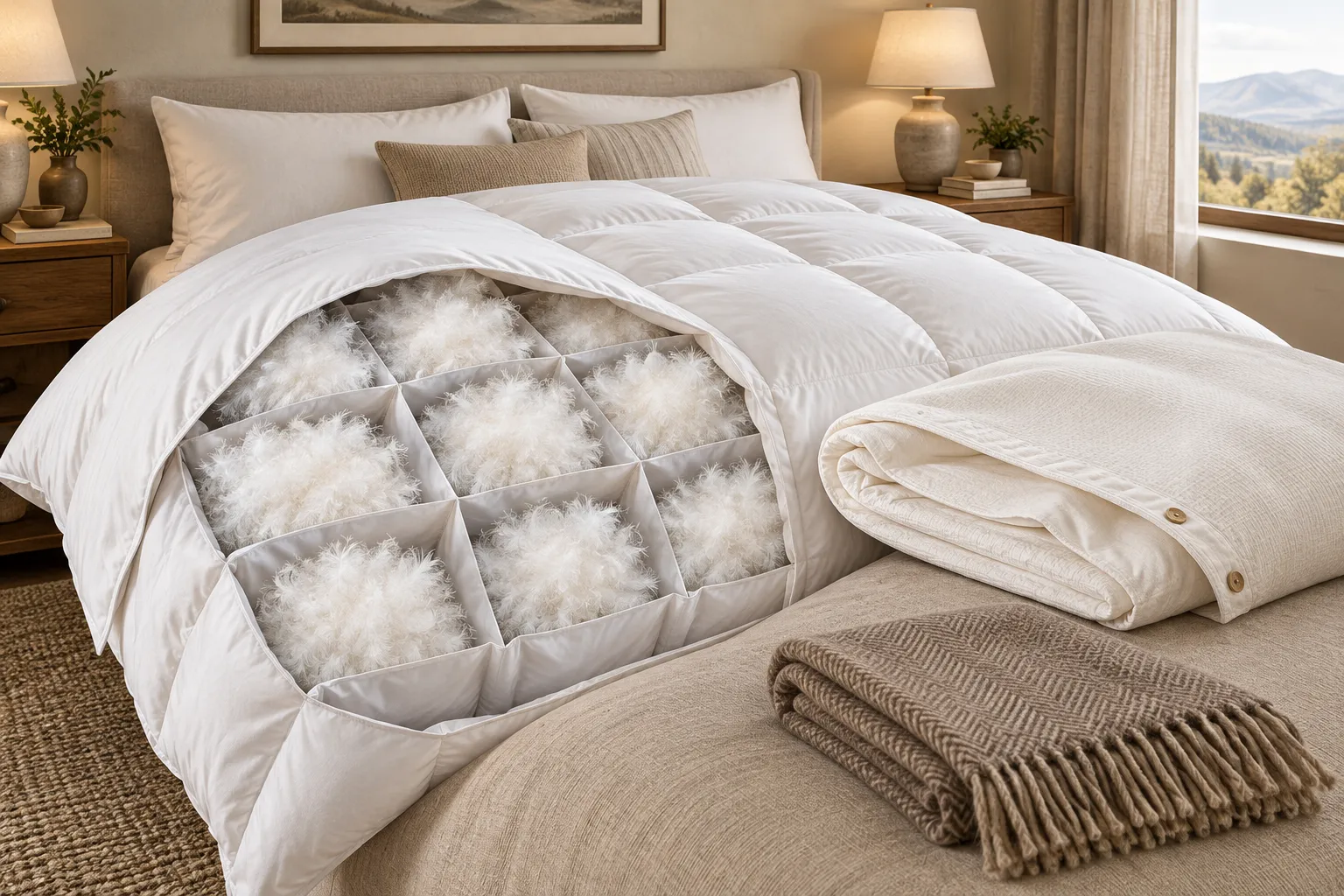
You need enough down to insulate the bed, with space for it to loft and stitching that keeps it in place. Read fill weight and fill power together rather than picking the biggest number on the label.
Fill power is not the same as fill weight
Fill power tells you how much space an ounce of down occupies. Fill weight tells you how much filling the comforter contains. Higher fill power can give you more loft for less weight, but fill amount and insert size still affect how warm you'll feel.
Compare fill weights at the same size and similar fill power. A king needs more filling to cover its larger area than a twin.
Baffles, covers and airflow
Baffle-box construction leaves space for down to loft and keeps it from shifting into thin spots. You'll also feel a difference when you change the shell or duvet cover. A breathable cover can make a warm insert easier to sleep under; a substantial one adds insulation.
A lighter fill with a warm duvet cover can beat one overly heavy comforter. On warmer nights, swap the cover for a lighter one rather than putting up with too much insulation.
Size guide: compare like with like
Give both sleepers enough coverage to keep drafts out. A full/queen may feel skimpy on a tall mattress or if your partner pulls the covers; compare dimensions before choosing between full/queen and king. For a California king, pay close attention to length. Size names alone won't settle the fit.
Fill-weight comparisons only work across the same size. Warmy & Tummy lists its Light organic cotton option at 20 ounces for Twin, 30 ounces for Queen and 35 ounces for King. The King has more filling to cover more bed, not to make it warmer than the Queen. You can see the warmth and size choices on the brand's site.
A cotton shell feels different from silk or linen, but thread count won't tell you how warm the insert is. Care varies by insert, so follow its label instead of assuming you can machine wash it. A duvet cover protects the filling and gives you an easier layer to change.
Build a winter bed you can adjust
If you're torn between two weights, start with the lighter one and keep a blanket nearby. On cold nights you can pull it on. Cooling down an extra-warm insert in a heated room is harder.
Notice whether your bedroom stays heated or turns chilly overnight, and whether you wake up sweaty or cold under your current bedding.
Use the climate table to pick a starting warmth level, then adjust for your own heat preference and your partner's.
Pair the insert with a cover you like, and keep a blanket handy for the coldest nights; if you remain cold even with the extra layer, move up to extra warm.
Warmy & Tummy offers goose down comforters in different materials and warmth levels, plus duvet covers and merino wool or cashmere blankets. With its mix-and-match comforter, you can choose fill, shell and warmth for your room. If that room changes temperature through the year, a lighter insert and changeable layers may suit you better than extra warm.
If your bedroom changes temperature with the season, try a Warmy & Tummy comforter with a cover and removable blanket. You can pull on that extra layer during cold spells without buying another insert.
FAQ
What is the warmest down comforter?
A well-filled extra-warm or ultra-warm down comforter with room for the down to loft will give you the most insulation. Compare fill weight at the same size alongside fill power; “warmest” on a label won't tell you how it'll feel in your room.
What is the best extra warm comforter?
Choose one with enough fill for your chilly bedroom and stitching that keeps the fill spread out. A cover you can change helps when you want less warmth, so you don't have to sleep under too much insulation.
What comforter is best for extreme winter conditions?
For a cold bedroom, use a warm or extra-warm down comforter with a cover or blanket you can remove. If you heat the bedroom, start with medium or warm even when the weather outside is severe.
Will a down comforter keep you warm?
Yes. Lofted down traps air and insulates you from a cool room. The amount of fill, your cover, the room temperature and how warm you sleep determine which weight you'll want.
What type of bedding is best for staying warm in the winter?
A down duvet insert matched to your bedroom, with a cover you can change, gives you options. Choose warm or extra warm for a cold room. If the heat stays on, try medium and add a blanket on chilly nights.
Is extra warm too hot for a heated bedroom?
Often, yes, especially if you sleep hot or the heat stays on overnight. Try medium with a removable cover or blanket first. Extra warm suits a chilly room or someone who stays cold under lighter bedding.