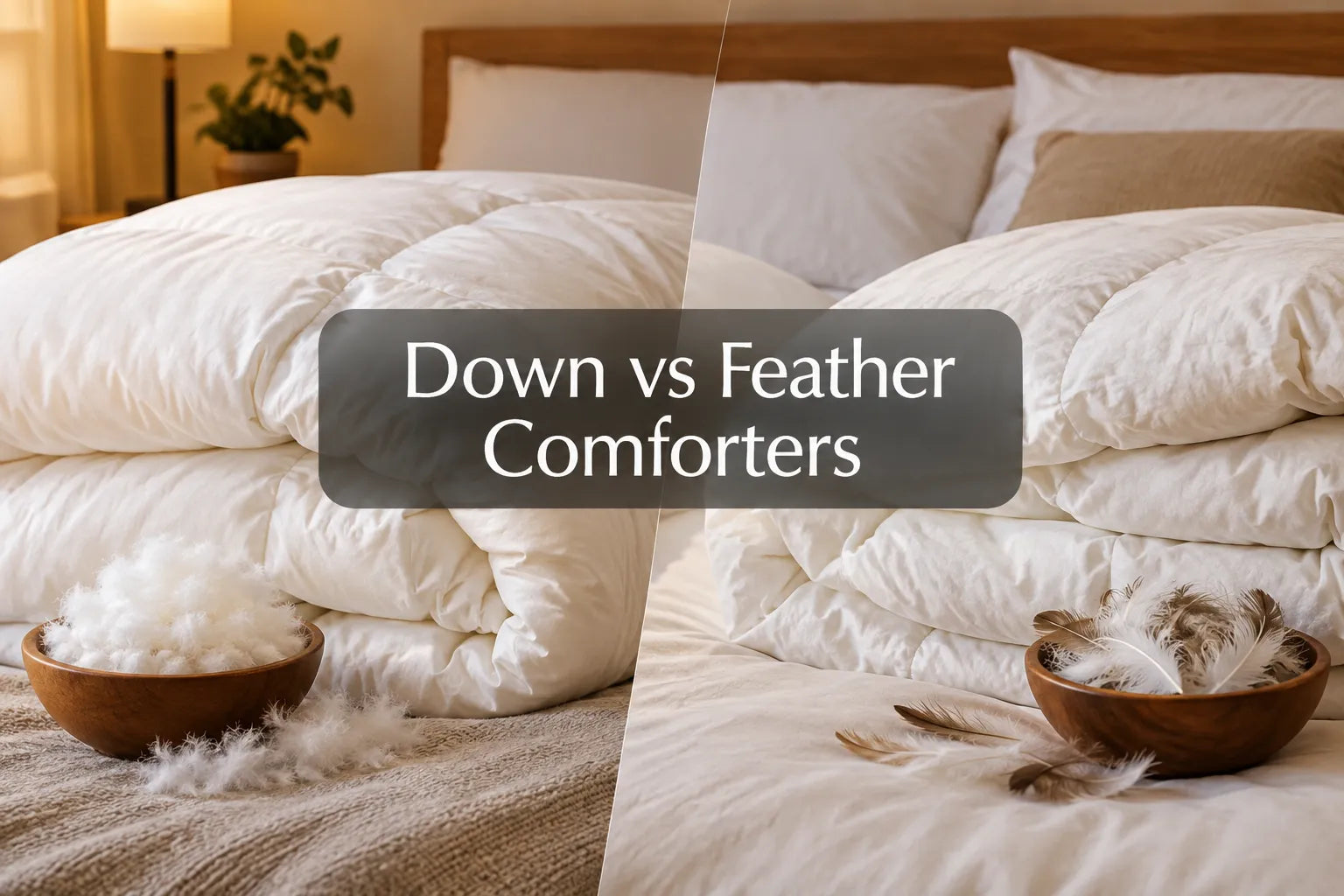


Black Friday deals can make a fresh bed look tempting. When did you last check the pillow you sleep on? If you're wondering when to replace pillows, assess a typical synthetic pillow after about 1–2 years, then judge its support and condition. Sheets, covers and comforters wear at different rates; you may only need to replace one piece.
When to replace pillows and other bedding: the quick checklist
If a bedding piece has lost its function, replace it regardless of age. The ranges below tell you when to take a closer look.

Bedding |
Typical replacement window |
Replace sooner if you notice... |
|---|---|---|
Synthetic or polyester pillow |
About 1–2 years |
Flattening, stubborn lumps, lingering odor or poor neck support |
Memory-foam pillow |
About 2–3 years |
Crumbling, permanent impressions or a change in support |
Down or feather pillow |
Often longer, around 5–10 years with good care |
Fill won't rebound, clumps persist or cleaning no longer freshens it |
Sheets |
Around 2–3 years with regular use and care |
Thinning, holes, frayed seams or an elastic edge that won't grip |
Duvet cover |
Around 2–3 years with regular use and care |
Worn fabric, broken closures or a fit that no longer holds the insert |
Comforter or duvet insert |
Often around 5–10 years, depending on construction and care |
Lost loft, uneven fill, cold patches or damaged shell |
Mattress protector |
No reliable universal date: replace when the barrier or fit fails |
Leaks, peeling backing, torn seams or elastic that slides off |
These windows assume regular use. Your guest-room set may last longer than the sheets you wash after week after week of use.
When to replace pillows
Assess most synthetic pillows after 1–2 years. A down or feather pillow may last substantially longer with good care, provided it still supports your head and feels clean.

Try the pillow fold test
Fluff a down, feather or loose-fill pillow, fold it in half on a flat surface, then let go. If it stays folded, the fill may be worn out. Fold a king pillow in thirds if it's too long; for solid foam, look for permanent dents, crumbling or lost support instead.
Lie on the pillow in your usual sleeping position. If you keep folding or stuffing it under your neck to get comfortable, the fill has lost its usefulness. Replace the pillow if odor or staining persists after care.
Sweat and body oils can turn a pillow yellow without telling you how much support it has left. If the care label allows cleaning, wash it and let it dry completely. A persistent stain or smell, or a loss of support, puts it on the replacement list.
"Dust mites are tiny bugs that live in bedding, mattresses, upholstered furniture, and carpets." - American College of Allergy, Asthma & Immunology
Can you make a pillow last longer?
A washable protector and care that follows the fill's label can help your pillow last longer. The American College of Allergy, Asthma & Immunology recommends dust-proof pillow covers for dust-mite exposure. Wash the case regularly, launder the pillow only as its label permits and let it dry completely. Once the fill stays flat, cleaning can't restore its spring.
When to replace sheets and duvet covers
Sheets and duvet covers often last around 2–3 years with regular use and appropriate care. Pull the fitted sheet over the mattress: if you find thin patches, holes or corners that slip off, it's ready to replace.
Faded fabric can still feel comfortable and hold up to laundering, so you can keep using it. Replace a duvet cover if the fabric wears through, its ties or buttons fail beyond an easy repair, or it can't keep the insert in place.
Keep sound sheets and covers in rotation; a clean spare set can be handy. If yours has worn out, browse sheet sets or duvet covers as separate purchases.
When to replace comforters
A comforter or duvet insert can often last around 5–10 years, depending on its fill, shell and care. If yours has cold spots, fill that won't spread out after appropriate care, or a shell that leaks filling, replace it sooner.
Check the cover and insert separately. Keep an insert that still lofts well even if its cover has worn out; buy a new insert if it has empty corners and cold spots. If yours lofts evenly but feels too warm, consider a lighter warmth level rather than another of the same weight.
Keep the insert in a suitable cover and follow its care label. Damp or compressed fill can feel flat, so give a washable comforter the drying and fluffing its instructions call for before deciding it's finished. If it really needs replacing, compare down comforters by warmth rather than assuming the plushest-looking one will suit your room.
When to replace a mattress protector
Replace a mattress protector when it slips off or stops protecting the mattress. Its backing, seams and elastic tell you more about its condition than a fixed number of years, especially if you've washed it often.
Remove it and inspect the underside as well as the top. Peeling or cracked backing, torn seams, a leak or stretched corners mean it's time for a new one; a protector that looks fine on top can still fail underneath. If the protector has a waterproof layer, don't assume a hot wash or high-heat dry is safe: follow its care label.
Your Black Friday replacement plan
Start with the item that's failing. Even a steep discount isn't much use if you're replacing a comforter that still works while sleeping on a flat pillow. Give the bed five minutes before you shop.
Check the pillow first. Do the fold test where it applies, then check support, smell and visible wear.
Strip the bed. Look at sheet corners, duvet-cover closures, the comforter's fill and the protector's underside.
Sort the list into replace, repair and keep. A missing duvet-cover button may be a quick repair; a leaking protector isn't.
Buy for the issue you've found. If temperature is the problem, compare warmth levels and shell fabrics. If the fitted sheet slips, confirm your mattress depth before ordering.
If your comforter needs replacing, Warmy & Tummy has goose-down options with different shells and warmth choices, including organic cotton, silk, linen and cooling-fabric options. Sleeping hot? You can choose a lighter warmth level instead of grabbing a heavy insert on sale. Keep a comforter that still works and spend on the pillow or protector that doesn't.

Keep the good bedding, replace the weak link
Replace the pillow if it has lost support, and let the sheets, cover or comforter stay if they're holding up. If warmth or comforter wear is the problem, try Warmy & Tummy's mix-and-match options to choose the fill, shell and warmth level for your bed instead of buying another one-size-fits-all insert.
FAQ
How regularly should you replace pillows?
Assess a typical synthetic pillow after about 1–2 years; down and feather can often last longer with proper care. Replace yours sooner if it stays flat, smells after cleaning or no longer supports your head comfortably.
Do dust mites live in your pillows?
Dust mites can live in bedding, including pillows, where skin flakes collect. A pillow protector and care that follows the label help, but replace a pillow that remains unclean or uncomfortable after care.
Why do pillows turn yellow?
Sweat and body oils can leave yellow marks on a pillow over time. Color alone isn't a reliable age test; check whether the pillow still feels clean and supportive after label-approved care.
Should I throw away my pillow if it's yellow?
Not necessarily. If the care label permits washing, clean and dry it completely, then assess any lingering stain or smell and test its support. Replace it if those problems remain or its fill no longer rebounds.