

Woke up cold under the comforter that felt fine in September? The right bedding for winter should help you stay warm at your bedroom's overnight temperature. Add a throw first; if you still wake up chilly, it's time for a warmer comforter.
When should you switch to bedding for winter?
Switch when your usual bed stops keeping you warm through the night. On the first day you turn on the heat, notice how the room feels after you lower the thermostat for bed. A drafty house may call for the swap weeks before a well-insulated apartment does.
The end of daylight saving time on November 1, 2026 is a good time to reassess your fall-to-winter bedding. You may need a warmer layer well before then in a colder climate, while a heated bedroom in a mild climate may still feel fine with an all-season comforter.
"During 2026, daylight saving time is in effect from March 8 at 2 a.m. (local time) to November 1 at 2 a.m. (local time)." - National Institute of Standards and Technology
Pay attention to the morning, too. If you're repeatedly pulling the comforter over your head or waking with cold feet, add warmth. If you wake sweaty, peel back layers before choosing a thicker insert.
Match comforter warmth levels to your bedroom
Use the overnight bedroom temperature to choose a starting point. These ranges aren't product ratings; your sheets, sleepwear, mattress, and tendency to run hot or cold all affect how each option feels.
Bedroom overnight |
First setup to try |
If you still wake cold |
|---|---|---|
Above 70°F (21°C) |
Lightweight comforter or breathable all-season layer |
Add a light throw at the foot of the bed |
65–70°F (18–21°C) |
All-season comforter |
Pull up a throw on colder nights |
60–64°F (16–18°C) |
All-season plus throw, or a warmer comforter |
Try warmer sheets or an extra blanket |
Below 60°F (16°C) |
Warmer comforter with insulating layers |
Address drafts and room heating as well as bedding |

Try one change for a few nights and see if you stay comfortable until morning. In the same room, you might like a light comforter while your partner needs another layer.
What Warmy & Tummy warmth levels mean in plain words
Warmy & Tummy's core down comforters come in Light, All Season, and Ultra Warm. Light suits a warm room or a hot sleeper. All Season leaves room to add a blanket when you need it, while Ultra Warm suits a colder room or someone who wakes chilly even with an extra layer. The labels describe the comforters, not fixed bedroom-temperature ratings.
You can get those warmth choices in the brand's organic cotton goose down comforter, as well as its silk and linen options. A breathable shell changes the feel of the bed, but the shell alone doesn't tell you how warm the finished comforter will sleep. Choose the warmth that fits your room first, then the fabric you like to live with.
If you're comparing duvet inserts, look beyond puffiness. The fill and its amount affect how much body heat the bed holds, while a high-quality shell affects its feel and breathability. Comforters filled with down alternative offer another filling choice. Whatever the fill, see how the “all season” label works in your own room.
Do you need a separate winter comforter?
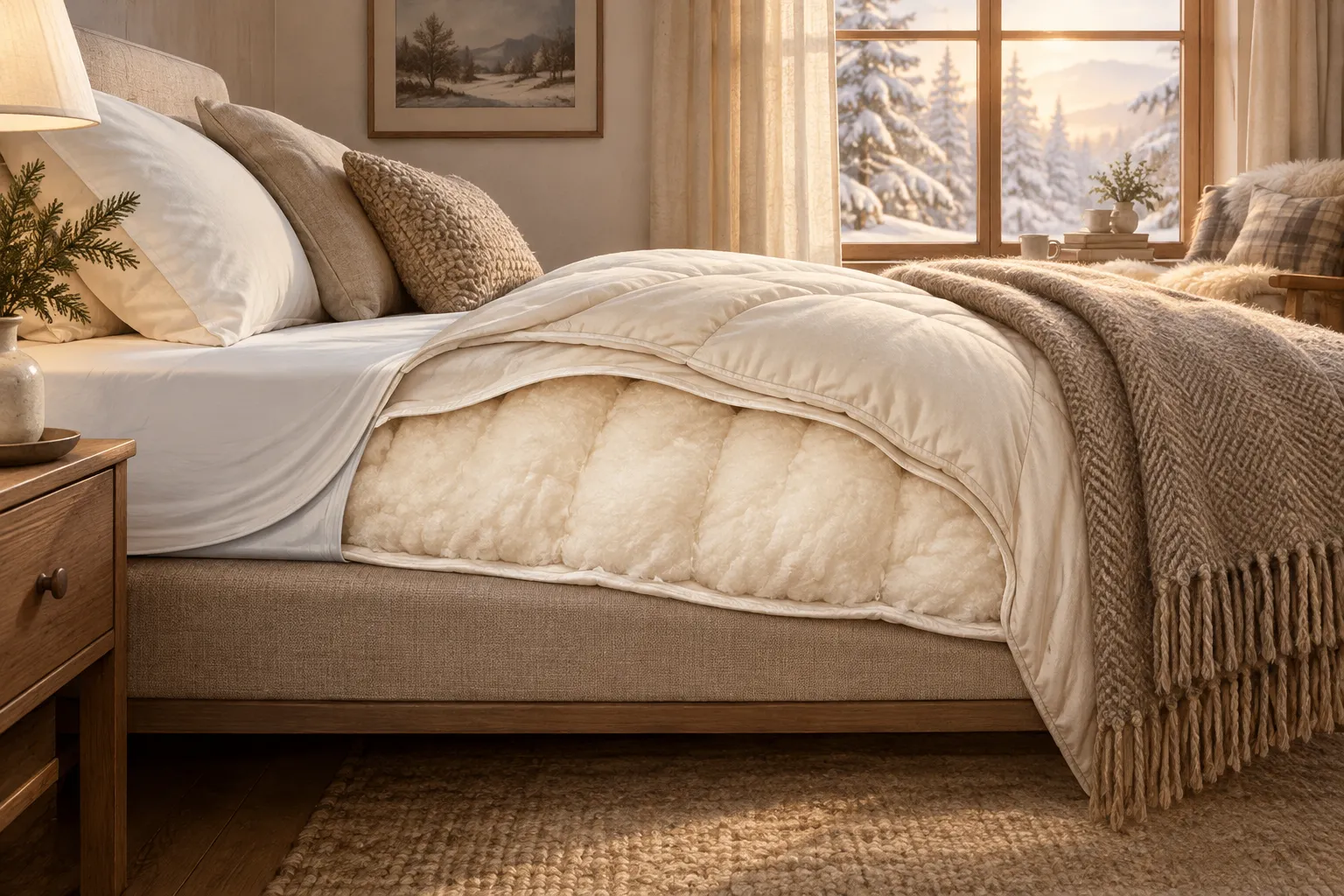
You may not need one. Many customers keep an all-season comforter on the bed and pull up a throw on colder nights. That leaves you with less to store and bedding options you can adjust as temperatures change.
A warmer comforter earns its place if you still feel cold under a blanket or your bedroom stays cool for months. Sharing the bed? Give the colder sleeper a throw for their side, or use separate top layers.
If you're still choosing your lighter layer, compare fall comforter options. Keep the all-season setup if it works. If you wake cold most nights, switch inserts.
How to make the fall-to-winter bedding swap
Pick a dry day for the changeover. Before packing anything away, follow its care label and make sure the fill is dry, especially if you're storing down or a delicate shell.
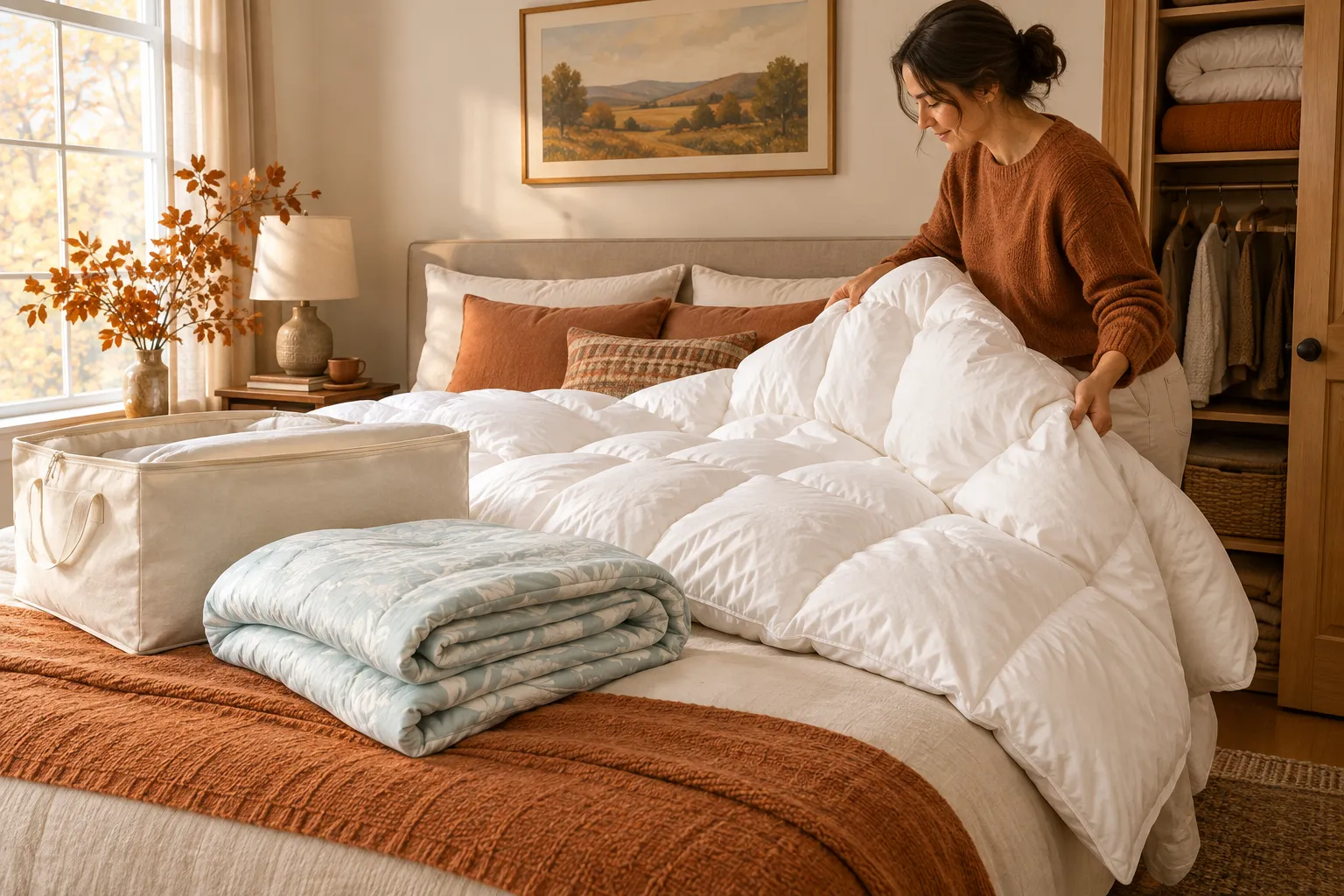
Wash the summer layer according to its label. Let it dry all the way through before packing it away; thick fill can stay damp inside even when the outside feels dry.
Store it loose in a breathable cotton bag or a clean, dry closet space. Keep it off damp floors and out of direct sunlight.
Inspect the winter comforter's shell and seams. Air it in a clean, dry spot, then give it a gentle fluff to restore its loft. Wash it only if its condition and care label call for it.
Put the warmer insert on the bed, or leave your all-season one there and add a throw. Sleep with the new setup for a few nights before deciding if the sheets need changing too.
You don't have to replace your whole bedding set. Cotton flannel feels warm when you first get into bed, while smooth cotton sateen or other cotton sheets may feel more comfortable in a heated room. You can leave your fitted and flat sheets in place and put a throw within reach for cold weather. If your mattress feels chilly too, a mattress pad is another layer to consider, though it won't fix a drafty room.
For easy care, look for machine-washable sheet sets. Read the care instructions for each insert separately; a silk-shell or down comforter may need different care from its duvet cover.
Set up a bed that stays comfortable
You shouldn't have to remake the bed at 2 a.m. to get comfortable. Keep a throw within reach and leave the foot of the bed easy to uncover; in the morning, notice if you were cold or too warm overnight.
If your current insert leaves you cold most nights, try a Warmy & Tummy comforter with a warmer fill option and a shell you like. If an all-season comforter plus a throw already does the job, keep it and save the closet space.
FAQ
Which is better for winter, a duvet or a comforter?
Neither is automatically warmer. A duvet is an insert used with a removable cover, while a comforter can be used as a finished top layer; what matters most for warmth is the insert or fill and the layers around it. Choose the setup that's easy for you to adjust and care for.
What sheets are good for cold sleepers?
Flannel or brushed cotton can feel warmer when you first get into bed. If you sleep in a heated room, smooth cotton may be comfortable with an all-season comforter and a removable throw. Start with the top layer if your sheets already feel good.
What is the best bedding for cold winter?
Start with a comforter warm enough for your overnight room temperature, then add a removable blanket for especially cold nights. Cold sleepers may also like flannel sheets; hot sleepers may prefer breathable sheets and lighter, adjustable layers. If the room is very cold, deal with drafts and heating rather than relying on bedding alone.