
Does your duvet feel clammy by midnight, or does every “soft” cover turn out scratchier than you hoped? The best material for duvet covers depends on how you sleep. Cotton percale suits most people, linen suits hot sleepers who like texture, and silk feels smooth and luxurious if you don't mind extra care. Bamboo-derived viscose or lyocell feels fluid and soft; microfiber is convenient when laundry ease matters more than breathability.
A cover changes how the bed feels against your skin. If the insert is heavy and warm, though, you'll still need a lighter one for summer.
Best material for duvet covers: a quick match
For most beds, start with cotton and choose a weave you like. If you wake up hot, try linen or cotton percale before trusting a “cooling” label on a slicker-feeling cover.
Material |
How it feels |
Good fit for |
Main tradeoff |
|---|---|---|---|
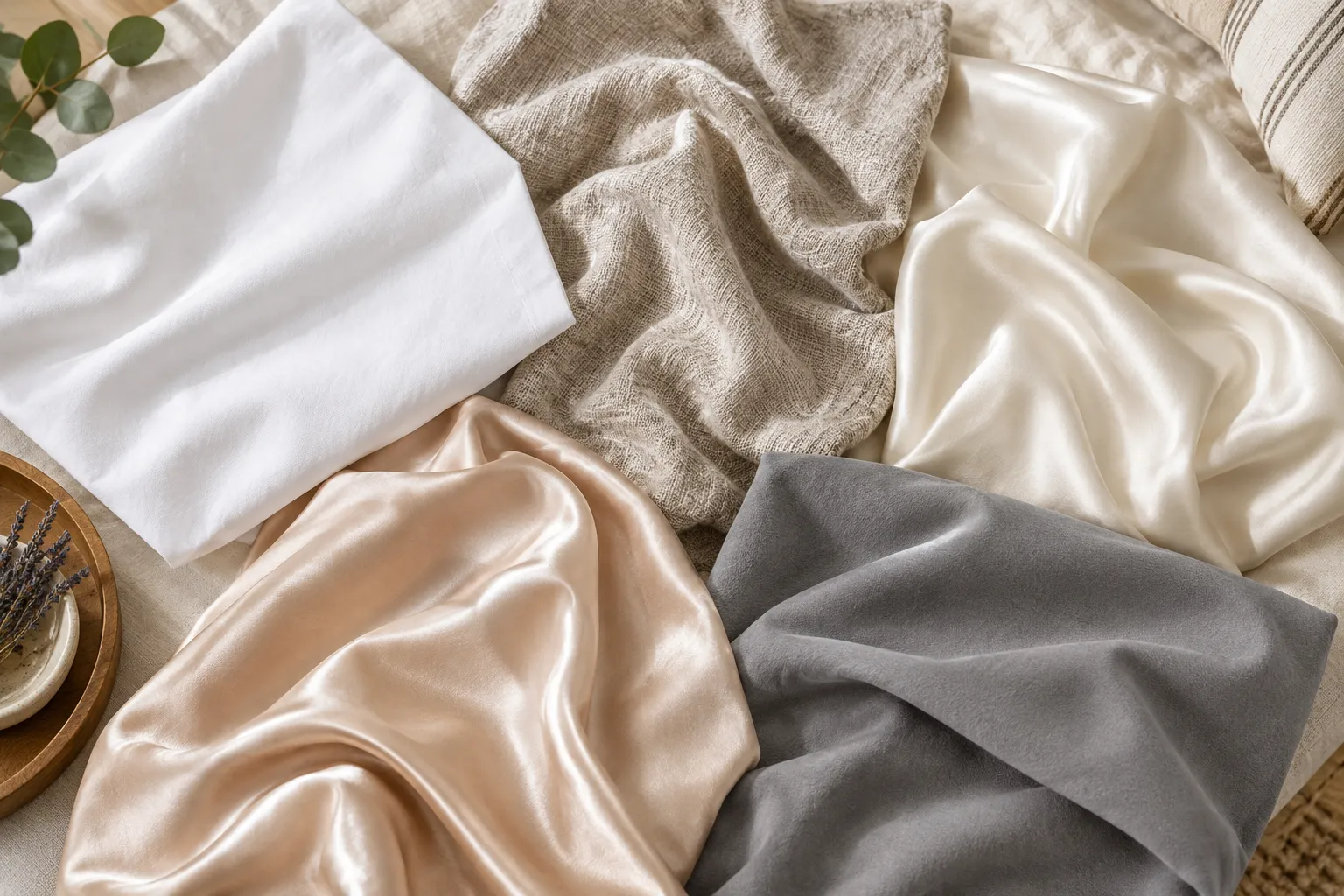
Cotton percale |
Crisp, matte, airy |
Warm sleepers who like a freshly made bed |
Can wrinkle and feel less silky |
Cotton sateen |
Smooth, soft, slightly weightier |
Anyone who finds percale too crisp |
Can feel warmer than percale |
Linen |
Textured, relaxed, airy |
Hot sleepers who don't mind a rumpled look |
Texture isn't for everyone |
Bamboo-derived viscose or lyocell |
Smooth, drapey, cool at first touch |
Sleepers who dislike crisp fabric |
The label and weave matter; care can be gentler |
Silk |
Sleek, light, luxurious |
Sleepers who prioritize low-friction feel |
Higher-maintenance cleaning |
Polyester microfiber |
Soft, lightweight, easy to wash |
Busy households on a budget |
Can hold heat and feel less airy |
If you sleep hot, what duvet cover material is best?
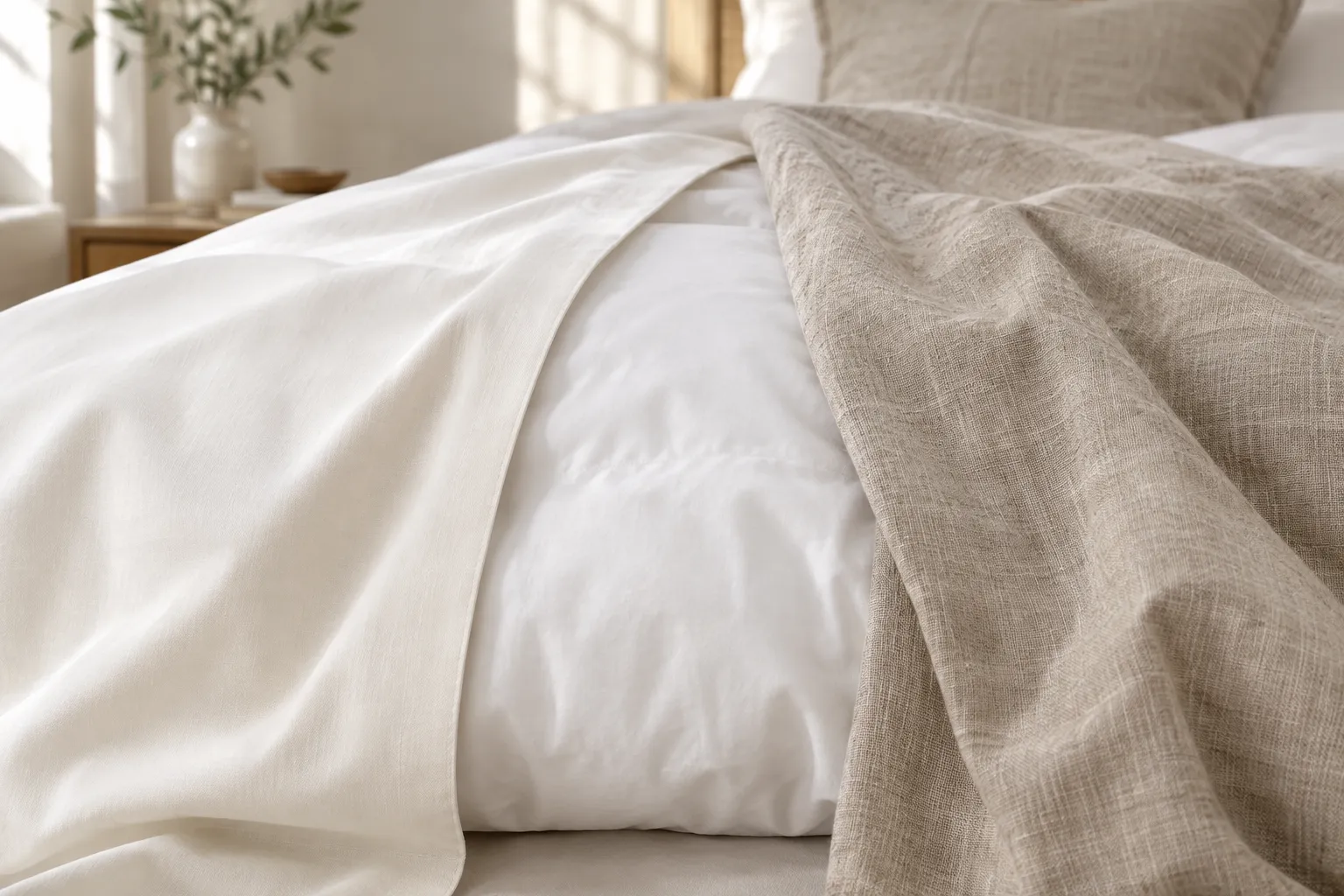
If you run hot, linen and cotton percale feel airy without the plushness of a heavier fabric. Linen has a casual texture; percale has that crisp, cool-sheet feel. Keep the insert in mind, since either cover can still feel too warm over a heavy duvet.
Linen or cotton percale for cooling?
Choose linen if you enjoy a loose, lived-in drape and don't mind visible wrinkles. Choose cotton percale if you want a smoother, tidier surface that still feels crisp. A cotton sateen cover can feel softer straight away, but its denser, silkier hand may be less appealing if you wake up overheated.
Is bamboo bedding cooler?
If the package says “bamboo,” read the fiber label too: bamboo-derived viscose and lyocell are processed textiles, rather than woven stalks. They may feel cool and silky when you touch them, but that first impression can't promise a cool night's sleep. The fiber content and weave tell you more than the word bamboo alone.
"A textile can be called bamboo only if it is made directly from bamboo fiber." - Federal Trade Commission
If you and your partner run at different temperatures, think about the insert too. A lighter insert under a breathable cover may be a more useful change than swapping covers while keeping the same hot duvet.
If you have sensitive skin, choose feel and washability first
If rough fabric bothers your skin, start with smooth cotton or silk. Washed linen may feel good if you like texture; coarser linen can still irritate you, even though it's a natural fiber. Trust how the fabric feels against your skin over a “hypoallergenic” claim.
With cotton, you can pick a smooth weave and wash the cover as often as you need. Silk feels lovely against the skin, though its care requirements can make frequent cleaning less convenient. If you have a diagnosed skin condition or allergy, fabric alone isn't treatment; the detergent, finishes and washing instructions matter too.
If you want easy laundry or a cozier bed
Cotton is an easy all-round choice for a cover you'll use and wash often. Polyester microfiber tends to dry readily and resist wrinkles, though hot sleepers may find it less airy. Cotton-polyester blends sit somewhere between the two; the fiber percentage tells you more than the word “blend.”
For a snugger feel, try cotton sateen or a warmer insert. You might also keep percale for warm weather and swap to a softer-feeling cover in colder months.
How cotton, linen, bamboo, silk and microfiber compare in real life
Pick a fabric whose quirks you won't mind on laundry day as well as at bedtime.
Cotton: the versatile baseline
Cotton changes character with the weave. Percale is crisp and matte; sateen feels smoother with a subtle sheen. If you're buying without feeling the fabric first, that distinction is often more useful than a lofty thread-count claim. Organic cotton describes how the cotton was grown, not whether the finished cover will feel cool or silky.
Linen: airy, textured and relaxed
Linen suits you if you like an airy bed and don't mind creases. It can feel firmer than buttery sateen at first, with small irregularities in the weave that give it character. If you prefer a pressed surface without ironing, you'll probably prefer cotton.
Bamboo-derived fabrics: soft, but read the label
Viscose made from bamboo and lyocell made from plant cellulose often have a fluid drape that people who dislike crisp cotton enjoy. But “bamboo” alone doesn't tell you how a cover was made or how to wash it. Look for the named fiber, weave and care instructions, especially if sustainable sourcing matters to you.
Silk: lovely to touch, more effort to own
Silk gives you a sleek surface against the skin. Frequent, no-fuss machine washes may be harder to manage with silk; follow the care label because constructions and finishes vary.
Microfiber: low-fuss, with a warmth tradeoff
Microfiber is a fine synthetic fabric, commonly polyester, that can feel soft at a modest price. It suits a guest bed or anyone who puts simple laundering first. If you sweat at night, its tendency to feel less ventilated than linen or cotton percale is worth weighing against the convenience.
Choosing the right duvet cover for your routine
You'll live with the right duvet cover on laundry day as well as at bedtime. Cotton bedding gives you a choice of crisp or smooth weaves if you wash it often; quick-drying microfiber is convenient but less airy. For a classic hotel look, crisp white percale feels quite different from relaxed linen fabrics.
Count the layers already on your bed. A cover adds an outer layer; a thicker duvet insert adds much more warmth. If you need extra warmth in winter or a cooler bed in summer, start there. A cool fitted sheet and a hot duvet are a clue that the insert needs attention.
Check the weave, fit and care label before you buy
Weave affects feel, the insert affects warmth, and a loose cover bunches up whatever fabric you choose. Thread count measures threads in a woven fabric; a very high number won't automatically make a cover feel better, and it won't rank cotton against linen or silk.
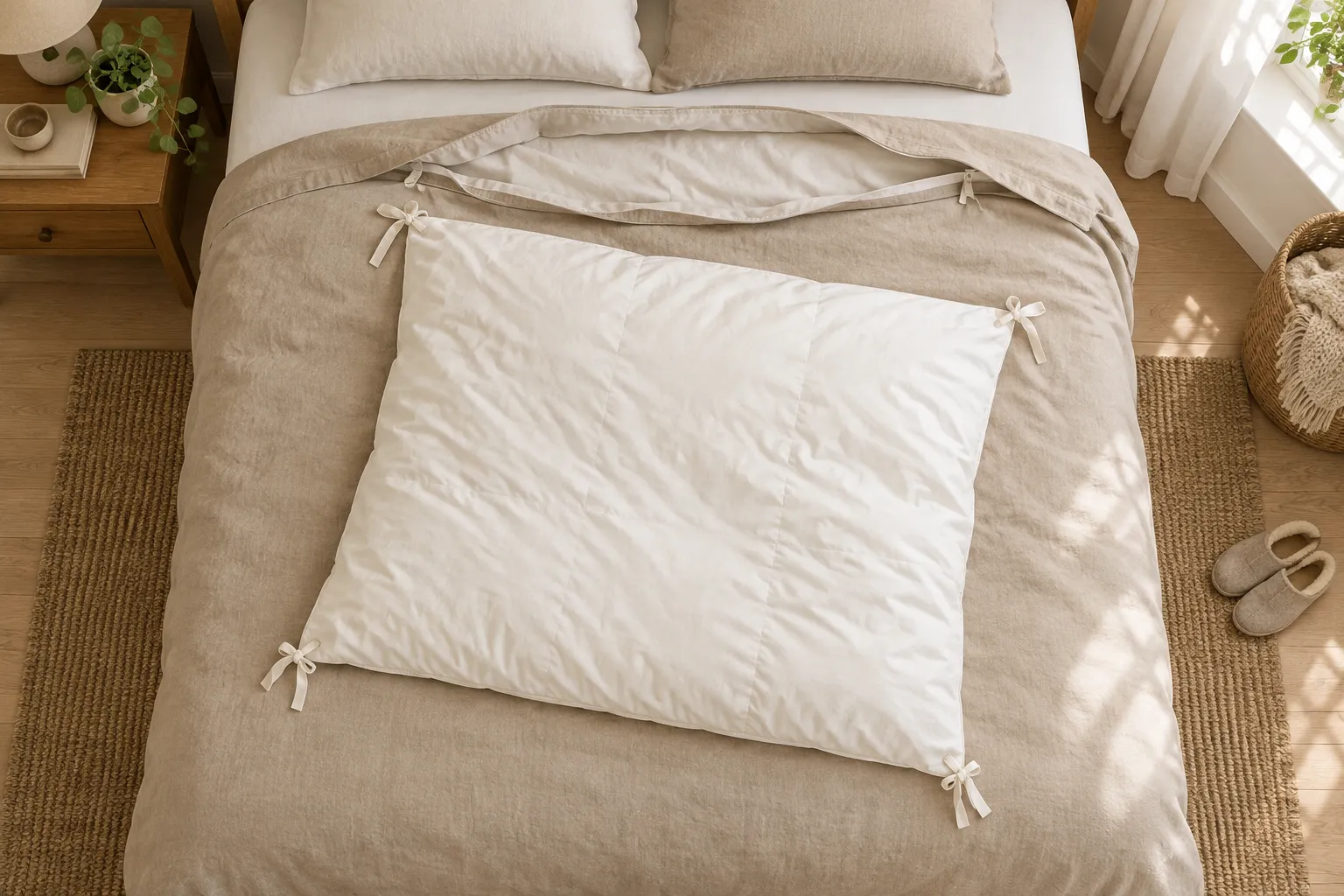
What's the ideal size of a good duvet cover?
Match the cover to your insert's stated dimensions. Duvet cover sizes vary across brands, so two covers labeled king size may measure differently. Compare length and width rather than relying on your bed size or a “queen” or “king” label.
If your duvet is filled with down or another lofty fill, an oversized cover may leave loose fabric at the edges while a small one can compress the insert. Corner ties or other internal fasteners help keep it in place. A manageable closure and care instructions that suit your laundry routine make changes easier.
The simplest choice for your bed
If you're still undecided, pick cotton percale for an airy everyday cover; move to linen if you love its texture, or cotton sateen if crisp bedding isn't your thing. Choose silk for the feel, bamboo-derived fabric for a fluid drape, or microfiber for straightforward upkeep, knowing what you're giving up in each case.
At Warmy & Tummy, you can think about your cover and comforter together, including how warm you want the bed to be. Choose the fabric you'd like against your skin, then pair it with an insert suited to your room and season. If your current duvet runs hot, changing the cover alone won't give you the same relief.
FAQ
Should duvet covers be 100% cotton?
No. 100% cotton is a versatile choice, particularly if you want a cover you can wash often, but linen may better suit a hot sleeper who likes texture. A blend can reduce wrinkles, while silk and bamboo-derived fabrics offer a different hand feel.
What is the best material to make a duvet cover?
Cotton percale is a strong all-round choice if you want a breathable, crisp cover. Try linen for an airy textured feel, cotton sateen for softness, or microfiber when easy laundering comes first.
What's the best thread count for a duvet cover?
There isn't a universal best number. Weave and fiber influence feel as much as thread count, so compare percale with sateen and pay attention to the fabric itself rather than chasing the highest figure.
What is the most comfortable material for a duvet cover?
Comfort depends on your preferred touch and sleeping temperature. Cotton sateen feels smooth, percale feels crisp, linen feels textured, and silk feels sleek; if you overheat, start with linen or percale and pair it with a lighter insert.