

Does your comforter feel cozy in October, then leave you hunting for a blanket in January? For an all-season vs winter comforter decision, start with your bedroom: all-season suits a fairly steady, comfortable room. Winter weight makes more sense if it gets cold or you wake up chilly. If you kick off the covers, try lightweight instead.
All-Season vs Winter Comforter: the quick difference

An all-season comforter sits in the middle for warmth. A winter version holds in more heat; a lightweight one holds in less. Since brands use the labels differently, compare the specifications within a collection.
Warmth label |
Most likely fit |
Trade-off |
|---|---|---|
Lightweight |
Warm bedrooms, summer use, or people who sleep hot |
May need an extra layer when the room cools |
All-season |
Stable indoor temperatures and sleepers who want one main comforter |
Can feel too warm in summer or too cool in an unheated winter room |
Winter or extra warm |
Cold rooms and sleepers who wake up chilly |
May be uncomfortable if you heat the bedroom or sleep hot |
Think of the bed you slept in last night: did you pull the comforter close or push it away?
What does all-season actually mean?
“All-season” generally means medium warmth. It may suit your room most of the year, though a chilly bedroom can call for more in winter. One brand’s medium can feel close to another brand’s winter weight because the fill, shell, and construction differ.
If you’re cold on ordinary winter nights in your usual sleepwear and sheets, you’ve reached its limit. If you wake sweaty and pull it off, you’ve reached the other limit. Either experience tells you more than the season printed on the label.
Some all-season bedding has two attachable layers. You can sleep under one in warmer months and fasten them together when it gets cold. A single medium-weight comforter gives you less flexibility, even if it carries the same label.
Choose by your bedroom, not the outdoor forecast
Your bedroom at night matters more than the weather outside. A winter comforter can be stifling in a heated room, while all-season may leave you cold in a drafty one. Picture the nights you sleep through, rather than the forecast.
"Sleep efficiency fell by 5–10% as temperature rose from 25°C to 30°C." - Nighttime ambient temperature and sleep in community-dwelling older adults
The researchers followed older adults sleeping at home. Their findings don’t give everyone the same ideal thermostat setting, but they do show why room temperature belongs in a bedding decision.
If you sleep hot or cold
If your feet end up outside the covers most nights, start with lightweight or a cooler all-season design. Wake up cold in a room someone else finds comfortable? Winter weight or a removable blanket could suit you better. Don’t use how heavy a cover feels as your only measure of warmth.
If you share the bed
Sharing a winter-weight comforter is tough when one of you sleeps hot. Try a medium-weight comforter with a blanket on the colder partner’s side. If that still doesn’t work, separate comforters let you each pick the warmth you need.
If your room changes a lot with the seasons
If you need more warmth for only a few months, an all-season insert and a removable layer give you room to adjust. Muggy summers and cold indoor winters may call for two comforters instead. Store the off-season one loosely so its fill keeps its loft.
Why fill weight alone won't tell you how warm it feels
Fill weight measures the amount of comforter fill, but it can’t tell you how warm the finished piece will feel. Fill power, construction, and shell all matter. If two comforters have the same fill weight, the larger one spreads that fill across more area.
Fill power describes how much space a given amount of down occupies. Higher fill power can trap air with less fill mass, which is why a lightweight comforter can still feel warm. A summer comforter can also have high fill power and contain less down than a winter version, so the number alone won’t settle the question.
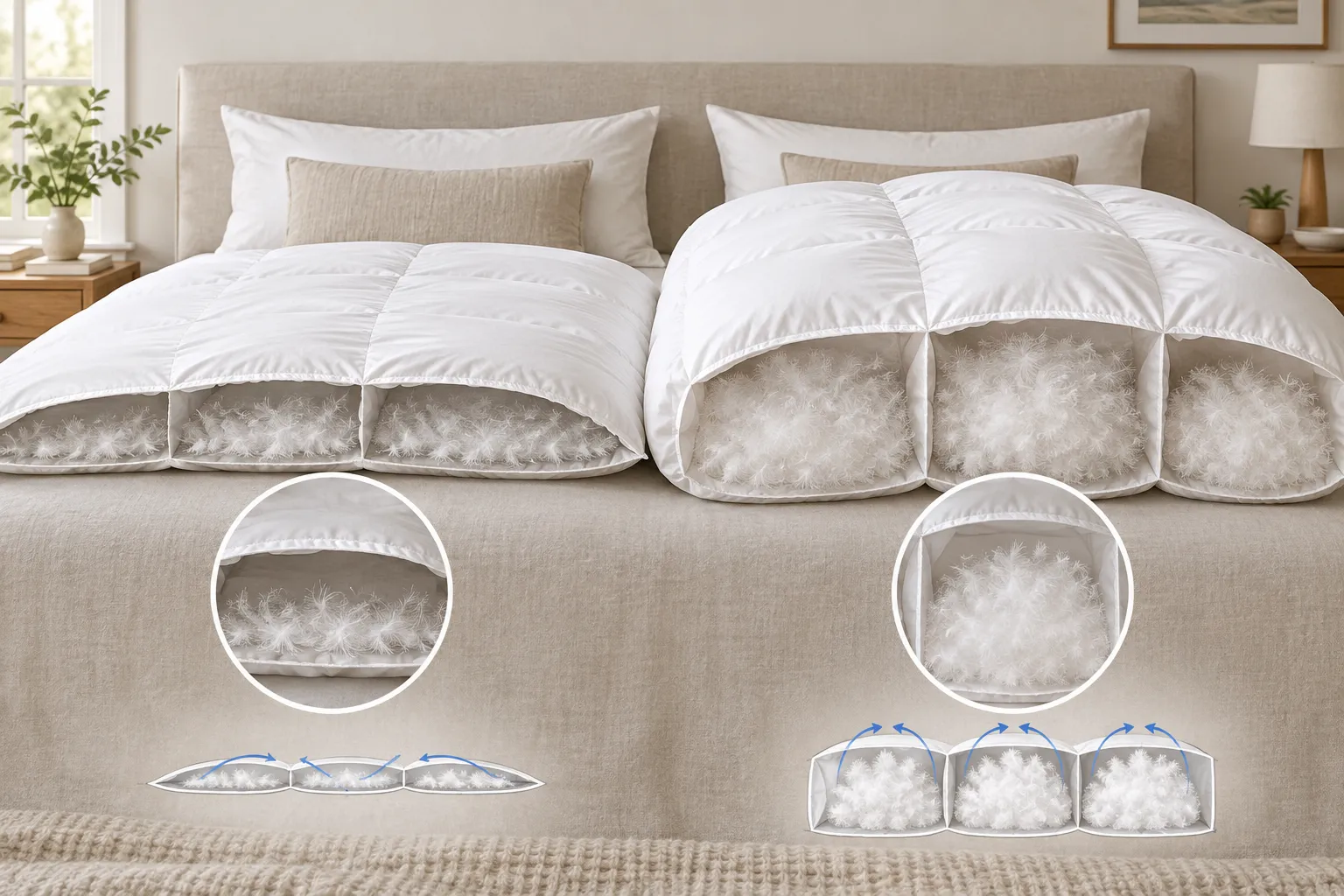
The stitching affects how warmth spreads across the bed. Baffle-box chambers leave space for down to loft; stitched-through seams can leave thinner spots. Your shell and duvet cover change the feel too. Cotton or linen may feel airier than a denser fabric, and silk or cooling-fabric shells change the surface feel. On a hot night, though, a cooling shell can’t make up for too much insulation inside.
Down and synthetic comforter fills have different loft and feel, so the same fill weight doesn’t mean the same warmth. Thread count can’t tell you on its own how cool a shell will feel; the fabric and weave matter. If you use an insert, remember that its duvet cover adds another layer.
Can a winter comforter be warm without feeling heavy?
Yes. Higher-loft down can give you winter warmth without the heft of densely packed, lower-loft fill. Compare options in the same size by both fill power and fill weight, then choose the feel you want for your bedroom.
Read product listings in this order:
Match the warmth option to how you sleep and the bedroom you have.
Compare fill weight in the same size, then read the fill type and fill power if the product uses down.
Look at the chamber construction and shell material, along with the layers you already use.
If a listing gives you nothing beyond “all-season,” you can’t compare its insulation with another brand’s in any useful way.
A simple way to make the choice
Your current bed can tell you where to start. If you sweat beneath your comforter, you need less insulation. If you wake cold beneath an all-season one, try a warmer fill or a removable layer.
Your usual night |
Best starting point |
If conditions change |
|---|---|---|
You get hot or sleep in a warm room |
Lightweight |
Add a separate layer for occasional cold nights |
Your bedroom stays fairly steady and you rarely wake too hot or cold |
All-season |
Add a blanket in winter or remove it when warm |
Your room is cold for much of winter and you wake up chilled |
Winter weight |
Store it and switch to a lighter comforter in warm months |
You and a partner disagree about warmth |
Individual layers or separate comforters |
Adjust each side without replacing the whole bed setup |
Before buying a warmer insert, sleep with an extra blanket for a few nights. If that solves the problem, keep the layer or shop for a warmer comforter. For an occasional cold night, the blanket might be enough.
The better buy for your bed
In a temperature-controlled bedroom, all-season with a spare blanket is a sensible first pick. Repeatedly chilly nights point toward winter weight; waking hot points toward lightweight.
Warmy & Tummy offers goose down comforters in different warmth levels, with shells including organic cotton, silk, linen, and cooling fabrics. Try its mix-and-match option if you want to choose the fill and the fabric together. Start with how your bedroom feels at night; then choose the combination you’ll want to pull up when you get into bed.
FAQ
Which duvet is best for winter and summer?
An all-season duvet insert is a reasonable middle choice when your bedroom temperature stays fairly steady. For cold indoor winters and hot summers, separate winter and lightweight inserts, or an attachable two-layer design, give you more control.
Which is better for winter comforter or duvet?
Neither is inherently warmer: a duvet insert and a comforter can both come in winter-weight versions. Compare the fill, construction, and warmth level; choose a duvet and cover if you want to change the outer layer without replacing the insert.
What is a good lightweight duvet for summer?
Look for a lightweight insert intended for warm rooms or hot sleepers, with a breathable cover fabric. If your bedroom is warm enough that any insulating fill feels excessive, use a light blanket or sheet instead.
Why use a comforter instead of a blanket?
A filled comforter offers an insulated main layer and a loftier feel than many flat blankets. A blanket is easier to add or remove when you only need occasional warmth, so you can use both if your bedroom temperature varies.