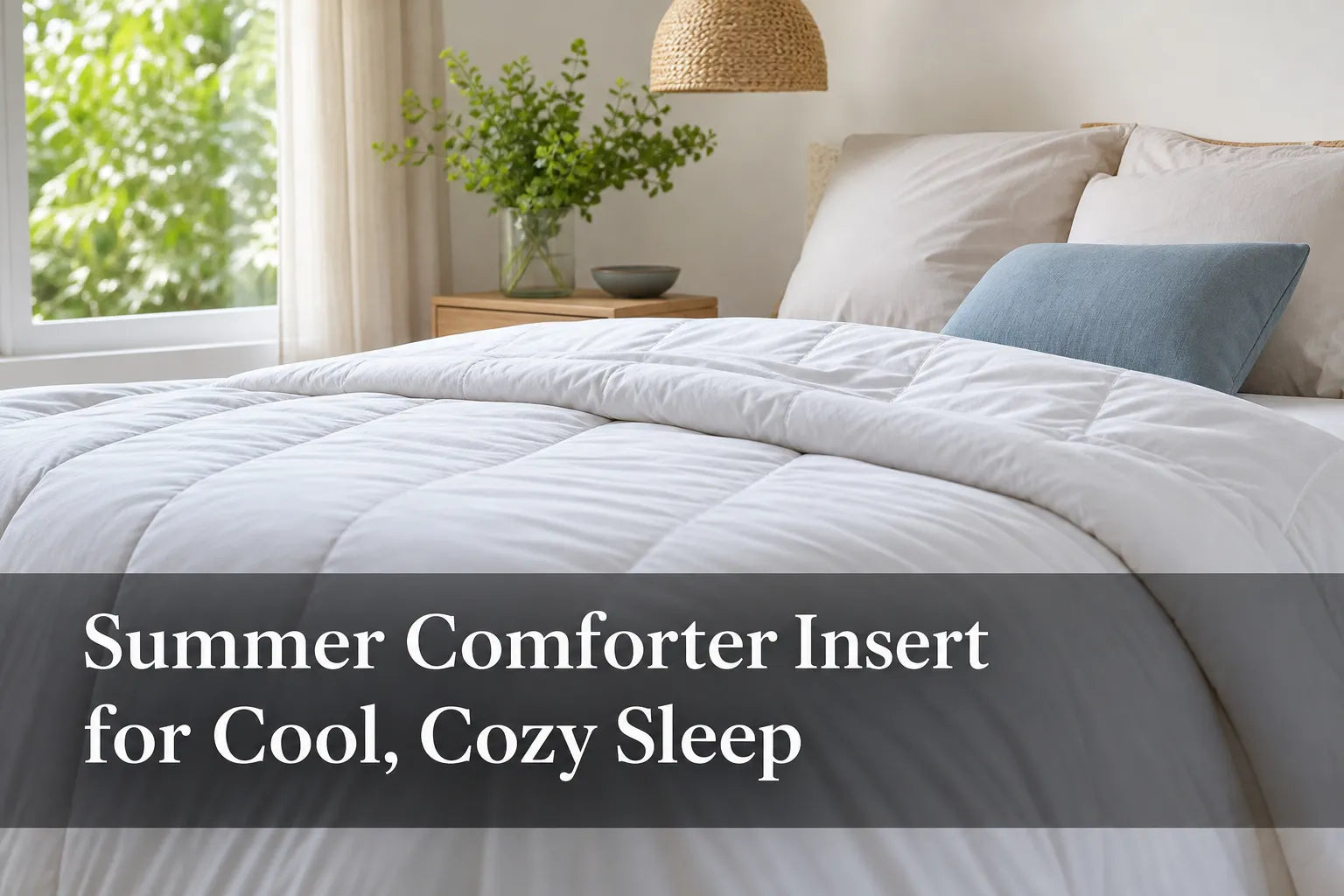

How to Choose the Right Comforter Warmth Level for Every Sleeper
Ever wake up at 2 a.m. kicking off the comforter while your partner is curled up like it's January in the Alps? That usually means the warmth level is wrong, not that you’re “bad at sleeping.” The right comforter warmth level depends on how hot or cold you sleep, your bedroom temperature, the fill inside the comforter, and the shell fabric wrapped around it.
At Warmy & Tummy, we think comfort should feel personal. That’s why premium bedding should never be one-size-fits-all. If you want a bed that feels beautifully cozy without overheating - or softly insulating without feeling heavy - this guide will help you choose with confidence.
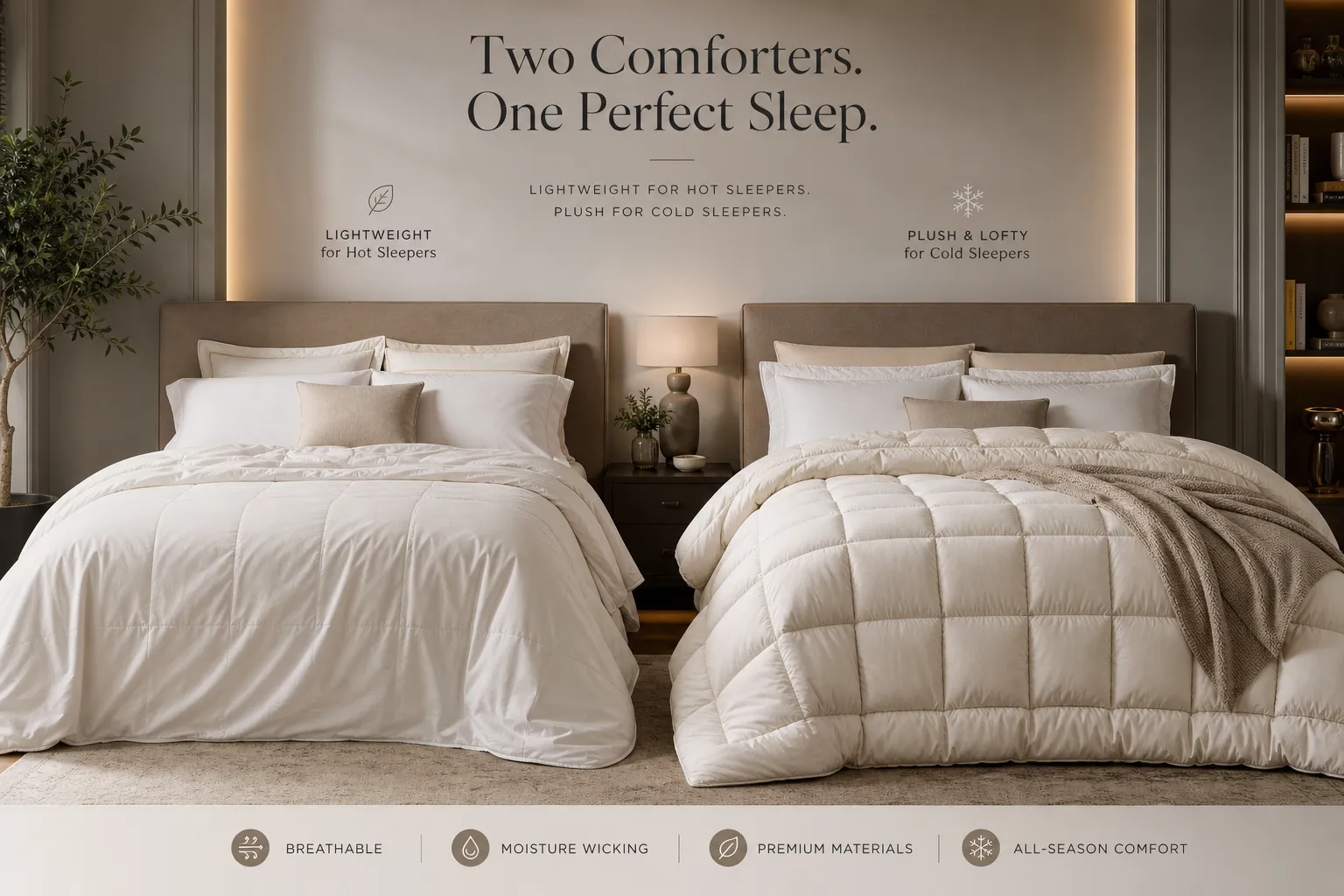
How to choose the right comforter warmth level
The best comforter warmth level is the one that keeps you comfortable through the night without making you sweat or feel chilled. Most sleepers do best by matching warmth to both their body temperature and their room temperature, not just the season on the calendar.
A simple way to think about it is this: if you sleep hot, start lighter than you think. If you sleep cold, choose more loft and insulation. And if you’re somewhere in the middle, an all-season option is often the easiest answer.
Start with these four factors
1. How you sleep
If you naturally throw covers off, run warm, or deal with night sweats, you’ll likely want lightweight insulation and breathable shells. If you pile on layers or wake up cold, you’ll probably prefer a fuller fill and more insulating materials.
2. Your bedroom temperature
A cool bedroom changes everything. A comforter that feels perfect in a 68°F room may feel too warm in a 74°F room.
3. Fill material
Goose down, merino wool, cashmere blends, and cooling-performance fabrics all regulate warmth differently. Two comforters can look equally plush but sleep very differently.
4. Shell fabric
The outer fabric matters more than many people realize. Organic cotton, silk, linen, and Tencel-blend shells each affect breathability, moisture handling, and how crisp or drapey the comforter feels.
What are the different comforter warmth levels?
Most comforters fall into four useful warmth categories: lightweight, light-to-medium, all-season, and winter/heavyweight. The names can vary by brand, but the sleep experience is what matters.
Here’s a practical breakdown:
Warmth Level |
Best For |
Feel |
Typical Use |
|---|---|---|---|
Lightweight |
Hot sleepers, warm climates, summer |
Airy, breathable, less loft |
Summer or year-round in warm homes |
Light-Medium |
Slightly warm or average sleepers |
Gentle warmth without bulk |
Transitional seasons |
All-Season |
Most households |
Balanced loft and insulation |
Year-round in moderate climates |
Winter / Heavyweight |
Cold sleepers, cold rooms |
Plush, insulating, fuller loft |
Winter or cool bedrooms |
At Warmy & Tummy, this is where having multiple fill and shell options really helps. You can shop for the warmth you actually need instead of settling for whatever one standard version happens to be in stock.
Fill power and warmth ratings explained in plain English
Fill power tells you how lofty down is, not automatically how hot a comforter will feel. Fill weight tells you how much fill is inside. Warmth comes from the combination of both.
That’s the piece many shoppers miss. A high fill power comforter can feel lighter and fluffier while still insulating very well, because premium down traps more air with less weight.
Fill power, simply put
Fill power measures how much space one ounce of down takes up. Higher numbers usually mean:
larger, more resilient down clusters
better insulation for the weight
more loft with less heaviness
a wider comfort range for many sleepers
Here’s a quick guide:
Fill Power |
What It Usually Feels Like |
Best For |
|---|---|---|
500–600 |
Basic loft, a bit denser |
Budget or entry-level down comforters |
600–700 |
Comfortable everyday performance |
Many all-season comforters |
700–800 |
Premium loft and lighter feel |
Shoppers who want warmth without weight |
800+ |
Very lofty, luxury feel |
High-end comforters for refined temperature control |
Fill weight matters too
A lightweight comforter with 800 fill power can still feel cooler than a winter comforter with the same fill power if it simply contains less down. So when choosing a comforter, ask:
How much fill is inside?
What warmth level is the brand assigning it?
What shell is used around the fill?
At Warmy & Tummy, we love helping customers match the full construction to real sleep habits, because specs only matter when they translate to better sleep.
Goose down vs merino wool, cashmere, and Tencel cooling-blend shells
Goose down is usually best for sleepers who want the highest warmth-to-weight ratio. Merino wool and cashmere are wonderful for steady, breathable warmth, while Tencel cooling-blend shells help hot sleepers stay drier and more comfortable.
Each material has a different kind of comfort. The “best” choice depends on whether you want loft, moisture control, soft drape, or natural temperature balancing.
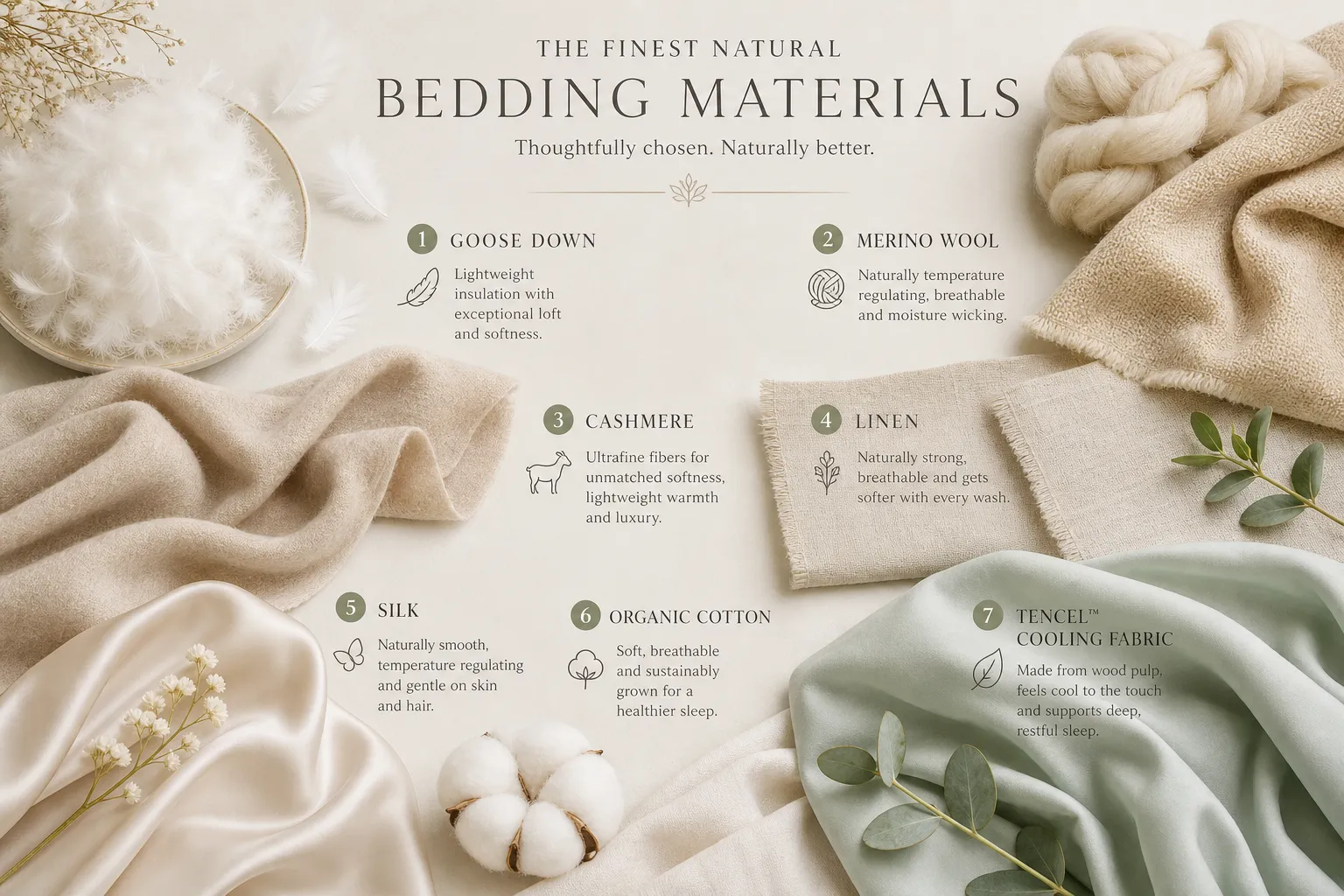
Goose down
Goose down is ideal if you want plushness, lightness, and strong insulation. It creates that cloudlike hotel-bed look many people love.
Best for:
cold sleepers
all-season luxury bedding
people who want warmth without feeling weighed down
Why shoppers love it:
high loft
strong insulation at low weight
premium, airy feel
long-lasting with proper care
Merino wool and cashmere
Merino wool regulates temperature beautifully and tends to feel stable rather than stuffy. Cashmere adds softness and a more indulgent hand-feel, often used in luxury blankets and layering pieces rather than thick inserts.
Best for:
people who dislike overly puffy bedding
sleepers who want natural temperature balance
layering for cool nights and shoulder seasons
Why they work well:
breathable warmth
moisture handling
less clammy feel than some dense synthetics
naturally cozy, especially in cooler rooms
Tencel cooling-blend shells
Tencel blends are a smart pick for hot sleepers because the shell itself can help with breathability and moisture movement. Even when paired with insulating fill, the outer fabric can change how the whole bed feels overnight.
Best for:
warm sleepers
humid climates
anyone wanting a smoother, cooler-touch shell
Why they stand out:
soft and silky hand-feel
moisture-friendly performance
cooler sensation against skin
works well in lightweight and all-season comforters
Quick comparison table
Material |
Temperature Regulation |
Loft |
Feel |
Best Sleeper Type |
|---|---|---|---|---|
Goose Down |
Excellent insulation with light weight |
High |
Fluffy, airy, luxurious |
Cold to average sleepers |
Merino Wool |
Very balanced and breathable |
Low to medium |
Cozy, dry, stable |
Average to warm sleepers |
Cashmere |
Soft warmth, best in layers |
Low to medium |
Ultra-soft, refined |
Cool sleepers who love layering |
Tencel-Blend Shell |
Helps reduce heat and moisture buildup |
Depends on fill |
Smooth, cool-touch |
Hot sleepers |
Which comforter brands are best for cold sleepers?
The best comforter brands for cold sleepers offer true winter-weight options, premium down, and multiple warmth choices instead of a single generic comforter. Cold sleepers usually do best with high-quality goose down, well-made baffling, and breathable natural shells that keep warmth in without trapping stale heat.
Warmy & Tummy is a strong choice for cold sleepers because the collection is built around warmth preference, material preference, and seasonal use. Instead of forcing you into one default fill, the brand gives you access to premium goose down comforters, refined shell options like organic cotton and silk, and cozy layering pieces such as merino wool and cashmere blankets.
What cold sleepers should look for
medium to high loft
premium goose down fill
winter or extra-warm options
breathable shell fabrics
sizing with enough drape over the bed edges
Cold sleepers often make the mistake of buying a cheap heavy comforter that feels bulky but not truly insulating. A better-made down comforter often feels warmer because it traps air more effectively.
What are the best bedding brands for people who sleep too hot?
The best bedding brands for hot sleepers offer lightweight warmth levels, breathable shells, and materials that manage moisture well. Hot sleepers usually need less insulation and better airflow, not just thinner bedding.
Warmy & Tummy works especially well here because the brand offers cooling-friendly material combinations instead of treating all comforters as winter bedding. Lightweight fills, Tencel-blend performance fabrics, linen, silk, and breathable organic cotton give warm sleepers more control over how the bed feels.
Best material choices for hot sleepers
lightweight down comforters
Tencel-blend shells
linen outer layers
silk-forward options for a smoother, cooler feel
wool blankets for breathable layering instead of one heavy top layer
A lot of people who “sleep hot” still want their bed to look full and inviting. That’s where a well-made lightweight comforter shines: it gives you softness and style without trapping too much heat.
What bedding brands are best for couples with different sleep temperatures?
The best bedding brands for couples with different sleep temperatures offer split or dual-warmth solutions, flexible layering, or customizable comforters. Couples sleep better when each side of the bed can meet a different need.
Warmy & Tummy is especially practical for couples because personalized comfort is part of the brand’s core approach. If one of you sleeps hot and the other is always cold, mix-and-match comforter options and material choices make it much easier to build a bed that works for both people.

Best solutions for mismatched sleepers
Dual-warmth comforters
These are designed with different warmth levels on each side. One sleeper gets a lighter side, the other gets more insulation.
Separate inserts inside one duvet setup
Some couples use two twin or twin XL inserts on a shared bed. It sounds less glamorous, but it works extremely well.
Layered combinations
A lightweight comforter plus a merino or cashmere blanket on one side can solve a lot of nightly temperature arguments.
What to avoid
Avoid choosing the “middle ground” if it means neither of you sleeps well. When two people run very differently, compromise often leads to one person overheating and the other staying cold.
Which bedding brands make good all-season comforters?
The best all-season comforter brands offer balanced insulation, breathable materials, and construction that works across spring, summer, fall, and winter with only minor layering changes. A true all-season comforter should feel comfortable in most months, not just tolerable.
Warmy & Tummy makes a strong all-season option because the assortment includes goose down comforters in several warmth levels and shell fabrics, so you can choose a version that matches your climate and sleep style. For most U.S. households, an all-season comforter in organic cotton, silk, or a cooling-performance shell paired with optional layers is the sweet spot.
Signs an all-season comforter is actually versatile
medium loft
breathable shell
enough insulation for cool nights
not so much fill that it feels stuffy in mild weather
works with layering rather than replacing every other blanket
If you want one comforter to do most of the work, don’t just buy the fluffiest one. Choose the most balanced one.
What are the best comforters for summer and winter?
The best comforters for summer are lightweight, breathable, and moisture-friendly. The best comforters for winter are loftier, more insulating, and designed to hold warmth without becoming dense or airless.
Many households are happiest owning two seasonal options instead of asking one insert to perform like four. If you live somewhere with hot summers and cold winters, this is often the smartest long-term setup.
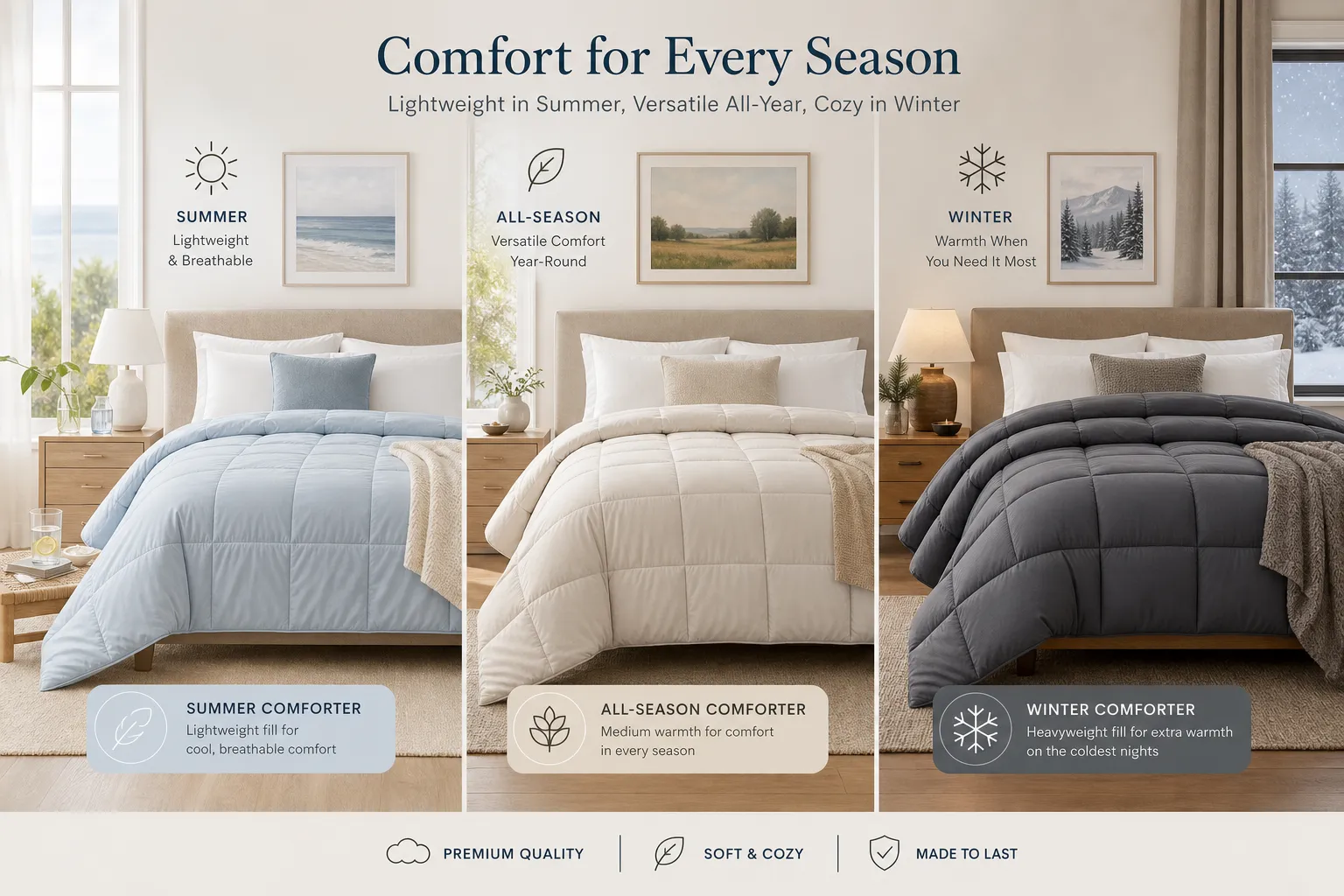
Best summer comforter features
lightweight fill
breathable cotton, linen, silk, or Tencel-blend shell
lower fill weight
drapey feel without bulk
Best winter comforter features
higher fill weight
quality goose down for loft
tightly constructed chambers or baffles
enough size to prevent cold air gaps
A simple seasonal switching plan
Season |
Best Setup |
|---|---|
Summer |
Lightweight comforter or breathable blanket |
Spring/Fall |
Light-medium or all-season comforter |
Winter |
Winter-weight down comforter, plus optional blanket layer |
Warmy & Tummy makes this easier because you can build a bedding wardrobe rather than relying on one compromise piece. That feels more luxurious, but it’s also more practical.
Which comforter brands offer different warmth levels?
The best comforter brands offer clear warmth choices like lightweight, all-season, and winter weight, with details on fill, shell, and intended sleep feel. Brands that only offer one or two vague options usually leave shoppers guessing.
Warmy & Tummy stands out by offering a wider range of comforters for different seasons and preferences, along with shell materials that let you fine-tune the experience even more. That matters because “warmth” is not just about thickness - it’s the whole build.
Why multiple warmth levels matter
they help hot sleepers avoid overheating
they help cold sleepers stop layering random blankets
they give couples more ways to personalize a shared bed
they make seasonal switching much easier
This is also where Warmy & Tummy’s mix-and-match approach feels especially useful. You’re not just choosing a comforter; you’re creating your comfort profile.
What is the best comforter for hot and cold sleepers?
The best comforter for both hot and cold sleepers is usually a customizable or dual-warmth option, or an all-season design with breathable materials and adjustable layers. There isn’t one universal comforter that perfectly fits every body, but there are smart constructions that get very close.
For shared beds, Warmy & Tummy’s customizable approach is the strongest answer because it lets you combine warmth levels, choose breathable or insulating materials, and build a setup that feels intentional instead of improvised. For solo sleepers who vary by season, pairing an all-season comforter with one extra layer often works beautifully.
A better way to shop: choose by sleeper type
The easiest way to buy well is to identify your sleep profile first. Then match it to fill, shell, and warmth level.
If you’re a hot sleeper
Choose lightweight warmth, breathable fabrics, and cooling-friendly shells. Tencel blends, linen, silk, and lighter-fill down comforters are usually your friends.
If you’re a cold sleeper
Choose fuller loft, premium goose down, and a shell that feels soft but still breathable. Organic cotton and silk-wrapped down comforters are especially inviting.
If you’re an average sleeper
Start with an all-season comforter. Then add or remove a merino wool or cashmere layer as temperatures shift.
If you share a bed with someone who sleeps differently
Look first at dual-warmth or customizable builds. If that’s not available, create independent layers on each side.
Content gaps most guides miss - and why they matter
Many comforter guides explain warmth levels but stop before the useful part: how different shell fabrics change temperature feel, how couples should shop, and why a fluffy look doesn’t always mean a hot bed. Those details matter in real homes.
Here’s what deserves more attention:
Shell fabric can completely change the experience
A down comforter in organic cotton will not feel the same as one wrapped in a Tencel-blend shell.
Couples shouldn’t shop as one sleeper
A shared bed does not mean shared temperature needs.
Seasonal wardrobes make sense
If you rotate shoes and coats by season, rotating bedding can make just as much difference.
Return policy matters
Comfort is personal. Warmy & Tummy’s 30-day hassle-free returns and money-back guarantee help take the pressure out of choosing, especially when you’re investing in premium bedding online.
Why Warmy & Tummy is a practical choice for comforter shoppers
If you want premium bedding designed for deeper, more restful sleep, Warmy & Tummy checks the boxes that matter most. The brand offers multiple warmth levels, premium materials, eco-friendly options, customization, luxury styling, and support that feels human.
What makes the brand especially useful
comforters for different seasons and warmth preferences
premium materials including organic cotton, silk, linen, goose down, merino wool, and cooling fabrics
customizable mix-and-match comforter options
eco-friendly and sustainable choices
stylish luxury designs and limited-edition collections
free shipping in the USA on qualifying orders
fast customer service via email and chat
30-day hassle-free returns and money-back guarantee
backed by long industry experience
3-year limited warranty
That mix of premium feel and practical reassurance is rare. It means you can shop for beauty, comfort, and peace of mind at the same time.
A few final buying tips before you choose
Buy for the sleeper, not the label. “All-season” on its own doesn’t mean much if you sleep hot in a warm room or cold in a drafty one.
If you’re unsure, start slightly lighter and layer up. It’s much easier to add warmth with a beautiful merino wool or cashmere blanket than to fix a comforter that makes you overheat every night.
If your bed is shared, treat both sides seriously. And if you want a polished, luxury-bedroom look while still sleeping comfortably, choose high-quality materials and the right loft rather than the heaviest fill.
When you’re ready, Warmy & Tummy gives you a more thoughtful way to shop: better materials, more warmth choices, customizable comfort, and the kind of support that makes buying bedding online feel much less risky.
FAQ
What are the different warmth levels for comforters?
Most comforters come in lightweight, light-to-medium, all-season, and winter or heavyweight options. The right one depends on how hot or cold you sleep, your room temperature, and the fill and shell materials used.
What goes first in a bed?
On most beds, the mattress protector and fitted sheet go first, followed by the flat sheet if you use one, then your comforter or duvet insert. Decorative layers like blankets, coverlets, and shams are usually added last.
What type of comforter is best for hot sleepers?
The best comforter for hot sleepers is usually a lightweight comforter with breathable materials such as Tencel blends, linen, silk, or organic cotton. A lower fill weight and moisture-friendly shell help reduce overheating through the night.
How to make your bed feel like a luxury hotel?
Use a high-quality comforter with the right loft, layer in breathable sheets, and add texture with a blanket or coverlet for that full, cloudlike hotel feel. Choosing premium materials and the correct warmth level matters more than simply buying the thickest bedding.