

Cold when you slide into bed, sweaty by 2 a.m.? Warm winter sheets should feel good when you get in and still feel good hours later. Cotton sateen is a good place to start: smooth without flannel's fuzzy insulation. If you run hot most nights, try washed linen or cotton percale.
Your comforter provides most of the warmth, while the sheets touching your body affect how it feels after you've been in bed a while. Don't judge the sheet by how thick it looks folded on a shelf.
How to choose warm winter sheets without overheating
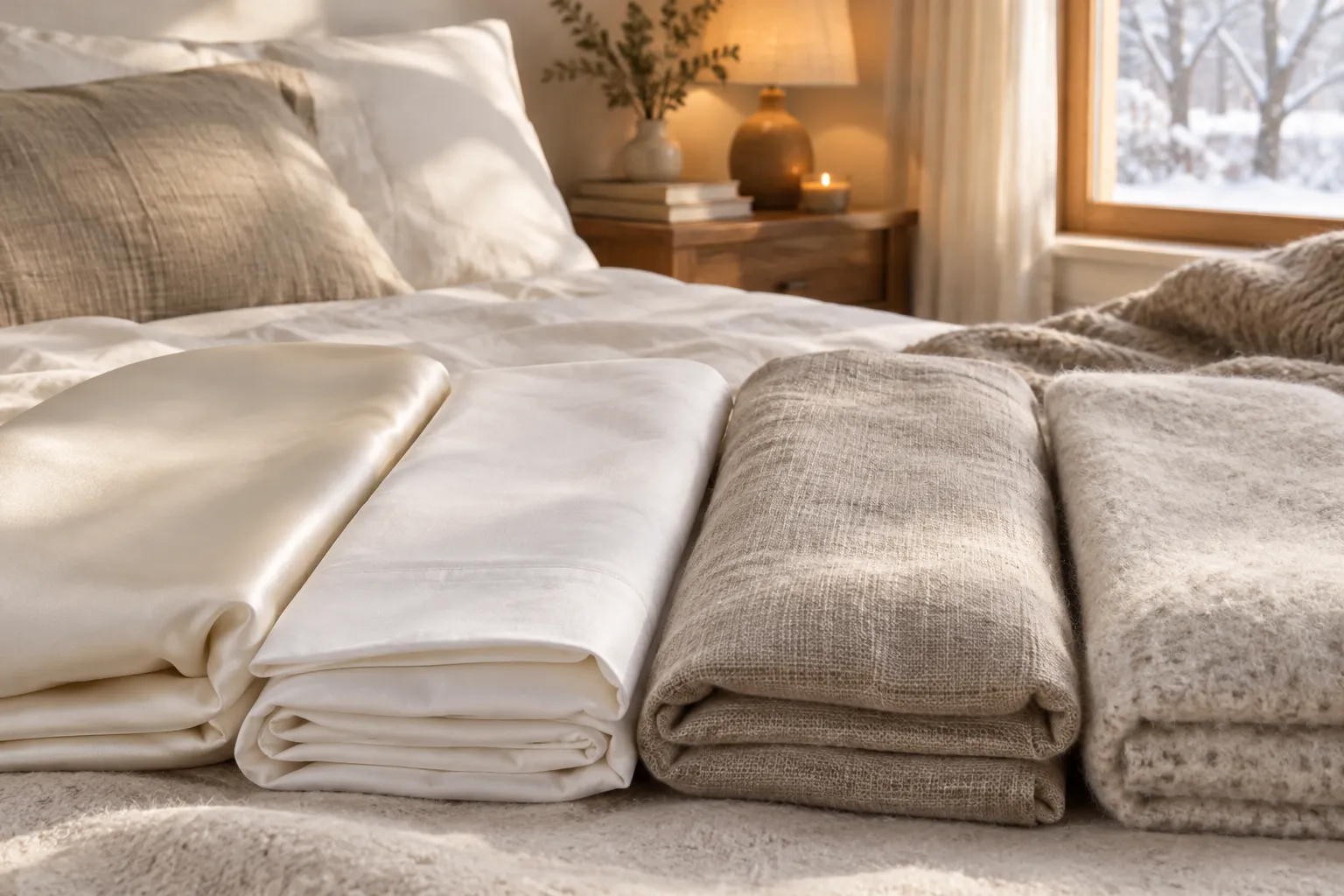
Start with surface feel, then think about airflow. Brushed flannel feels cozy as soon as you get in; cotton sateen is smooth without the fuzz. Percale and linen feel cooler at first, which may be a relief if you wake up hot.
Sheet |
Feel when you get in |
Later in the night |
Best fit |
Main tradeoff |
|---|---|---|---|---|
Cotton sateen |
Smooth, soft, less crisp than percale |
Moderately warm; can feel too close for some hot sleepers |
Cold entry, occasional overheating |
Less airy than percale |
Cotton percale |
Cool, crisp |
Airy and relatively dry-feeling |
Hot sleepers who still want a cotton sheet in winter |
Can feel chilly at first |
Linen |
Textured, sometimes cool at first |
Breathable and comfortable when temperature shifts |
Sleepers who dislike a close, silky sheet |
Texture and wrinkles aren't for everyone |
Cotton flannel |
Soft, brushed, immediately cozy |
Holds more warmth close to skin |
Persistently cold sleepers |
Can become too warm later |
How warm a sheet feels at first isn't the whole story. Think about the heat and moisture you'll feel against your skin later, too: the sheet that feels chilly at bedtime may be the one you prefer by morning.
What each winter sheet material feels like
Cotton sateen: the soft middle ground
Cotton sateen has a smooth drape rather than percale's crisp first touch. Have you tried flannel and ended up kicking it away halfway through the night? Sateen may feel more comfortable.
Sateen describes a weave. The fiber still matters: cotton sateen and synthetic sateen won't necessarily handle moisture the same way, so read the composition label. If you're sensitive to heat, even cotton sateen might feel too close compared with percale or linen.
Cotton percale: crisp and airy
Percale's plain weave feels crisp and airy. It suits the sleeper who'd rather put up with a cool first touch than wake up hot. Don't expect the instant coziness of flannel.
If you like percale against your skin, you can leave it on the bed through winter. Change what's above it on colder nights instead of switching to a warmer sheet you'll dislike once you're asleep.
Linen: relaxed feel for shifting temperatures
Linen feels more textured than sateen, but it tends to soften with use and washing. That airy, less clingy feel can be welcome if you wake up damp or overheated.
It won't feel cozy as soon as you climb in, and it tends to look rumpled. If texture irritates your skin, smooth cotton percale may be easier to live with.
Cotton flannel: warm on contact
Flannel gets its fuzz from a brushed surface called a nap. You'll notice the warmth right away if your bedroom stays cold, especially if you seldom overheat.
"Classic cotton fabrics with napped surfaces, such as flannel, moleskin and fleece, have an inherent warmth and softness." - Cotton Incorporated
Flannel might feel lovely at bedtime, then too warm a few hours later. Check the fiber content, because “flannel” doesn't guarantee cotton. If overheating is a concern, start with cotton flannel before trying a synthetic fleece-like sheet.
What matters beyond the fiber label
Cotton names the yarn's material. Percale and sateen name weaves, while flannel tells you to expect a brushed surface. That's why two sheets labeled “cotton” can feel so different at 2 a.m.
Thread count isn't a warmth rating, and it won't help you compare flannel with cotton sateen. For flannel, you may see fabric weight in GSM (grams per square meter). A heavier sheet may be warmer than you want. Cotton Incorporated's cotton sheeting guide also points to yarn, construction and finishing as factors in how a sheet performs.
Fleece and brushed microfiber feel inviting on a cold bed. But if you tend to wake up sweaty, start with cotton or linen before you buy a plush synthetic sheet for that first few minutes of softness.
Measure your mattress, including any topper, before choosing pocket depth. A fitted sheet that bunches underneath you can ruin the feel of even a lovely fabric. Follow its care label to preserve the fit and feel you bought it for.
Match the sheet to your night
If you're cold when you get in but wake up hot, try cotton sateen first. Still too close-feeling? Linen or percale may be easier to sleep on. You can also warm the bed before getting in, so the sheet doesn't have to keep you warm all night.
If you're cold from bedtime to morning, cotton flannel makes sense. Its brushed surface feels cozy as soon as you lie down; keep another sheet handy for warmer nights.
If you share a bed with someone who sleeps at a different temperature, choose a sheet the hotter sleeper can tolerate, often percale or linen. The colder sleeper can add warmth on their side without changing the fabric both of you sleep on.
A warmer welcome, without a stuffy night
For a cold start and a hot finish, try cotton sateen first. Move to linen or percale if you still feel too warm, and save flannel for nights when you stay cold through morning. The test is whether you like the sheet against your skin when you wake up.
Once you've found a sheet you like, leave it in place and adjust the warmth above it. Warmy & Tummy offers comforters and other bedding for different warmth preferences, so you can keep the fabric you enjoy against your skin. For help choosing what's on top, see Winter Bedding Layers for Cold Sleepers.
FAQ
When should I stop using flannel sheets?
Stop using flannel when you start waking up too warm or damp, even if the room still feels cold at bedtime. Try cotton sateen for a softer transition, or percale or linen if you run hot throughout the night.
Which bed sheets are the warmest?
Among cotton sateen, percale, linen and cotton flannel, flannel generally feels warmest against your skin because its brushed surface feels cozy on contact. That warmth is helpful if you stay cold, but it may be too much if you overheat later.
Which bedsheet is best for winter?
It depends on what happens after you fall asleep. Cotton sateen is a good starting point if you want a soft, warmer-feeling sheet but sometimes overheat; choose cotton flannel if you stay cold, or percale or linen if you wake up hot.