

Do you kick off the covers at 2 a.m., only to pull them back when you get chilly? Comforter too hot? You may have more insulation than you need, a cover that holds in warmth, or a room that stays warm. Try changing one part of the bed at a time before you shop for a replacement.
Comforter too hot? Find the cause
Your comforter may hold in too much heat or leave damp air against your skin. Its fill and loft matter, but so do the fabric around it, the other layers on your bed, and the temperature of the room.
What you notice |
Likely culprit |
First thing to try |
|---|---|---|
You feel hot soon after getting in |
Too much insulation or a warm room |
Remove the extra blanket; cool the room |
You wake up clammy later |
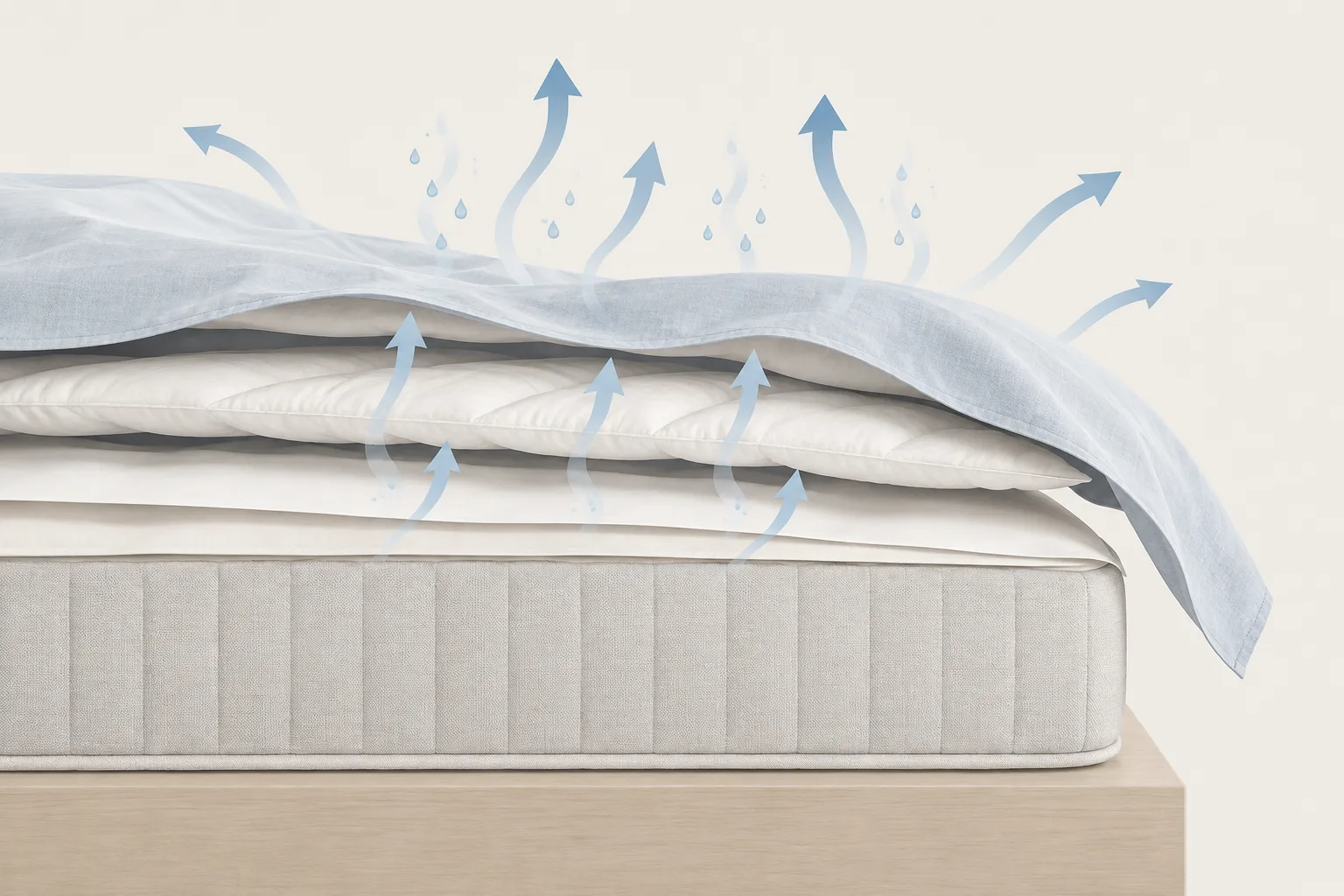
Heat and moisture collecting under the covers |
Try a lighter layer and a different cover |
The insert feels fine until you put on its cover |
The cover adds warmth or limits airflow |
Sleep with the insert alone for a night |
You’re comfortable but your partner is cold |
Different warmth needs under one cover |
Use separate covers or different weights |
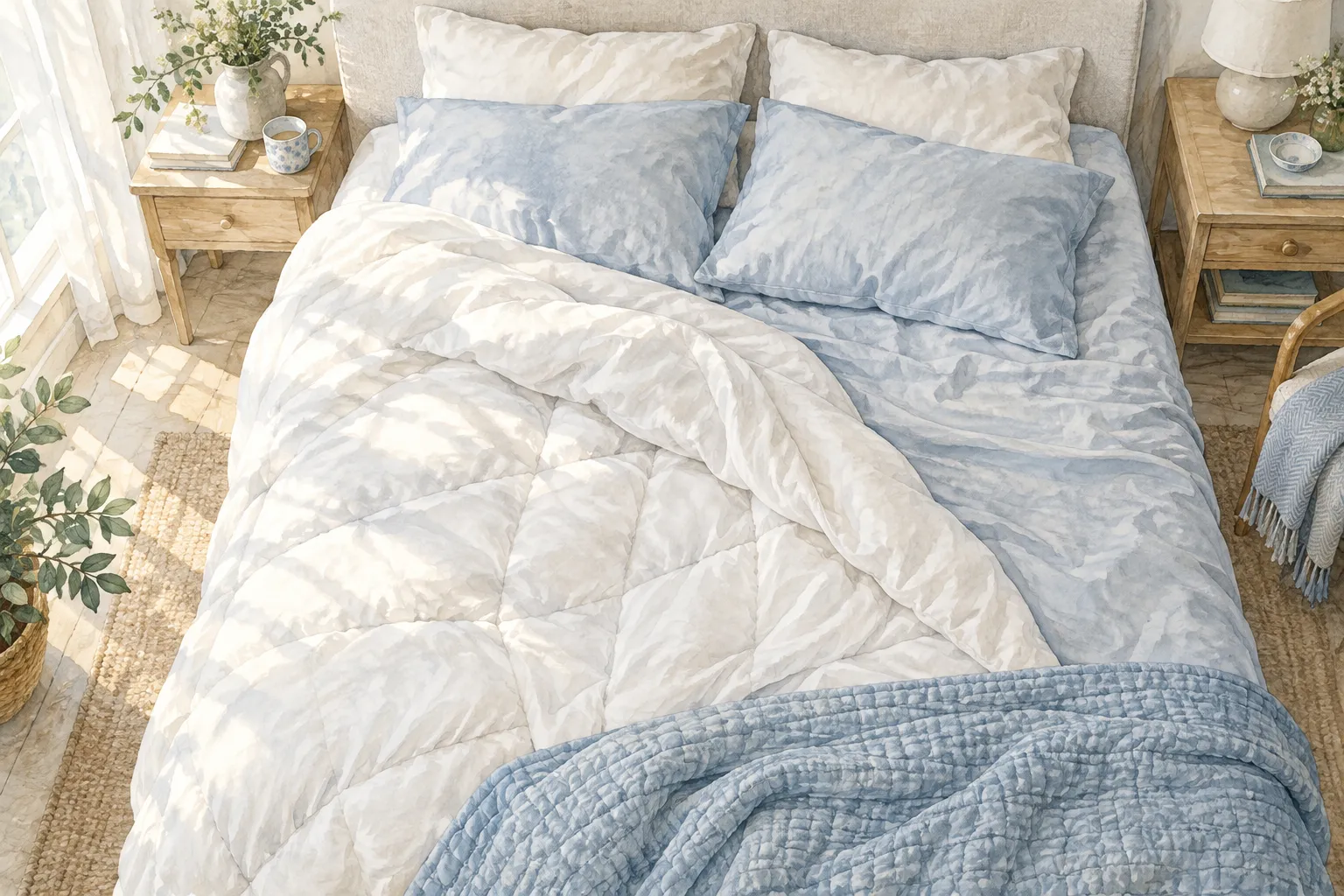
Fill and loft: fluffy doesn’t always mean cool
Fill traps air to keep you warm. A lofty down comforter might feel light in your hands yet leave you sweating in bed. A thick down-alternative insert can do the same, especially with dense fill inside a close-fitting shell.
An “all-season” label tells you little about how the comforter will feel in your summer bedroom. If you keep waking up hot, compare its warmth level and fill amount, if listed. That puffy look can be tempting, but a thinner summer-weight insert is a better starting point.
Shell fabric and duvet cover: the layer you can overlook
You may notice the duvet cover first because it touches you, yet the shell beneath it matters too. Cotton, linen, and silk covers can feel different from dense synthetic fabric. Even a breathable cover is still one more layer over the insert.
Did the heat start after you changed covers? Try the insert alone for a night if its care instructions allow it. Leave your sheets and room setting as they were so you can tell whether the cover made the difference.
Room temperature and layers can tip the balance
A lightweight comforter can feel sweltering in a stuffy room, especially under a quilt or throw. Warm pajamas, a heavy mattress protector, or flannel sheets add to the heat you feel. Before blaming the insert, look at the whole bed.
"A cool bedroom, around 60–67°F (15.6–19.4°C), supports sleep, though personal preferences vary." - Sleep Foundation
Notice when you get hot. If it happens as soon as you get into bed, start with the room and extra layers. If you wake up clammy hours later, heat and moisture may be building under the covers.
Fix a comforter that’s too hot tonight
Try the easiest fix first: take the throw or quilt off your bed. If you’re still warm, move on to the room and the duvet cover, one change at a time.
Remove the throw or quilt first. Keep the sheet and comforter, and see if that’s enough.
Let the bedroom cool before bed. Use ventilation or a fan if that’s comfortable for you; avoid aiming a draft at someone who runs cold.
Test the cover separately. If you use a duvet insert, spend a night with a lighter cover or, where care instructions permit, the insert alone.
Swap in a lighter layer. If the insert is still too warm, try a thin blanket, quilt, or summer-weight comforter rather than stacking layers under the same heavy insert.
Your partner doesn’t have to sleep under your summer-weight insert if they’re cold. Separate covers let each of you pick a comfortable weight.
Is it the insert or the duvet cover?
Keep your sheets, room setting, and insert the same for a night or two, and change the cover. If the lighter cover solves the problem, there’s no need to give up the fill you like.
If the insert is still too hot with its lightest suitable cover, save it for colder months and try a lighter one for summer. Feeling hot before you’ve pulled up the comforter points instead to the room or the layers underneath you.
Choose a comforter that isn’t too hot
If you sleep hot, shop by warmth level first. You want enough fill to feel tucked in without piling on insulation, and a shell that works with your sheets and cover. Cool-to-the-touch fabric is pleasant at bedtime; the insert’s weight affects how you feel hours later.
Choice |
What it changes |
A good fit if… |
Trade-off |
|---|---|---|---|
Summer-weight down |
Keeps some puff with less insulation than a warmer down insert |
You like the airy down feel |
It can still be too warm in a hot room |
Lightweight down alternative |
Gives a soft, filled feel without down |
You prefer to avoid down |
Warmth and moisture comfort depend on fill and shell construction |
Silk-filled insert |
Offers a flatter drape than lofty down |
You want coverage without a puffed-up feel |
It won’t mimic a plush down comforter |
Thin quilt or blanket |
Removes much of the fill altogether |
Even light inserts feel too warm |
It gives you less of that cloudlike feel |
Summer weight versus all-season weight
A summer comforter has less insulation than an all-season version of a similar design. You can still overheat under one in a warm room or beneath extra layers. If you love down, try a lighter warmth option before giving it up.
Fill power tells you how much loft a given amount of down produces; fill weight tells you how much fill the comforter contains. A high fill-power number alone doesn’t tell you how hot you’ll feel. The amount of down and the way the insert is built matter too.
What should a cooling comforter actually do?
A cooling comforter should feel comfortable hours after you fall asleep. Consider both its insulation and the way its shell and cover handle air and moisture. If your bedroom is warm, a heavy insert may still leave you sweaty, whatever the label says.
Warmy & Tummy lets you choose a warmth level alongside a shell and fill you enjoy. Its comforter range includes goose down with cotton, silk, linen, and cooling-fabric options, plus mix-and-match choices. A lightweight down comforter will still feel fuller than a thin quilt if you prefer barely-there coverage.
When sweating may not be your bedding
If you still wake up soaked after changing the bedding and cooling the room, the comforter may not be the cause. Cleveland Clinic advises seeing a healthcare provider when night sweats disrupt your sleep. A lighter insert can make the bed more comfortable, but it won’t explain unexplained sweating.
The next move for a cooler bed
Tonight, take off the extra blanket. If you’re still too warm, try a different cover before you replace the insert. That way you won’t buy a new comforter to solve a problem caused by the layer over it.
If you miss the tucked-in feeling of a comforter, Warmy & Tummy offers different warmth levels, shells, and fills so you can choose a lighter setup that still feels cozy. Start with the lightest one that gives you the coverage you want.
FAQ
What is the best comforter for the summer?
A summer-weight comforter with less insulation is a sensible first choice if you still want a filled, cozy cover. Choose the shell and cover with your room temperature and other bedding layers in mind; if even that feels warm, try a thin quilt instead.
What is the difference between a lightweight down comforter and an all-season down comforter?
A lightweight down comforter is designed for less warmth than an all-season version of a similar construction. Look at the stated warmth level and fill amount where available, since a label alone won’t tell you how it will feel in your bedroom.
Why does my comforter make me sweat?
Your comforter may be holding in too much heat or letting damp air collect under the covers. Remove an extra layer, try the insert without its usual cover if its care instructions allow, and see whether the room cools overnight. If sweating persists despite those changes, speak with a healthcare professional.
What type of duvet is best for people who sweat a lot?
Start with a lightweight duvet whose warmth suits your room, then consider how the shell and cover feel overnight. A thin, breathable cover may be more comfortable than piling layers over a heavy insert; persistent unexplained sweating calls for medical advice, too.