

Did a seam open on your favorite comforter, or did you find down on your sheets? A down comforter warranty can help with a covered defect in materials or workmanship during its stated term. Three years doesn't promise a free replacement for every problem; the written terms decide what qualifies.
What does a down comforter warranty cover?
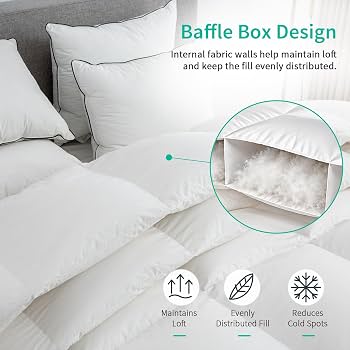
A limited down comforter warranty typically addresses manufacturing defects. A poorly stitched seam, a faulty baffle or a shell flaw that leaks fill may qualify if the written terms cover it. The seller still needs to determine what caused the problem.
What you notice |
Why it matters |
What to look for in the written terms |
|---|---|---|
An edge seam opens or stitching unravels |
It could point to a construction defect |
Are seams, stitching or workmanship covered? |
Down repeatedly escapes through an intact-looking area |
It could point to a shell or construction issue |
Does the policy address the shell and fill leakage? |
A little loose down appears at a seam |
This alone does not show a defect |
What evidence is required to establish a covered flaw? |
The comforter flattens gradually with use |
Ordinary aging is different from a manufacturing fault |
Is normal wear excluded? |
A spill stains the shell or a pet tears it |
Outside damage is different from faulty workmanship |
Are stains, accidents or pet damage excluded? |
If you spot a single cluster at a seam, take a closer look before assuming the shell has failed. Repeated loss through a split baffle or faulty-looking fabric calls for a photo of the spot and a note about when it started.
Care matters too. A snag or laundering mishap can split the shell, while stitching may come apart during ordinary use. Warmy & Tummy instructs Deluxe Silk owners to wash gently with mild detergent and dry thoroughly on low heat; follow the sewn-in label for your item.
What does a three-year limited warranty actually mean?
Three years tells you how long a stated warranty lasts. “Limited” means the seller sets conditions, such as eligible products, covered defects, exclusions and how it will resolve a qualifying claim. Read when the clock starts too: some policies use the purchase date, others the delivery date.
A three-year term doesn't predict the comforter's lifespan. Gradual loss of loft, a stain or a pet's claw mark calls for a different assessment from a faulty seam. The seller may offer repair or replacement rather than a refund if the policy says so.
The FTC's consumer warranty advice recommends reading which parts and repairs are covered, exclusions, the available remedy, how to obtain service and any costs you must pay. Those questions tell you more about usable protection than the number of years on the label.
"Whenever there’s a warranty, the law says it must be available for you to read before you buy." - FTC Consumer Advice
Down comforter warranty vs. return window
Use the return policy if you want to send back an eligible purchase. Use the warranty process if you believe you've found a covered defect. You may still have warranty coverage after the store's return window closes.
Situation |
Better starting point |
Why |
|---|---|---|
The unopened comforter isn't the warmth you wanted |
Return or exchange policy |
Preference isn't necessarily a defect |
A new item arrives damaged, defective or incorrect |
Contact the seller promptly |
The seller needs to assess the delivery issue |
Stitching separates after use |
Warranty terms and support |
It may be a workmanship issue, depending on cause |
You spill coffee on it months later |
Care or replacement |
A warranty doesn't automatically insure accidents |
Warmy & Tummy's current return policy gives you 30 days from delivery to request a return for an eligible item. For a standard free return, the item must be unused and in the condition received, with its tags, original packaging and proof of purchase. The policy excludes custom or personalized products, sale items and gift cards. Once approved, an eligible standard return gets a free label. A used comforter doesn't qualify for that standard path, although the team may separately approve a donation-based return for a clean, usable comforter. Warranty coverage follows different terms.
How to compare comforter warranties before you buy
Start with what happens if your comforter fails. Policies with the same length can cover different components and ask you to pay different costs.
Coverage: Does the written policy name defects in the shell, seams, stitching, baffle construction or filling? Is it for the whole comforter or selected components?
Exclusions: How does it treat normal wear, laundering contrary to the care label, stains, accidental tears and pet damage?
Timing and eligibility: When does coverage start? Does it apply to your exact model, a gifted item or a personalized version?
Remedy and costs: Is the outcome repair, replacement or refund? Who pays shipping, and is proof of purchase required?
Claim route: Is there a clear contact method, and does the seller ask for order details, photos or the item itself?
If you can see only the warranty's duration, you can't tell how it handles a seam or fill problem. Ask for the written terms before you rely on the promise.
What Warmy & Tummy publishes about its comforters
Warmy & Tummy describes a three-year limited warranty in its site messaging. Its product and return pages don't specify which defects the warranty covers, what it excludes, how claims work or which remedies it provides. If a seam fails or fill leaks, send the care team your order number and photos and ask for the written warranty terms.
The Deluxe Silk Goose Down Comforter has a silk-cotton sateen shell and 800-fill-power European goose down, with Light, All Season and Ultra Warm choices. Warmy & Tummy recommends a duvet cover to protect the shell. If you're weighing warmth against loft, its fill power and fill weight explainer can help you choose. None of these product features changes the warranty terms.
What to do if your comforter develops a problem
Before you patch a hole or pull out loose fill, take photos of the whole comforter and the trouble spot. A close-up may show whether a seam opened or the shell snagged. Note when you first saw the damage.
Find your order confirmation and the care label, then photograph the defect before washing, patching or pulling out loose fill.
Describe the location, when you first noticed it and whether the shell or stitching is visibly damaged.
Contact the seller using its published support route and ask what the written warranty provides for this issue. Warmy & Tummy's return policy says to contact its team immediately about items that arrive damaged, defective or incorrect and to wait for instructions before shipping anything.
For a claim, the written coverage and the cause of the damage matter as much as the date. If you're buying, choose a shell and warmth level that feel right for your bed, then read the return rules and request the warranty terms. Warmy & Tummy gives you several warmth choices and a published return policy, so you can make the comfort decision without guessing about your return window.
FAQ
When to get a new down comforter?
Consider replacing it if persistent fill loss, a torn shell or lasting loss of loft leaves you cold. If a seam or fabric flaw appears during the warranty period, send the seller photos first. A covered defect may qualify for a remedy other than buying a new comforter.
How to wash a comforter?
Follow the sewn-in care label for your comforter. For Warmy & Tummy's Deluxe Silk comforter, the product page calls for a gentle machine cycle with mild detergent, no fabric softener and thorough drying on low heat. Washing against the label's instructions can complicate a defect claim.