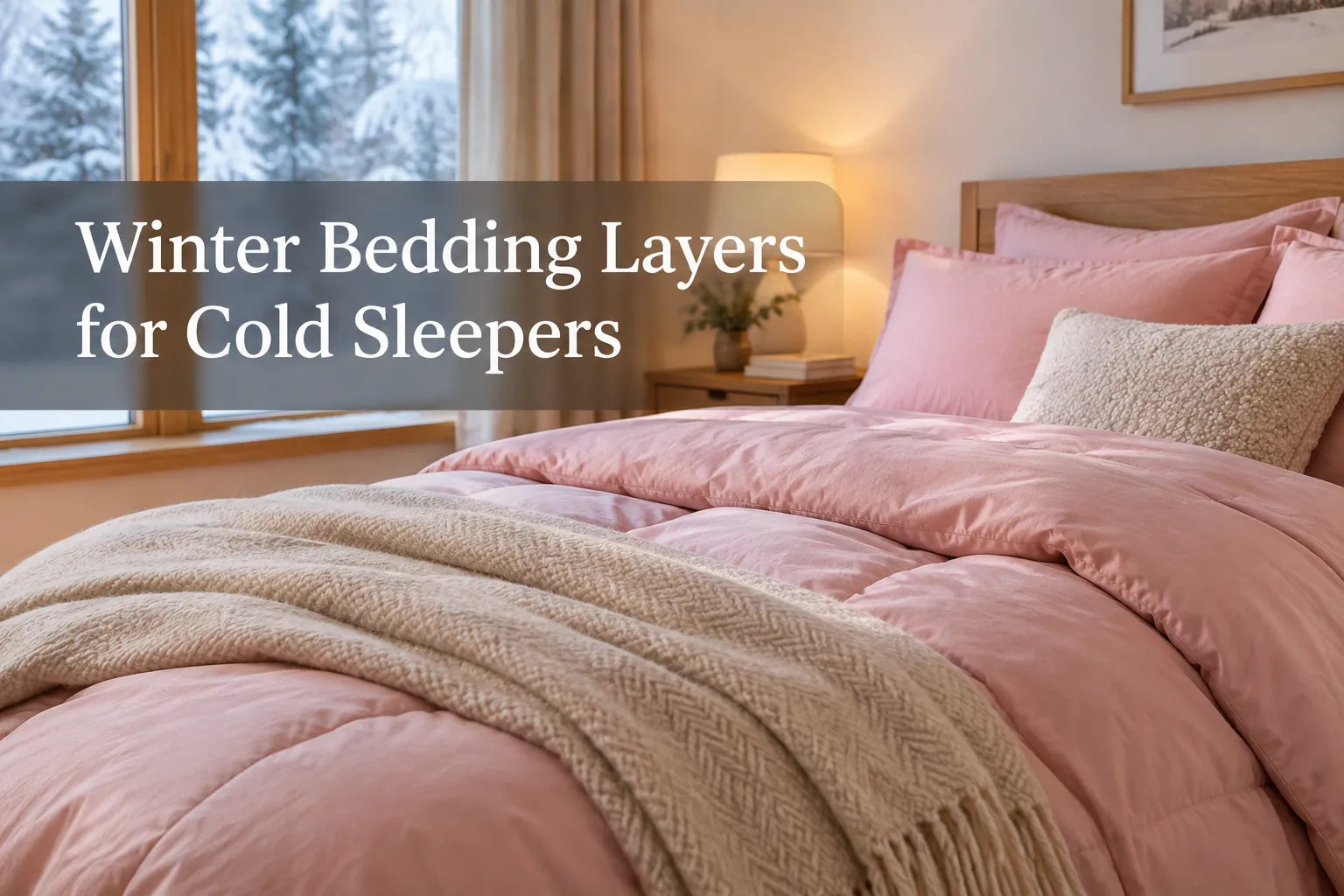

Do you kick off the covers at midnight, then reach for them again by morning? The difference between quilt and comforter styles comes down to loft and insulation. A quilt lies flatter and is easy to layer; a comforter gives you more puff and, in most cases, more warmth on its own. If you run hot, try a quilt first. If you're tired of piling on covers, try a comforter.
Difference between quilt and comforter at a glance
A quilt sandwiches a thin middle layer between its top and backing, then holds the layers together with stitching. A comforter holds a loftier fill between two fabric faces. Both may have stitched patterns, so feel the thickness rather than judging by the seams.
What matters |
Quilt |
Comforter |
|---|---|---|
Feel on the bed |
Flatter, with less loft |
Puffier, with more loft |
Typical warmth |
Lighter alone; easy to add layers |
Warmer alone, depending on fill and weight |
Bed-making |
Folds neatly and layers easily |
Creates a full, plush top layer |
Laundry |
Often easier to fit in a washer, but construction matters |
Bulky fills may need a larger washer; follow the care label |
Best starting point |
Warm rooms, hot sleepers, adjustable layers |
Cool rooms, cold sleepers, one-piece coverage |
Some thick quilts feel warmer than lightweight comforters. The fabric and fill change the result.
Warmth isn't the same as weight
A quilt feels flatter and makes it easy to peel back a layer. A comforter's lofty fill holds warm air, though the fill and construction affect how warm it feels. Try a quilt with a sheet or light blanket if you like a smoother bed.
Which sleeps better in summer or winter?
For summer, try a quilt first: its thinner build tends to feel less insulating. In winter, you may prefer a warm comforter that works on its own. A chilly bedroom can change that summer choice, just as a warm bedroom can change your winter one.

"In an in-home study of older adults, sleep efficiency dropped by 5–10% as nighttime bedroom temperature rose from 25°C to 30°C." - Nighttime ambient temperature and sleep in community-dwelling older adults
In a warm bedroom, lay a quilt over your sheet and fold it toward the foot if you get hot. In a cool room, a comforter saves you from arranging several layers. Use the quilt alone in summer and add the comforter when temperatures fall. If you and your partner disagree about warmth, separate covers may spare you a nightly tug-of-war.
The hot-sleeper and cold-sleeper test
If you throw off your bedding, a lighter cover gives you somewhere to start. Waking up cold calls for a warmer comforter or another layer. Pay attention to the shell fabric and fill when you choose your warmth level.
Can a quilt replace a comforter?
Yes, a quilt can replace a comforter if it keeps you comfortable all night. It suits a warm sleeper who prefers a flat bed, and you can add layers as the seasons change.
Lay the quilt over your sheets as the main cover, then pull on a blanket or comforter for colder nights. You can also use a comforter on its own.
Does a quilt go over or under a comforter?
You can place a quilt over or under a comforter. Keep the comforter below it for warmth close to you and a top layer you can toss aside. If you love the comforter's fluffy look, keep it on top and fold the quilt across the foot.
If your bed feels... |
Layer it this way |
|---|---|
Too warm |
Sheet, then quilt |
Too cold |
Sheet, comforter, then quilt if needed |
Comfortable but you want a layered look |
Sheet, comforter, quilt folded at the foot |
Begin with a fitted sheet and, if you use one, a top sheet. On warm nights, leave the extra cover folded at the foot.
Which is easier to wash and live with?
A thinner quilt often takes less effort to launder and store than a bulky comforter. The care label still decides what you can wash at home, and a large comforter may not fit your washer.
Match the cover to your machine's capacity and follow its cleaning instructions. A comforter needs space to move and dry as directed. A “machine washable” label won't solve a too-small drum.
For storage, a quilt folds flatter, while a comforter takes up more closet space. That may sway you if you keep seasonal bedding in a small closet.
Where does a duvet fit?
A duvet is an insert for a removable duvet cover. A comforter has its outer fabric attached, so you can use it without a separate cover. A quilt is the flatter, stitched finished layer. Those distinctions help when a product name alone doesn't tell you what you'll put on the bed.
Choose a duvet if you want a removable cover to wash or swap. For one finished piece, choose a quilt or comforter. Quilt and duvet can mean different things across regions, so look at the construction.
How to choose yours
Picture the bed on a night when you can't get the temperature right:
If you overheat, try a quilt or lighter comforter. If you wake up cold, choose a warmer comforter or leave room for another layer.
For a smooth bed, pick a quilt. For a puffier one, choose a comforter.
Consider laundry and storage before you buy. The cover needs to fit your washer and your closet.
If you want to swap layers with the seasons, use a quilt alone in warm weather and add it to the bed in winter.
If you like a flat, light bed, a quilt is the better place to start. For a plush cover you can tailor to your room, try Warmy & Tummy's comforters: you can choose among shells, fills and warmth levels. Its comforters won't give you the flat feel of a quilt. Start with the warmth you need, then pick the fabric you'd want to pull up at bedtime.
FAQ
Is a quilt cover the same as a duvet cover?
Sometimes the names refer to the same removable cover, especially where “quilt” is used for a duvet insert. A finished, stitched quilt doesn't normally need a cover. Look at whether the product is a removable fabric shell or a filled bed covering before you buy.