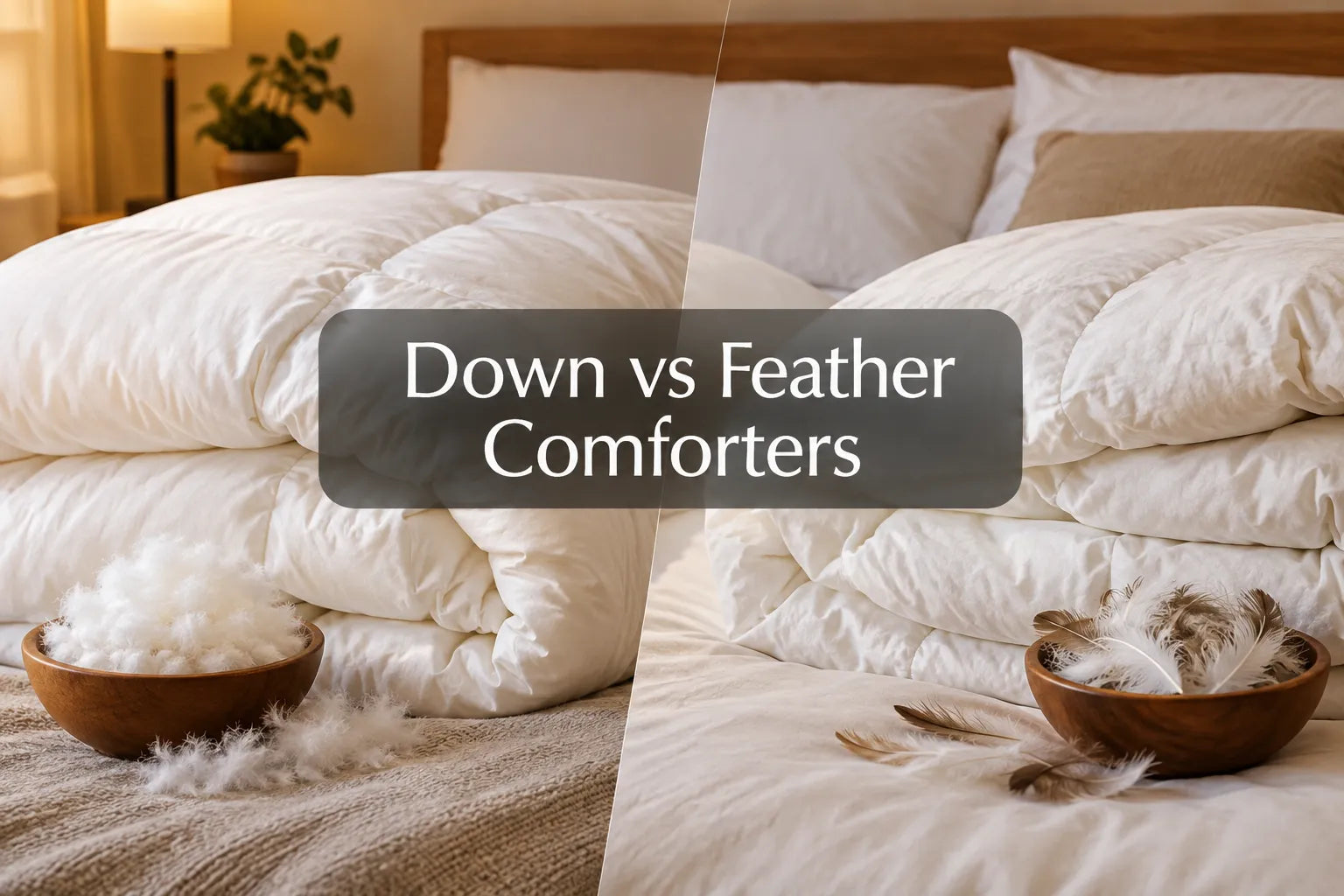
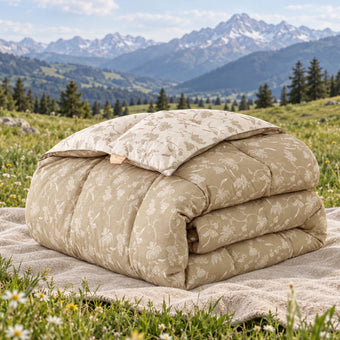


One holiday guest pulls the comforter up to their chin; the next kicks it off by morning. For the best warm comforters for winter guests, start with an all-season option and keep a warmer one nearby. Breathable sheets help the person who runs hot.
This works in a spare bedroom, on a pullout sofa or with an air mattress. Ask about allergies before anyone arrives, too. It's nicer to swap a pillow or fill now than to remake the bed after midnight.
Best warm comforters for winter guests: choose warmth you can adjust
For a guest bed, start with an all-season comforter and keep a winter-weight one for someone who sleeps cold. A hot sleeper can use the base comforter or fold it down; a cold sleeper can swap in the warmer one.

Comforter choice |
Best guest situation |
What to watch for |
|---|---|---|
All-season down |
Mixed sleep preferences and a room that isn't especially cold |
It may not feel warm enough to a cold sleeper on its own |
Winter-weight down |
A cold sleeper or a chilly guest room |
It can be too warm for someone who runs hot |
Down alternative |
A guest who prefers to avoid feather or down fill |
Warmth and care needs vary by product; read its label |
How do you tell if a comforter will actually be warm?
Look at the stated warmth level, fill amount, shell and guest-room temperature. Fill power describes down's loft, not a universal temperature rating; a high-loft comforter with little fill can still be lighter than a generously filled winter version. Read the warmth designation instead of judging by how puffy the comforter looks.
Compare fill weights within the same bed size. If one insert is much larger, the number tells you less about how warm it will feel. Check that the stitching keeps fill spread across the bed, rather than letting it shift away from your guest.
Choose a breathable duvet cover you can remove for washing. Put the warmer comforter on a shelf or at the foot of the bed, and tell your guest they can use it. Otherwise, they may spend the night cold rather than rummage through your closet.
Build a guest bedding kit before the holidays
Keep the spare bedding together so a last-minute arrival doesn't send you hunting for pillowcases. If both comforters look alike, add a note identifying the warmer one.
A fitted sheet, flat sheet and pillowcases in a breathable fabric
An all-season comforter with a clean duvet cover
A separate warmer comforter or washable extra blanket for cold sleepers
A lightweight blanket for someone who wants coverage without much heat
An alternate pillow and a non-down fill option if a guest needs one
A mattress protector and a spare set of pillowcases
Make the bed with the all-season setup and put extra layers somewhere visible. If you want the order of sheets, covers and throws, the guest bedroom layering guide walks through it.
Bedding for hot sleepers, cold sleepers and allergies
Guests can choose their warmth if you leave a lighter and a warmer option available. Before you make the bed, ask, “Do you tend to sleep hot or cold, and are there any bedding materials you're allergic or sensitive to?”
For a guest who sleeps hot
Start with breathable sheets and the all-season comforter. Cotton or linen sheets can feel less clingy than a plush, heat-holding set. Leave a light blanket where your guest can use it in place of the comforter, and skip the decorative fleece throw if the room is warm.
For a guest who sleeps cold
Offer the winter-weight comforter as a swap, with a second blanket at the foot of the bed. If your guest arrives late, they'll appreciate finding the extra layers without waking you. Keep the lighter comforter available for whoever stays next.
For a guest with allergies or sensitivities
Ask what bothers your guest. The word “hypoallergenic” on a label won't tell you if they need to avoid down, feathers, fragrance or dust. Have clean bedding, a clean mattress protector and an alternate fill that suits their answer.
Wash sheets and pillowcases before the visit with a detergent your guest can tolerate, and avoid scented fabric sprays if you don't know their preferences. If a guest tells you they have a serious allergy, use their stated requirements for the comforter, pillows and laundry products.
For a guest sensitive to dust mites, allergen-resistant covers on the mattress and pillows are worth considering. Follow each item's care label when laundering.
"Encase mattresses and pillows in allergen-impermeable covers, and wash bedding and blankets weekly at 130–140°F to kill mites." - National Institute of Environmental Health Sciences
Make sofa beds and air mattresses warmer
Sofa beds and air mattresses need a layer underneath the sleeper as well as a comforter on top. Air can move beneath them, leaving your guest cold from below even under a thick duvet.
Sofa bed
Open it early so you can feel for bars, dips and drafts. Add a well-fitting mattress pad or topper beneath the fitted sheet, then make the bed with the same all-season setup you'd use in the guest room. If the sofa sits near a window, move it away from drafts where practical, and leave a warmer blanket nearby.
Air mattress
Put the inflated mattress on a rug or other insulated surface rather than a bare, cold floor when you can. Use a mattress pad or a securely tucked blanket beneath the fitted sheet to soften the surface and add a layer between the sleeper and the air inside. Keep bulky bedding off the inflation valve, and test the mattress before guests arrive so you can top it up if needed.
Set up the bed before guests arrive
Wash the sheets and set out a bed your guest can adjust without removing a stack of decorative layers. Check care labels before cleaning the comforter, and air or launder stored bedding as its instructions allow. Leave the spare pillow and warmer layer in view, not buried in a closet.
If two people share the bed but sleep at different temperatures, offer separate blankets. Give each enough room to pull up or kick off a layer without disturbing the other.
A guest bed they can make their own
Make the bed with the all-season comforter, then show your guest the cooler and warmer choices. For a guest kit you'll use again, Warmy & Tummy has comforters with different shell and fill choices, plus sheets and blankets. You can use its mix-and-match comforter to choose for the room and the people who visit. Warmy & Tummy customers often hear from guests that the bed feels comfortable. Giving them a choice of layers is a good way to make that happen without a midnight bedding change.
FAQ
How often should you wash a comforter?
Follow the comforter's care label, since fill and shell materials need different handling. Between holiday visits, wash sheets and pillowcases, clean the removable duvet cover, and assess whether the insert needs washing or airing before you store it.
Are comforters for summer or winter?
Both. Comforters come in lighter, all-season and warmer options, so choose according to the sleeper and the room rather than the season alone. An all-season base plus a winter-weight swap works well for guests with different preferences.
What is the best material for bed sheets to stay warm in winter?
A warmer-feeling sheet can be comfortable for a cold sleeper, but it may be too much for a hot sleeper. For a shared guest setup, start with breathable cotton sheets and offer a separate blanket for extra warmth; let the guest adjust their layers.