
Comforters Sets: Best Styles for Better Sleep
Ever wake up in the middle of the night because you're too hot, too cold, or tangled up in bedding that looked pretty online but feels wrong in real life? The right comforters sets can fix more of your sleep problems than most people realize.
A well-chosen setup should feel soft, regulate temperature, suit your style, and make bedtime easier. That’s why this guide breaks down comforter and duvet choices, materials, warmth levels, and what actually matters when you're shopping for long-term comfort.
What are comforter sets, really?
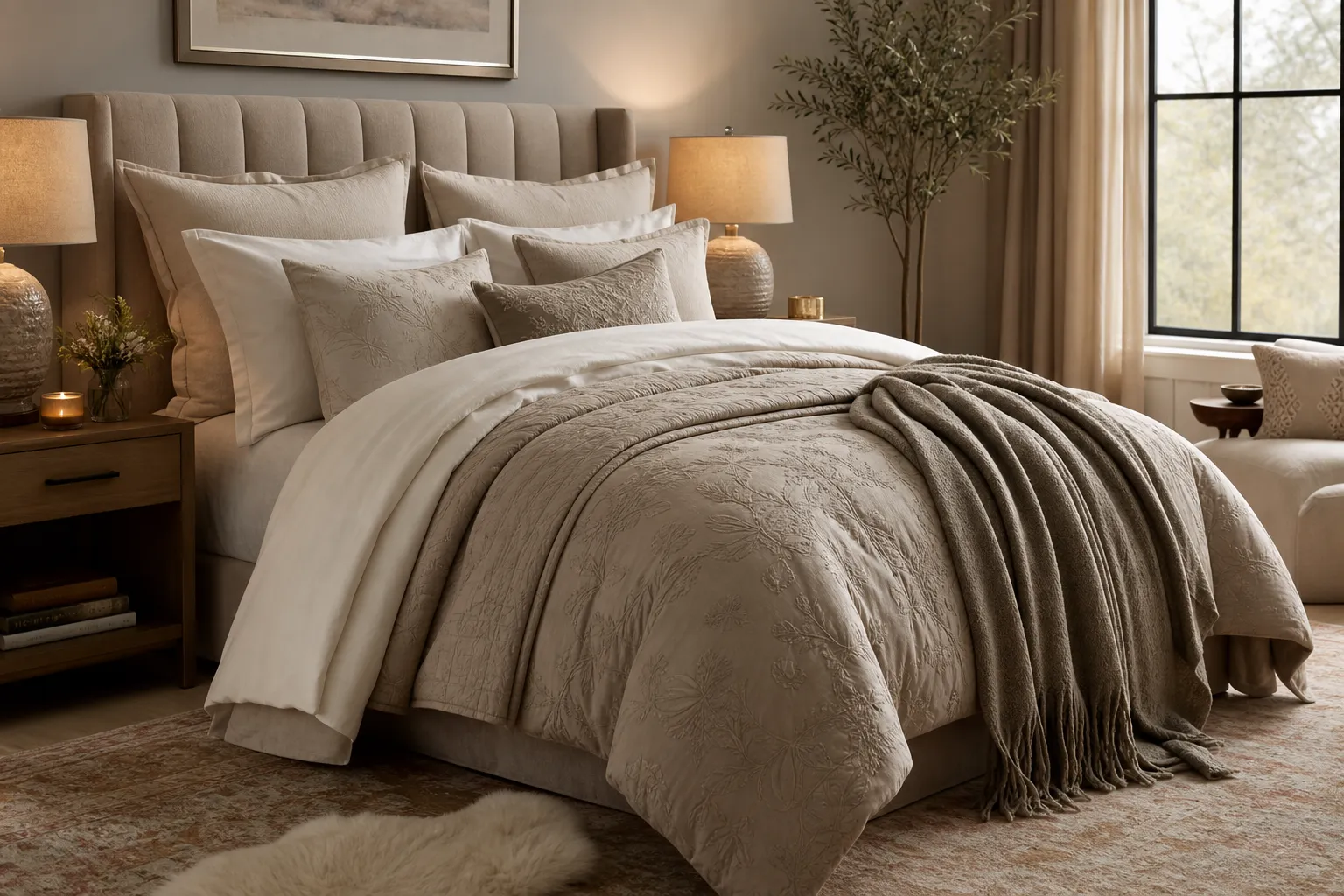
Comforter sets are coordinated bedding bundles that usually include a comforter and matching pillow shams, and sometimes decorative pillows or bed skirts too. They’re made to give you an easy, finished bed without needing to piece every element together yourself.
That simplicity is part of the appeal. But the best comforter sets don’t just match visually. They also help you sleep better by pairing the right fill, shell fabric, size, and warmth level for your body and bedroom.
Many shoppers focus on color first, then regret the feel later. A better approach is to start with sleep comfort, then layer in style.
Comforter vs duvet: which one is better for sleep?
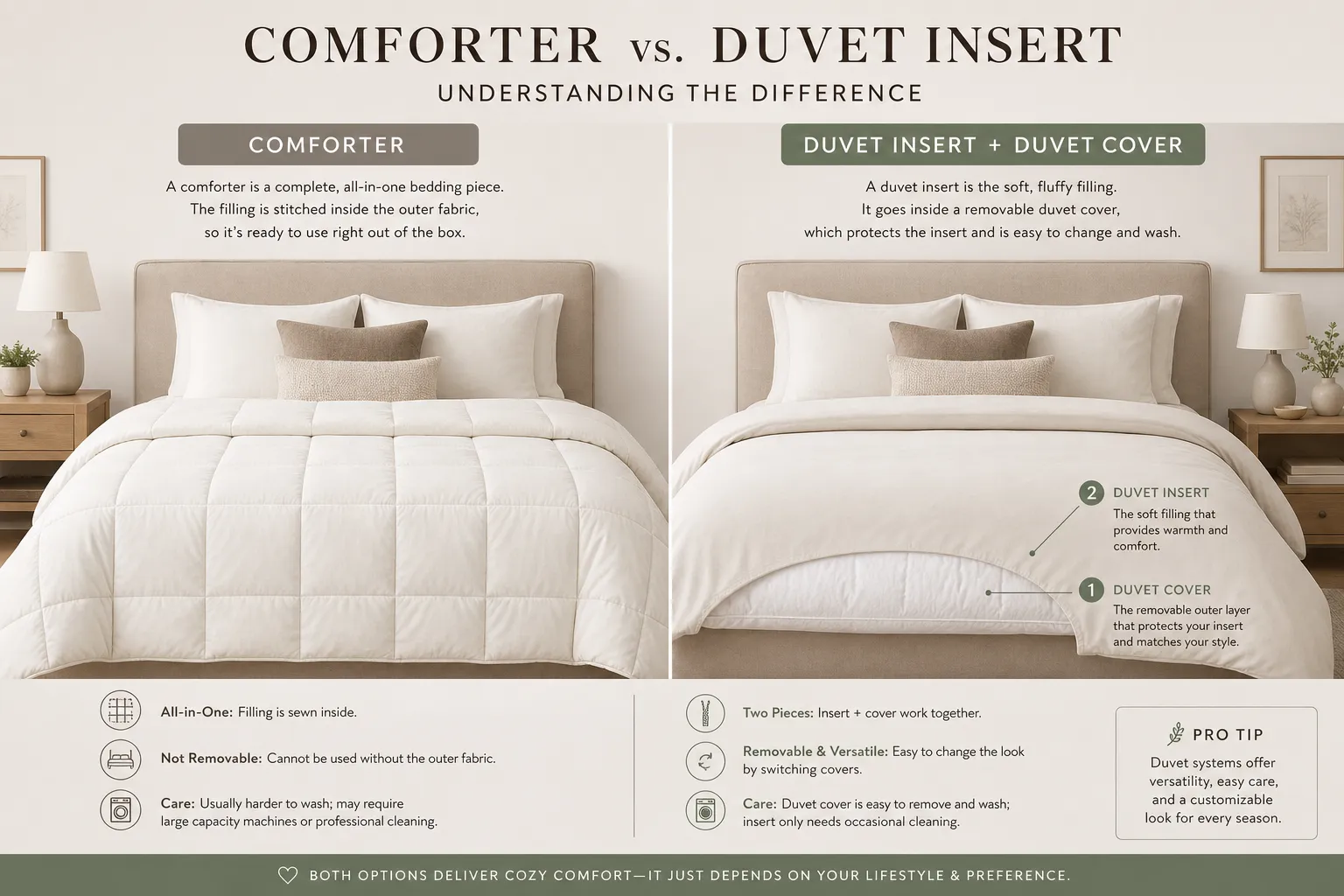
A comforter is a finished top layer you can use on its own. A duvet is an insert that usually goes inside a removable cover.
If you want the short answer: comforters are easier for grab-and-go styling, while duvets are more flexible and easier to refresh seasonally. The better choice depends on how you sleep, how often you wash bedding, and how much control you want over the final look.
Quick comparison: comforter and duvet
Feature |
Comforter |
Duvet |
|---|---|---|
Ready to use |
Yes |
No, needs a cover |
Easy to wash |
Sometimes |
Usually easier because you wash the cover |
Style flexibility |
Moderate |
High |
Fluff and loft |
Often plush |
Depends on insert |
Best for |
Simple bedding shoppers |
People who like to switch looks or protect inserts |
A lot of people search for a comforter and duvet as if they’re interchangeable, but they’re not exactly the same. If you love a polished bed with minimal effort, comforters & sets make sense. If you like changing your bedding by season or want to protect a premium insert, a duvet system often wins.
How comforters sets affect sleep quality
Your comforter influences body temperature, sensory comfort, and how settled you feel once you get into bed. If it traps too much heat, feels scratchy, or shifts around all night, your sleep suffers.
The best bedding setup keeps your temperature more stable and feels soothing from the first minute. That’s especially important if you sleep hot, share a bed, or live somewhere with real seasonal changes.
One thing competitors often skim past is sleep customization. Not every adult or couple needs the same loft or warmth. That’s where Warmy & Tummy stands out: instead of settling for one generic fill, you can choose premium materials, different warmth levels, and mix-and-match options that fit how you actually sleep.
Best comforter materials for different sleepers
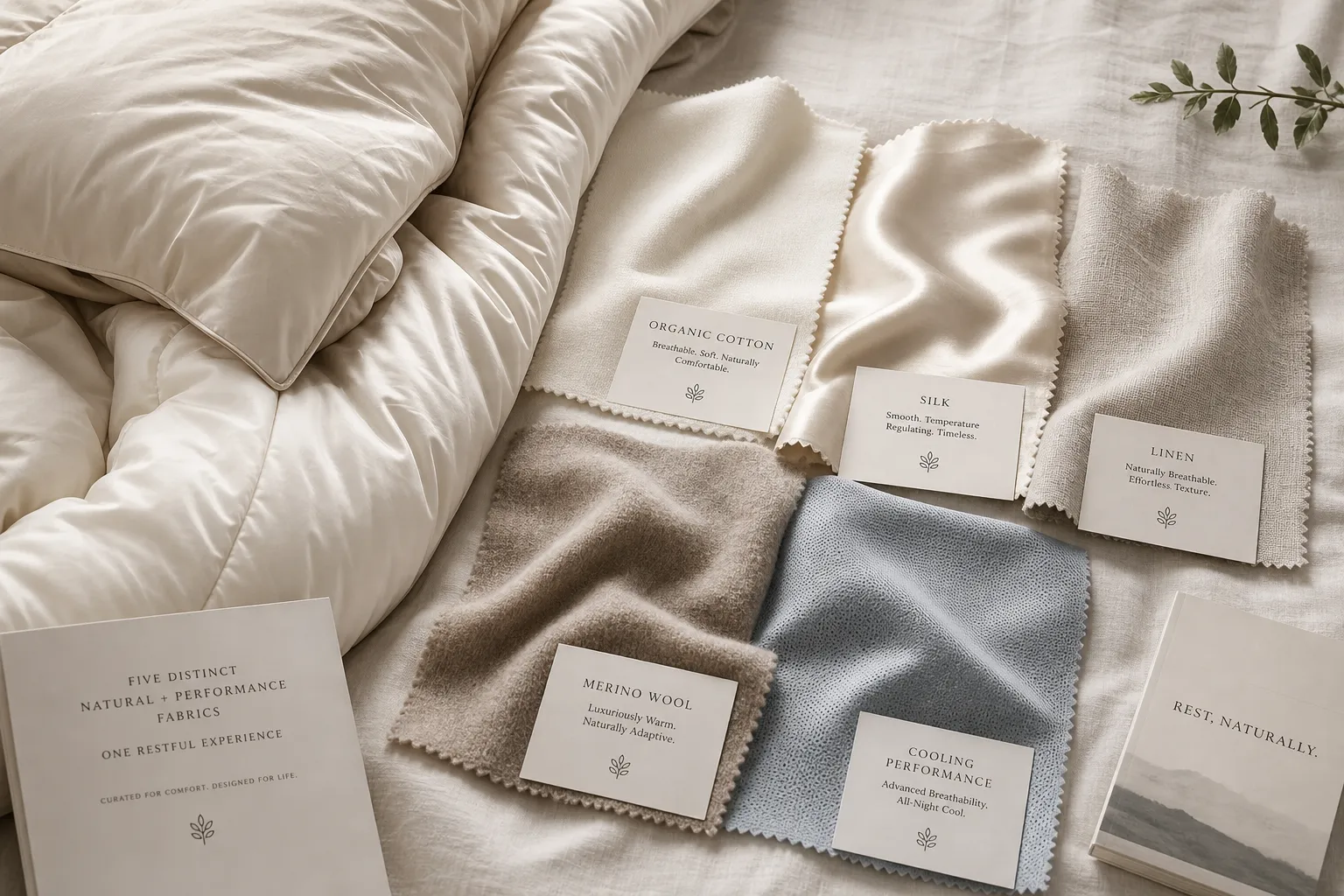
Material matters more than branding. The shell and the fill decide whether your bed feels crisp, airy, cloud-like, weighty, cool, or deeply warm.
Organic cotton
Organic cotton comforters are breathable, familiar, and easy to love. They work well if you want a classic sleep feel with softness and less fuss.
They’re a strong year-round option, especially for households that want natural fibers and a cleaner, more eco-conscious bedding choice.
Silk
Silk comforters feel smooth, refined, and surprisingly good at temperature balance. They’re often loved by people who want lightweight luxury without bulk.
If you want a bed that feels elegant and softly cocooning rather than heavy, silk is a beautiful choice.
Linen
Linen has a more relaxed texture and exceptional breathability. It’s ideal for warmer climates, casual-luxury bedrooms, or sleepers who hate stuffy bedding.
It can feel a little more textured than cotton at first, but many people end up loving that effortless, airy look and feel.
Goose down
Goose down is known for loft, softness, and warmth without excessive weight. It’s one of the best options if you want that true hotel-bed feeling.
Premium goose down comforters are especially appealing for cold sleepers, winter use, and anyone who wants that plush cloud effect.
Merino wool
Merino wool helps regulate temperature and moisture very well. It can be cozy in winter but still comfortable across changing seasons.
This is a smart option if you want a natural fiber that balances warmth and breathability.
Cooling performance fabrics
Cooling blends, including Tencel-based or performance fabric shells, are made for hot sleepers and humid nights. They help reduce that trapped, sticky feeling some comforters create.
If you often kick covers off by 2 a.m., this category deserves your attention.
Best comforters sets by sleep style
The best pick depends less on trends and more on how your body sleeps at night. Here’s the practical version.
For hot sleepers
Choose lightweight fills, breathable shells, and cooling fabrics. Avoid overly dense down if you already run warm.
Look for cotton percale, linen, silk, or cooling performance options with moderate loft.
For cold sleepers
Go for goose down, merino wool, or a higher-loft all-season to winter-weight comforter. You want insulation without feeling crushed under heavy layers.
A larger comforter can also help reduce cold air gaps at the sides.
For couples with different sleep temperatures
This is where most bedding advice falls short. Couples often don’t need one “middle ground” comforter. They need options.
Warmy & Tummy’s mix-and-match approach is useful here because you can choose bedding with different warmth preferences in mind instead of forcing one sleeper to overheat while the other stays chilly.
For style-first shoppers
Choose luxury shells, tailored stitching, and a color palette that still feels calm at bedtime. Soft neutrals, muted earth tones, deep hotel whites, and limited-edition textures tend to age better than overly trendy prints.
For eco-conscious homes
Focus on organic cotton, responsibly sourced down, wool, linen, and durable construction. Sustainable bedding isn’t just about materials. It’s also about buying better so you replace less often.
Comforters and duvet covers: when to pair them
You can absolutely use comforters and duvet covers together, and in many cases it’s a smart setup. A duvet cover protects your insert, changes the look of the bed instantly, and cuts down on full comforter washing.
This works especially well when you invest in a premium insert. If you’ve chosen a goose down, silk, or wool comforter, adding a duvet cover can help keep it cleaner and extend its life.
Best reasons to use a duvet cover
You want easier care
You like to switch your bedroom look by season
You’re investing in a higher-end comforter
You want to reduce wear on the insert
A lot of shoppers searching for comforters and duvet covers are really looking for a setup that feels luxurious without being high-maintenance. That combination gets you there.
How to choose the right size
The right comforter size should cover the mattress and leave enough drape at the sides. If you have a tall mattress, deep topper, or share the bed, sizing up can make a big difference.
Size guide at a glance
Bed Size |
Standard Fit |
When to Size Up |
|---|---|---|
Twin/Twin XL |
Twin comforter |
Rarely needed |
Full |
Full/Queen |
If you want extra drape |
Queen |
Queen or Full/Queen |
King for more coverage |
King |
King |
Oversized king for deep mattresses |
A common question in comforter sets reviews is whether a king comforter works on a queen bed. Yes, if you want extra side coverage and a fuller, more luxurious look. It’s especially helpful for couples who fight over blankets.
The best styles for better sleep and a better-looking bed
Style matters, but sleep-friendly style is different from showroom style. You want a bed that feels calming, soft, and inviting at the end of a long day.
Best comforter set styles right now
Hotel-inspired white bedding
This style feels clean, timeless, and quietly luxurious. It’s ideal if you want your room to feel brighter and more restful.
Pair it with texture so it doesn’t look flat: matelassé, sateen, or a lightly quilted finish works beautifully.
Relaxed natural textures
Think linen, oatmeal tones, soft taupes, and organic cotton. This style feels grounded and easy.
It’s a strong fit for homes that lean warm, minimal, or nature-inspired.
Layered luxury
This means combining a premium comforter with a duvet cover, throw, and coordinated pillows. Done well, it looks rich without feeling fussy.
If you love designer bedrooms, this is usually the formula behind them.
Seasonal color edits
A soft ivory set for spring, cooling neutrals in summer, richer tones in fall, and plush textures in winter can make your room feel fresh all year.
Warmy & Tummy’s limited-edition collections are especially nice for shoppers who want that styled feel without sacrificing sleep comfort.
What good comforter reviews actually tell you
Useful comforter reviews talk about heat, loft, softness, size accuracy, noise, and how the bedding performs after weeks of use. They don’t just say “pretty” or “soft.”
When reading comforter sets reviews, pay attention to these details:
What to Check |
Why It Matters |
|---|---|
Sleeps hot or cool |
Helps match your body temperature |
Weight on the body |
Some people want airy, others want cocooning |
Shell fabric feel |
Scratchy or slick shells ruin comfort |
Fill shift over time |
Poor stitching leads to cold spots |
Real-life size feedback |
Important for deep mattresses and couples |
The biggest content gap in many roundups is that they treat all softness the same. But silky softness, crisp softness, fluffy softness, and breathable softness are different experiences. The “best” one is the one that matches what helps you relax and stay asleep.
A better way to shop: build your comfort from the inside out
Start with sleep feel, not color. Decide how warm you sleep, what textures you love, how much loft you want, and whether you’d rather use a comforter alone or with a cover.
Then narrow by material and style.
A simple buying path
Choose your warmth level
Choose your shell material
Decide between comforter-only or comforter set duvet setup
Confirm bed size and desired drape
Add coordinating layers only after comfort is solved
This is exactly why Warmy & Tummy’s assortment is so practical. Instead of forcing one standard bed feel, the brand gives you premium bedding designed around real preferences: organic cotton, silk, linen, goose down, merino wool, cooling fabrics, and customizable combinations that feel personal.
Why premium bedding is worth it
Premium bedding usually lasts longer, feels better against skin, regulates temperature more reliably, and holds its shape better over time. That means fewer frustrating nights and fewer replacements.
It also changes how your whole room feels. A high-quality comforter doesn’t just sit on the bed. It creates the mood of the room and the ritual of bedtime.
At Warmy & Tummy, that premium feel comes with practical peace of mind too: free shipping in the USA on qualifying orders, fast email and chat support, 30-day hassle-free returns, a money-back guarantee, and a 3-year limited warranty. Luxury should feel reassuring, not risky.
Try the Swedish sleep method if you share a bed
The Swedish sleep method means each partner uses their own comforter instead of sharing one. It can reduce blanket tugging, improve temperature comfort, and make it easier for both people to sleep the way they want.
If one of you sleeps hot and the other sleeps cold, separate comforters often work better than endless compromise. This is another place where a customizable bedding brand becomes genuinely useful.

Warmy & Tummy picks for different needs
If you’re trying to narrow your options, here’s a practical way to think about it.
Best for hotel-like softness
Choose a goose down comforter with a smooth cotton shell.
Best for breathable everyday comfort
Choose organic cotton or linen.
Best for elegant lightweight luxury
Choose silk.
Best for natural all-season balance
Choose merino wool.
Best for hot sleepers
Choose cooling performance fabrics or Tencel blends.
Best for a personal touch
Choose a customizable mix-and-match comforter setup, especially if you want different fillings, shells, warmth levels, or even personalized text.
That customization is a real advantage. Many brands offer nice bedding, but far fewer let you tailor the sleep experience itself.
Final word: the best comforter set is the one you’ll want to crawl into every night
If your bed looks beautiful but you still wake up uncomfortable, it’s time to rethink your top layer. The best comforters sets blend softness, temperature balance, quality materials, and a style that makes your room feel like a retreat.
Warmy & Tummy is built for that kind of sleep. With premium materials, seasonal warmth options, customizable comforters, sustainable choices, luxury styling, and customer-friendly policies, it’s a smart place to find bedding that feels just as good at midnight as it looks at noon. If you’ve been settling for bedding that’s only “fine,” this is your sign to upgrade your sleep properly.
FAQ
What is the Swedish sleep method?
The Swedish sleep method means each person in a shared bed uses their own comforter instead of sharing one. It can reduce blanket stealing, improve temperature comfort, and help couples sleep more peacefully.
What are the best types of bedding for a good night's sleep?
The best bedding is breathable, soft, and matched to your temperature needs. Organic cotton, silk, linen, goose down, merino wool, and cooling performance fabrics are all strong choices depending on whether you sleep hot, cold, or somewhere in between.
Which comforter is considered the most luxurious?
A high-quality goose down or silk comforter is often considered the most luxurious because it offers exceptional softness, beautiful drape, and a refined sleep feel. The best choice depends on whether you prefer plush warmth or lightweight elegance.
What do high end hotels use for bedding?
High-end hotels usually use white, layered bedding with lofty down or down-alternative comforters, crisp cotton sheets, and supportive pillows. The goal is a clean, plush, breathable bed that feels inviting to a wide range of sleepers.