

Does your “all-season” comforter feel like a sheet by morning? The best warm comforters for winter have enough fill for your bedroom and your body. The loft number on the tag can't tell you that by itself. If the room swings between chilly and comfortable, try a medium insert with a removable wool blanket.
Best warm comforters for winter: choose by your bedroom
Start with the temperature beside your bed and how cold you feel under the covers. The outdoor forecast doesn't tell you how much insulation you'll need. Use the table as a starting point, then account for drafts, sleepwear and anyone sharing the bed.
Your situation |
Start with |
Why |
|---|---|---|
Room generally around 65–70°F; you run cold |
Medium or warm down insert |
More insulation than a lightweight insert without committing to the hottest option |
Room often below 65°F; you wake up cold |
Winter-weight down insert with baffle-box construction |
More fill and intact loft help avoid thin, chilly areas |
Room is very cold or drafty |
Winter-weight insert plus removable wool blanket |
Layering adds warmth where you need it and lets you peel back a layer later |
You like a weightier feel or prefer no animal down |
Wool-filled or substantial down-alternative insert |
Offers a different feel, though equal warmth may take more weight than high-loft down |
One partner is cold, the other overheats |
Medium insert and a separate blanket on the cold side |
Each person can change their own coverage |
The temperatures in the table are starting points, not product ratings. A draft can make a 65°F room feel colder at the bed. And if your feet are cold while your upper body sweats, more fill across the whole bed will likely make things worse.
What makes a cold weather comforter warm?
A cold weather comforter keeps insulating air close to you and spreads its fill across the bed. Look at the fill type, fill quantity and stitching. “Extra warm” alone tells you little.
Down, down alternative and wool
Down is a good starting point if you want warmth without a heavy bed. Its loft creates insulating air pockets. A down alternative may feel fuller or weightier, and can take more fill to give you similar warmth.
Wool fill feels more substantial and less airy than down. It can suit you if the room changes temperature overnight. For home laundering, read the exact insert's care label; down and synthetic inserts don't all have the same instructions.
Fill |
Best fit |
Trade-off |
|---|---|---|
Goose or duck down |
Cold sleeper who wants light, lofty warmth |
Care and down sourcing deserve attention |
Down alternative |
Shopper who wants a non-down insert |
Can feel heavier or less lofty at a similar warmth level |
Wool |
Shopper who likes a more substantial, less puffy bed |
Won't give the same airy down look |
Fill power is not fill weight
Fill power measures the space an ounce of down occupies, in cubic inches. Fill weight tells you how much down the comforter contains. Even a high-fill-power summer insert can leave you cold if it has too little fill.
"Fill power tells you how much volume an ounce of down occupies; for a winter comforter, consider fill weight as well, because warmth depends on both, not fill power alone." - American Down and Feather Council
Compare fill weight only across the same size and similar fill types. For a queen bed, compare queen inserts with stated fill weights and warmth levels. Don't compare a king's total ounces with a twin's or treat polyester GSM as down fill power. A higher fill power can get you warmth with less weight, but it does not replace sufficient fill. IDFL's insulation calculation accounts for fill power, net fill weight and comforter area.
Shell and stitching can create cold spots
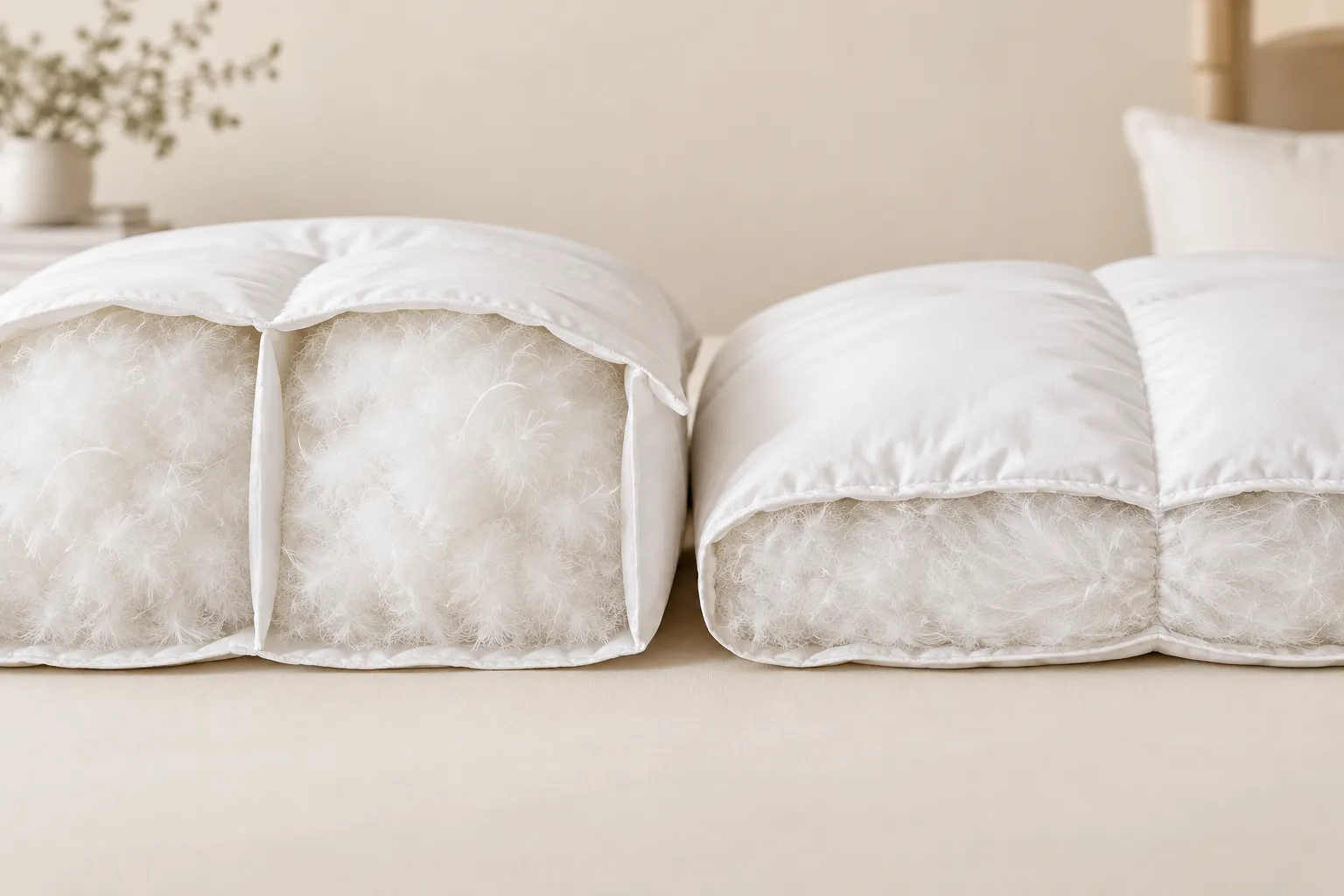
For a warm down insert, look for a tightly woven, breathable shell and baffle-box construction. Fabric walls between the panels give down room to expand. Stitch-through seams flatten the fill along the stitching, leaving cooler lines.
Cotton gives you a familiar, breathable feel. Silk, linen and smooth performance fabrics change what you feel at the surface; none can warm up a lightly filled insert enough to make it winter-weight. Your duvet cover also affects how the bed feels against your skin, so think about both layers.
When a blanket beats a heavier insert
A removable blanket makes sense if some nights are warmer, your partner sleeps hot, or your feet need extra coverage. You can pull it up, fold it back or leave it off. A heavier comforter warms the whole bed every night.
Lay a merino wool blanket over a medium comforter, or keep it on your side of a shared bed. Cashmere feels softer and lighter when you want a bit more warmth without changing inserts. If your insert has bare patches where the fill shifted, a blanket won't fix that uneven coverage.
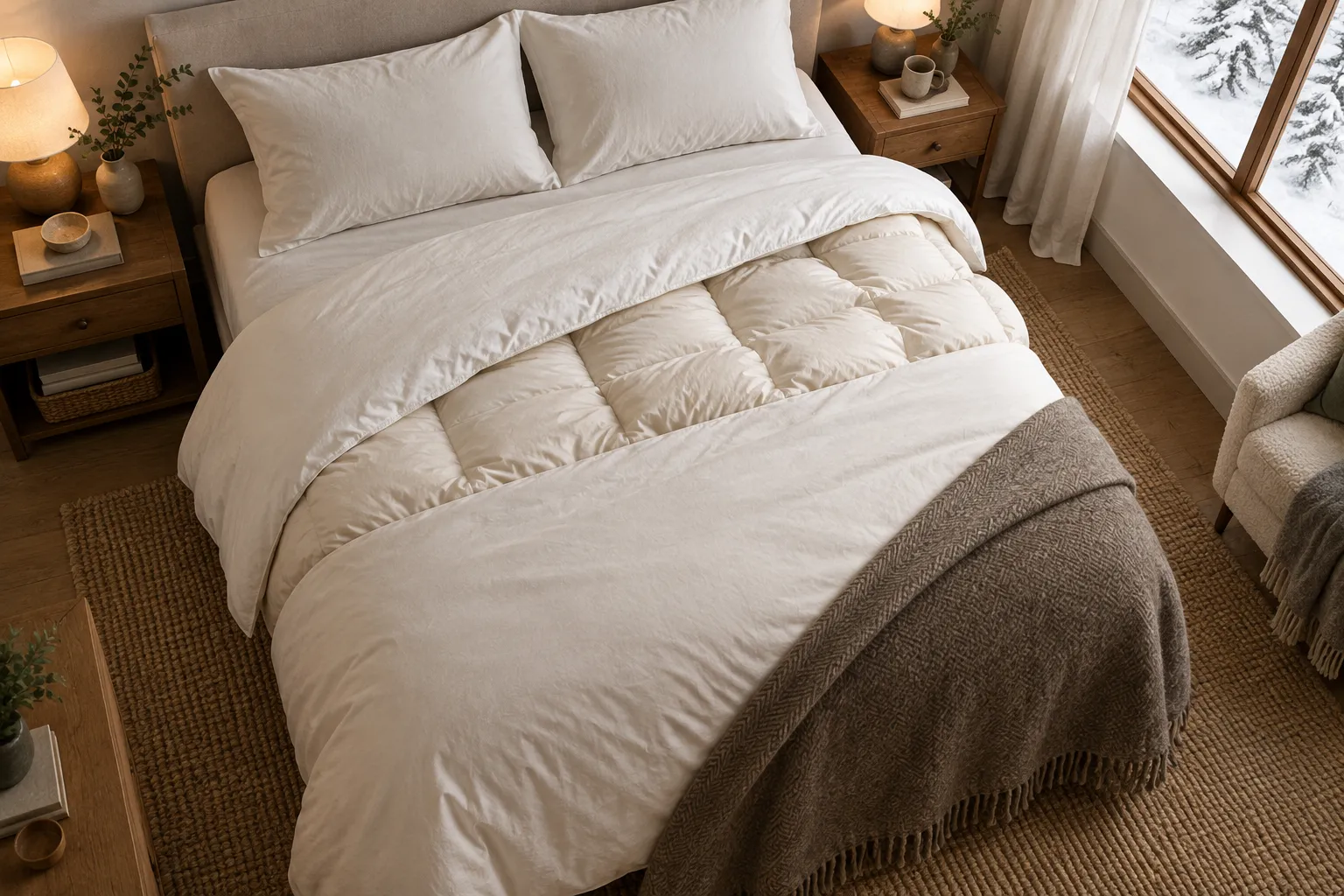
Start with the blanket over your comforter. If your upper body gets hot, fold the blanket down to the foot of the bed. Sharing with someone who runs warm? Your own blanket is easier to adjust than a hotter insert for both of you. See comforters for couples who sleep hot and cold for other shared-bed setups. And if you feel a draft at the edge, pull the comforter around you before replacing it.
How to buy and care for your winter comforter
Look past the word “winter” on the packaging. You can make a useful comparison when two inserts of the same size show their fill, fill weight, construction and care directions.
Match warmth to your room: choose a winter-weight option for a consistently cold bedroom; choose a medium insert and optional blanket if conditions change.
Compare like with like: check down fill power and fill weight at the same size, or compare stated warmth and fill quantity for non-down options.
Look for even coverage: baffles or well-spaced compartments help keep fill from collecting at one end.
Allow room to tuck in: a comforter that barely covers the mattress can leave shoulders or feet exposed, especially for two sleepers.
Read the care label: a removable duvet cover can take routine wear, but the insert still needs care according to its own label.
Thread count and plush photos tell you little about how warm an insert will feel. Without a fill amount or warmth option, the listing gives you too little to judge it for your room.
The right winter setup for your bed
If your bedroom stays cold and you do too, choose a winter-weight down comforter with a stated fill amount and baffles that hold the down in place. If the room gets cold only some nights, a medium insert and a wool or cashmere blanket give you a layer you can take off.
At Warmy & Tummy, you can choose from goose down comforters in different shell styles, then add a merino wool or cashmere blanket for colder nights. The mix-and-match options make sense if you want to choose the warmth of the insert separately from the feel of its shell. Pick the warmth your bedroom needs first, then the fabric you want to curl up under.
FAQ
Which comforter material is best for all seasons?
A medium-weight down insert is a flexible starting point if your room stays fairly steady. If your bedroom changes a lot through the year, a removable wool layer with a medium insert gives you more control than expecting one comforter to feel right every night.
Which is better, a blanket or a comforter?
A comforter is better as your main, evenly distributed insulating layer. A blanket is better for adjustable warmth, especially if one person gets cold or the temperature changes from night to night.
What are winter comforters called?
You'll often see them called winter-weight, heavyweight, extra-warm or ultra-warm comforters or duvet inserts. Those labels aren't a universal rating, so compare the fill amount and construction before treating two products as equally warm.
Is a comforter good for winter?
Yes, if it has enough insulation for your bedroom and keeps that insulation evenly distributed. A lightweight or all-season insert may leave a cold sleeper chilly in a room that regularly drops below 65°F.
What is the best comforter for heavy winter weather?
Judge by the temperature in your bedroom, not the weather outside. For a consistently cold room, choose a winter-weight down insert with sufficient fill and baffle-box construction; add a removable blanket if you still need localized warmth.