
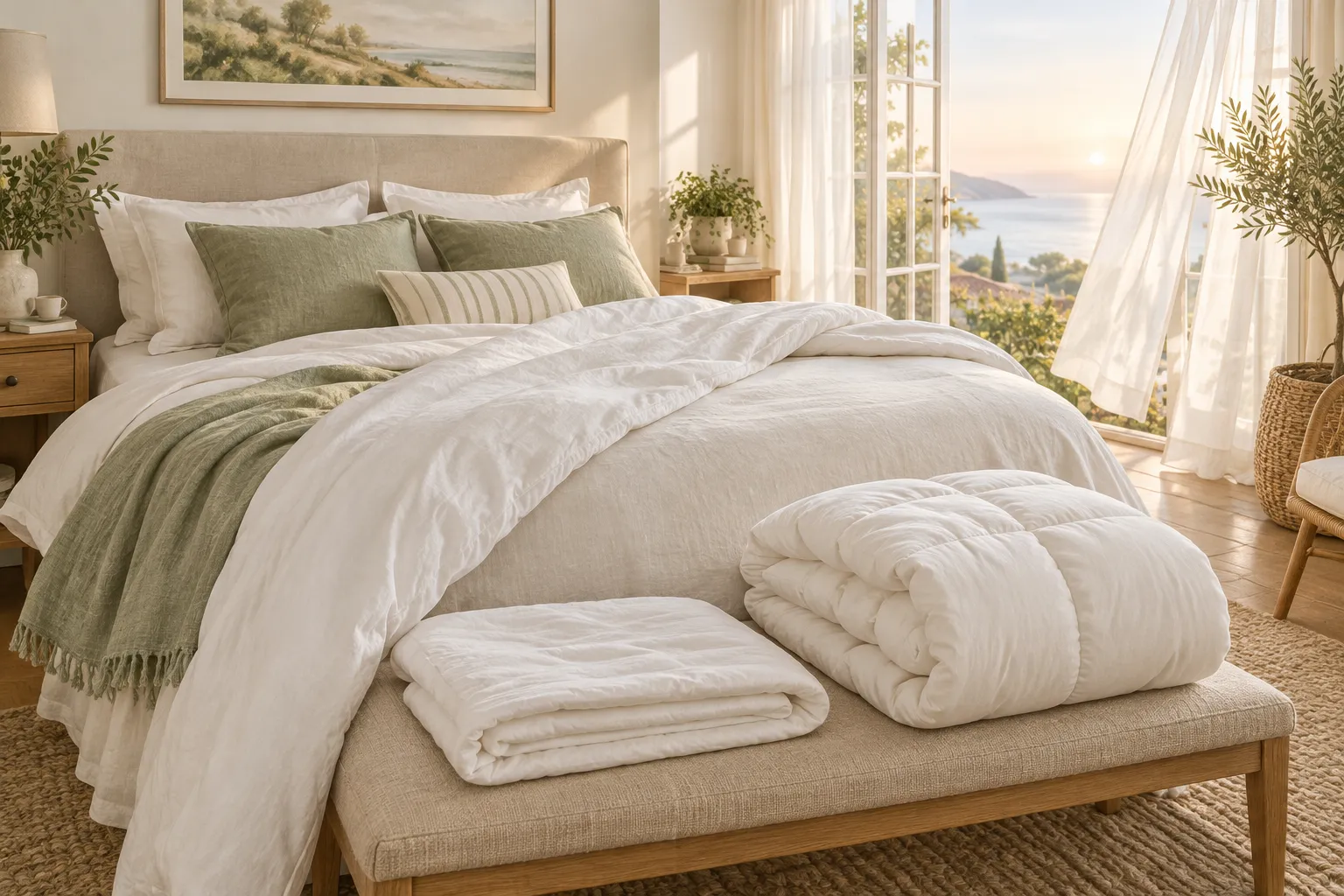
Wake up with one leg out from under the covers again? The best lightweight comforter for hot sleepers has modest fill and a breathable shell, such as cotton percale or linen. It should give you a little loft without wrapping you in a thick layer of insulation.
If you love the fluffy look of down, you don't have to give it up. A lightweight down comforter can work for hot sleepers, but the warmth level and amount of fill matter far more than the word “down” on the label.
Best lightweight comforter for hot sleepers: the short answer
Start with a summer or lightweight warmth rating, then choose the shell and fill. If you need very little warmth, try a thin silk or cotton-filled comforter. Prefer a fluffy bed? A low-fill down insert with a cotton shell gives you that look with less insulation.
If you want… |
Start with… |
Watch out for… |
|---|---|---|
The least insulation |
Thin silk or cotton fill |
Less of the lofty, puffy look |
Fluffy but not too warm |
Lightweight down with a cotton or linen shell |
“All-season” versions with more fill |
Help with clamminess |
Light wool fill or a breathable lyocell shell |
Extra fill that cancels out the shell's benefit |
Easy-care, down-free bedding |
Thin down alternative |
Dense polyester fill and microfiber shells |
The right comforter adds less warmth and lets moisture escape; fabric alone won't cool an insulated bed all night.
Which fill is best for hot sleepers?
Start with the feeling that's waking you up: trapped heat, damp fabric, or the weight of your current comforter. The amount of fill can outweigh the material choice: a thin synthetic insert may feel cooler than an overstuffed down one.
Down: airy loft, if you buy the light version
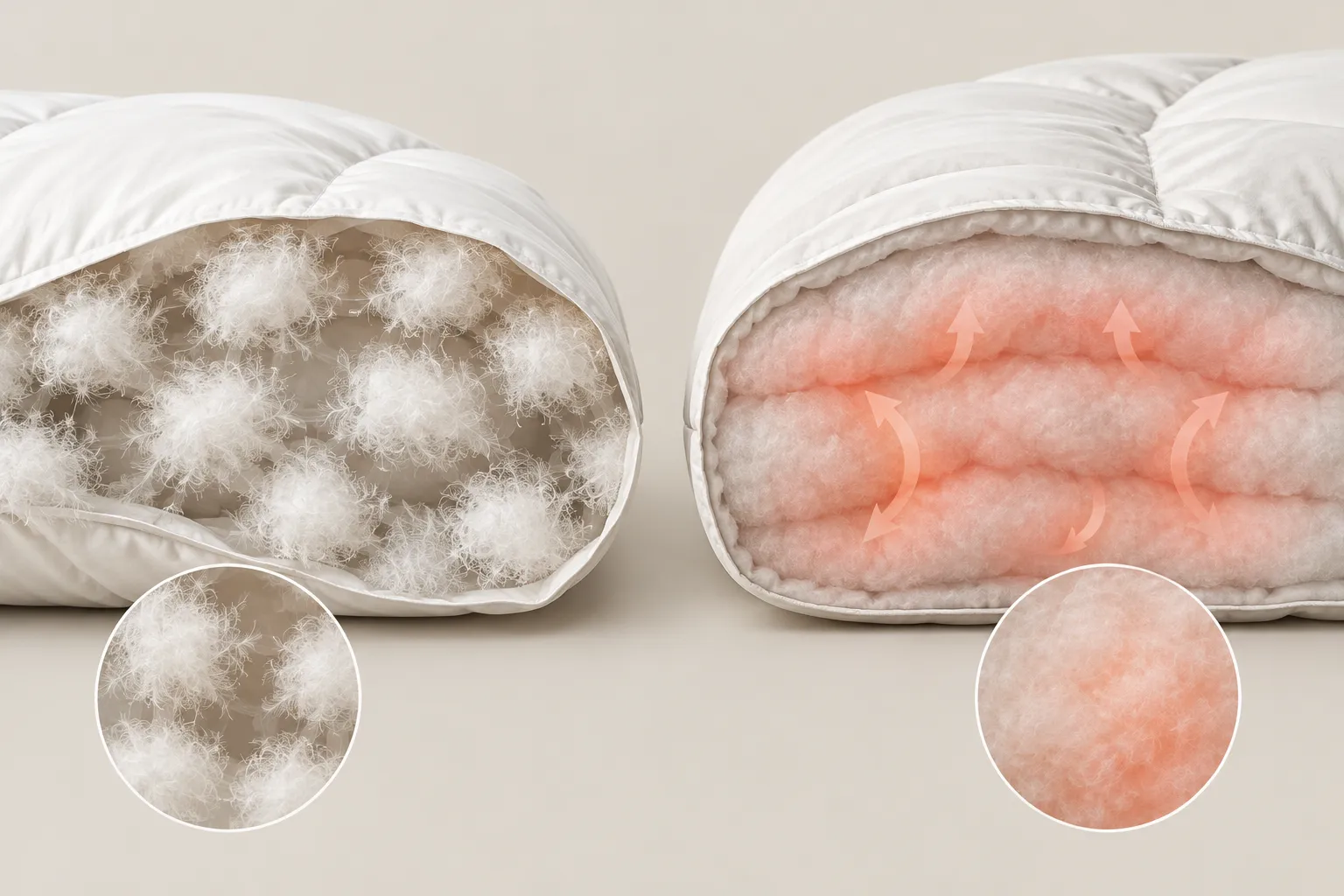
Down suits you if you want fluff without a heavy layer. Because its loft also holds warm air, choose the lightest warmth rating that meets your needs. For a lightweight down comforter, look at fill weight and construction before fill power.
Down feathers and down clusters aren't the same thing: clusters provide loft, while feather-heavy blends can feel flatter and heavier. If you're comparing two inserts, compare the same size and warmth category first. An “all-season” label is not a promise that it will feel good in your hottest months.
Silk and cotton: less puff, less trapped warmth
Silk-filled and cotton-filled comforters suit a bed where you want a light drape rather than a big puff. Both tend to lie closer to the bed than lofty down; thick versions can still feel warm.
If you want a truly light summer layer, consider whether you need a filled comforter at all. A breathable blanket or coverlet might be enough.
Wool and down alternative: useful for different reasons
A light wool-filled comforter can be comfortable when damp, clammy bedding is your biggest frustration. Wool helps manage moisture, but a thick wool insert still insulates. Down alternative gives you a down-free choice and can be easier to care for, depending on its label; choose a thin build rather than assuming that “alternative” means cooler.
Polyester fill varies. A bulky synthetic comforter in a tight microfiber shell may hold more warmth than its weight suggests.
Which shell fabric feels coolest?
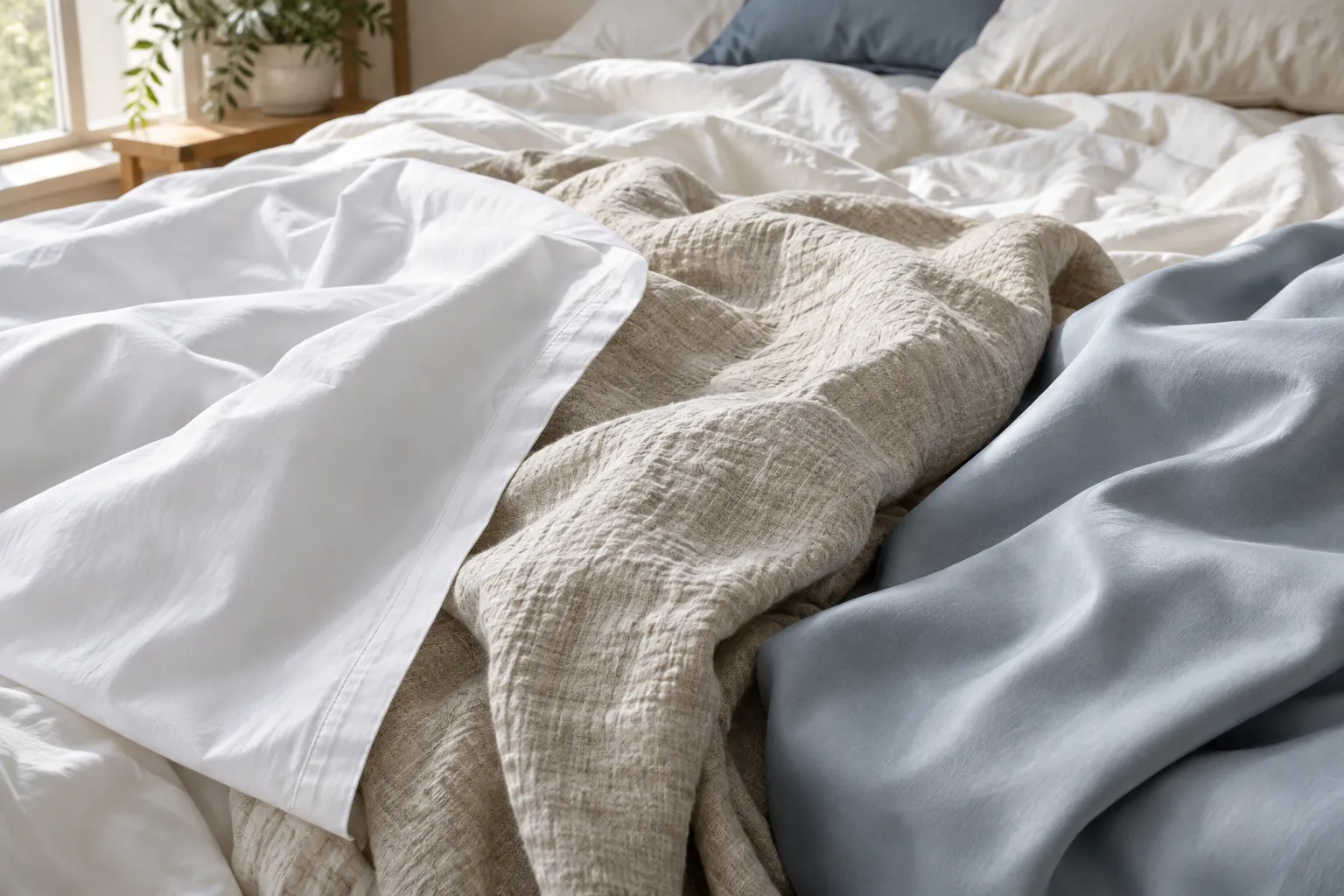
Cotton percale feels crisp and airy, while linen has a more textured feel. Lyocell is smooth if clammy bedding bothers you; silk feels sleek, though the weave and the layers beneath it affect how warm it feels.
Shell |
Feel in bed |
Best fit |
|---|---|---|
Cotton percale |
Crisp, relatively airy |
You dislike slick or clingy bedding |
Linen |
Textured, relaxed |
You want an airy, less polished feel |
Lyocell or Tencel blend |
Smooth, fluid |
You notice dampness and prefer softness |
Silk |
Sleek, drapey |
You enjoy a smooth surface |
Microfiber or dense polyester |
Smooth to the touch, often less airy |
You prioritize easy care over maximum airflow |
A dense weave, extra layers, or a heavy duvet cover can make a breathable fiber feel too warm. Cotton sateen tends to feel smoother and less crisp than percale. And if your insert goes inside a thick cover, that's the fabric you'll feel first.
Thread count measures yarns in a square inch of fabric, not how cool the shell will sleep. More tightly woven fabric can reduce airflow; feel the weave and consider the whole comforter instead of treating a high thread count as a quality shortcut.
How much loft and weight should you choose?
Pick warmth level before you chase loft. Loft is the height or puffiness of the fill; it creates an insulating air space. Fill weight is the actual amount of filling, while fill power describes how much space down occupies for its weight. A high fill-power number doesn't tell you whether the whole comforter will be cool.
When two down inserts use the same shell and size, less fill generally means less insulation. Compare fill weight only across similar sizes and constructions: a king-size insert naturally uses more material than a twin. For hot sleepers, “summer” or “lightweight” is usually a better starting label than “all-season” or “extra warm.”
Don't confuse a light comforter with a thin-looking one, either. A low-fill down insert can remain visibly puffy. A densely filled cotton or silk one can look flat yet feel surprisingly substantial.
Do cooling comforters work?
Yes, they can make a bed feel less stuffy, but they can't replace a cooler room. Moisture-handling fabrics help when you wake up clammy; cool-to-the-touch finishes can feel refreshing when you first get in. Neither removes the insulation from a heavily filled comforter.
"The best room temperature for sleep is approximately 65 degrees Fahrenheit (18.3 degrees Celsius)." - Sleep Foundation
Read the “cooling” claim for what it promises. Breathability means airflow; moisture management concerns sweat. A cool-to-touch surface changes how the fabric feels when you first get into bed. For comfort through the night, start with less fill and a breathable cover before paying extra for a specialty finish.
Moisture-wicking fabric can move perspiration away from skin, while temperature regulation is the broader goal of avoiding too much retained body heat. Cooling technology on a thick insert can't make it behave like a thin one. Sleep Foundation's room-temperature guidance gives you another useful lever when the whole bed feels warm.
If you're waking up soaked regularly despite lighter bedding, a comforter change may not solve the underlying issue. Bring persistent night sweats up with a healthcare professional.
How to choose one for your bed
Take stock of the whole bed. A thick duvet cover, warm sheets, or a partner sharing heat can overwhelm your light comforter.
Decide how much coverage you actually want on a warm night: a thin comforter, a coverlet, or just a sheet.
Choose your warmth category before fill power or fabric marketing: start with summer or lightweight if you routinely kick off the covers.
Compare shell and fill together. A breathable shell won't undo a thick fill, and an airy fill can't fully compensate for a dense cover.
Match the cover to the insert. Try a light cotton or linen duvet cover rather than a thick or plush one.
Read the care label. A comforter that needs special cleaning may be frustrating if you sweat often; a removable, washable cover can make maintenance easier.
A machine-washable down alternative comforter can be practical for frequent laundering, but read the instructions for the particular insert: cold-water washing, drying, or dry cleaning depend on its materials and construction. A duvet insert with a removable cover lets you wash the outer layer more often without washing the fill every time.
For couples with different temperature preferences, two separate light top layers can be more practical than asking one shared insert to suit both people. If your partner sleeps cold, they can add a blanket on their side while you keep a lighter layer.
Warmy & Tummy offers comforter options with different shells and warmth preferences, including down with cotton, silk, linen, and cooling-fabric choices. Its mix-and-match approach is useful if you want to choose the feel of the shell separately from the warmth you need. Choose the lighter configuration if overheating is the reason you're shopping.
The practical verdict
If you're mostly too warm, begin with a summer-weight insert in a breathable cotton percale or linen shell. If you also wake up clammy, pay attention to moisture handling; if you want that plush look, keep down in the running but choose less fill. And if even a thin insert is too much, sleep under a light coverlet instead.
Warmy & Tummy is worth a look when you want to tailor a comforter rather than settle for a fixed shell-and-fill combination. Start with the lightest warmth you would actually enjoy sleeping under, then choose the texture you want against your skin.
FAQ
What are some good lightweight bedding options for hot sleepers?
A summer-weight comforter with a breathable cotton or linen shell is a good start if you still want a filled layer. If even that feels too warm, use a light coverlet or just a sheet; keep your duvet cover thin if you use one.
Is a 100% cotton comforter good for hot sleepers?
It can be, particularly if both the shell and fill are cotton and the comforter is thin. “100% cotton” doesn't specify its thickness or warmth, though, so a heavy cotton comforter can still sleep hot.