
Waking up with damp sheets even though the room feels fine? Cooling bed sheets can make the bed less stuffy. Pair them with a lighter cover and a protector that doesn't hold heat underneath. Cotton percale and linen have an airy feel; lyocell feels smoother.
Want to see how the fabrics differ? This video compares cooling sheets side by side.
Cooling bed sheets for night sweats: what matters most
Sheets for night sweats should let air move and deal with moisture without feeling heavy. Moisture-wicking means a fabric draws dampness away from your skin; it doesn't lower your body temperature. A cool first touch won't tell you how the sheets will feel at 3 a.m.
The weave matters as much as the fiber. Cotton percale has a crisper feel than dense sateen; linen drapes loosely and has more texture. If linen feels rough to you, smooth lyocell might be more pleasant when you wake up damp. You'll spend more time in the sheets than you will touching them in a store.
"Across 24 woven cotton and cotton/Tencel fabric conditions, thermal resistance ranged from 0.11 to 0.43 Tog; weight, weave and surface raising mattered alongside fiber composition." - Journal of Engineered Fibers and Fabrics
Consider what's beneath the fitted sheet. A thick foam topper or an impermeable protector can leave you clammy even if your sheets breathe well. If you're replacing one item, start with the layer that bothers you most.
In one controlled study of bedding and sleepwear at different room temperatures, bedding made no difference to sleep under the conditions tested. Fabric measurements and personal comfort can't promise a better night's sleep.
Which sheet fabric should you buy?
Cotton percale and linen are good starting points if you sleep hot. Lyocell suits you if you'd rather have a silkier surface. Feel the fabric and read the care label before letting a “cooling” tag make the choice for you.

Material |
Feel in bed |
Why a hot sleeper might like it |
Tradeoff |
|---|---|---|---|
Cotton percale |
Crisp, matte, light |
Airy feel without a slippery finish |
Can wrinkle and feel less soft at first |
Linen |
Relaxed, textured, airy |
Comfortable drape and less clingy feel |
Texture and wrinkles aren't for everyone |
Lyocell, including Tencel-branded fabric |
Smooth, fluid |
Soft option when crisp sheets irritate you |
Some constructions feel drapier or heavier than percale |
Cotton sateen |
Smooth, substantial |
Softer cotton feel |
Dense versions may feel warmer |
Silk |
Sleek, light |
Smooth against skin |
Care can be more demanding |
Performance blends |
Varies by blend and knit |
Some are made to move moisture away from skin |
“Cooling” tells you little without a fiber and construction label |
Cotton percale versus linen
Pick cotton percale for that freshly made, hotel-bed crispness. Linen feels looser against your body. Both work as sheets for night sweats, but texture may settle the question for you. If you have sensitive skin, feel linen against your cheek or wrist first; it can be rougher out of the package.
Two cotton sheets can feel surprisingly different: percale is crisp, while sateen is smoother and denser. A high thread-count label alone won't tell you how airy either will feel at home.
What about bamboo and cooling performance fabrics?
Read the fiber label on bamboo sheets. Bamboo viscose and lyocell are manufactured fibers, not woven strips of bamboo. They're worth a look if scratchy bedding bothers you, though a set's construction still affects its weight.
A light woven performance blend may feel airy; a stretchy knit may cling. Even if a cooling sheet set promises “advanced cooling,” look for its fiber content and weave. An icy first touch tells you less about overnight comfort than those details do.
Do wool sheets make sense?
Wool handles moisture, though it won't give you the light, crisp feel of percale. If you like wool, a thin blanket is easier to fold down when you get warm.
Build breathable bedding for night sweats, layer by layer
Sheets have a harder job if the rest of the bed holds heat. Give yourself a cover you can fold down rather than one you have to kick off.
Sheets and pillowcases
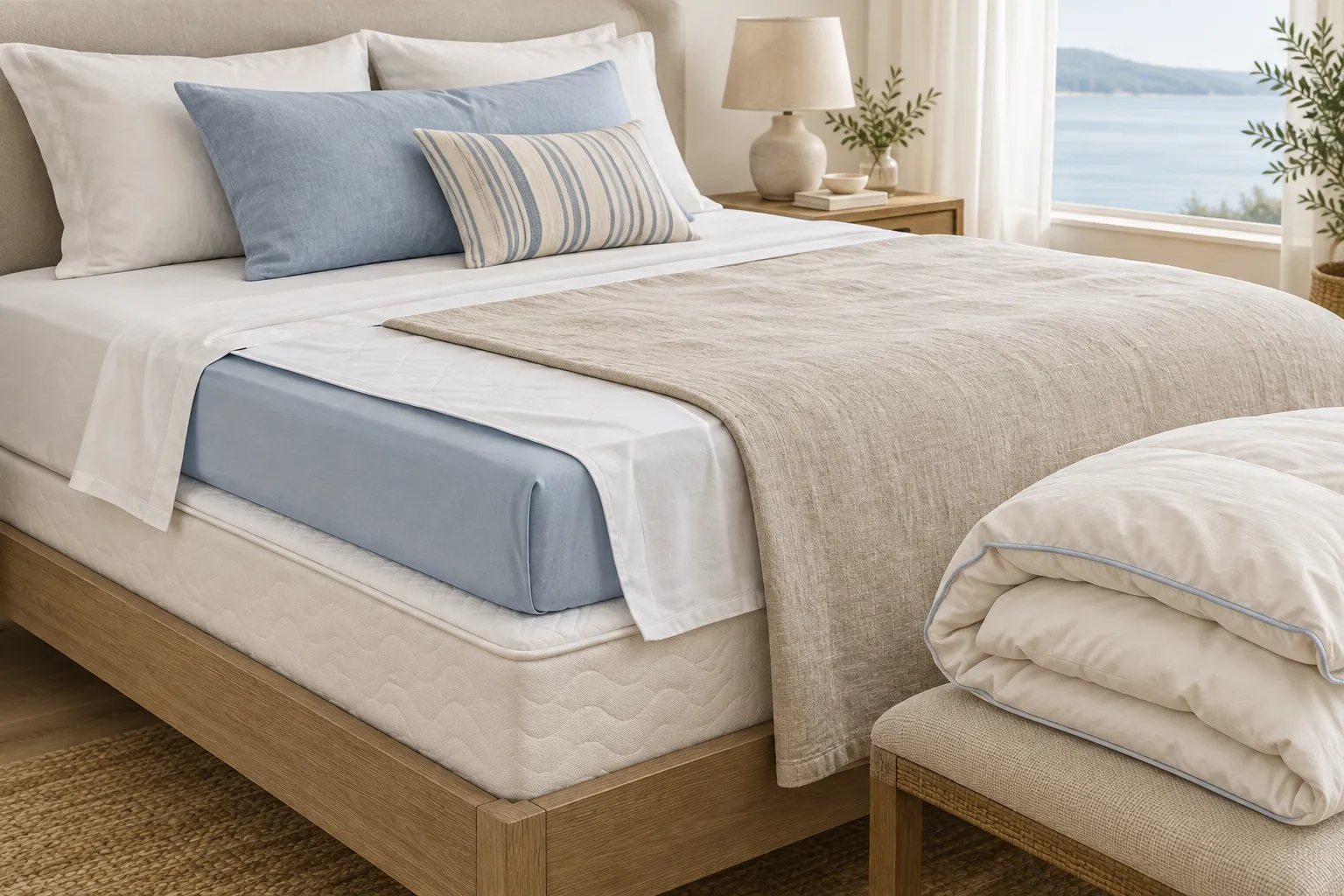
Use a breathable fitted sheet and cooling pillowcases with a feel you like. A plush pillow cover can still leave your head and neck warm even after you've changed the rest of the sheets.
A flat sheet can be all the cover you want on a warm night. Put the protector beneath the fitted sheet, then add your flat sheet and a blanket or duvet as needed. If you sleep with the duvet cover against your skin, its feel matters as much as its appearance.
Mattress protector and topper
If you sweat at night, a protector helps keep moisture off the mattress. It can also change how warm the bed feels. Waterproof barriers may limit airflow, so choose the protection you need without assuming the sheet above it will make up for a bulky layer.
A thick topper can make light sheets feel warmer. If you already like your sheets, try sleeping without an extra mattress layer before you replace them.
Blankets, comforters and duvet covers
For hot sleepers, a light blanket or top sheet may be enough on warm nights. Add a comforter when you need one. A breathable cover won't make a warm insert feel like a summer-weight duvet.
If you like wool, use it as a blanket you can remove. Linen and cotton are also options for the duvet cover. A down comforter can be cozy, but its warmth level needs to suit your room and the season. And if you wake up hot, take that decorative throw off before bed.
For more detail on shell materials, see Warmy & Tummy's comforter and duvet cover fabric comparison.
At Warmy & Tummy, you can choose sheet sets, comforters with different shells, and merino wool blankets. The mix-and-match comforter lets you choose a combination that suits your warmth preference. If you're happiest with hardly any cover, start with sheets and a light blanket instead of an insert.
What should you avoid if you sleep hot?
Keep heavy layers off cooling bed sheets when you're too warm. Linen can still feel muggy under a thick topper, comforter and throw.
If your bed has… |
Try instead… |
|---|---|
Heavy comforter used all year |
A lighter insert or removable blanket for warm nights |
Thick fleece or microfiber throw close to your body |
A lighter cotton, linen or wool layer you can move aside |
Dense, slippery sheets that feel clammy |
Crisp percale or airy linen if you like their feel |
Waterproof protector that feels hot |
A less bulky protector suited to your protection needs |
“Cooling” claims with no fabric details |
A clearly labeled fiber, weave and care instructions |
The fabric label, weave and layers you already own will tell you more than a cooling name or thread-count boast.
Pick a setup for the way you sleep
Choose bed linen for the discomfort you feel: dampness, warmth, or a partner who needs a heavier cover. Change one layer at a time so you can tell what helped.
Your situation |
A sensible starting setup |
|---|---|
You wake up sweaty and dislike clingy fabric |
Linen or cotton percale sheets, a light top sheet, and a removable blanket |
You sleep warm but want silky softness |
Lyocell sheets, a light cover, and no extra throw |
You and your partner prefer different warmth |
Shared breathable sheets with separate top layers or different blanket weights |
You need a protector |
Breathable-feeling sheets over a protector chosen for the level of protection you need; keep top layers light |
If your partner wants a heavier duvet, separate covers keep you from sharing all that warmth. They can add weight on their side while you keep your lighter layer.
Keep your bedding comfortable
Follow the care label when you wash your sheets, and let them dry fully before making the bed. A spare set means you can change damp sheets without facing laundry first thing in the morning.
Leave the heavy blanket where you can pull it off easily. If you're comfortable at bedtime but hot later, try removing it before buying another sheet set.
Make the bed easier to adjust
Start with cotton percale or linen for an airy feel, or lyocell for smoothness. Keep the cover light and pay attention to the protector underneath. Sheets won't do much if the bed holds heat on both sides.
If your top layer needs changing too, Warmy & Tummy has shells, blankets and comforters with different warmth levels. That lets you choose a cover for your room rather than make do with the same weight all year. Save the extra blanket for a colder night.
FAQ
Do cooling bed sheets actually work?
They can make your bed feel more comfortable by changing the fabric against your skin and how airy the layer feels. They won't fix a heavy duvet, warm topper or heat-holding protector underneath.
What are the best bedsheets for cooling?
Cotton percale and linen are good starting points if you like a crisp or airy feel. If you prefer a smoother sheet, consider lyocell, then pair your choice with a light, removable top layer.