

Picking bedding for a parent or grandparent? A lightweight warm comforter gives them warmth without a heavy layer to tug around when they turn over. Add sheets that feel good to them and a pillow that suits how they sleep, and you’ve put together a gift they’ll use every night.
Picture their bedroom before you choose. Do they kick the covers off, or keep an extra blanket at the foot of the bed?
Why a lightweight warm comforter makes a thoughtful gift
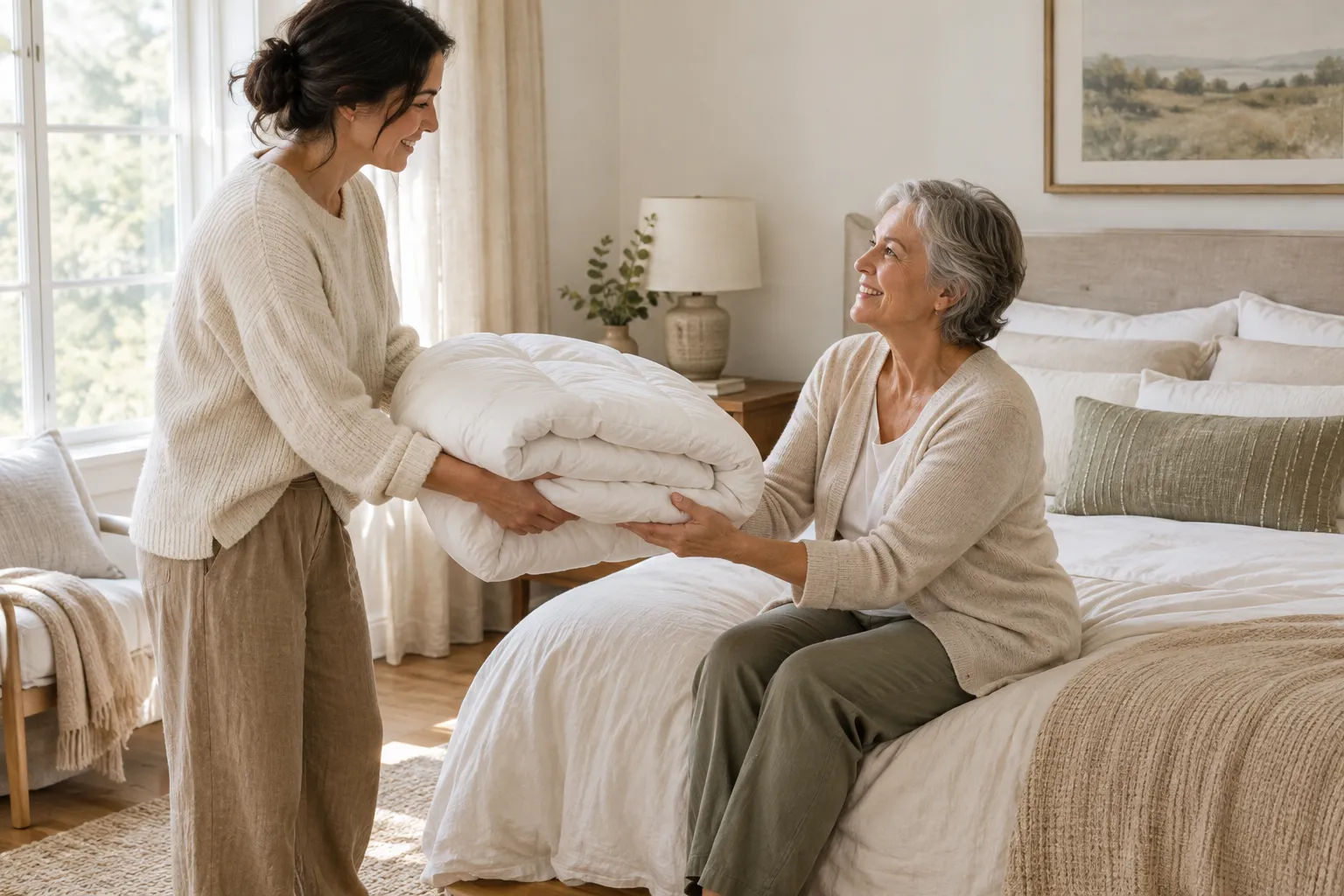
A lighter comforter is easier to pull up around the shoulders, and there’s less bulk to handle when making the bed or changing a cover. It can still be plenty warm. The word “lightweight” describes how it feels to move, not how cool someone will sleep under it.
Ask what’s on their bed now. Stacked blankets suggest they’d welcome a warmer fill in a manageable weight. Covers kicked off halfway through the night point toward a lighter warmth option and breathable fabric. You’ll get a better clue from that than from the season printed on a package.
Choosing a lightweight warm comforter
The best lightweight warm comforter for a gift has enough insulation for their bedroom and a care routine they can live with. Puffiness alone won’t tell you how warm it is. Pay attention to the amount of fill and how the comforter keeps it in place.
“Generally, the higher the fill power the greater amount of warmth and fluffiness per ounce.” - American Down and Feather Council
Down, down alternative or another fill?
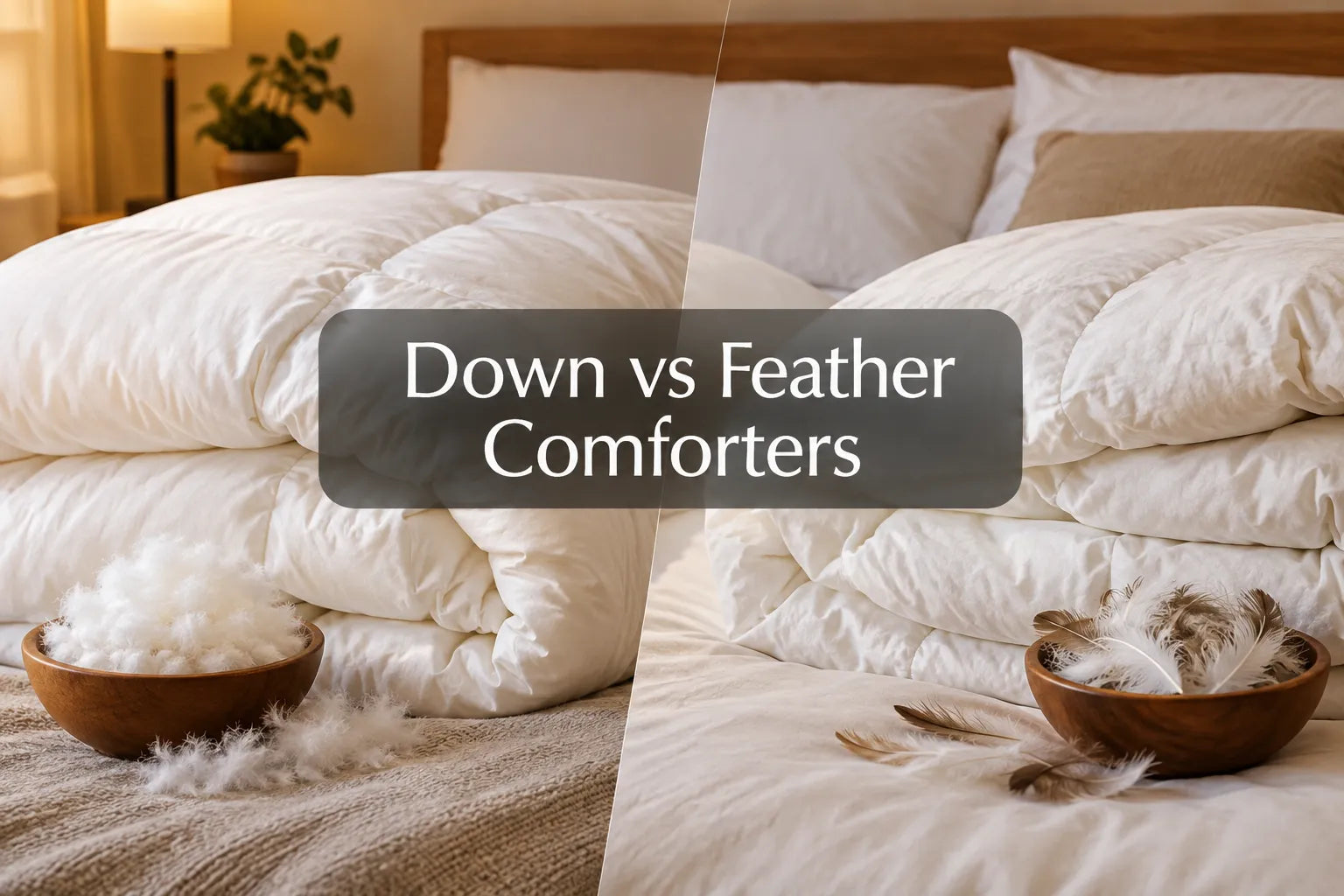
Down works well for someone who wants warmth without a dense, weighted feel. With a cotton shell, a soft warm comforter filled with down can feel airy rather than stiff. A washable down alternative is worth considering if your recipient avoids animal-derived materials or wants simpler laundry. Read the care label to see if the whole comforter can go in the machine.
For down inserts, compare fill power and fill weight at the same bed size. Fill power describes loft per ounce; fill weight tells you how much down is inside. Neither number tells the whole story about warmth, and box stitching or baffles help keep the fill spread across the bed.
Comforter choice |
Good fit when they… |
Trade-off to know |
|---|---|---|
Lightweight down with cotton shell |
Want warmth and an airy feel |
Care instructions vary by product; a removable cover helps |
Lightweight down alternative |
Prefer a non-down fill |
Warmth and heft vary, so compare the stated weight and warmth level |
Light-to-medium warmth insert plus a throw |
Need a flexible setup for changing seasons |
There’s one more layer to arrange and launder |
A lightweight winter comforter can have a warmer rating if the bedroom is cold and the sleeper wakes up chilly. For a heated room, a lighter insert with a separate throw lets them add warmth only when they want it.
Choose a shell that feels good against the skin
Does your recipient love their cotton sheets? An organic cotton shell or duvet cover could be a comfortable match. Cotton can feel gentle on sensitive skin, but “organic” doesn’t make a finished product hypoallergenic. For allergies or irritation, think about the fill, every fabric they’ll touch and how they’ll wash it.
Silk feels smooth; linen has more texture. If you’re unsure which they’d enjoy, ask what their favorite sheets are made of. You’ll learn more from that answer than from a product photo.
Bedding gift picks beyond the comforter
Sheets and pillows are worth adding if you know what your recipient likes. A beautifully soft sheet that won’t stay on the mattress is no fun to use.
Sheets they’ll want to put on the bed
Think about the sheets they reach for now. Cotton suits someone who likes a crisp or smooth classic sheet; linen has a more textured feel. Find out the mattress size and whether there’s a deep topper, or the fitted sheet may pop off the corners.
An extra set means they can put clean sheets straight on while the other set is in the laundry. If their skin is sensitive, choose a fabric they already like and care instructions that fit their routine.
A pillow that fits their sleep position
Pillow height is personal. A side sleeper may want enough loft to fill the gap between shoulder and head, while a back or stomach sleeper may prefer a lower pillow. If you don’t know their sleeping position, adjustable fill lets them change the height themselves.
A washable pillow protector lets them freshen the bedding without washing the entire pillow each time. The pillow itself may need different care, depending on its fill.
What to check before you buy
Before ordering, get three details: bed size, how warm they sleep and any allergies. If you’re keeping the gift a surprise, ask someone who knows their bed.
Before you buy
Bed size: Find the mattress size, and check the duvet cover dimensions against the insert, not just the “queen” or “king” label.
Hot or cold sleeper: Ask if they keep extra blankets nearby or usually kick the covers off. Match the warmth rating to that habit and the room.
Allergies or sensitivities: Find out whether down, particular fabrics or detergents are an issue. Choose a material they tolerate and a practical washable layer.
You don’t need a special “older adult” bedding category. You need the size and feel that work for this person.
Make the gift easy to live with
With a duvet cover, they can wash the cover instead of laundering the insert each time. Make sure the opening is easy for them to use and the cover fits the insert. If they hate putting a cover on, a comforter they can care for directly is a kinder choice.
A large insert may need a roomy washer or professional cleaning, depending on its label. The sheets and pillow protector should work with the laundry routine they already have.
At Warmy & Tummy, you can choose a goose down comforter’s shell and warmth level, then add sheets, pillows or a duvet cover. The mix-and-match option is handy if you know exactly how your recipient likes the bed to feel. Down won’t suit everyone, so ask about the fill before making it a surprise.
A comfortable gift they can actually use
If you’re choosing one gift, start with a lightweight comforter in the right size and warmth level. Add a washable duvet cover if they use one, or sheets in a texture you know they love. Save the pillow for when you know their sleep position and preferred height. Warmy & Tummy’s choice of materials and warmth levels helps you get those details right.
FAQ
What is the best breathable comforter?
A breathable comforter is one that matches the sleeper’s warmth needs and room temperature without trapping more heat than they want. For a hot sleeper, start with a lighter warmth rating and a cotton shell; a separate throw can add warmth when needed.
What is the difference between a quilt and a comforter?
A quilt is typically a flatter, stitched layer, while a comforter has an insulating fill between its outer layers and tends to look loftier. If the recipient wants a puffy yet light layer, consider a comforter; if they like a flatter feel, a quilt may appeal more.
Which is the fluffier down or down alternative?
Either can look fluffy, depending on its fill amount and construction. Down can offer lofty warmth with less heft, while down-alternative products vary considerably; compare the individual comforters rather than assuming the fill name tells you how fluffy one will feel.